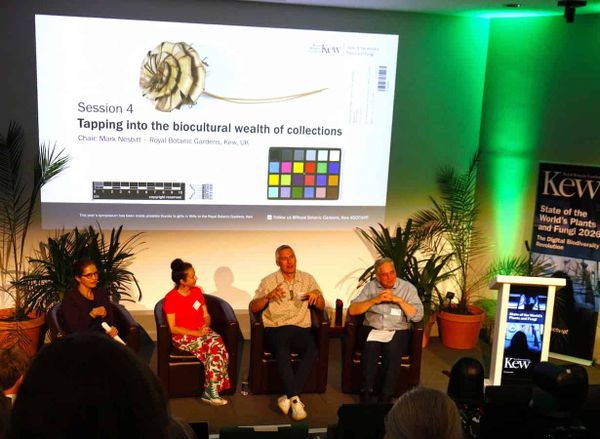

What a month this has been. Halfway through our Botany One’s Digital Botany Focus Issue, Royal Botanic Gardens, Kew released the State of the World’s Plants and Fungi 2026 report. The timing could not have been better.
The report, launched on 16 June, gives the scale of the digital biodiversity revolution: more than 145 million preserved plant and fungal specimen records are now part of the global digital biodiversity landscape, and the report draws on the work of more than 400 scientists from over 170 institutions in 40 countries.
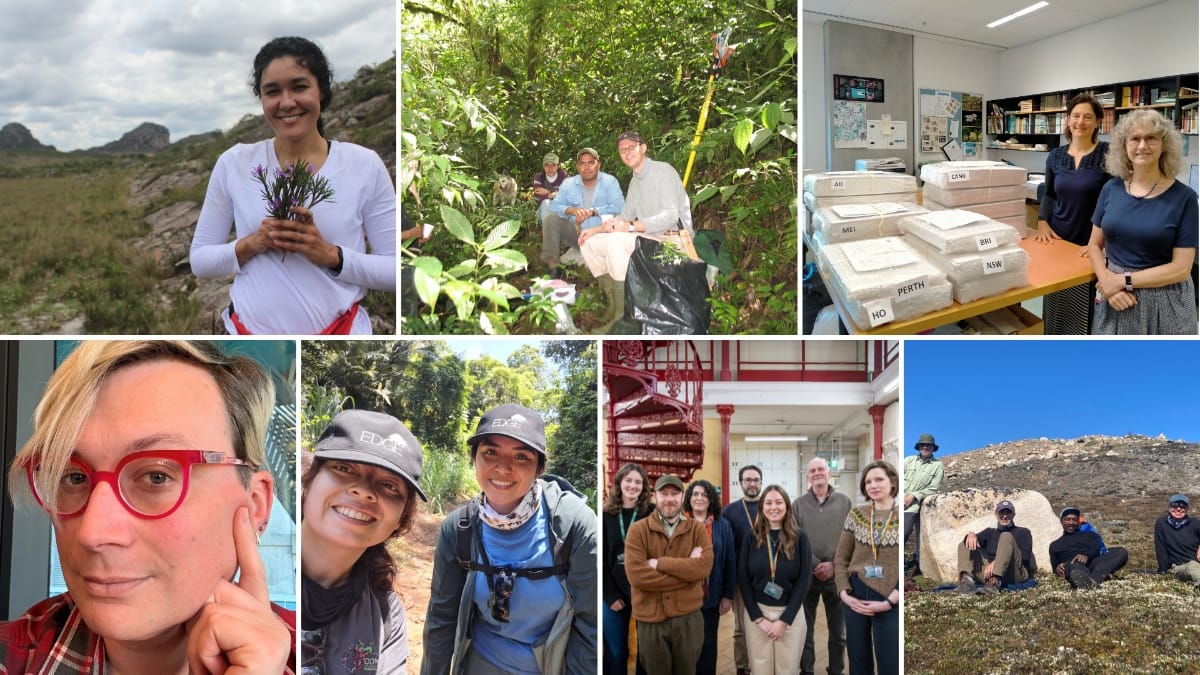
Our Focus Issue tells the same story from closer range. It shows what that revolution looks like when you speak to the people behind the records: the botanists, curators, seed bankers, mycologists, data managers, software developers, artists, volunteers, students, citizen scientists, community partners and writers who make digital botany possible.
The report says the digital biodiversity revolution is underway. Our issue says: "Look who is doing it”.
Our Focus Issue, article by article
Setting the frame
- Introducing Botany One’s Digital Botany Special Focus Issue set out the month’s plan: follow plant data from its origins, through digitisation and hidden stories, to real-world use.
Origin: how plants become data
- Turning Plants into Data: A Deeply Human Experience opened the issue with Ana Valladares’ Q&A on why specimens do not simply “become data”. Fieldwork, labels, taxonomy, local context, uncertainty and human judgement all matter.
- How to Keep Track of 2 Million Crop Accessions took us into crop genebanks, where conserving seeds also means managing the data that give them meaning for food security, breeding and agricultural resilience.
- How Digitisation Gives Specimens More Meaning used Greta Stevenson’s fungal collections to show how digitisation can reconnect specimens with collectors, networks, archives and overlooked scientific contributions.
Build: the craft behind digital collections
- Heather Cole: Best Tricks, Equipment and Software for Digitisation made the practical work visible: cameras, lighting, software, file handling, quality control and all the small choices that shape whether a digital collection is genuinely usable.
- Lights, Camera, Action! went behind the lens of Kew’s mass herbarium digitisation project, connecting directly with SOTWPF’s milestone: the complete digitisation of Kew’s Herbarium and Fungarium.
- Three Tools That Bring Digital Botany Within Reach looked at Wikidata, Herbariograph and AI-assisted workflows, reminding us that tools are powerful only when they are built around good data and expert judgement.
Reveal: hidden stories and new paths
- Herbarium Collections Can Offer Exciting New Career Paths Far Beyond Taxonomy showed through Barnabas Daru’s work that herbarium data now support ecology, evolution, conservation, climate research, biogeography and data science.
- Hidden Stories in Collections explored how digitised collections can connect science, history and art, allowing specimens, paintings, archives and names to be searched together.
- Unravelling Human-Plant Connections focused on ethnobotanical collections and biocultural knowledge, and why digital access must be paired with context, consent, protection and care.
Apply: from records to decisions
- Interview with Bob Allkin about Name Games asked what happens when familiar plant names point to several possible species, and why useful plant data must work for health professionals, regulators, researchers and the wider public.
- María Susana Sánchez Chávez on EDGE, data and conserving Pinus culminicola on the ground in Mexico showed what happens when global conservation priorities meet field reality: land tenure, trust, fences, seedlings, grazing pressure, local knowledge and people.
- How Your iNaturalist Photos Feed the Digital Botany Revolution showed how everyday plant photographs can become research-ready phenology data. Erika’s article followed PhenoVision and PhenoBase, showing how machine learning can turn iNaturalist images into records of flowering and fruiting that help researchers track how plant timing is changing across cities, regions and climates.
- The Ecology of a Herbarium: How Te Papa connects plants, people, and data took us into an expedition to the work of Te Papa’s herbarium, showing how they are making their plant collections more accessible, connected and alive.
Behind our scenes
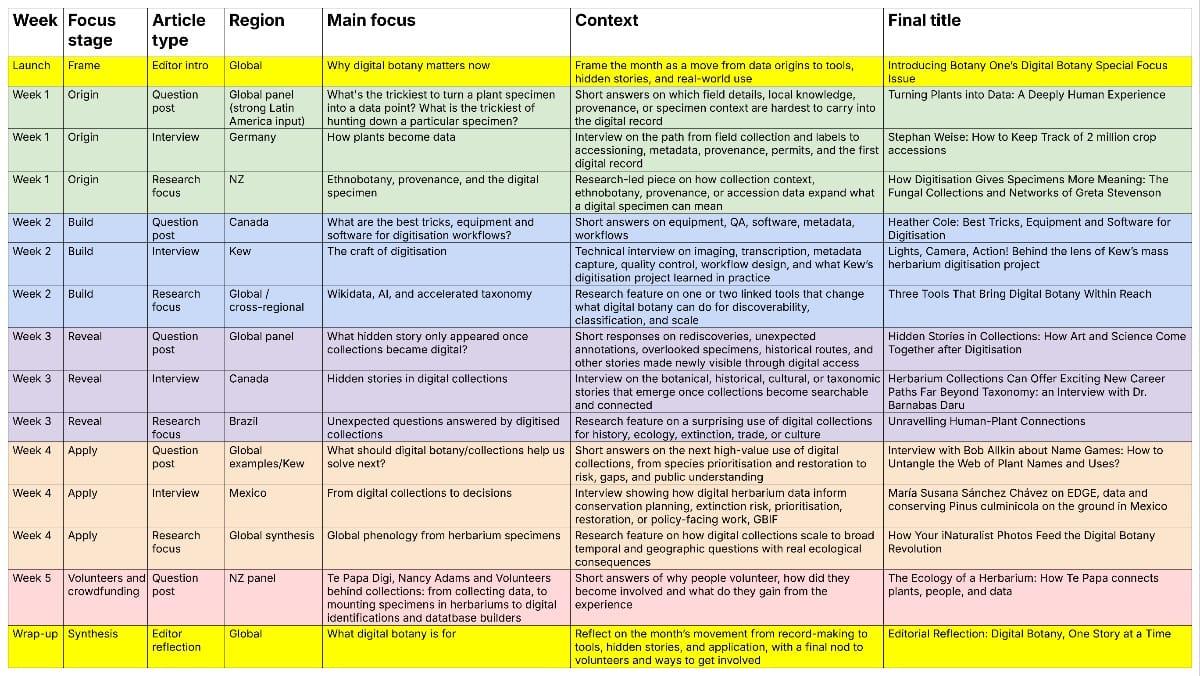
Because the issue has covered so many behind-the-scenes stories, it feels right to show a little of our own. Before the SOTWPF report was published, we had already built a rough structure around four stages: Origin, Build, Reveal and Apply. The spreadsheet looked neat. The process, as always, was more human.
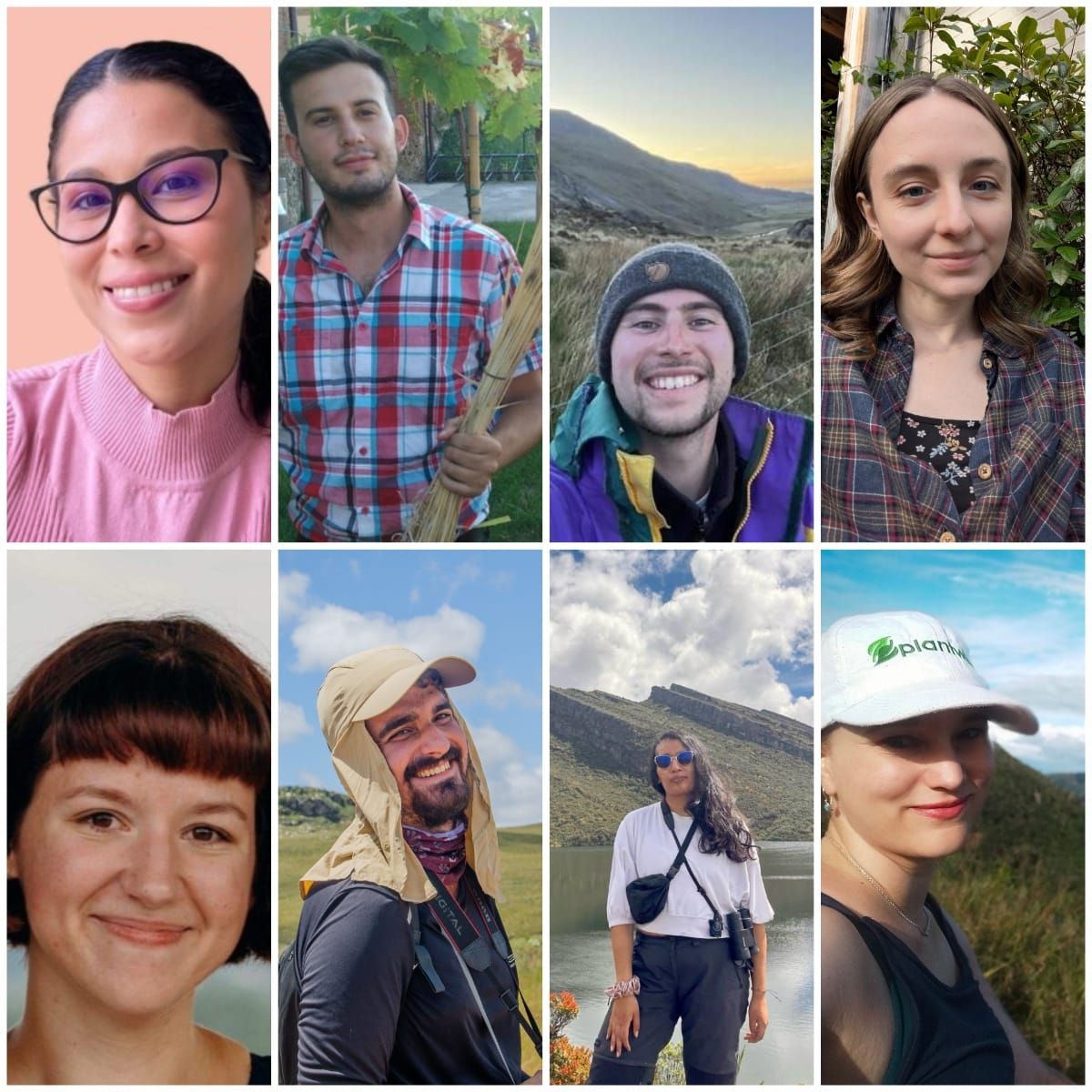
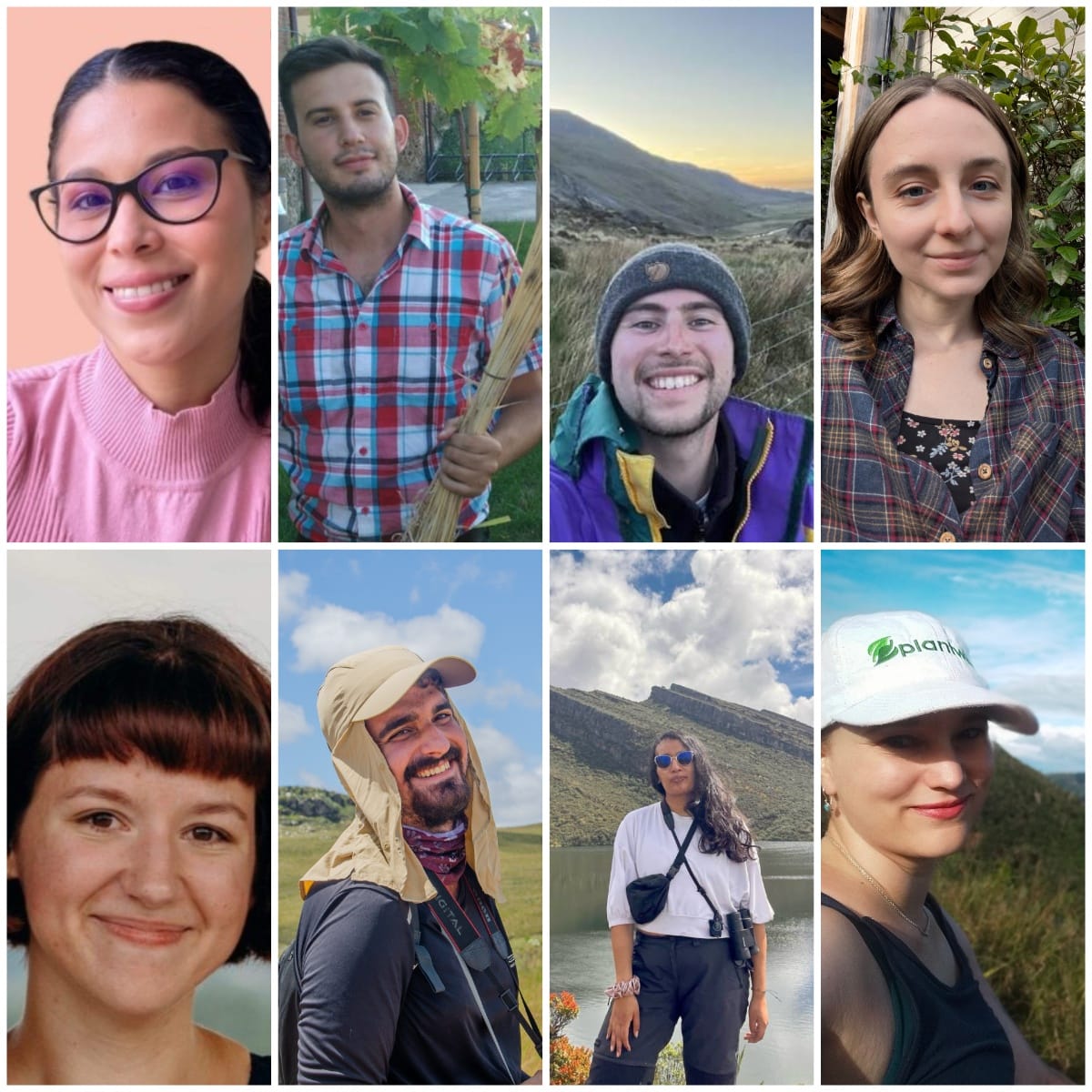
I was ever so lucky to work with eight brilliant writers. For many, this was their first time writing a blog article, interviewing someone, or turning a technical topic into a public-facing story. That is not easy work. It means asking useful questions, listening carefully, following up, cutting kindly, fact-checking, finding images, sorting licences, fixing captions and sometimes spending far too long deciding whether one sentence is accurate enough.
I loved watching rough ideas turn into stories. I loved seeing writers find their confidence. I loved the rabbit holes: copyright, public domain images, Latin names, specimen numbers, ambiguous common names, slightly-too-bold claims, conflicting statistics and image captions that needed one more check. Those details can feel small, but they are part of what makes science communication trustworthy. Our articles became a tad long because we did not have the heart to cut down our stories.
Good science writing is not just explaining results. It is also respecting the people, evidence and histories behind them. We all care deeply about our interviewees.
The small infrastructure of trustworthy stories
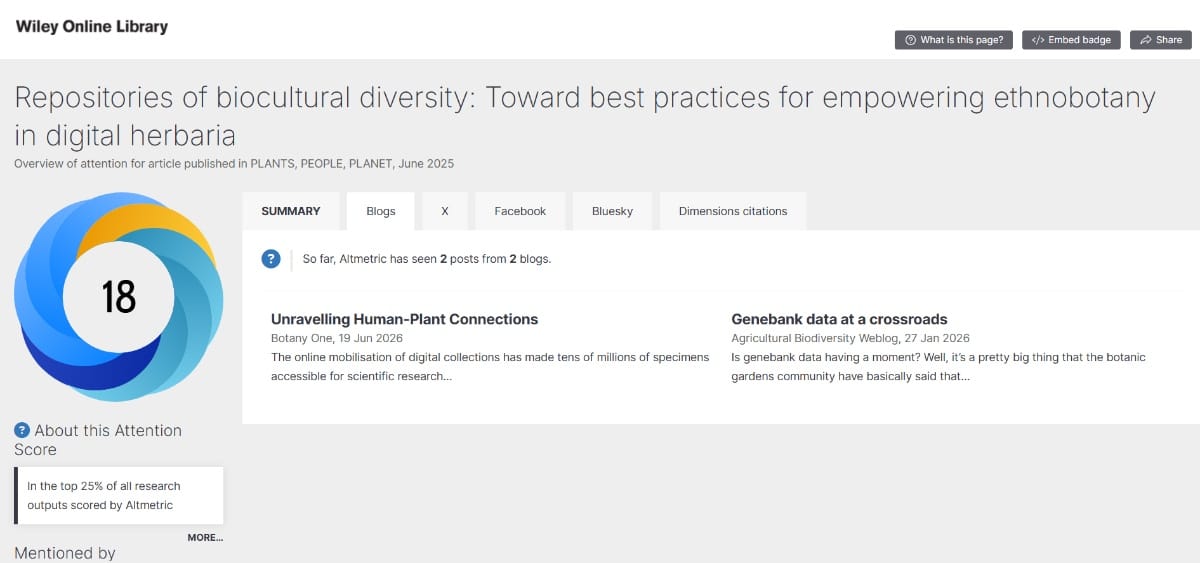
This issue also reminded me how much science communication depends on infrastructure that readers may never notice. At Botany One, references in the “Read More” section use Cite Them Right; researchers can be linked through ORCID; and blogs can be tracked through tools such as Altmetric.
Altmetric in particular, give researchers a practical way to see how scientific articles travel after publication. It tracks online attention around research outputs by matching identifiers such as DOIs to mentions in sources including news outlets, blogs, policy documents, patents, Wikipedia, reference managers and social media. The Altmetric Attention Score (AAS) then summarises this attention as a weighted indicator, not as a measure of research quality.
For example, AAS showed that conservation research and public attention can be biased towards charismatic mammals, while plants, reptiles and amphibians received lower attention. These metrics also change as researchers move across digital platforms. For example, there was a sharp rise in Bluesky mentions of scientific papers after the 2024 US election, reminding us that outreach data reflect not only research interest, but also where scientific communities choose to gather online.
We also try to use DOIs for adding hyperlinks where possible, so readers will (hopefully) always be sent to the right article even if a journal webpage changes.
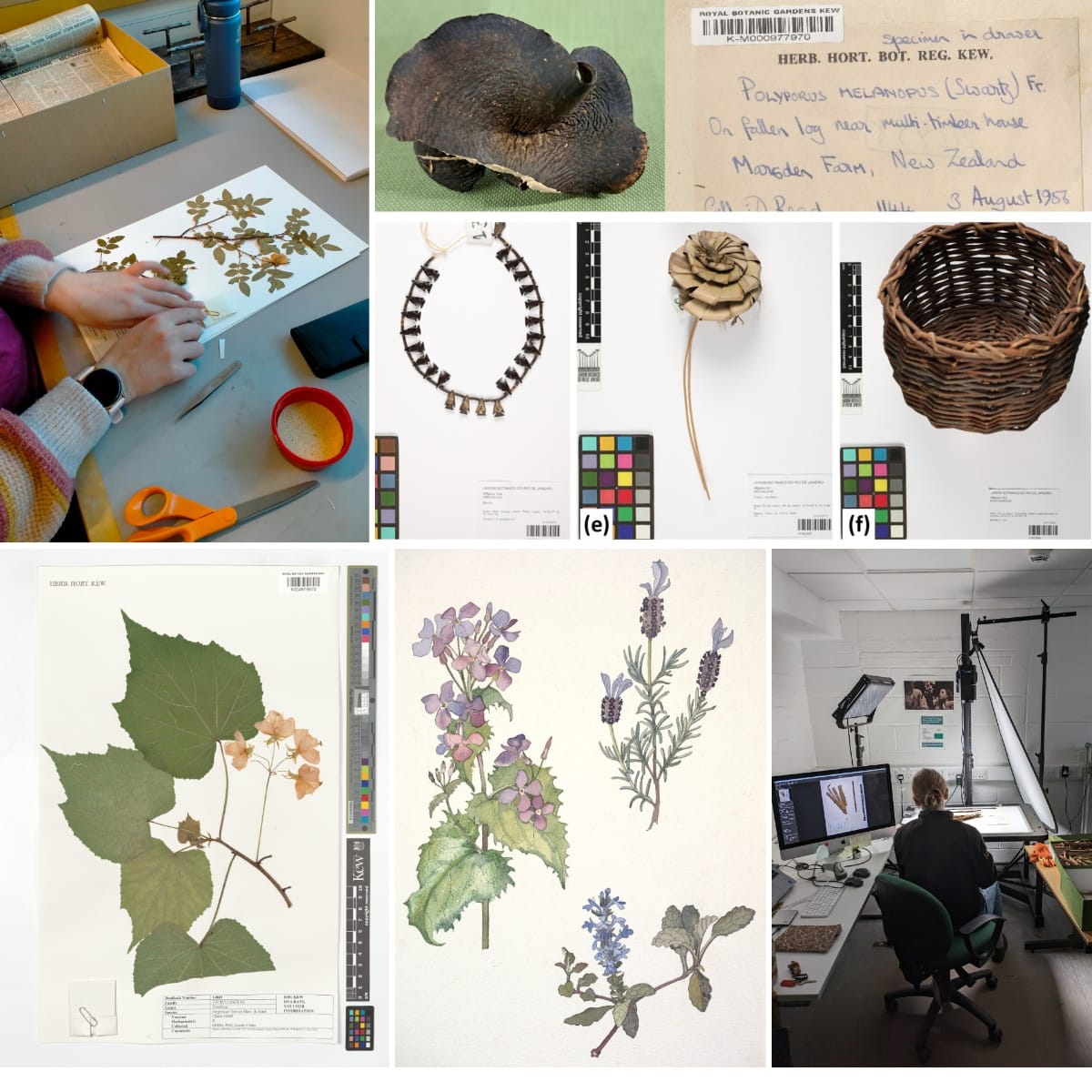
Images were another lesson for our new writers. Openly licensed portals such as Wikimedia Commons, Flickr, Te Papa’s Collections Online and iNaturalist make it possible to bring stories alive with images we are allowed to use. But using them properly still takes time: checking licences, naming creators, and linking sources.
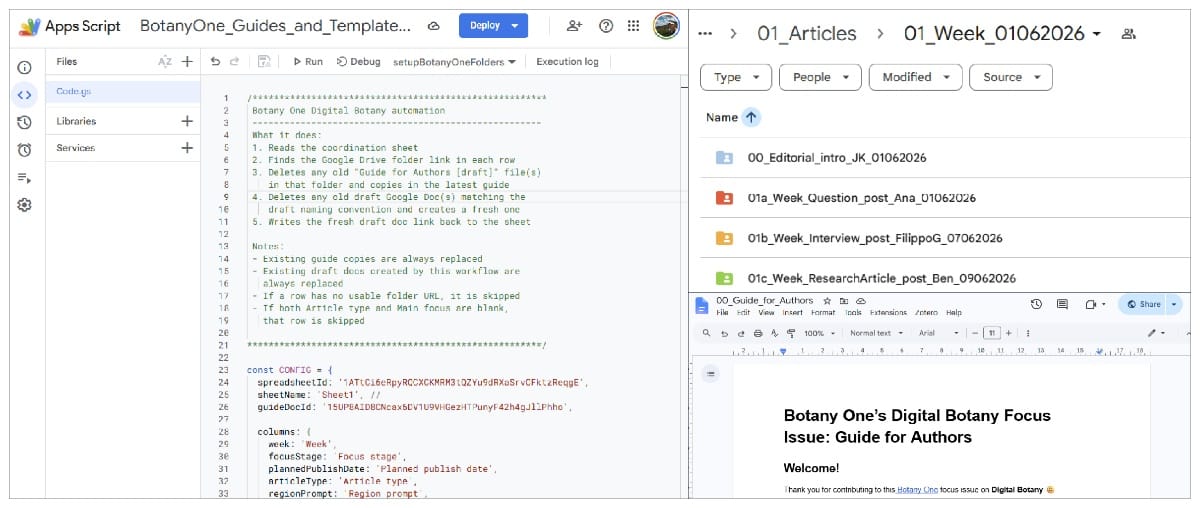
Even the coordination had its own small automation story. Our Google Drive folders and draft documents were prepared with help from Google Apps Script, which quietly turned a spreadsheet into a working editorial system, making sure everyone had access to their own workspaces but shared resources.
What we still need to talk about
This issue could have gone on for months.
We tried to include different regions, disciplines, and perspectives, but many stories are still missing. We should have covered more work from Africa, Asia, Australia, the Pacific, and Latin America, as well as local institutions that rarely get the spotlight.
We also need to keep talking honestly about the histories behind collections. Herbaria, fungaria, museums, seed banks and archives are extraordinary scientific resources. They are also tied to colonialism, extraction, unequal access, elitism and the movement of specimens away from the places and people they came from. Digitisation does not undo that. Sometimes it makes those histories more visible. Sometimes it creates new risks, especially when sensitive locations, traditional knowledge or culturally important information are shared without enough thought.
So the future cannot simply be ‘digitise everything and put it online’.
The next challenge is more complex: to build practical digital platforms with the right data, the right people and the right workflows, so plant knowledge can flow both ways — from collections into real-world decisions, and from people, places and communities back into better science.
More data will not automatically lead to better decisions. A million records with unclear names, missing coordinates, inaccessible formats, duplicated effort or poorly documented workflows can still leave people stuck. Worse, data extracted from places, communities and collections can become another one-way system: knowledge flows out, but too little comes back to the people and landscapes it came from. As Bob Allkin pointed out, plant information is only useful if people outside botany can find it, understand it and apply it safely.
That is where we need to get out of our own little boxes. Different taxonomies, metadata standards, databases, licences, vocabularies and software systems may make sense to the people who built them, but they can become barriers to everyone else. Non-reproducible workflows, inaccessible records and poorly connected platforms slow down the very work digitisation is meant to support.
The point is not to make one perfect system that solves everything. It is to build better bridges: between global platforms and local collections, between scientific names and common uses, between specimens and decisions, between data managers and field teams, between institutions and communities.
Digital botany will matter most when records do not simply accumulate in databases, but help people make better decisions about plants, fungi, collections and the landscapes they come from.
Final takeaways
For scientists: we see you and celebrate you. There is an amazing community out here that wants to know about your experiences and the lessons you have learnt. Please do not work in silos. Share methods. Share mistakes. Share data carefully and responsibly. Think big: look at what the SOTWPF report shows hundreds of scientists can pull together. It can get even bigger.
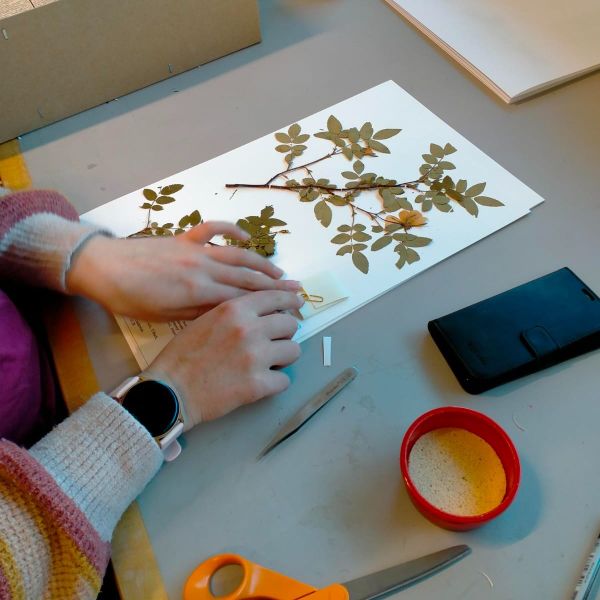
For citizen scientists and volunteers: your work matters more than you might imagine. A plant photograph on a walk, a transcribed label, a mounted specimen, a corrected identification or a morning spent helping in a herbarium can become part of a much larger evidence base. It may feel small at the time. It is not.
For data people, software engineers and developers: your background work makes digital botany possible. Databases, identifiers, interfaces, APIs, exports, scripts, standards and documentation shape what future researchers can find, trust and use. You may feel as though you are “just” working behind the scenes with your own maze of abbreviations and technical terms. Thank you for your patience with the perhaps sometimes head-in-the-cloud scientists, you deserve all the coffee and cakes.
For artists and designers: thank you for extending the reach of plant knowledge. Art, illustration, maps, exhibitions and visual storytelling help people notice, understand and care. We need your help to communicate the value of botanical knowledge, data and collections creatively.
For journalists and science communicators: please keep telling these stories. Visit herbaria, botanic gardens, museums, libraries and archives. Talk to the people behind the collections. Ask about the fun memories and the awkward details. Quote people carefully. Read the papers properly. Make the wonderful behind-the-scenes people feel seen. That is often where the best story begins.
And for everyone: please go and look at the world around you. Visit a herbarium, botanic garden, museum, library or archive, online or in person. Take the plant photograph. Read the label. Ask who collected the specimen and where it came from. Volunteer if you can. Use iNaturalist. Support local collections. Follow the State of the World’s Plants and Fungi Symposium. Share the stories that make plants and fungi visible.
I have to admit, I wanted to call this article “Digital Botany: Plants, People, Planet”, but the wonderful journal Plants, People, Planet got there first. That feels fitting. So many of the publications we covered sit in that interdisciplinary space, showing why we need journals, blogs and public platforms that make room for work across data, collections, people and place.
The digital biodiversity revolution is not only about data. It is about people documenting, connecting and protecting our little planet. Thank you so much for reading, “dearest gentle reader”!
READ MORE:
Prokop, P., Masarovič, R., Hajdúchová, S., Ježová, Z., Zvaríková, M., and Fedor, P. (2022) Prioritisation of Charismatic Animals in Major Conservation Journals Measured by the Altmetric Attention Score. Sustainability, 14(24), pp. 17029. Available at: https://doi.org/10.3390/su142417029.
Arroyo-Machado, W., Robinson-Garcia, N., and Torres-Salinas, D. (2025) Are there stars in Bluesky? A comparative exploratory analysis of altmetric mentions between X and Bluesky. Journal of Informetrics, 19(3), pp. 101700. Available at: https://doi.org/10.1016/j.joi.2025.101700.