
This week brings us to the heights of ... a season. Whether it be summer or winter in your part of the world, a columnist in Nature this week reminds us that science happens globally. Indeed, this is especially true for botany. Currently, one part of the world is experiencing the peaks of summer, and another is getting ready for spring, and the plants are displaying their foliage, blossoms and seeds according to their nature. In the spirit of global botany, I'd like to invite you to try our Hot Botany tool, where you can learn which plants are blooming near you, wherever you are, or travel digitally to somewhere new. In the meantime, we will try our best to tell stories from a global lens, no matter the season.
There'll be another email sharing what we've posted as well as the stories you're sharing on Mastodon and Bluesky, and career postings at the usual time next week.
Until then, take care,
Sarah (webmaster@botany.one)
On Botany One
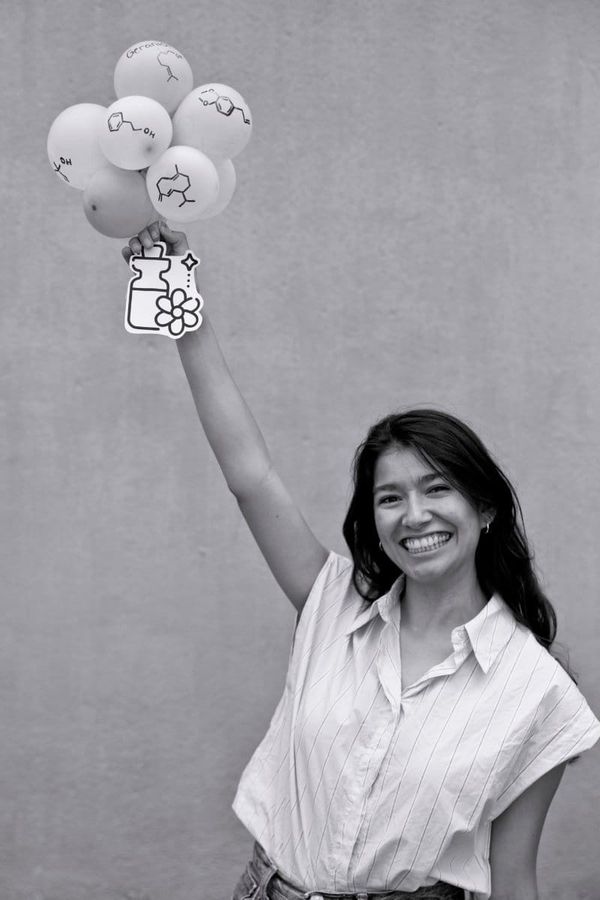
When the Fragrance of Flowers Changes: How Global Warming Can Affect Communication Between Plants and Pollinators
Global warming could interfere with the scents that guide pollinators to flowers, threatening ecological interactions long before species disappear.
Ancient Tropical Mountaintop Plants Bet Big to Attract Pollinators
By tracking 13 species in mountain grasslands, researchers reveal how ancient Vellozia plants synchronise blooms and rely on pollinators to produce viable seeds.
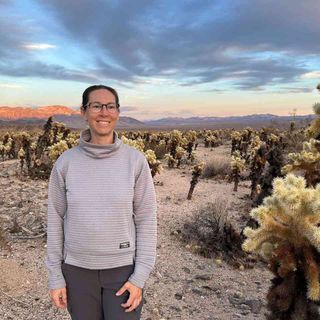
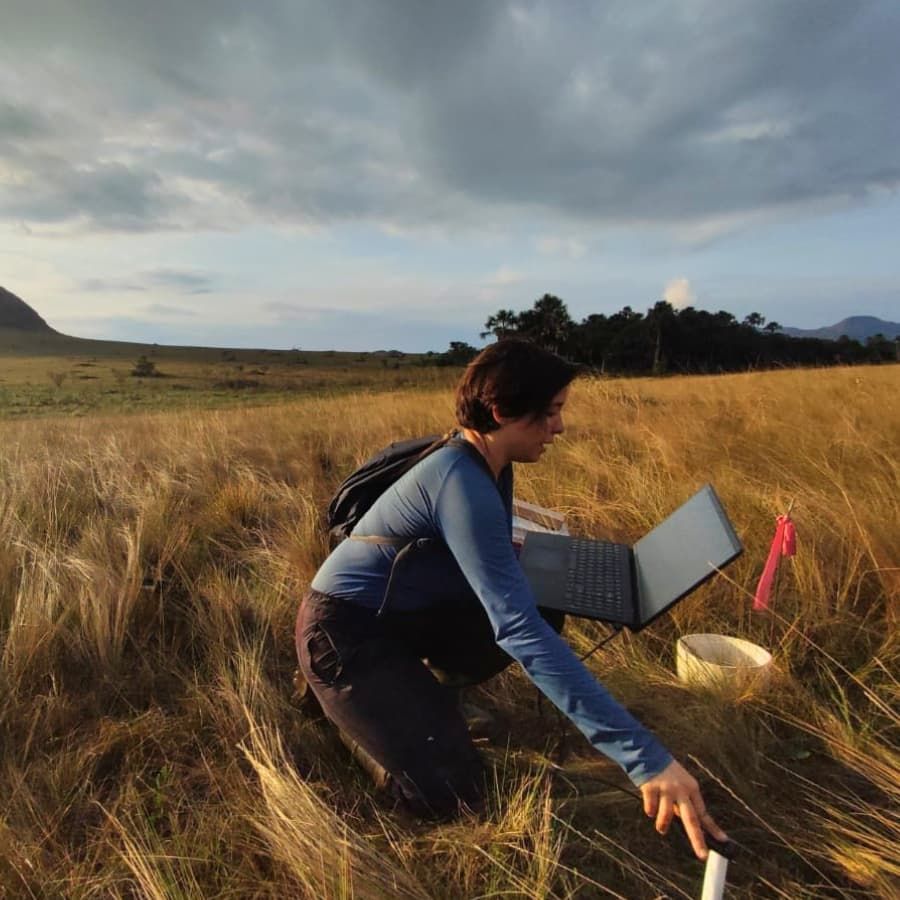
Larissa Verona: Where Water, Plants and Carbon Meet
Botany One interviews Larissa Verona, an ecosystem ecologist exploring how Cerrado wetlands connect vegetation, water and the global carbon cycle.
Flowers That Please People May Also Please Pollinators
A study reveals that the flowers humans love may also be the favourites of bumblebees, but not of thrips.
Why Do Lemurs Always Return to the Same Tree?
A new study in Madagascar's Ranomafana National Park reveals that seventy percent of individual trees receive only a single visit from lemurs over a year and a half.
Navigating a Salty World: Environmental Conditions Drive Salinity Tolerance in Plants
Plants have evolved the ability to germinate in salty soils multiple times, in a case of convergent evolution.
There was also Science Shared, Sudoku Garden, and Monotropa uniflora was plant of the week. You can also see last week's Week in Botany too.
In AoBC Publications
- Special Issue: Plant Conservation Genetics
- Virtual Issue: Plant Reproductive Biology
- Untargeted metabolic analysis reveals intraspecific and organ-specific chemodiversity in Solanum dulcamara 🆓
News & Views
Season’s mis-greetings: why timing matters in global academia
Stop using ‘summer’, ‘winter’ and the rest when inviting researchers to events — it’s a small step, but it’s necessary and inclusive.
nature.com
Inspired by the Botanic Garden: Growing tropical plants at home
Head of Horticulture, Sally Petitt, shares her love of tropical plants and how you can grown them at home.
botanic.cam.ac.uk
Darwin Was Right: These Plants Are Carnivores
Small insects are easily trapped in the sticky glandular hairs of Saxifraga candelabrum.
nytimes.com
These 10 Aussie wildflowers have superpowers. Pick your favourite
Move over waratahs and banksias! These 10 flowers from the unsung understorey are not just pretty faces, they have surprising tricks up their sleeves.
abc.net.au
Science Shared
Three botany papers widely shared on Bluesky this past week were:
1. Maintenance of phenotypic divergence in two sympatric monkeyflowers with weak reproductive isolation
Arenas-Castro, H. et al. · bioRxiv · 1 post · 69 likes · 25 reposts on Bluesky
Sympatric species often exhibit permeable reproductive barriers, yet many of them coexist as phenotypically distinct entities. One way to account for this apparent paradox is that selection on loci that underlie divergent traits render them less likely to cross species boundaries. Chromosomal rearrangements can further help counterbalance the homogenizing effects of hybridization if they capture sets of locally adaptive alleles, suppressing recombination among them. Here, we extensively sequenced two young, co-occurring monkeyflower species, Mimulus glaucescens and M. guttatus , that exhibit minimal reproductive isolation and extensive gene flow, but nonetheless are phenotypically distinct.
Jenn Coughlan @jenncoughlan.bsky.social · on Bluesky
So proud of this manuscript- lead by the fantastic @henryarenas.bsky.social with two undergraduates (Cage Cochran and Quinn Evans) each doing a Herculean effort during their honors theses, and Hongfei Chen helping out tremendously with lab work.
www.biorxiv.org/content/10.6...
2. Pollen release during buzz pollination depends on vibration amplitude and floral vibration transmission, but not on spectral composition 💰
Vallejo-Marin, M., Magitteri, A., Jafferis, N. · Journal of Experimental Biology · 1 post · 54 likes · 15 reposts on Bluesky
Bees use vibrations across behavioural contexts, including a specialised foraging routine in which they vibrate flowers to release pollen (floral vibrations). Floral vibrations often have complex spectral properties, combining fundamental frequencies and their harmonics, yet their functional consequences remain unknown. We experimentally replicated bee buzzes with identical fundamental frequency (300 Hz) but different harmonic content (0, 2, or 4 harmonics) to determine their effect on pollen release, a key functional outcome for both the bee and the flower.
Mario Vallejo-Marin @nicrodemo.bsky.social · on Bluesky
Did you know that bee buzzes on flowers are rich in harmonics? We investigated how harmonics, which give musical instruments their unique sounds, affect buzz pollination. Very happy to see this paper published @jexpbiol.bsky.social Thanks @hfspo.bsky.social for the support! doi.org/10.1242/jeb....
 View on Bluesky →
3. Fijiyama: a registration tool for 3D multimodal time-lapse imaging
Fernandez, R., Moisy, C. · Bioinformatics · 3 posts · 28 likes · 5 reposts on Bluesky
Fijiyama, a Fiji plugin built upon biomedical registration algorithms, is aimed at non-specialists to facilitate automatic alignment of 3D images acquired either at successive times and/or with different imaging systems. Its versatility was assessed on four case studies combining multimodal and time series data, spanning from micro to macro scales. Availability and implementation Fijiyama is an open source software (GPL license) implemented in Java.
Cédric Moisy @cedric-moisy.bsky.social · on Bluesky
2/3 – 🌱 Nature doesn't have a pause button...
Fortunately, Fijiyama does the next best thing: it aligns 3D scans over time so scientists can follow the same tissues as plants grow. 👀
A time-lapse — in 3D. 🔬🌱🍇
🔗 doi.org/10.1093/bioi...
🔗 doi.org/10.1016/j.pl...
#Science #Time #Fiji #3D #SMIYC
 View on Bluesky →
You can see the full list with more details at Science Shared: August 8.
Careers on Bluesky
Please note these are not jobs I am offering. Nor can I help you with any visa requirements. At time of writing there are around 117 other jobs posted at Botany One.
Postdoctoral researcher for dynamic vegetation modeling and satellite-based fire analysis // Leiden University
careers.universiteitleiden.nl/job/Postdoct...
You will quantify fire dynamics and its impacts on vegetation and climate at regional scales
PhD position in modeling the mechanical regulation of plant development and regeneration // Leiden
careers.universiteitleiden.nl/job/PhD-posi...
The opening is within the field of mathematical or theoretical biology, computational physics, applied mathematics or computational science.
PhD: Plant tissue lifespans // Western Sydney University
www.findaphd.com/phds/project...
You will investigate how variation in tissue lifespans shapes whole-plant strategies and ultimately scales up to ecosystem processes such as carbon storage.
John Otto Haas Molecular Ecologist // University of Pennsylvania
www.bgci.org/job/john-ott...
The John Otto Haas Molecular Ecologist will conduct research at Morris Arboretum & Gardens with a focus on techniques that integrate fieldwork and herbarium collections.
Cover Image: Larissa Verona doing fieldwork. Photo by Guilherme Alencar.