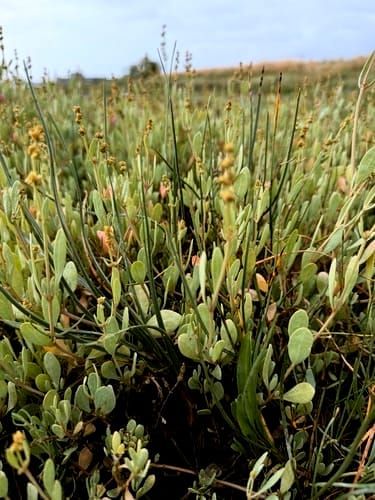

Most people associate global climate change with increased temperature, such as the heat waves in Europe this summer, but that’s not the whole story. Soils are also getting saltier – and this can affect germination rates globally.
“One of the growing concerns linking climate change to biodiversity conservation and agricultural production is the increasing soil salinity in many regions worldwide, caused by factors such as saltwater intrusion, rising water tables, and unsustainable water reuse practices,” write Maleki and colleagues in their paper published in Annals of Botany.
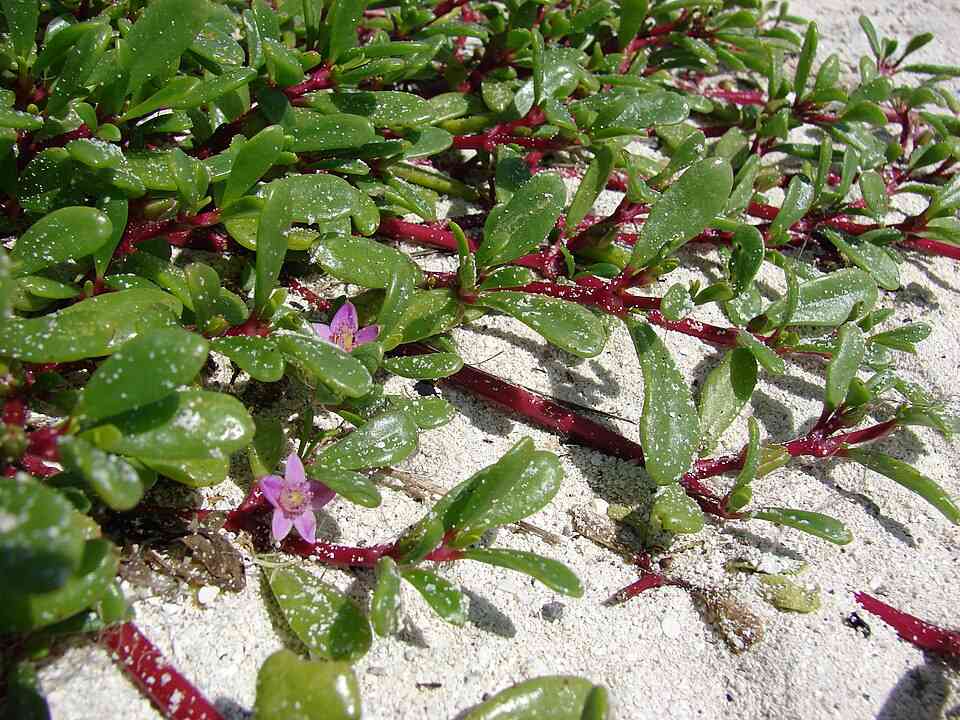
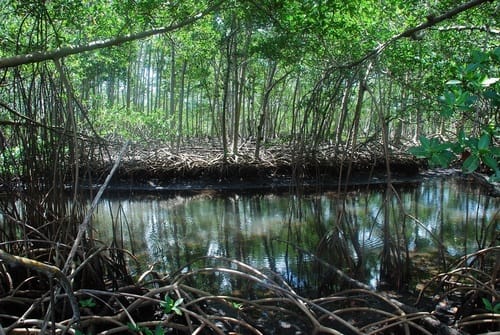
These salty areas, such as deserts, coastal marshes and mangroves, often experience high temperature along with high salt, which can exacerbate the effects of salt on a germinating seed. These selective pressures have resulted in diverse coping strategies that provide varying degrees of salt tolerance to plant species native to these areas.
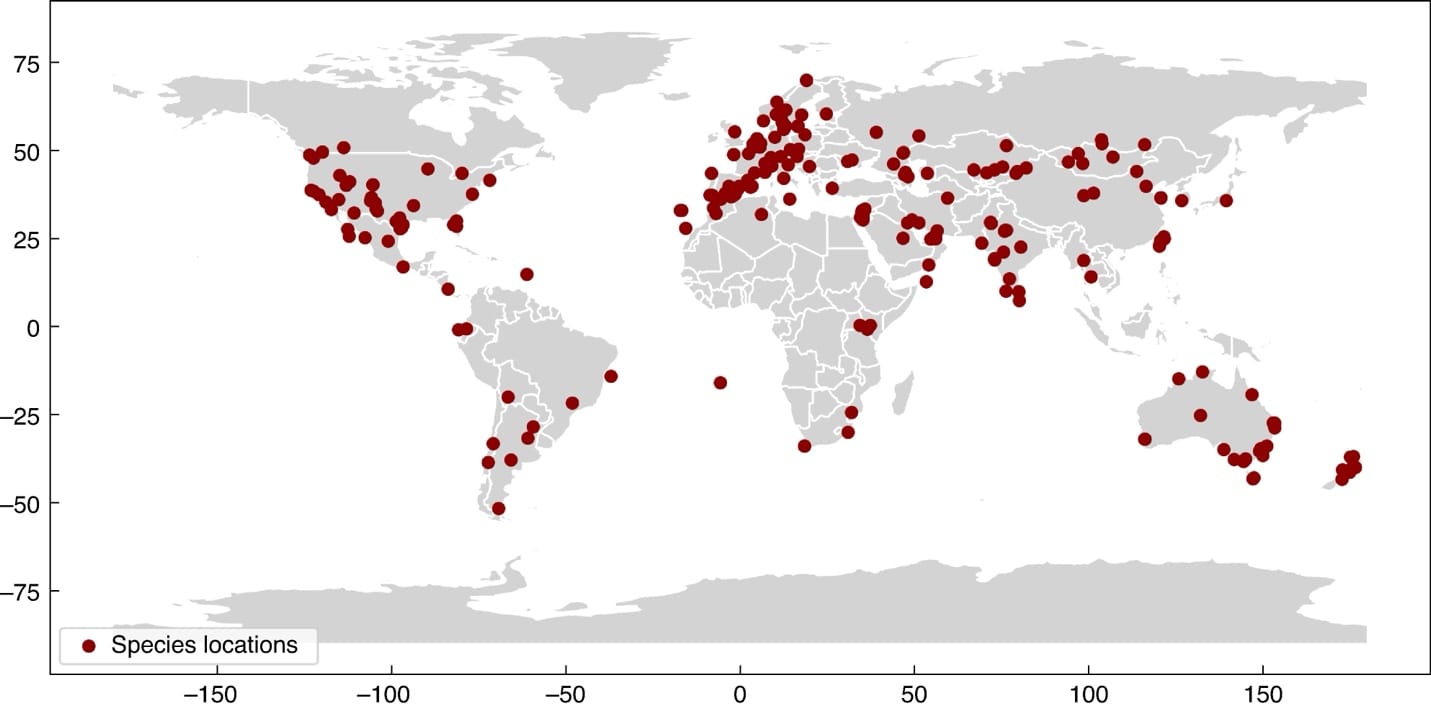
In their paper, Maleki and colleagues set out to better understand how plants in these harsh environmental conditions adapt their seeds for successful germination. Using available literature, the scientists compiled data on seed germination along salinity gradients from 327 species in 70 families around the world. They extracted data on seed mass, shape, coat, thickness, width and embryo size, as available, to determine whether these traits are linked to germination rates. They also collected data on plant type (tree, shrub or herb; annual or perennial) and assigned a biome habitat to each species. Trends in the data were then analyzed to find any connections to evolutionary history (phylogeny) or growth environment (ecological niche).
Based on their data, Maleki and colleagues identified three distinct germination types: “hypersensitive” species, which have limited salt tolerance and lose their ability to germinate as salinity increases; “salt-tolerant” species, which can germinate in a variety of high salinity environments; and salt-tolerant species “with an alternative response”, which are able to germinate in environments that have fluctuating salinity levels.
When they looked at the influence of evolutionary history, the scientists found that salt tolerance evolved multiple times within plant families, representing a case of convergent evolution. They note that other researchers have also found that salt tolerance has independently evolved in many lineages, and that it did so relatively recently.
“One reason for this pattern could be adaptive divergence, where species adapt to local conditions that vary significantly across their range,” suggest Maleki and colleagues.
However, the data did not support other established findings. According to Maleki and colleagues, plant species growing in salty soils are known to have large seeds, resulting in the working hypothesis in the literature that large seeds somehow confer an advantage for germination in these environments. But, their data show the opposite: larger seed species have lower salinity tolerance when germinating.
Additionally, the researchers did not find a correlation between salinity tolerance and plant life span (annual or perennial). As for growth form (e.g. tree, shrub, herb) and habitat, they found complex variation in salt tolerance, while evolutionary history (phylogeny) had limited impact, indicating salt tolerance likely evolved “multiple times in response to local environmental pressures”.
The idea that salinity tolerance is a “labile” adaptive trait that can evolve in response to the environment is encouraging. It suggests that plant species exposed to higher soil salinity due to climate change may be able to respond and adapt to this environmental pressure.
READ THE ARTICLE: Maleki, K., Vandelook, F., Maleki, K., and Soltani, E.(2025) The role of ecological niche and seed mass in macroevolution of germination tolerance to salinity. Annals of Botany, 137(2), pp. 499-516. Available at: https://doi.org/10.1093/aob/mcaf199.
READ MORE: de Ocampo, M., Tam, B., Egdane, J., Chebotarov, D., Doi, K., Yamauchi, A., Ismail, A., Henry, A., and Mitsuya, S.(2024) Leaf Na+ effects and multi-trait GWAS point to salt exclusion as the key mechanism for reproductive stage salinity tolerance in rice. Annals of Botany, 135(5), pp. 949-962. Available at: https://doi.org/10.1093/aob/mcae227.
Liu, X., Elzenga, J., Venema, J., and Tiedge, K.(2024) Thriving in a salty future: morpho-anatomical, physiological and molecular adaptations to salt stress in alfalfa (Medicago sativa L.) and other crops. Annals of Botany, 134(7), pp. 1113-1130. Available at: https://doi.org/10.1093/aob/mcae152.
Cover Photo: Atriplex portulacoides, a salt-tolerant species, growing on the Northumberland Coast, United Kingdom via iNaturalist / mcmillanteaghlach / CC BY-NC 4.0