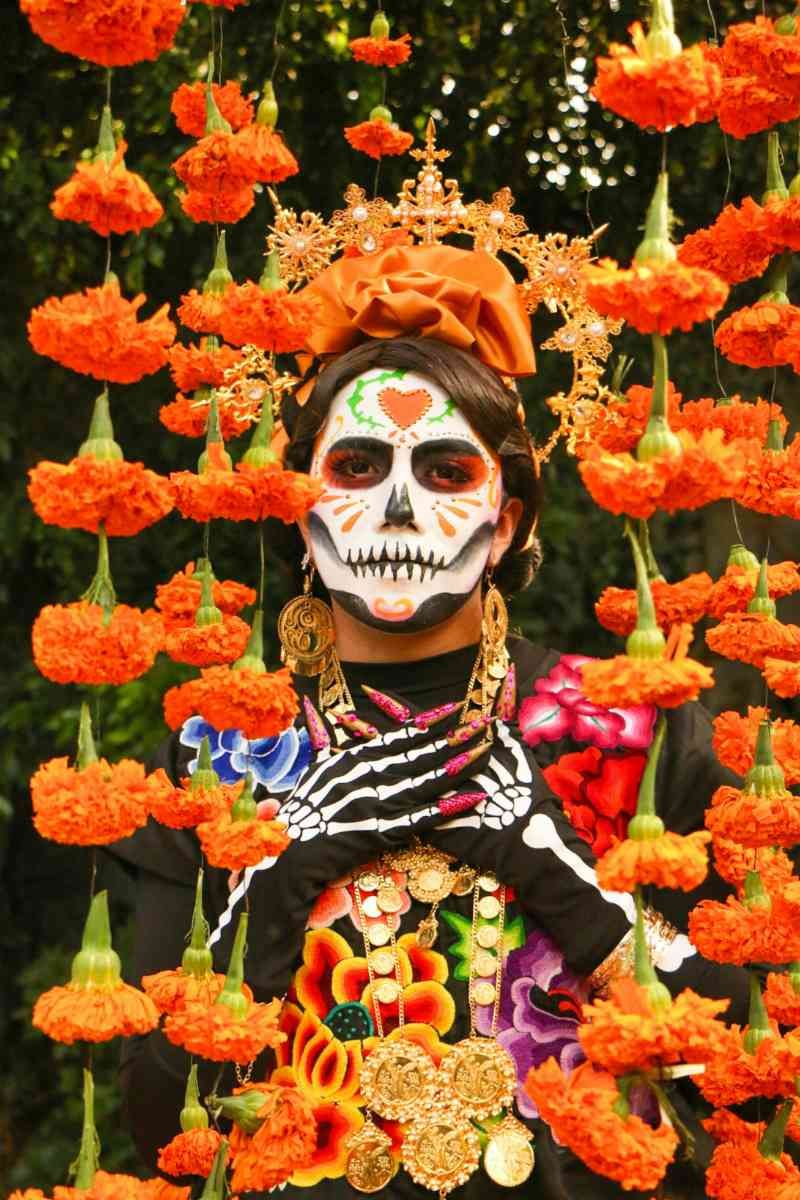

The Mexican marigold lies at the heart of Dia de los Muertos, a powerful celebration of the lives of the dead that occurs annually in Mexico on 1-2 November. On this ancient holiday, from the time of the Aztecs, the veil between the worlds thins and loved ones return to visit. Marigolds play a pivotal role in their return – the souls use the bright orange colour and musky scent from the leaves and stems as a bright and fragrant path to find their way home.
"In Mexico, we call the marigold cempasúchil, which comes from a Náhuatl word meaning "twenty flowers," shared Ana Valladares, one of our writers here at Botany One, who is from Mexico. "It is one of the many important symbols we use on the Día de los Muertos to decorate graves, altares and map out a glowing trail to welcome our loved ones back home. People are usually surprised by how we connect death with such bright, yellow-orange flowers, but for us, it’s all about duality. It reminds us that death is just a natural part of life's cycle, then you can’t have light -life- without obscurity -death. Its vibrant colors also act as a visual guide, basically lighting up the path so the souls don't get lost."
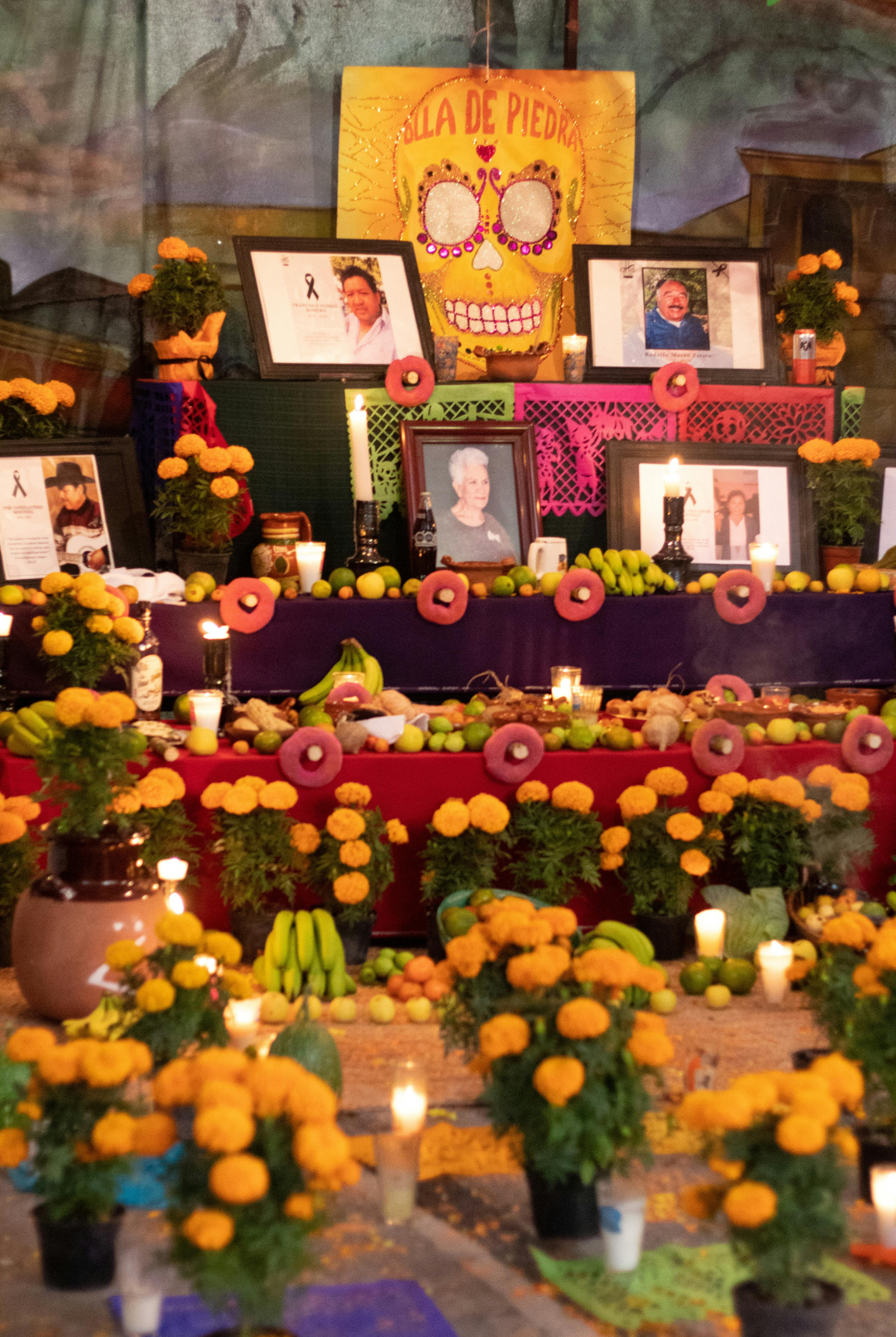
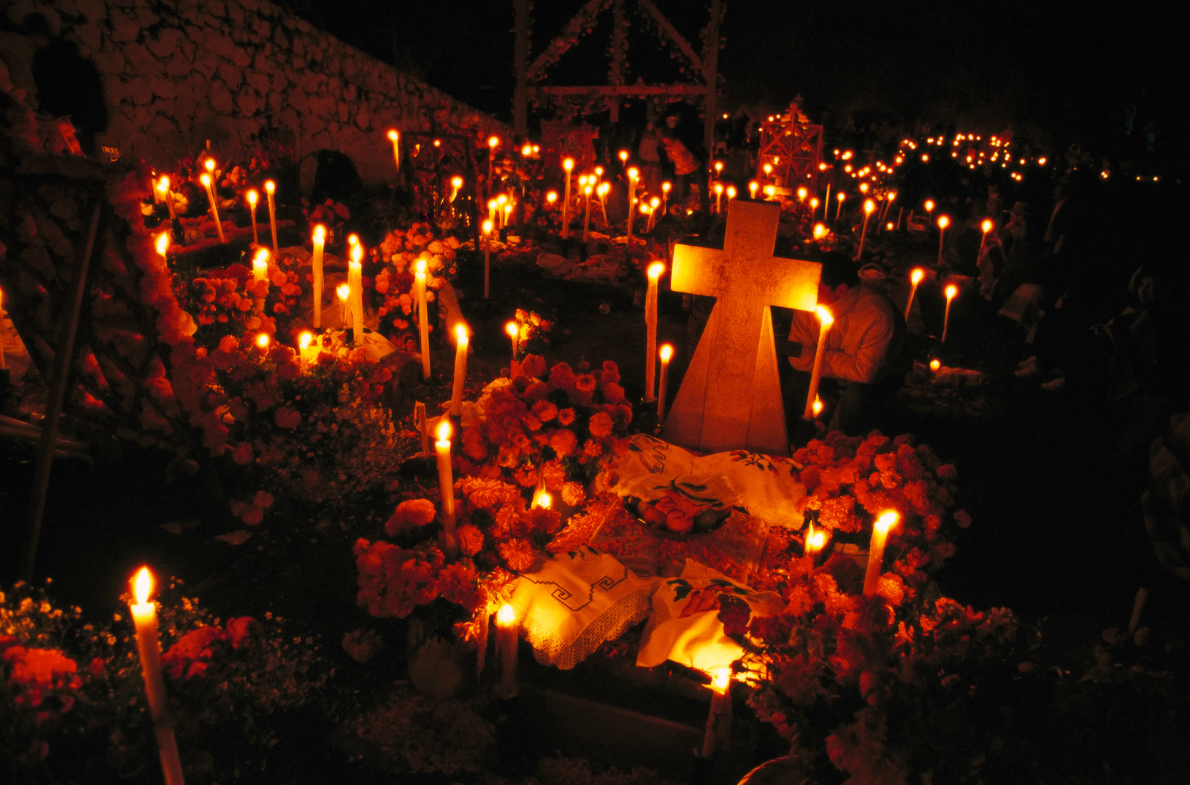
Left: A family alter to honour the dead (Image: Alberto Lara from Pexels via Canva); Right: A cemetery adorned with candles and marigold flowers (maogg from Getty Images Signature via Canva).
Mexican marigold has a long history of use. It was both foraged and cultivated by the Aztecs for ceremonial, decorative, and medicinal purposes. Today, its use in Dia de los Muertos connects people across time. The festival, with its deep roots in Aztec history, blends Aztec and Roman Catholic traditions. The Aztec goddess Mictecacihuatl, or the Lady of the Dead, allows the spirits to return to earth and visit their families, using the golden path of the marigold. At the same time, the traditions of All Saints Day, which is 1 November, are honoured.
All over Mexico, families set up altars, adorned with marigold garlands as well as photographs of the dead, candles, and the deceased's favourite foods and drink. Special skulls made of sugar, called calaveras, are also common. Additionally, families maintain and repair the graves of their loved ones, and decorate cemeteries with the flower. People also participate in a special type of poetry called calaveras literarias, in which they rhyme light-hearted verses to honour the dead.
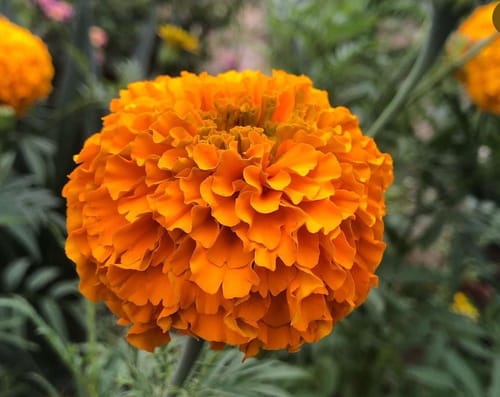
Given Mexican marigold's cultural importance, it isn't surprising that it is native to Central America. The plant reaches peak bloom at this time of year, with its showy flowers readily available for the festival. The plant produces many composite flowers composed of ray florets surrounding a central disc. Colour varies depending on their carotenoid and xanthophyll content, and may be yellow, orange, or red. Both flowers and stems are fragrant, with stems containing resin channels in the bark that release scent when crushed. The stems are used to weave garlands for the altares and cemeteries, and plucked petals are laid out in paths for souls to follow home.
Bridging past and present, light and dark, this beautiful flower connects loved ones during Dia de los Muertos, a celebration of remembrance.
LEARN MORE:
Cover picture by Anya Juárez Tenorio from Pexels via Canva.