
This week’s plant was an easy choice after reading two articles by Erika Alejandra Chaves-Díaz. One explores a medical innovation inspired by the way Drosera capensis captures its prey, while the other reveals how some insects manage to escape the sticky traps of Drosera species. After reading both, I couldn’t resist learning a little more about these fascinating carnivorous plants.
Drosera capensis, commonly known as the Cape sundew, is a carnivorous plant native to South Africa’s Cape region, where it grows in moist habitats such as marshes, streamsides and boggy areas. Its scientific history goes back to 1753, when Carl Linnaeus described it in Species Plantarum, the book that established the modern system of naming plants using two-part scientific names. Since then, this species has continued to attract scientific attention. It was the first sundew to have its genome sequenced and is known to produce several compounds with potential medicinal applications.

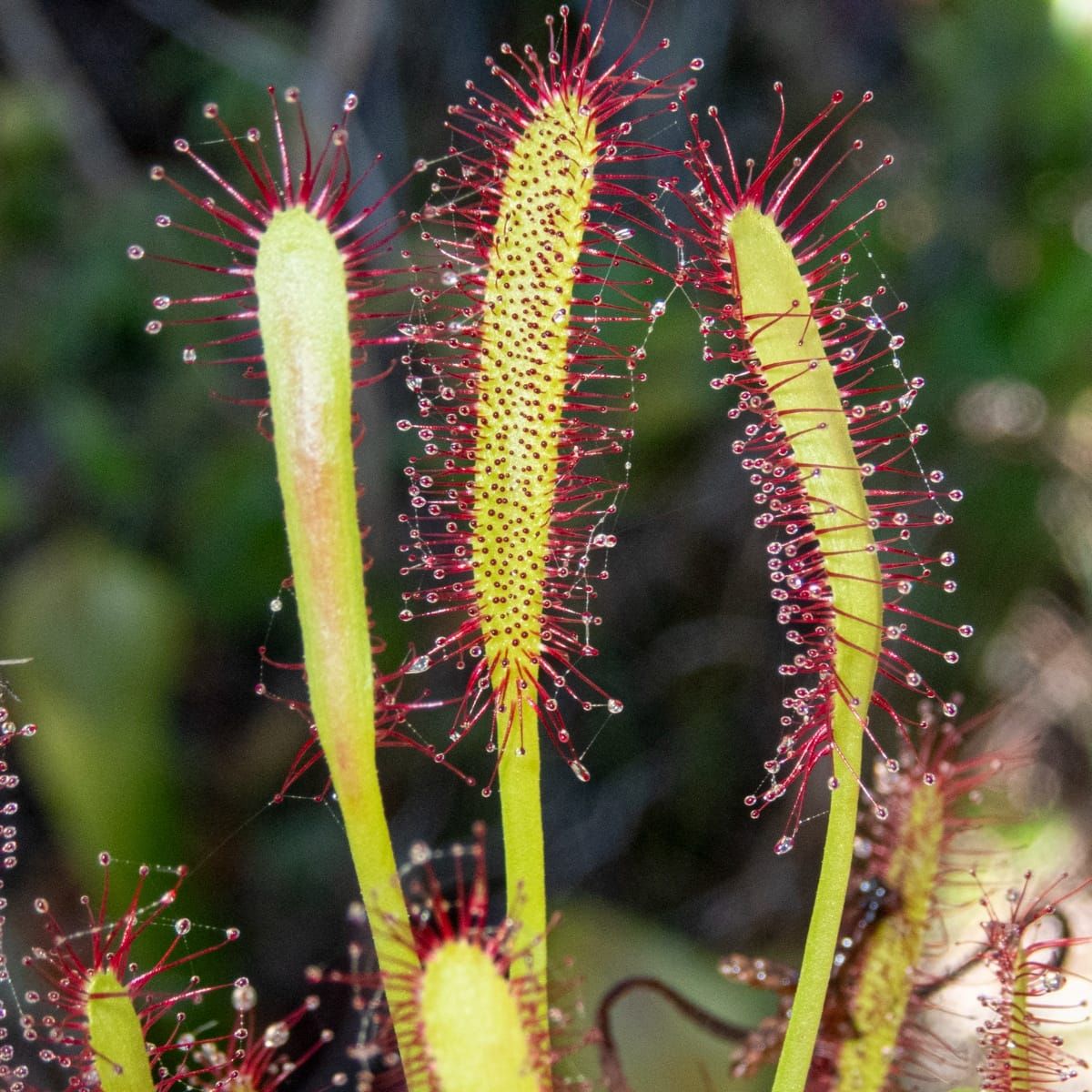
But what makes these plants so fascinating? Like other sundews, Drosera capensis has long, narrow leaves covered in tiny glandular hairs that produce glistening droplets of a sticky substance. When an unsuspecting insect comes into contact with these droplets, it can become trapped, triggering the leaf to slowly curl around its prey before releasing digestive enzymes to break it down.
Interestingly, this trapping mechanism fascinated Charles Darwin, who described it in his 1875 book Insectivorous Plants. Darwin observed that while contact with solid objects could cause the sticky tentacles of sundews to bend, falling water droplets did not trigger the same response. More than a century later, researchers studying Drosera capensis discovered that mechanical stimulation and chemical signals from prey activate electrical and hormonal responses that help the plant capture and digest insects. Water droplets, however, fail to activate these responses fully, preventing the plant from wasting energy reacting to every passing shower.
Time-lapse of Drosera capensis eating a mosquito. Total time elapsed is ~1 hour.
Interestingly, the same mechanism that makes Drosera capensis such an effective predator has inspired scientists to develop new medical technologies. As Erika explained in her article earlier this week, researchers have developed a patch with tiny structures that curl when exposed to body temperature, mimicking the movement of sundew leaves to help close wounds. Although this technology is still experimental, it is a remarkable example of how studying plants can inspire solutions to problems that seem completely unrelated to botany.
However, despite their sophisticated trapping mechanisms, sundews are not always successful hunters. Some insects have surprising ways of escaping their sticky leaves, challenging our idea of these plants as inescapable predators. Next week, Erika will introduce us to some of these remarkable escape artists and the strategies they use to avoid becoming a sundew's next meal. Hopefully, by then, you'll be just as fascinated by these little plants as I am!
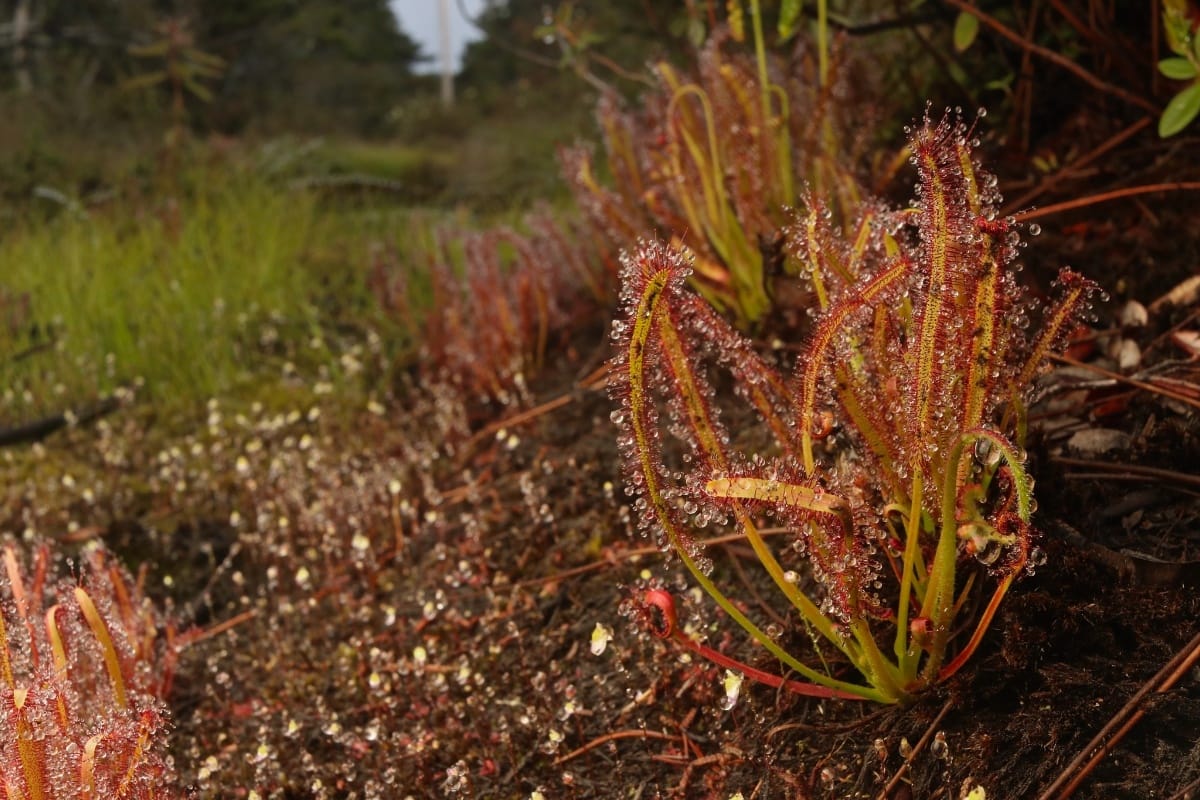
Cover picture by Don Loarie (iNaturalist, CC BY 4.0).