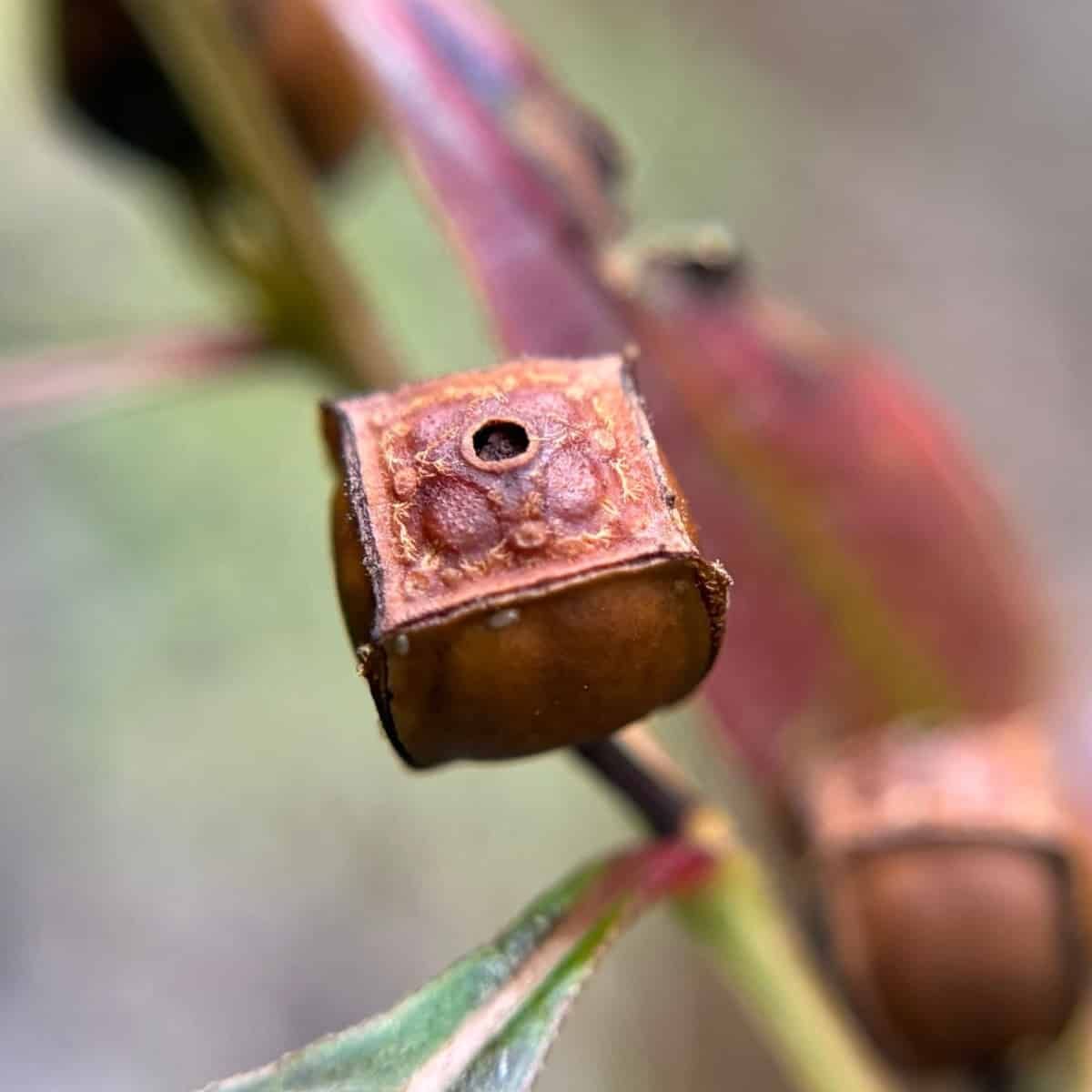

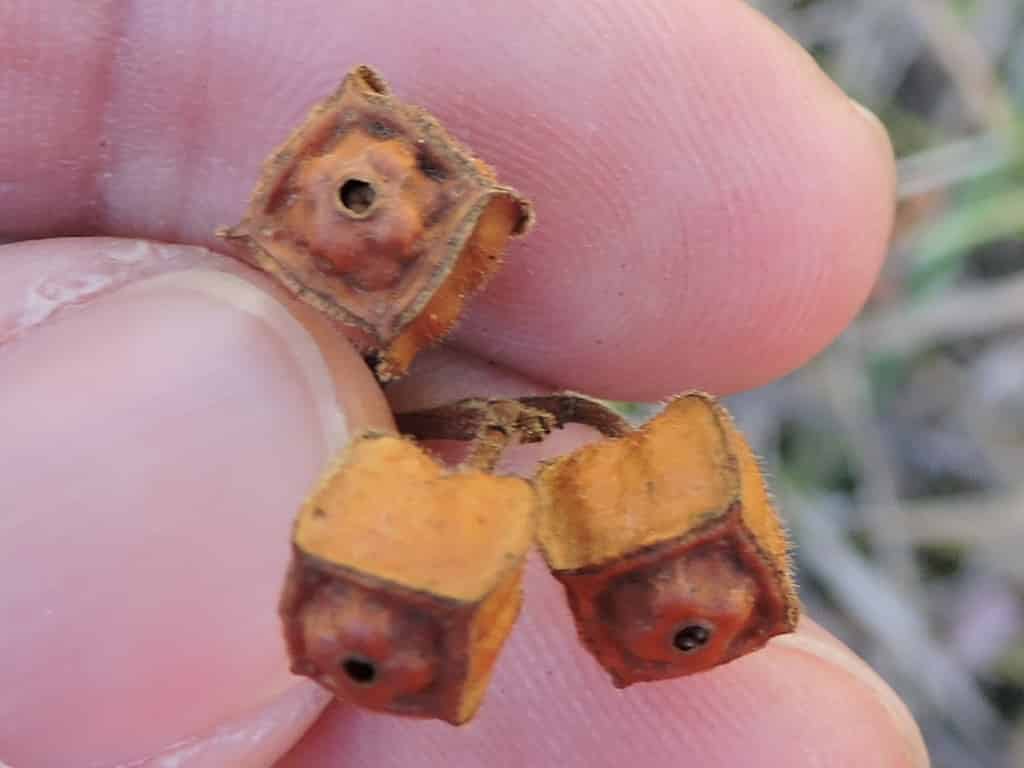
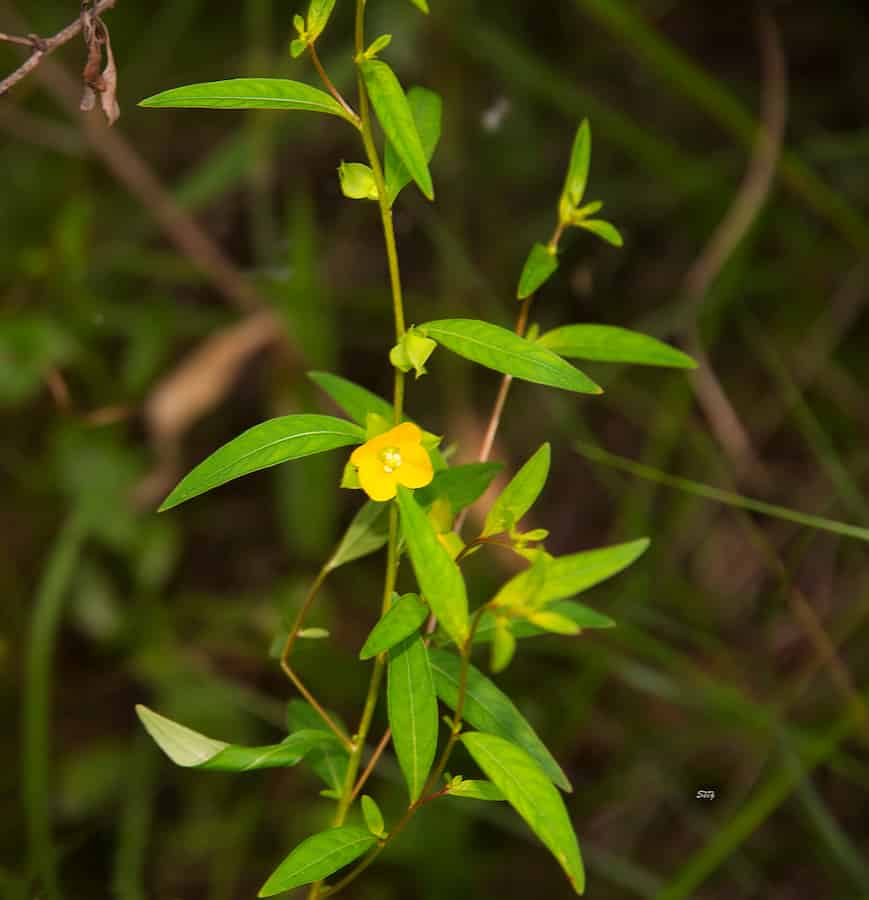
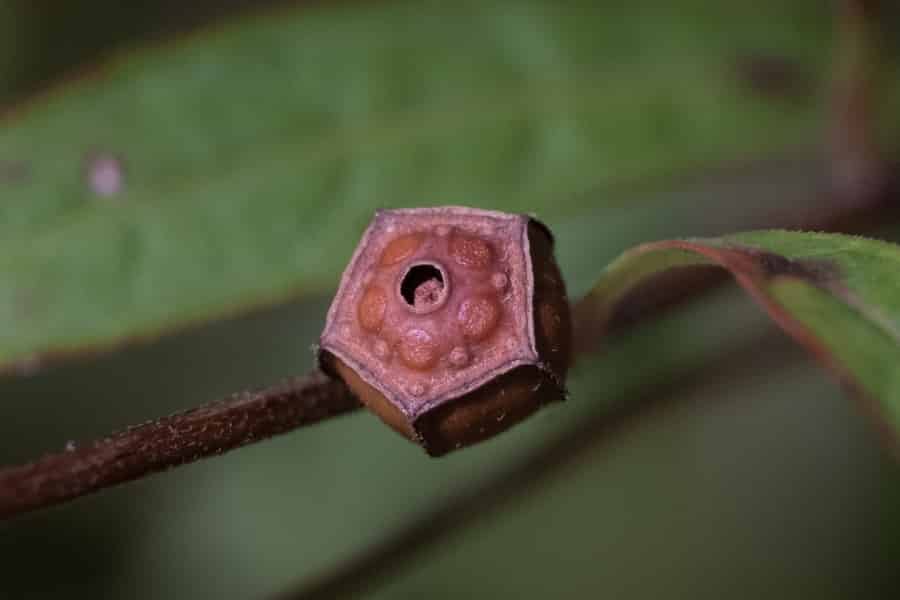
This week’s plant of the week is chosen because I saw a photo and has to check that it wasn’t an AI hallucination. Ludwigia alternifolia is a native of the eastern USA, but to my European eyes it looks odd, and extremely well-named. It’s common name is Seedbox, a name it shared with the more widely-spread Ludwigia hyssopifolia, and it comes from the fruits. They look tidy and compact, but its name hasn’t always been the same way.
Going back to Linnaeus’s Species Plantarum, it’s an example of how Linnaeus may not have been the first to describe a plant, but he was the first to name it with a binomial.
The description starts: 1. LUDVIGIA foliis alternis, lanceolatis. This being a Ludwigia (I don’t know how the v changed to w) with alternating lanceolate (wider towards the base rather than the middle) leaves. It might seem odd when you have such a distinctive fruit to name it after the leaf arrangement, but the name isn’t about identifying a Ludwigia, but telling two Ludwigias apart. The next plant in the list Ludwigia perennis, is identified by having opposite leaves, rather than alternating leaves.
Next in the description comes a list of citations to previous descriptions, with the plant names used in each one. This is an insight into the names that came before binomials.
Ludvigia capsulis cubicis apice perforatis. Hort. upsal. 30. is Linnaeus’s own description this translates as Ludwigia with cubic capsules, perforated at the apex. This is an example of a polynomial, as the whole description is the name. Hort. upsal. 30. refers to the book Hortus Upsaliensis, p. 30.
The next two authorities in the list call it Ludvigia capsulis subrotundis, Ludwigia with roundish capsules, so you can see how the multiple names could be confusing. One even calls it Lysimachia non papposa, flore luteo majore, siliqua caryophylloide minore, ex virginia (Non-pappose Lysimachia, with a larger yellow flower and a smaller clove-like pod, from Virginia). It’s not a Lysimachia, but even if it were, that would be a lot to write down to identify a plant.
These days you’ll find it across eastern North America from Ontario and Quebec in the north, to northern Florida and across the shores of the Gulf of Mexico to the Mexico / Texas border in the west. It’s observed year-round but June to October seems to be the most popular time to go looking for it.
Cover image: Ludwigia alternifolia by j-7dwj9xrt CC BY-NC