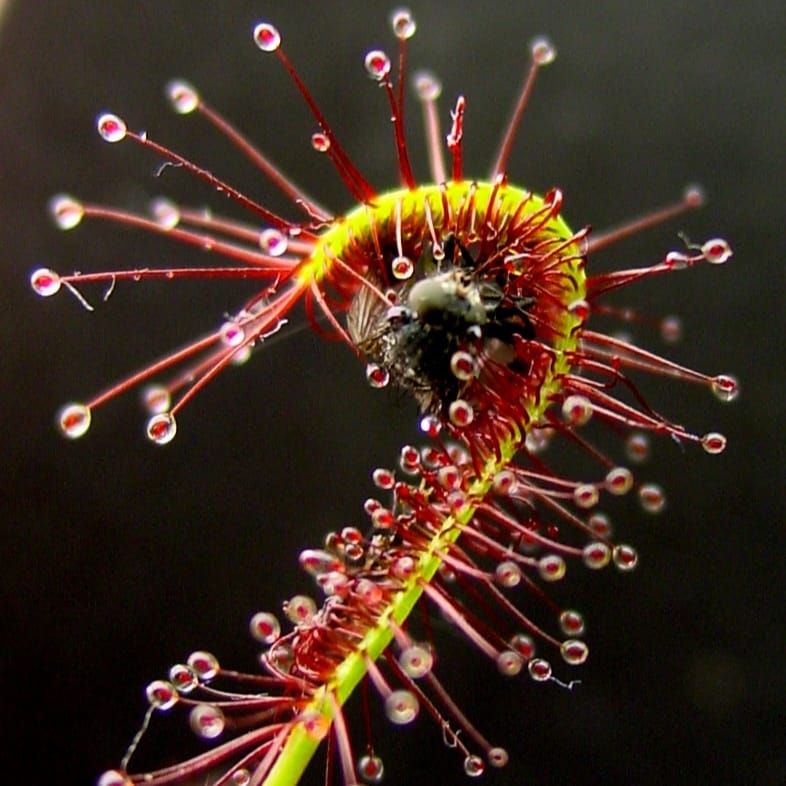

In nature, the embrace of the Cape sundew (Drosera capensis) is a death sentence for many insects. In a laboratory, that very coiling and grasping motion has become the ideal solution for wound closure in fragile tissue.
When facing deep cuts, incisional wounds, or lesions with delayed healing, conventional medicine typically relies on sutures, staples, or tissue adhesives. The problem is that sutures and staples inflict secondary tissue damage, create inconsistent tension, and provide potential entrance points for pathogens, while chemical adhesives lose efficacy on humid surfaces or irregular wound sites.
To overcome these limitations, a multidisciplinary team of scientists from South Korea, led by researchers at Hanyang University and the Korea Institute of Industrial Technology (KITECH), turned to bioinspired design. In a study published in the scientific journal Advanced Materials, the researchers integrated AI-guided 4D printing to fabricate a smart microneedle patch. This is 3D printing with the added dimension of time, allowing the patch to recapitulate, feature by feature, the hunting strategies of Drosera capensis.
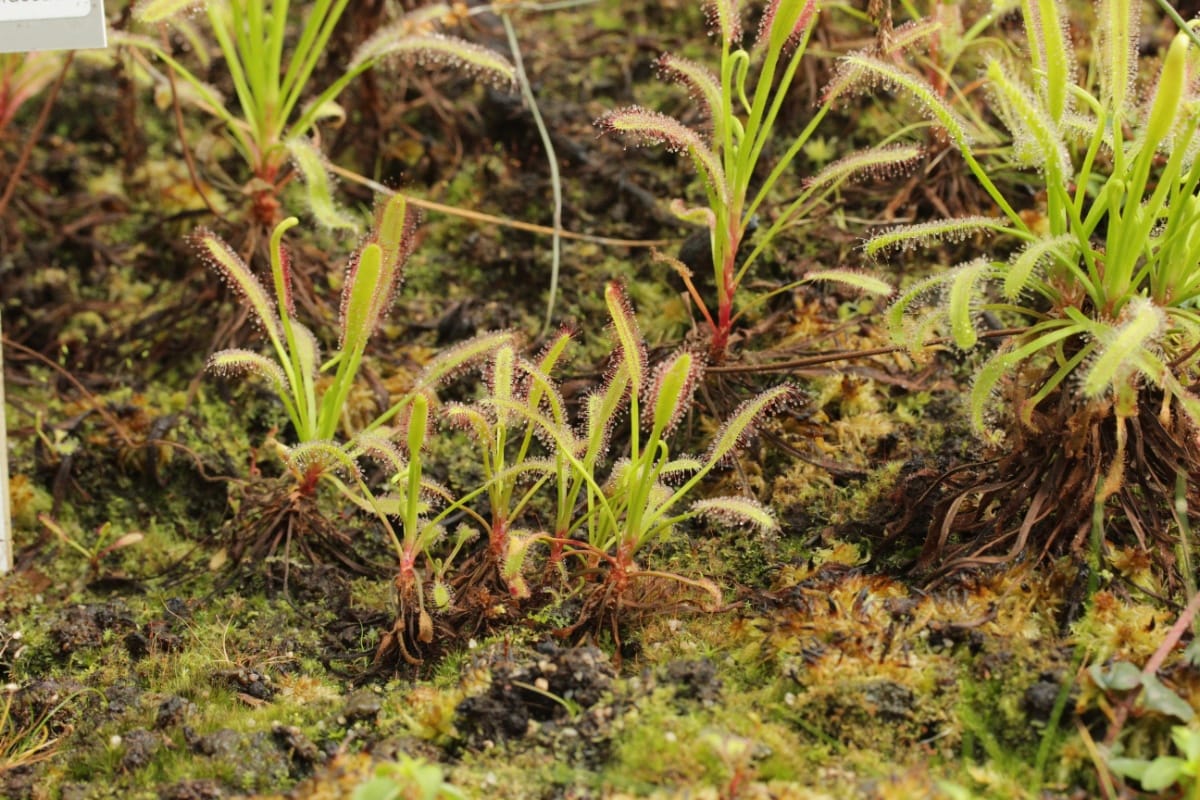
In its natural habitat, the Cape region of South Africa, the sundew grows in nutrient-poor soils, severely limited in key elements like nitrogen and phosphorus. To supplement its nutritional status, the species evolved an adhesive trap composed of tentacles coated in viscous, glistening mucilage that retains prey. As soon as an insect is captured and begins to struggle, mechanical stimulation triggers progressive tentacle and leaf bending, slowly coiling around the victim in an immobilising grip. Subsequently, the plant secretes digestive enzymes to break down the prey's body, absorbing vital mineral nutrients while deploying intrinsic antibacterial defence.
The study authors translated this ecological choreography into biomedical engineering. To recapitulate the plant's motion, they used 4D printing to create tiny needles from a material that can change shape when warmed. Artificial intelligence helped them optimise this response so that the microneedles remain straight at room temperature but begin to curl when they reach body temperature (37 °C). As they bend, they gently pull the edges of a wound together, much like the sundew’s tentacles closing around an insect.
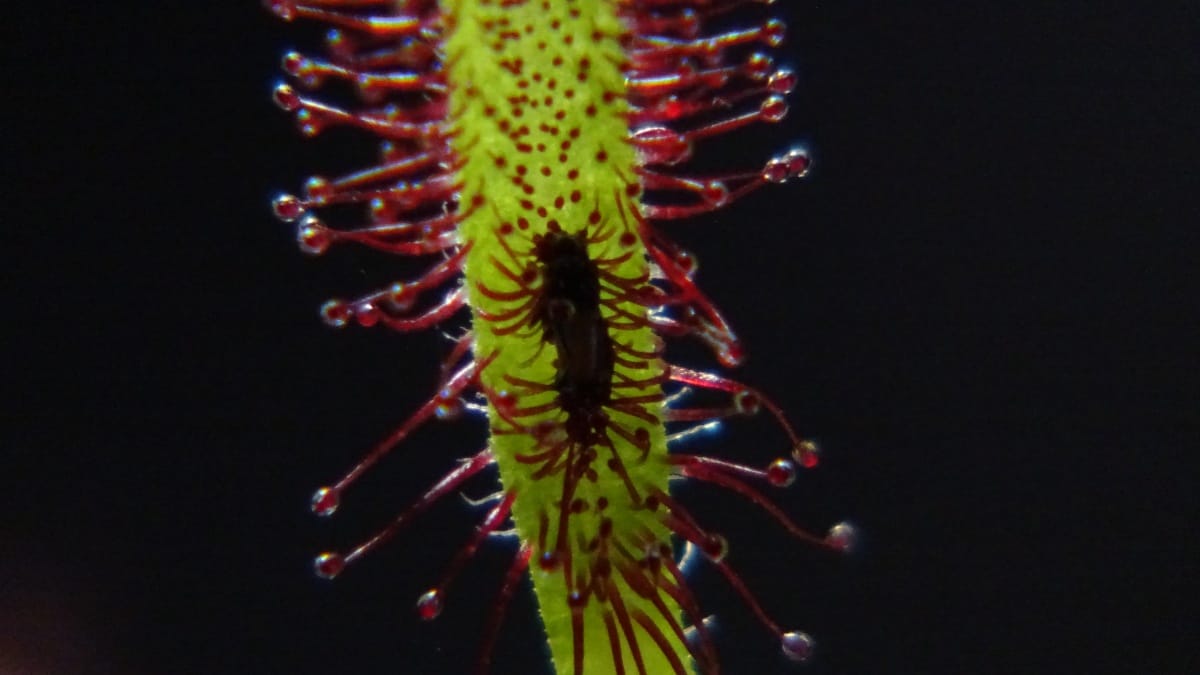
Still, the researchers borrowed more than the sundew’s movement. Its sticky mucilage inspired them to coat the microneedles with a DNA-based adhesive that helps the patch remain attached to wet tissue while gradually releasing molecules that support tissue repair and the formation of new blood vessels. The team introduced a Zn nanolayer that mimics the plant's intrinsic antibacterial defence, reducing the growth of common pathogens like Escherichia coli and Staphylococcus aureus by over 80%, while allowing the DNA-based treatment to be released gradually by over several weeks.
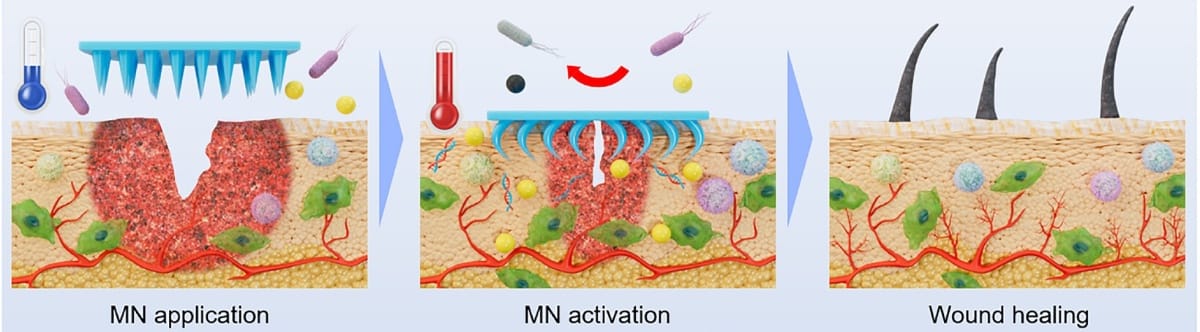
The performance of this biomimetic microneedle was evaluated in diabetic wound models, which are particularly difficult to heal and highly vulnerable to infection. The patches not only provided antibacterial protection but also significantly promoted the regrowth of damaged tissue, the formation of new blood vessels and better organisation of collagen, the molecule responsible for rebuilding and strengthen the skin..
Beyond its impressive clinical outcomes, this development stands as a compelling testament to the immense value of bridging plant ecology with state-of-the-art biofabrication. By closely examining how plants have solved mechanical, adhesive, and functional challenges through millions of years of evolutionary adaptation, human engineering does not need to reinvent the wheel, but rather learn to translate it. The integration of natural history with advanced technology demonstrates that the future of medicine lies not solely in synthetic chemical compounds, but in our ability to interface with the bioinspired designs of the plant kingdom, turning its survival strategies into inspiration and healing.
READ THE ARTICLE
H. Lee, M.-J. Kim, D. Kim, et al. “ AI–Guided 4D Printing of Carnivorous Plants–Inspired Microneedles for Accelerated Wound Healing.” Advanced Materials 38, no. 39 (2026): e23665. https://doi.org/10.1002/adma.202523665
Spanish and Portuguese translation by Erika Alejandra Chaves-Diaz.
Cover picture by Noah Elhardt (CC BY-SA 3.0)