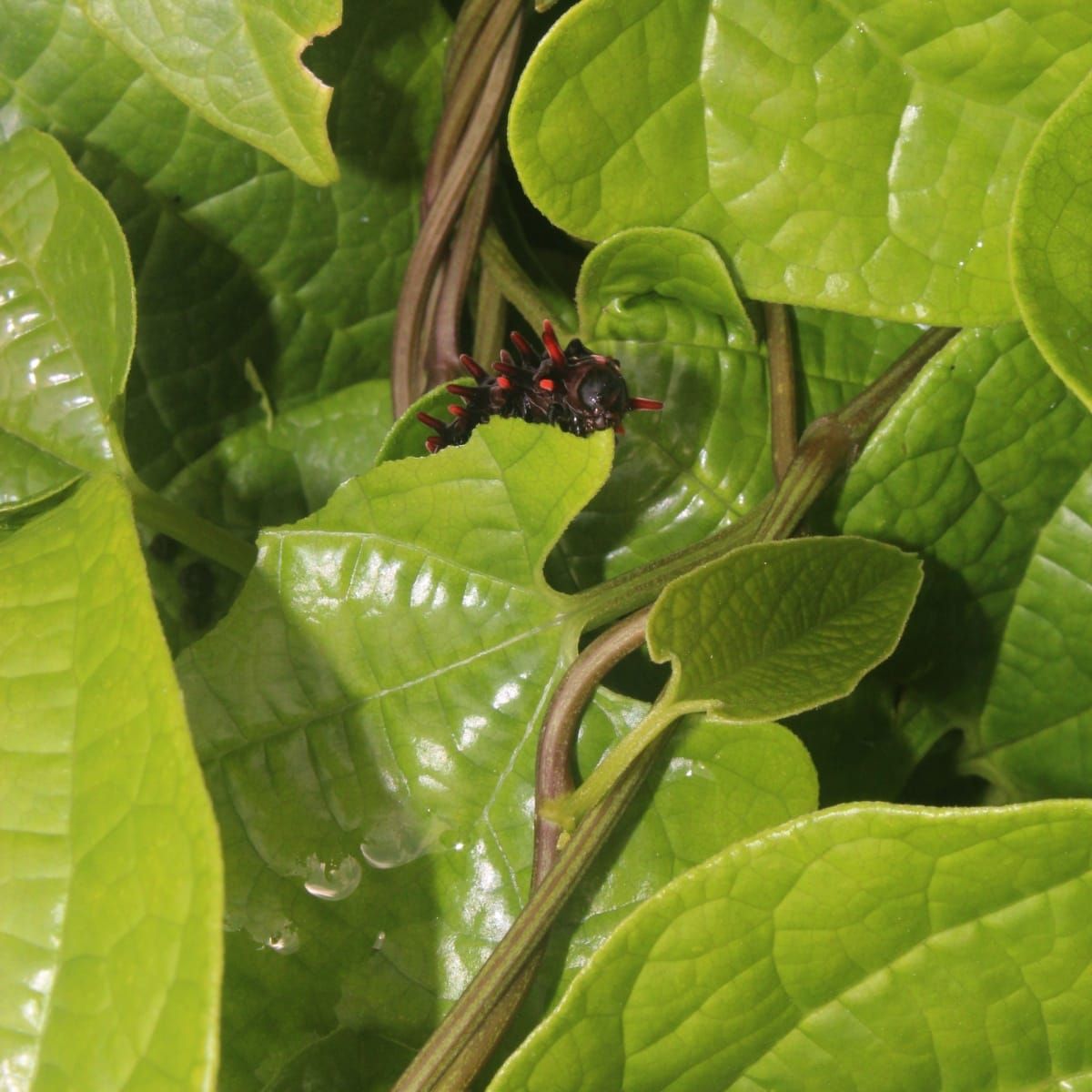

Plants and herbivorous insects have been mutually adapting for millions of years: when a plant develops a defence to protect itself, the insect usually finds a way to overcome it, a process known as coevolution. For a long time, the relationship between vines of the genus Aristolochia and tropical butterflies of the Troidini tribe, the group that includes the majestic birdwing butterflies, seemed to be a closed case. The plant produces aristolochic acids, toxic substances meant to deter herbivores. However, the caterpillars of these butterflies not only learned to eat the leaves without getting sick, but also began to store that poison in their own bodies to protect themselves from birds and other predators. At first glance, it seemed that the insects had won the game and the vine had no choice but to be eaten.
But the story doesn't end there. To test whether these plants could defend themselves before the caterpillars began to feed, a team of researchers from the Netherlands and Malaysia decided to focus on a little-studied stage: the egg. The study was conducted at the Poring Butterfly Garden, next to the jungle of Kinabalu National Park, in Malaysian Borneo. There, wild butterflies frequently enter to lay eggs on the garden's cultivated plants, especially on the Aristolochia acuminata vine. The scientists checked the leaves, stems, and supports daily for newly laid eggs, photographed the responses of the plant tissue, and took the eggs to a laboratory to measure how many managed to complete their development and hatch.
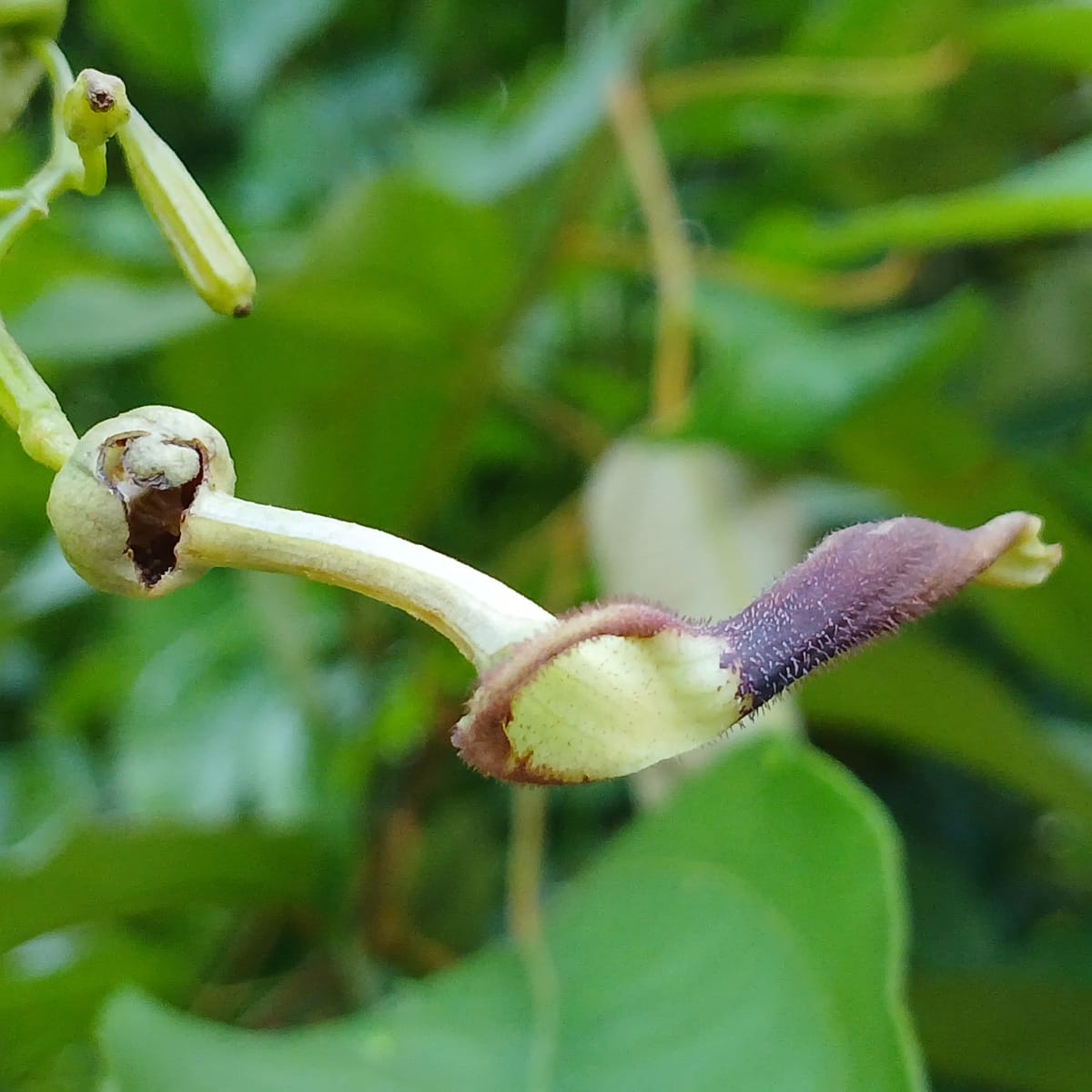
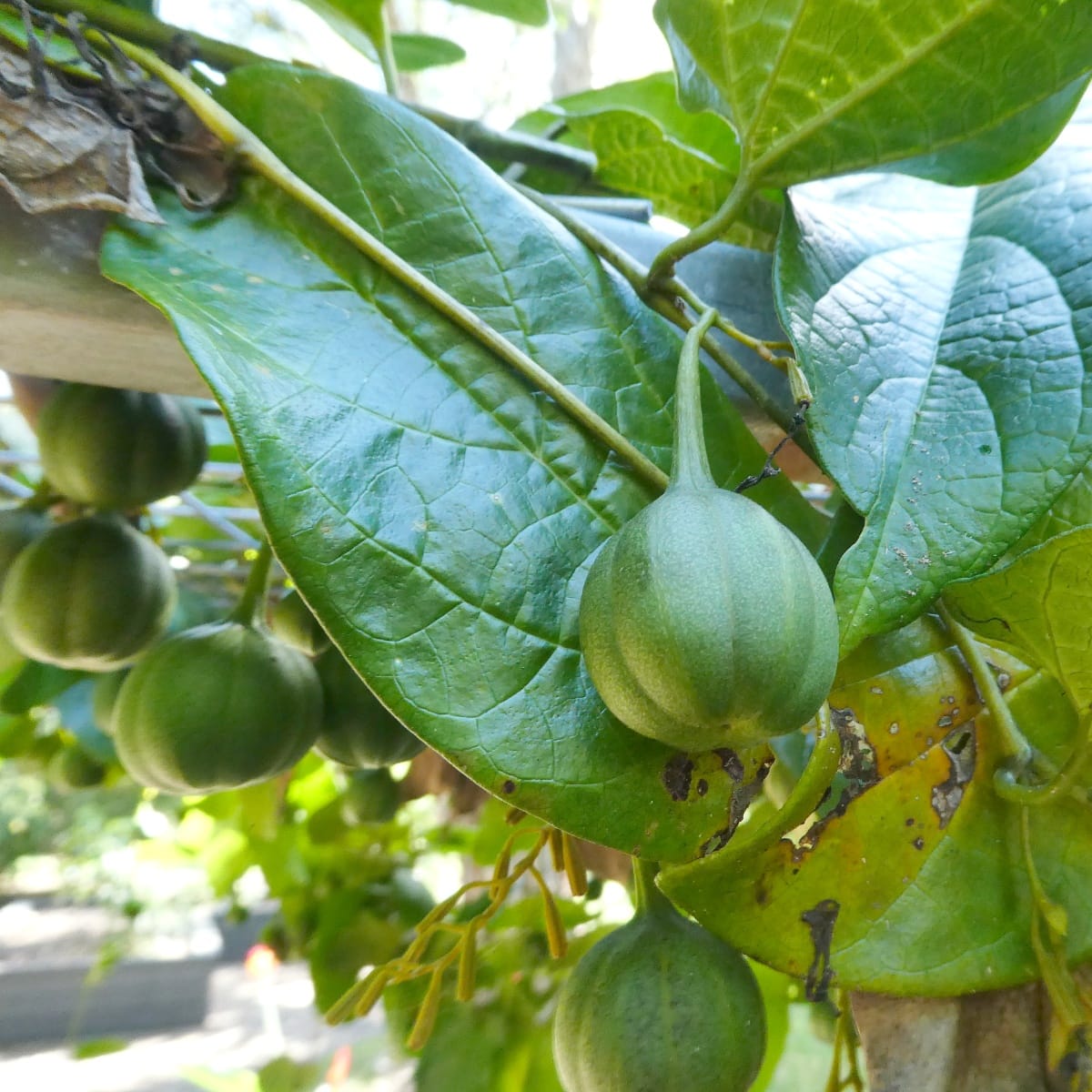
Details of the vine Aristolochia acuminata. On the left, its characteristic tubular flower displays purple and cream hues. On the right, developing fruit capsules and foliage, the exact arena where the plant detects butterfly eggs and triggers cell death to defend itself. Source: Nativeplants garden (CC BY-SA 4.0) and Steve Fitzgerald (CC BY-SA 4.0) via Wikimedia Commons.
What they observed was a direct and effective defense that had never before been documented in this botanical group. When a butterfly lays an egg on the underside of a leaf of the Aristolochia acuminata vine, the plant does not remain still. In many cases, the cells located right under the egg begin to die: the area turns from green to yellow, then to brown, and ends up forming a dry, black spot that draws moisture away from the egg until it kills it. In other cases, the plant produces a small tissue growth under the egg, a neoplasm, that lifts it and causes it to detach from the leaf. This finding represents the first record of foliar defenses against insect eggs in the entire Magnoliid clade, a highly diverse group comprising more than 10,000 plant species.
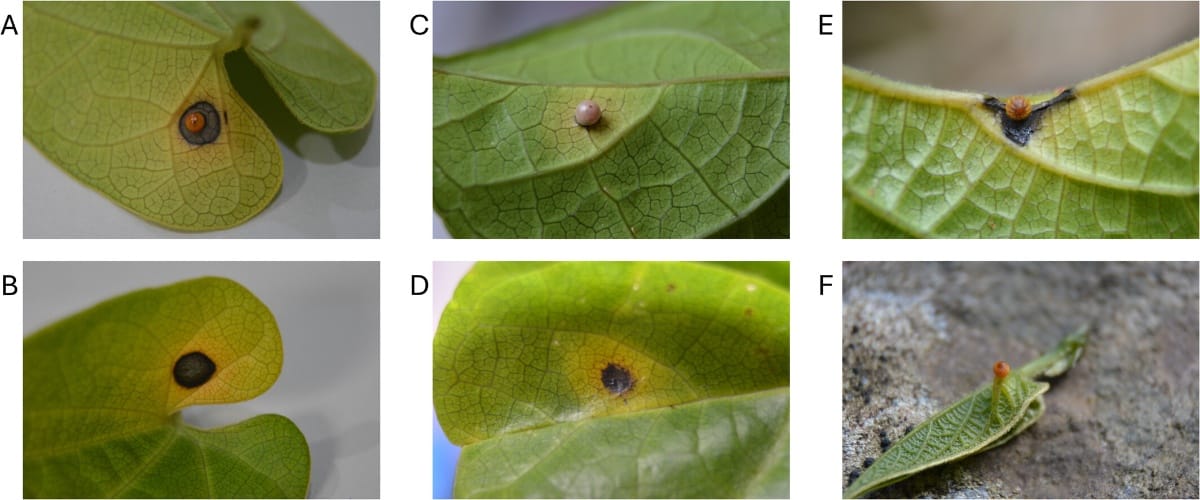
The impact of these defenses on the butterflies is overwhelming. The data showed that cell death clearly reduces egg survival. In the common rose butterfly (Pachliopta antiphus), the hatching rate dropped from 56% on normal leaves to 29% on those that developed this reaction. In the common birdwing butterfly (Troides helena), the effect was even greater: not a single egg managed to hatch when the leaf activated cell death. For the plant, stopping these insects in time is a great advantage, since a single caterpillar can devour a large amount of foliage and leave it almost leafless. Faced with this situation, the butterflies seem to have developed a behavioral response: almost 38% of the eggs were not found on the leaves, but on stems, dry branches, or even on nearby plants that the caterpillars cannot eat. Laying eggs off the leaf seems to be a way to dodge the plant's lethal reaction, allowing the offspring to hatch and then walk a few centimeters to its food.
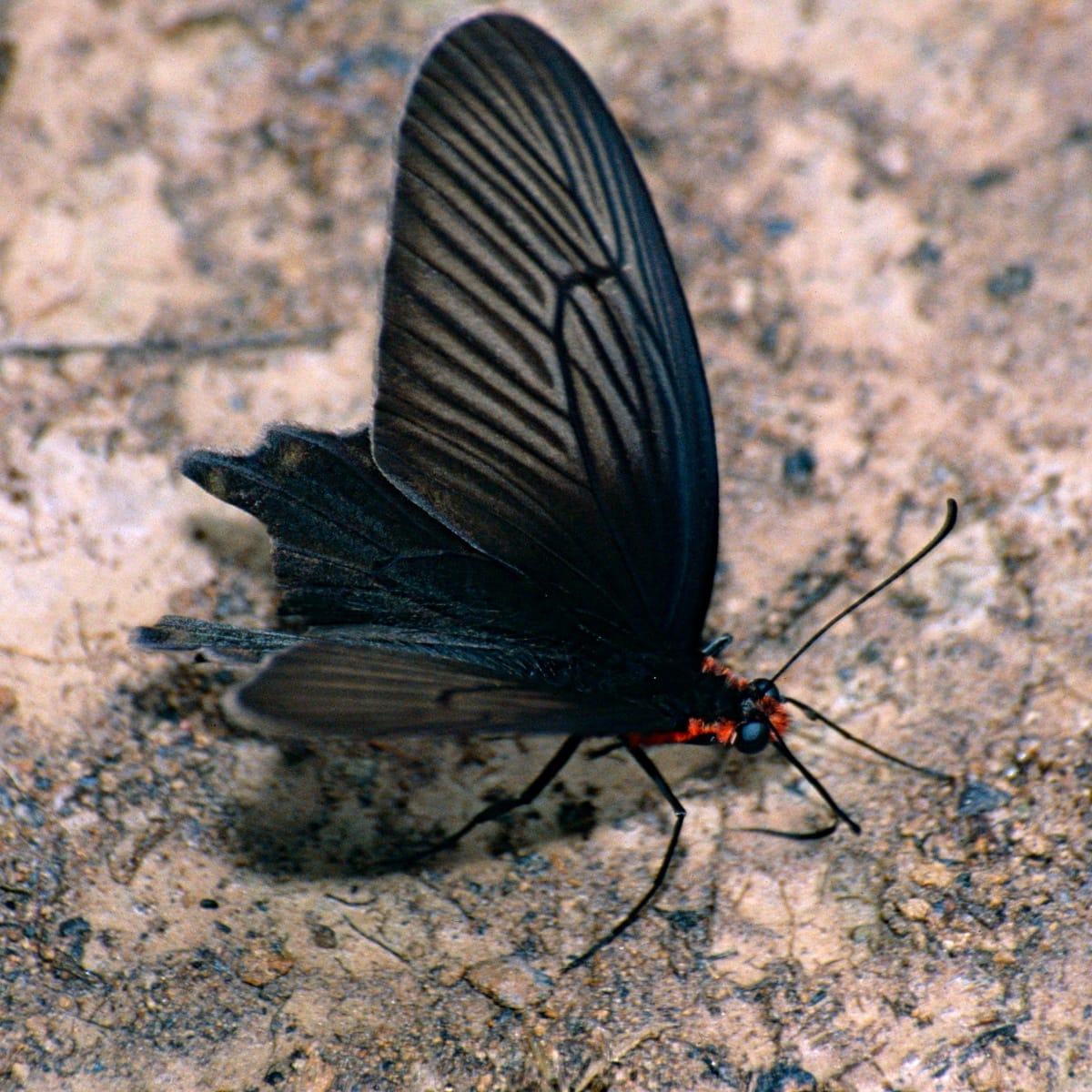
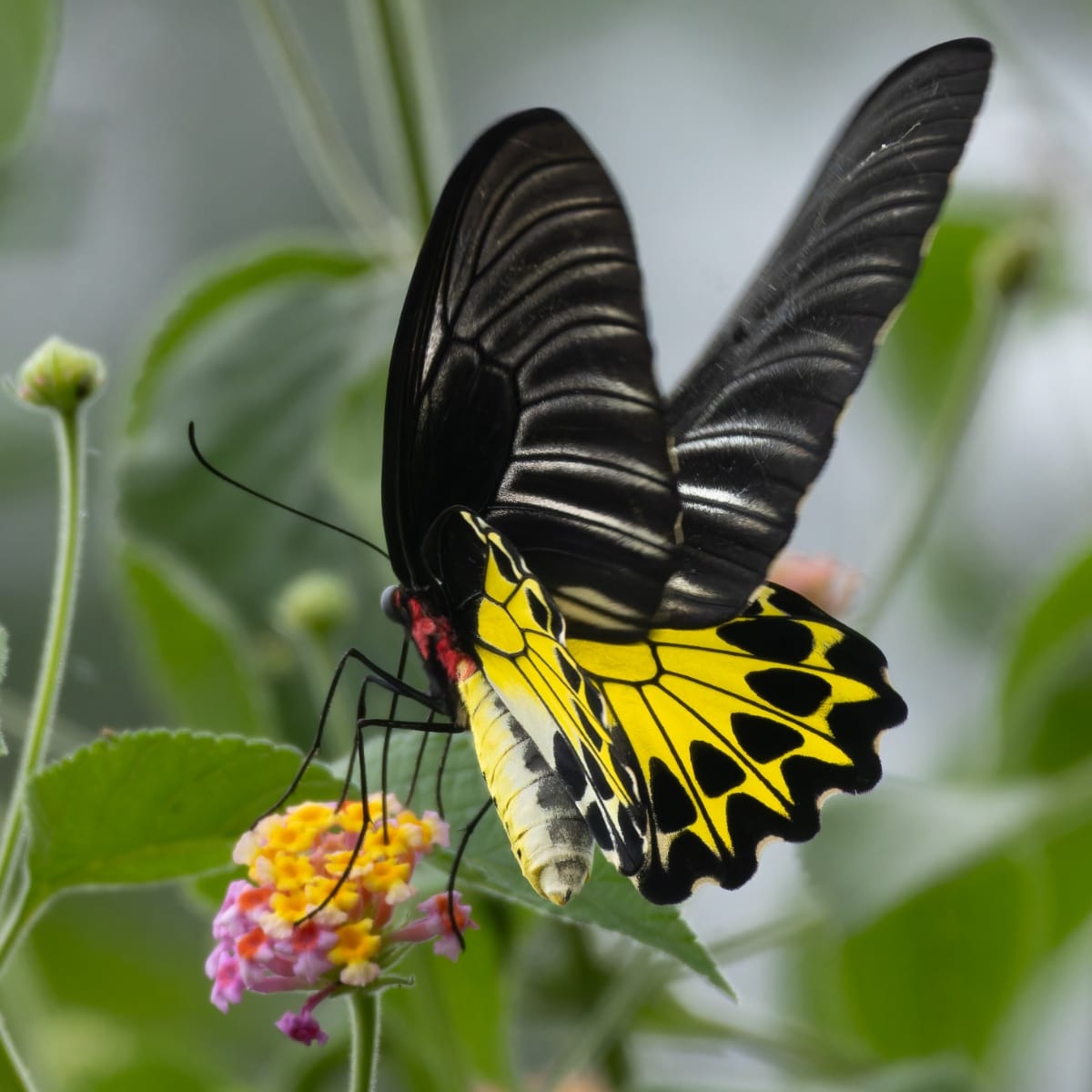
Two of the focal butterflies from the study. On the left, the common rose (Pachliopta antiphus), whose eggs triggered the formation of small tissue growths on Aristolochia leaves. On the right, the common birdwing (Troides helena), a butterfly with striking yellow and black wings whose eggs suffered complete mortality due to the plant's defensive reaction. Source: Bernard Dupont (CC BY-SA 2.0) and Tisha Mukherjee (CC BY-SA 4.0), via Wikimedia Commons.
Beyond ecological interest, these results have direct consequences for conservation. Several species of birdwing butterflies are threatened by habitat loss and illegal trade, so many breeding projects and botanical gardens cultivate the Aristolochia acuminata vine to help them reproduce. However, if these centers unknowingly choose plants with active defenses against eggs, they could reduce the reproductive success of the very populations they seek to protect. This work shows that plants are not simply passive stages for herbivores, but actively participate in a dynamic relationship where every detail counts.
READ THE ARTICLE
van Beeck V, Parantis J, Zandstra BE, et al.. 2026. Vengeful Vines: Cell Death and Neoplasm Formation in Aristolochia (Aristolochiaceae, Piperales) in Response to Oviposition of Troidini (Papilionidae, Lepidoptera) Butterflies. Ecology and Evolution 16. https://doi.org/10.1002/ece3.74426
Spanish and Portuguese translation by Erika Alejandra Chaves-Diaz.
Cover picture by Cerlin Ng (CC BY-NC-SA 2.0)