
Since the 1500s, the world's flora has been on the move. Many species, like ferns, are initially introduced to a new location through human activities, such as horticultural cultivation, and then escape into their surroundings. Some of these non-native species then establish themselves and out-compete the native plants they encounter. But not all. So what makes an invasive species so successful?
A new study took a deep dive into the global distribution of invading ferns, a group of species that is often overlooked in invasion studies – and noticed something interesting.
Some geographic regions are overrepresented as sources or recipients of invasive ferns, and the pattern of over-representation is different than for non-fern species. The culprit? The researchers identified the "fern craze of Victorian Britain", when ferns were brought from British colonies in Asia, Australia, and the Pacific Islands to North America, the Pacific Islands, Europe, and Australia, as the reason for this unique distribution pattern.
There was "a particular historical fascination with ferns during the Victorian era in the horticultural trade of Europe and its colonies termed ‘pteridomania’," write the researchers. "This obsession with ferns in the mid-nineteenth century probably facilitated the spread of non-native ferns globally, especially among areas colonized by the British Empire."
But just because a plant gets moved from one location to another doesn't mean it will take over the area. So, the researchers studied what makes a non-native fern successful at invading a new location. Firstly, they found that invasive ferns tend live in climate niches similar to their native habitat. So perhaps if a fern is moved to a similar location, then it is more able to invade. Secondly, they found that invasive ferns have smaller genomes than native ferns and a higher ploidy level. This is similar to data from invasive angiosperms. Finally, they found that invasiveness has a weak, but significant, link to phylogeny, meaning that invasive traits are not widely conserved across the whole fern group but may be conserved in a narrow cluster of related species, such as floating water ferns.
The researchers came to these conclusions by collecting data on Polypodiopsida sensu PPG I species and their global location using publicly available literature and databases. They then classified the species according to the 'introduction-naturalization-invasion' continuum as "casual", "naturalized (but not invasive)", or "invasive" and applied bioclimatic data for further analysis of habitat preferences. Genome size and ploidy information was also obtained from public resources.
The final checklist yielded 93 non-native (invasive) species for analysis, representing 78% of all fern species. Of these, 19 were "casual", 43 were "naturalized (but not invasive)", and 31 were "invasive". If a species could be assigned to more than one classification category, the maximum observed invasion stage was used for analysis purposes.
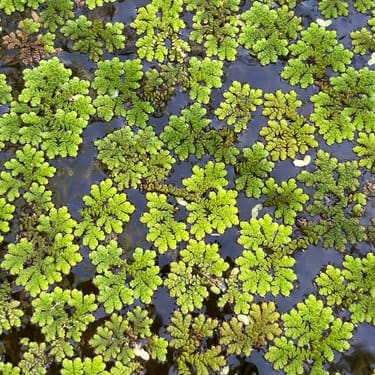
The most problematic non-native ferns were Angiopteris evecta, Azolla filiculoides, Lygodium japonicum, Macrothelypteris torresiana, Salvinia molesta, and Sphaeropteris cooperi. And by comparing data from these ferns, and other ferns in the data set, to studies in angiosperms, the researchers hope to better understand how a non-native species becomes an invading species.
"Non-native ferns represent a non-trivial component of the world’s exotic floras and can have significant ecological and economic impacts in their introduced ranges." write Pelosi, Yañez and colleagues. "Since ferns diverged from the seed plants over 400 million years ago, they provide an excellent opportunity to test fundamental hypotheses in invasion biology in a distinct evolutionary context."
READ THE ARTICLE: Pelosi, J., Yañez, A., Veldhuisen, L., Dant, A., Northing, P., Bland, R., Testo, W., and Dlugosch, K.(2026) Testing fundamental hypotheses of colonization success in the ferns. Annals of Botany. Available at: https://doi.org/10.1093/aob/mcag299.
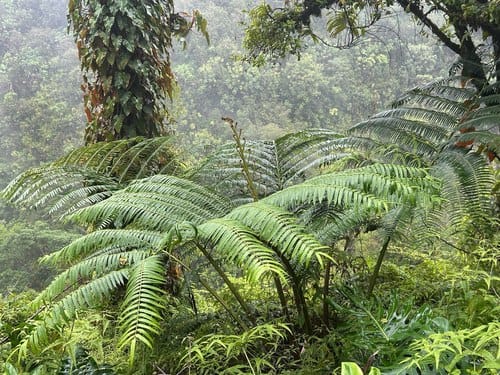
Cover Image: Scaly Tree Fern (Sphaeropteris cooperi), seen here growing in Portugal, was brought to Europe from its native Australia by human activity. Image Credit: agtnatura via iNaturalist CC BY-NC 4.0