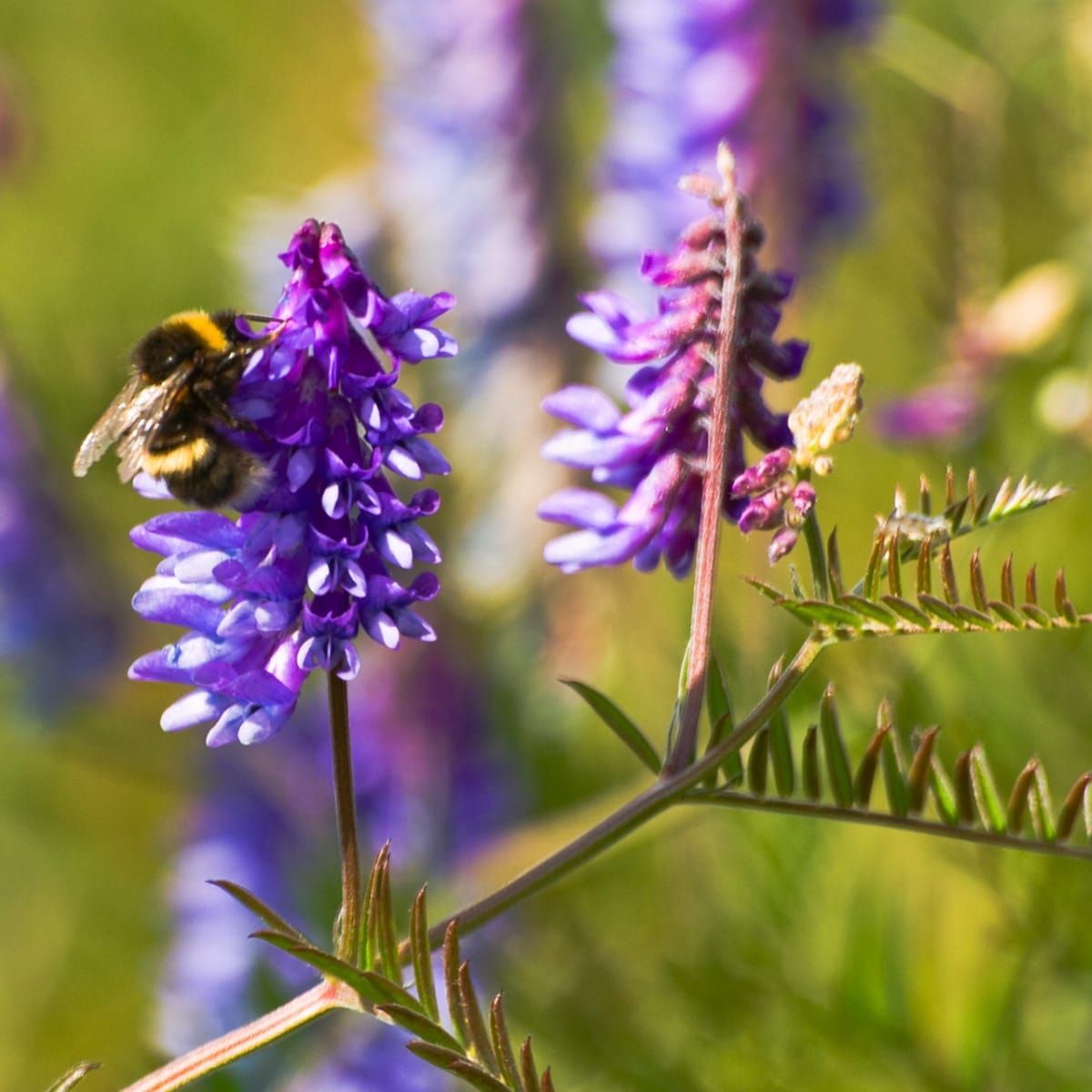

We often imagine pollinators calmly gliding from flower to flower, guided by a vibrant symphony of colours. However, when an insect speeds across the landscape in search of nectar or pollen, its flight looks much more like that of a driver on a highway: it does not stop to admire subtle details, but rather looks for gigantic billboards visible from tens of meters away.
This sensory logic is the starting point of the study led by Leonardo Lorenzato and published in the Journal of Vegetation Science, which demonstrates that, in the visual perception of insects, flower size dominates over any other trait and resolves one of the most persistent controversies in pollination ecology.
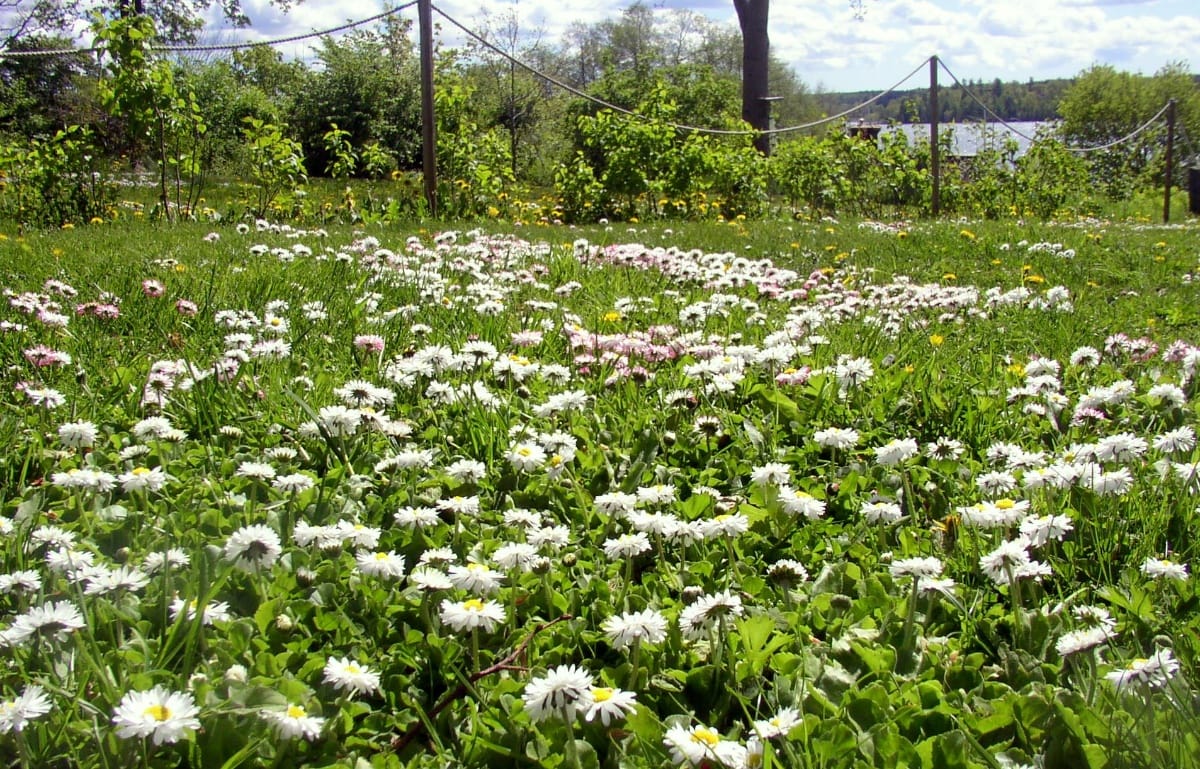
For decades, ecological research assumed that the total number of flowers in a meadow was an unfailing gauge of visitor abundance: the greater the abundance of open blooms, the higher the recorded number of visits should be. However, field studies in temperate and Mediterranean regions yielded baffling and contradictory results. While some meadows displayed predictable linear increases, others exhibited hump-shaped curves where visits dropped after reaching intermediate floral densities, and negative correlations were even documented in plots overflowing with flowers. The dilemma of why a massive abundance of flowers would deter or dilute pollinators stemmed from a methodological simplification: treating flowers as identical units ignores which visual cues and botanical identities actually make up that tapestry.
To unravel this discrepancy, the authors monitored semi-natural herbaceous communities in northeastern Italy across three consecutive seasons, recording insect activity and categorizing plant species by their primary visual traits: display size, color, and shape. Rather than merely counting buds, they integrated these morphological traits into machine learning models to quantify each plant's individual attractiveness and synthesize it into an attractiveness index. Using this value, they calculated an attractiveness-weighted floral abundance to test whether evaluating flowers by their actual ability to capture attention explained visitation rates better than raw counts.
The analysis revealed a clear visual hierarchy: floral display size explained nearly 56% of the variance in visits, doubling the relevance of color (28%) and more than tripling that of floral shape (16%). In fact, for flowers smaller than 13 millimeters, visual attraction power at the community level dropped to zero within the model, whereas large displays captured the vast majority of visits. When this correction was applied to multi-year data, the ecological puzzle dissolved: while raw flower counts yielded erratic interannual patterns, linear in one year and hump-shaped the next, floral abundance weighted by plant attractiveness revealed a positive, steady, and consistent relationship across all seasons.
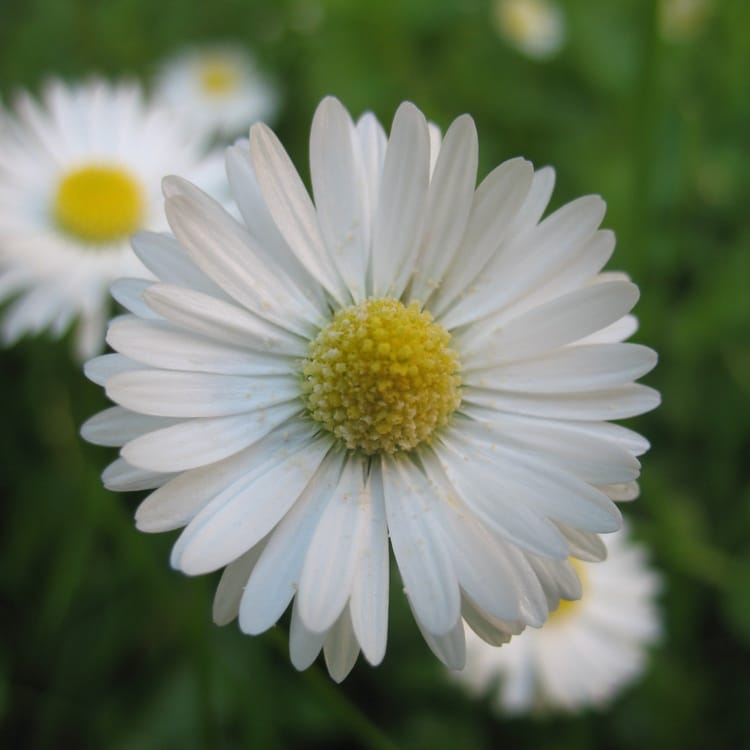
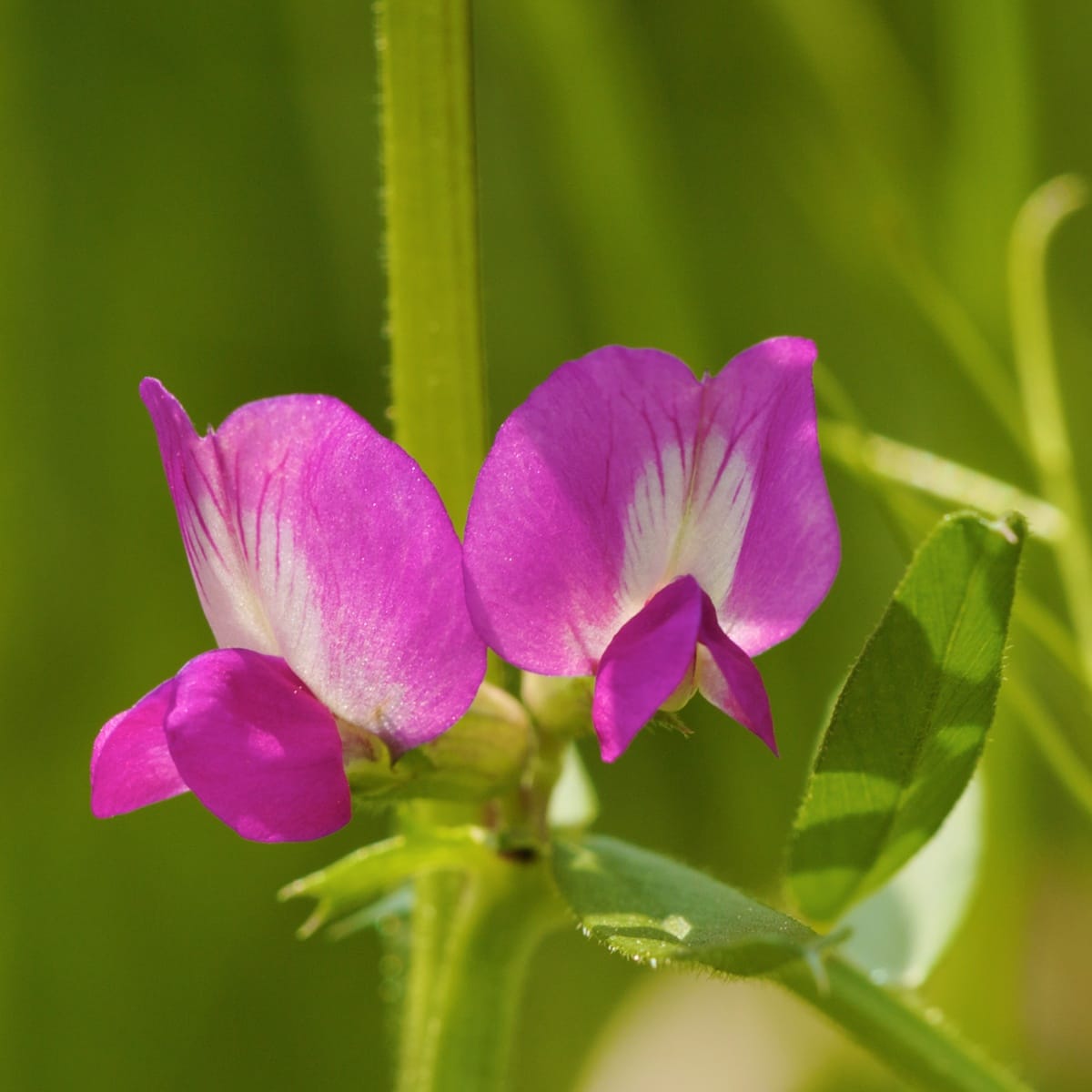
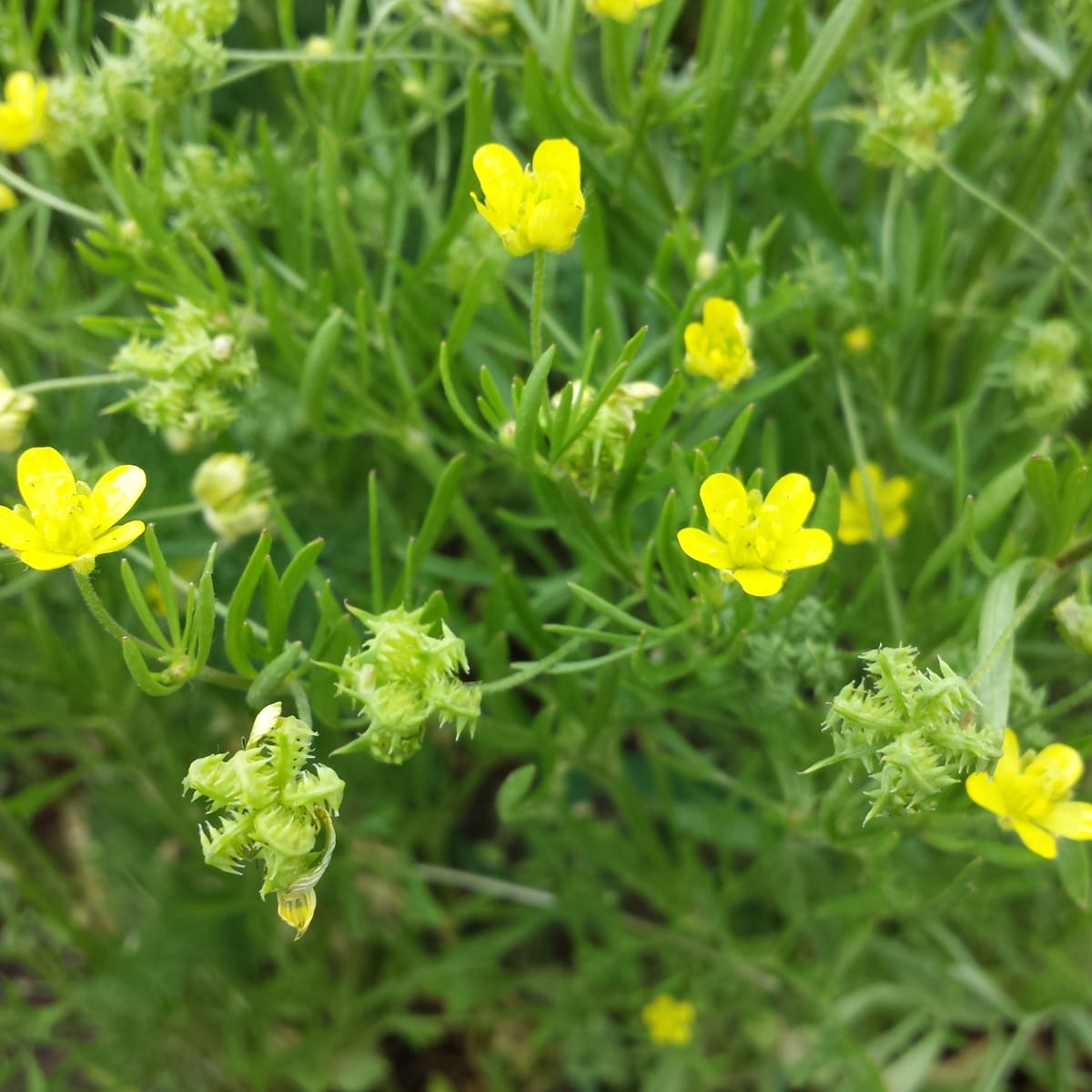
Three plant species examined in the study illustrating pollinator visual hierarchies. On the left, Bellis perennis (daisy) compensates for its medium size with a flower-head structure and sharp yellow-white contrast. In the centre, Vicia sativa (common vetch) serves as an unmistakable long-distance billboard thanks to its large display and flag blossom. On the right, Ranunculus arvensis (corn buttercup) illustrates the meadow paradox: at under 13 mm across, even bright yellow petals fail to draw insects from afar. Source: Alessio Pierotti (CC BY-SA 3.0), Jörg Hempel (CC BY-SA 3.0 DE) and Stefan.lefnaer (CC BY-SA 4.0), via Wikimedia Commons.
It all boils down to a matter of plant economics and long-distance vision. Producing large, conspicuous flowers packed with nectar requires an enormous investment of metabolic energy and resources. As a result, many plants adopt a more modest strategy: instead of investing in a few striking flowers, they produce thousands of tiny buds. Consequently, meadows with the highest flower counts are often saturated with these discrete species. For a bee foraging from the air, that mass of dwarf blooms fails to stand out; size is the visual beacon that sparks interest from afar, while color and shape merely help guide the landing once the insect has already decided to approach.
This finding provides a direct lesson for ecological restoration, the design of agricultural flower strips, and urban gardening for biodiversity. Sowing commercial seed mixes that only maximize ground cover or generate dense carpets of tiny flowers does not guarantee a frequented or rewarding habitat if insects cannot detect them from above. To support diverse, active pollinator communities, selecting species with prominent displays and powerful visual cues is essential, reminding us that in nature's visual marketing, a single billboard will always outperform thousands of tiny flyers scattered on the ground.
READ THE ARTICLE
Lorenzato L, Della Bella A, Fantinato E, Buffa G. 2026. Beyond Flower Abundance: Plant Attractiveness Explains Patterns of Pollinator Visits at the Community‐Level. Journal of Vegetation Science 37. https://doi.org/10.1111/jvs.70180
Spanish and Portuguese translation by Erika Alejandra Chaves-Diaz.
Cover picture by Axel Kristinsson (CC BY 2.0)