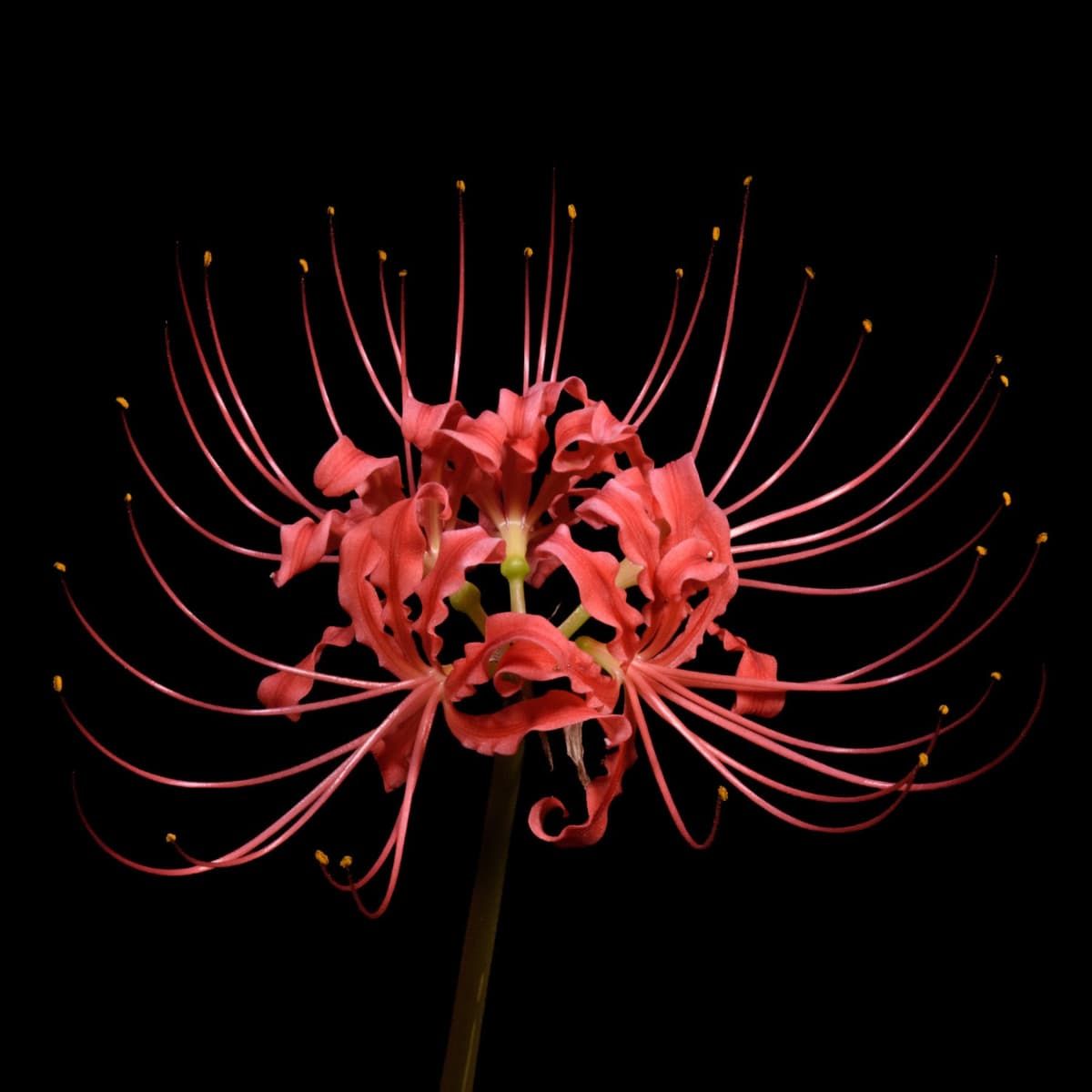

I'm (Alun) back for a week. It's been a busy week not helped by the fireworks at night. However, it made choosing the cover for this week easy. This Hurricane Lily, or Red Spider Lily, photographed by Aidan Campos in Texas looks like a firework made into a flower.
I've captured what I could from social media this week. There was a big story from North America that seemed to be dominating attention, and I've sifted them out. I'll be working on altering the monitoring system slightly for next week. Whatever happens with it, there will be another email sharing what we've posted, as well as the stories you're sharing on Mastodon and Bluesky, and career postings at the usual time next week.
Until then, take care,
Alun (webmaster@botany.one)
On Botany One
Abu Bakar Siddique: Studying Tiny Pollen to Make a Big Impact
Botany One interviews Abu Bakar Siddique, an early-career researcher at the Tasmanian Institute of Agriculture, to discuss his breakthrough work on the genetic and physiological control of heat tolerance in wheat.
Roadside flowers take a double hit
Dusty flowers get less pollination.
The Case of the Travelling Ferns
How the fern-craze of Victorian Britain began a global redistribution of this plant group.
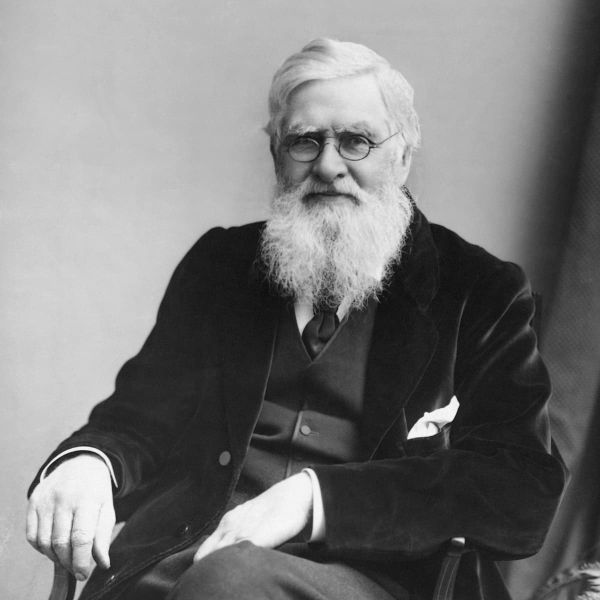
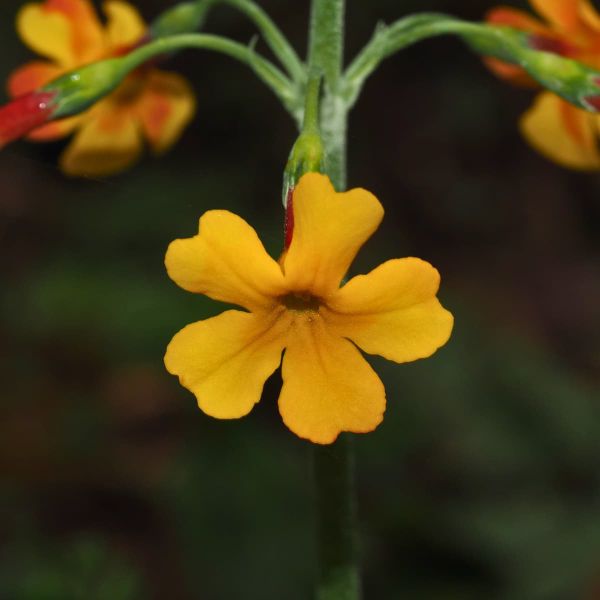
There was also Science Shared, Sudoku Garden commemorated Alfred Russel Wallace, and Ocimum tenuiflorum : Holy Basil or Tulasi/Tulsi was Plant of the Week in honour of Diwali. You can also see last week's Week in Botany too.
In AoBC Publications
- Microhabitat engineers: Seaweed canopies facilitate thermal microclimates across natural and artificial intertidal habitats
- Enter the Tomatrix: Model-Driven Ideotype Design for Dwarf Tomato in Vertical Farming
- From plant blindness to plant awareness: a narrative and visual framework for botanical literacy
News & Views
James Lloyd
A note on the passing of Dr James P. B. Lloyd.
research-repository.uwa.edu.au
M. Luke McCormack
New Phytologist welcomes a new editor.
nph.onlinelibrary.wiley.com
Greater Dodder refound in Warwickshire after 64 years
Greater Dodder, a rare parasitic plant, has been recorded on the banks of the River Avon in Warwickshire: the first county record for 64 years. Because it lacks chlorophyll and can’t photosynthesise, Greater Dodder has to get all its water, nutrients and carbon from a host plant, usually nettle.
bsbi.org
The Thymes – Botanical University Challenge
The October edition of the popular periodical.
botanicaluniversitychallenge.co.uk
New global analysis reveals huge gaps in fungal genomics, limiting progress in food security and disease control
A new review has revealed that despite rapid growth in fungal genome sequencing over the past three decades, most of the fungal kingdom remains genomically unexplored, leaving critical blind spots for agriculture, ecology, biotechnology and disease research.
rothamsted.ac.uk
Treasure hunt for rare orchid discovers thriving new cluster
Conservationists are thrilled by the discovery of a new location of the critically endangered Bonville leafless orchid, which was previously known to exist at only one place in Australia.
abc.net.au
Hidden fungi in the roots help shape which young plants survive in Mediterranean forests
In forests, the fate of young plants is not determined by sunlight and water alone. It also depends on other organisms, such as herbivores or birds. However, one key group is often overlooked: fungi. These organisms live throughout the plant, from the leaves to the roots.
fesummaries.wordpress.com
Pollen study reveals the hidden history of grasses
Scientists used machine-learning and super-resolution microscopy to overcome a challenge that has stymied research into the natural history of grasses for decades. Their method allowed them to detect subtle differences among grass pollen grains and trace changes in grass diversity at one site over a period of 25,000 years.
globalplantcouncil.org
Mistletoes of Southern Australia
The definitive illustrated guide to all 47 mistletoe species found in southern Australia.
publishing.csiro.au
Large wild grazers can have strong influence over how soil carbon persists in the long-term
We are living in a world of simultaneous biodiversity loss and climate change. While we have long understood that plants and soil microbes play important roles in carbon cycling, we are only now beginning to appreciate that large animals can have major impacts on these same processes.
fesummaries.wordpress.com
Science Shared
Three botany papers widely shared on Bluesky this past week were:
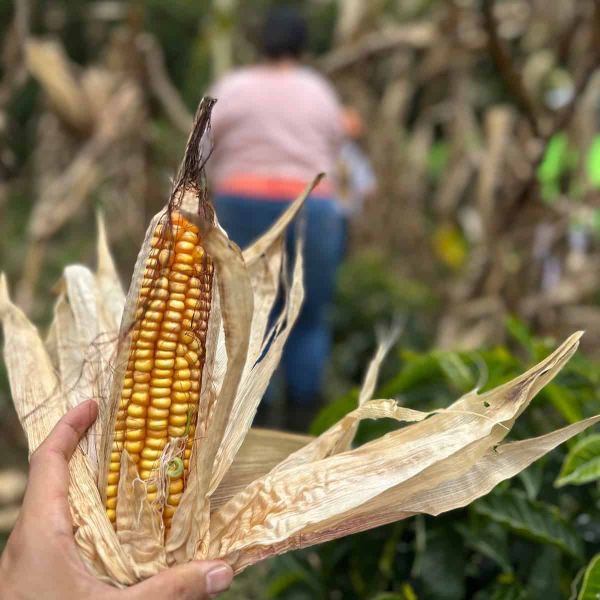
1. Maize genetic diversity is largely unstructured by human ethnolinguistic diversity in its center of origin 💰
Snodgrass, S. J. et al. · Proceedings of the National Academy of Sciences · 1 post · 81 likes · 36 reposts on Bluesky
Using publicly available genotyping and passport data from approximately 2,000 traditional maize varieties, more than 500 whole genome sequences of humans from Mexico, and indigenous linguistic maps, we quantify anthropogenic effects on maize genetic diversity in the Americas.
Jeffrey Ross-Ibarra @jrossibarra.bsky.social · on Bluesky
Out today! Our analysis of how human genetics and language (don't) structure maize diversity in the Americas. A really fun interdisciplinary collaboration led by @sjsnodgrass.bsky.social and @genomeofforrest.bsky.social and coadvisors @gcbias.bsky.social and Dan Runcie. www.pnas.org/doi/10.1073/...
View on Bluesky →2. Coring has no detrimental impact on tree growth across European forests, but effects on mortality remain uncertain
Battison, R. et al. · Forest Ecology and Management · 1 post · 63 likes · 17 reposts on Bluesky
Here we comprehensively test the impacts of tree coring on 16 European tree species using a dataset spanning a broad range of forest types across the continent.
Tommaso Jucker @tommaso-jucker.bsky.social · on Bluesky
New paper by @rbattison.bsky.social revisits the 3200 trees I cored in 2012 for my PhD to see how they have fared since. Good news is we found that coring had no negative impact on growth or clear infleunce on survival across a range of species & forest types!
www.sciencedirect.com/science/arti...
 View on Bluesky →
3. How to build a shoot: insights from Physcomitrium patens
Howe, S. A., Moody, L. A. · New Phytologist · 2 posts · 36 likes · 22 reposts on Bluesky
The evolution of body plans with multiple cell layers provided structural rigidity and enabled tissue specialisation, which were both essential for the colonisation of land by plants. Building such structure requires apical cell divisions that generate merophytes along all three axes (3D growth), as well as the spatial control of cell fate. The shoot (gametophore) of the moss Physcomitrium patens is an ideal model for studying these processes.
Laura Moody @moodytomato.bsky.social · on Bluesky
Delighted to share our New Phytologist Tansley insight: “How to build a shoot: insights from Physcomitrium patens”.
A big shoutout to my PhD student Simon Howe for his excellent work on this paper, and for producing some mosstastic figures (moss-terpieces!). Read it here: doi.org/10.1111/nph.... 🌱 😊
You can see the full list with more details at Science Shared: November 7.
Careers on Bluesky
Please note these are not jobs I am offering. Nor can I help you with any visa requirements. At time of writing there are around 60 other jobs posted at Botany One.
We're recruiting a Senior Researcher to combine mechanistic models, AI/ML and biological datasets to build and test predictive models of cells, tissues, microbial communities and other biological systems.
Posted by @earlhaminst.bsky.social
ASHS Career Center
Asst Prof and Ext Veg Spec https://ow.ly/ugYF5103NjP
Horticulturist-Garden Curator https://ow.ly/qjWm5103NjO
VP of Horticulture https://ow.ly/eERt5103NjR
More jobs https://ashscareers.careerwebsite.com/
Posted by @ashs-hort.bsky.social
Applications are open for a new 3-year Postdoctoral role developing novel computational and mathematical methods to resolve the diversity of the soil microbiome.
📅 Apply by: 13 November 2026
Posted by @earlhaminst.bsky.social
PhD position in my lab at @mpips.bsky.social (IMPRS Cologne): how are crossovers formed and controlled when meiosis runs in inverted order? We’ll use genome editing, cytogenetics, microscopy and genomics in holocentric Rhynchospora.
Apply by 5 Jan 2027
www.mpipz.mpg.de/5860972/marq...
Posted by @amarques.bsky.social
Cover Image: Lycoris radiata by Aidan Campos / iNaturalist CC BY-NC