
Unusually, none of the top three papers are about Arabidopsis this week. Also, I found a paper (at 15) What is Biology Research For? interesting. I plan to write something up about that, as I disagree with a little of it, but I suspect the reason I disagree is that Blekhman has a better grip on reality than me. As usual, papers behind a paywall are marked 💰. Otherwise, they're free to access at time of checking.
How this works
We scan posts by people on the Botany Auto list and pull out the entries with links to papers. Every time a paper gets a post written about it it gets 4 points. It gets 3 points for a repost and 1 point for a like.
We try to add people to the Botany Auto post, if they post about Botany (doesn't have to be links to papers) around 20% of the time or more. The belief is that because the list as a whole shares an interest in plants, it's this material that tends to rise to the top.
If you think you should be on the Botany Auto list, but aren't, please drop a message to @botany.one on Bluesky.
1. Maize genetic diversity is largely unstructured by human ethnolinguistic diversity in its center of origin 💰
Snodgrass, S. J. et al. · Proceedings of the National Academy of Sciences · 1 post · 81 likes · 36 reposts on Bluesky
Using publicly available genotyping and passport data from approximately 2,000 traditional maize varieties, more than 500 whole genome sequences of humans from Mexico, and indigenous linguistic maps, we quantify anthropogenic effects on maize genetic diversity in the Americas.
Jeffrey Ross-Ibarra @jrossibarra.bsky.social · on Bluesky
Out today! Our analysis of how human genetics and language (don't) structure maize diversity in the Americas. A really fun interdisciplinary collaboration led by @sjsnodgrass.bsky.social and @genomeofforrest.bsky.social and coadvisors @gcbias.bsky.social and Dan Runcie. www.pnas.org/doi/10.1073/...
View on Bluesky →2. Coring has no detrimental impact on tree growth across European forests, but effects on mortality remain uncertain
Battison, R. et al. · Forest Ecology and Management · 1 post · 63 likes · 17 reposts on Bluesky
Here we comprehensively test the impacts of tree coring on 16 European tree species using a dataset spanning a broad range of forest types across the continent.
Tommaso Jucker @tommaso-jucker.bsky.social · on Bluesky
New paper by @rbattison.bsky.social revisits the 3200 trees I cored in 2012 for my PhD to see how they have fared since. Good news is we found that coring had no negative impact on growth or clear infleunce on survival across a range of species & forest types!
www.sciencedirect.com/science/arti...
 View on Bluesky →
3. How to build a shoot: insights from Physcomitrium patens
Howe, S. A., Moody, L. A. · New Phytologist · 2 posts · 36 likes · 22 reposts on Bluesky
The evolution of body plans with multiple cell layers provided structural rigidity and enabled tissue specialisation, which were both essential for the colonisation of land by plants. Building such structure requires apical cell divisions that generate merophytes along all three axes (3D growth), as well as the spatial control of cell fate. The shoot (gametophore) of the moss Physcomitrium patens is an ideal model for studying these processes.
Laura Moody @moodytomato.bsky.social · on Bluesky
Delighted to share our New Phytologist Tansley insight: “How to build a shoot: insights from Physcomitrium patens”.
A big shoutout to my PhD student Simon Howe for his excellent work on this paper, and for producing some mosstastic figures (moss-terpieces!). Read it here: doi.org/10.1111/nph.... 🌱 😊
4. A systemic auxin state integrates light and temperature to gate lateral rooting in Arabidopsis
Ren, C. et al. · Molecular Plant · 2 posts · 39 likes · 21 reposts on Bluesky
Here we show that availability of the phytohormone auxin across the Arabidopsis root provides a shared hormonal state that integrates environmental cues and gates whether locally specified branching sites develop.
KleineVehnLab @kleinevehnlab.bsky.social · on Bluesky
1/7 Two root systems can look pretty much the same and have very different hormonal histories. @czren.bsky.social saw this in Arabidopsis at 21 and 29 °C under bright light. Following nuclear auxin signalling over several days revealed how they got there.
Check it here
www.cell.com/molecular-pl...
5. A beneficial root endophyte buffers natural variation in pathogen susceptibility across Arabidopsis accessions
Peltz, N. et al. · New Phytologist · 2 posts · 30 likes · 20 reposts on Bluesky
Host genetic diversity shapes pathogen susceptibility within plant populations, raising the question of whether beneficial root microbes can buffer these differences. The fungal root endophyte Serendipita indica ( Si ) promotes plant growth and can mitigate disease caused by the pathogen Bipolaris sorokiniana ( Bs ). Here, we assessed how natural host genetic variation influences Si ‐mediated protection against Bs in Arabidopsis thaliana.
Team_Zuccaro @algazuccaro.bsky.social · on Bluesky
Wild Arabidopsis populations vary widely in immune-gene content, yet the root endophyte S. indica protects accessions against B. sorokiniana, regardless of baseline susceptibility. Could microbial protection relax selection on costly immune receptors? nph.onlinelibrary.wiley.com/doi/full/10....
View on Bluesky →6. C4 photosynthetic pathway fluxes in transgenic rice plants
Baccolini, C. et al. · Nature Plants · 1 post · 33 likes · 20 reposts on Bluesky
Here we developed new transgenic rice lines and protocols to detect C 4 -cycle activity: CO 2 fixation into C 4 acids by the carboxylation of a C 3 compound, decarboxylation, refixation of CO 2 by Rubisco and regeneration of the C 3 donor. We demonstrate that these four core C 4 reactions are operating in rice, establishing the in vivo flux framework needed to progress towards a functional carbon-concentrating mechanism.
Maria Ermakova @mariaermakova.bsky.social · on Bluesky
We have engineered a complete minimal C4 cycle into rice and confirmed its active! Although the C4 Rice project came to an end, there is a lot of hope for future C4 engineering research 🌾
View on Bluesky →7. When insects smell like plants: how sensory bias shapes insect pheromone evolution 💰
Darragh, K. · Evolution · 1 post · 39 likes · 16 reposts on Bluesky
Here, I propose that adaptation of insect sensory systems to plant chemistry biases the origin and diversification of insect pheromones.
Kathy Darragh @kdarragh.bsky.social · on Bluesky
I had fun writing this insight piece for Evolution on the role of sensory bias in shaping insect pheromone evolution!
academic.oup.com/evolut/artic...
8. Architecture and Evolution of Prokaryotic Multicellularity: Common Patterns and Diversity
Sohl, G. et al. · Molecular Microbiology · 1 post · 25 likes · 14 reposts on Bluesky
Prokaryotes form multicellular structures under both natural and experimental conditions, through developmental processes that sometimes echo those known from eukaryotes. Recent research has increasingly focused on the mechanisms underlying bacterial multicellular organization and its evolutionary origins. In this review, we first consider the modes of group formation, that is, clonal or aggregative, and show how mixed strategies in prokaryotic systems complicate this division. We then survey bacterial and, where known, archaeal multicellular structures, focusing on common patterns and differences in developmental dynamics across species, and highlighting the “soft” similarities with eukaryotic tissues and organismal organization. Next, we discuss the molecular and cellular mechanisms underlying the canonical hallmarks of multicellularity in prokaryotes. Finally, we discuss recent research on the evolution of prokaryotic multicellularity, drawing on experimental, computational, and comparative approaches.
Enrico Sandro Colizzi @escolizzi.bsky.social · on Bluesky
📢📢📢 Our review:
"Architecture and Evolution of Prokaryotic Multicellularity: Common Patterns and Diversity"
is now published in Molecular Microbiology
onlinelibrary.wiley.com/doi/10.1111/...
please share and repost 🙏
Below, a mini🧵
9. Root hairs and mycorrhiza represent alternative phylogenetically conserved strategies for belowground absorptive surface maximization
Bergmann, J. et al. · New Phytologist · 1 post · 20 likes · 10 reposts on Bluesky
Using fluorescence and light microscopy, root‐hair length and incidence were measured along with mycorrhizal colonization. We found a phylogenetically conserved trade‐off between plant investment into root hairs and mycorrhiza, which captures functional differences between obligatory and non‐mycorrhizal plants as well as between grasses and legumes. This trade‐off defines a novel dimension in fine‐root trait variation.
New Phytologist @newphyt.bsky.social · on Bluesky
Root hairs and mycorrhiza represent alternative phylogenetically conserved strategies for belowground absorptive surface maximization
@joanabergmann.bsky.social, et al.
nph.onlinelibrary.wiley.com/doi/10.1111/...
@karlabarfuss.bsky.social @elsaelsam.bsky.social @mrillig.bsky.social
#PlantScience
 View on Bluesky →
10. Maize physiology under waterlogging: shoot and root adaptive responses to mitigate low oxygen stress
Striker, G. G., Yamauchi, T., Mollard, F. P. O. · Journal of Experimental Botany · 1 post · 18 likes · 10 reposts on Bluesky
Waterlogging is a major constraint on maize (Zea mays L.) productivity, particularly in regions increasingly affected by extreme precipitation. This review synthesizes current knowledge on the physiological and molecular responses of maize to low-oxygen stress, focusing on adaptive mechanisms in both root and shoot tissues.
Journal of Experimental Botany @jxbotany.bsky.social · on Bluesky
🌽💧 REVIEW 🔬🌽
With flooding risks rising, this review highlights how maize adapts to low oxygen stress, detailing physiological and genetic mechanisms critical for improving crop resilience under climate change - Striker et al.
🔗 doi.org/10.1093/jxb/...
#PlantScience 🧪
 View on Bluesky →
11. Plants and low oxygen: from sensing and signalling to ecological adaptation and crop resilience
Fukao, T., Ashikari, M., Nakazono, M. · Journal of Experimental Botany · 1 post · 17 likes · 10 reposts on Bluesky
This Special Issue, Plants and low oxygen, brings together 14 reviews and one research article on how plants sense, signal, tolerate, avoid, and recover from oxygen limitation.
12. Identification of auxin response factor ARF27 as a regulator of maize root morphogenesis
Dash, L. et al. · New Phytologist · 1 post · 22 likes · 8 reposts on Bluesky
Auxin is a central phytohormone that mediates root development. This study investigated the genetic basis of auxin‐mediated primary root growth in Zea mays (maize) seedlings, which is not well‐understood in this key cereal crop.
13. SHOOT GRAVITROPISM 9 links sensory timing to the initial lateral root growth angle
Farkas, S. Z. et al. · Proceedings of the National Academy of Sciences · 1 post · 19 likes · 8 reposts on Bluesky
Here, we show that temporal regulation of gravity responsiveness within a defined developmental phase sets the initial GSA in lateral roots. Stage-specific transcriptome profiling revealed that SHOOT GRAVITROPISM 9 ( SGR9 ) is upregulated in emerged lateral roots as they first respond to gravity.
14. Genetic and molecular networks mediating potato tuber development
Sinha, D. et al. · New Phytologist · 2 posts · 12 likes · 9 reposts on Bluesky
In this review, we provide a comprehensive overview of the genetic and molecular mechanisms underlying underground and aerial tuber formation, their regulation by antituberigen factors, key genes controlling stolon‐to‐tuber transitions, the role of StSWEET‐StSUT transporters in establishing the source–sink relationship essential for tuber development, and the evolution and global dissemination of modern potato cultivars.
15. What is biology research for?
Blekhman, R. · PLOS Biology · 1 post · 16 likes · 8 reposts on Bluesky
In the age of generative artificial intelligence (AI), the assumption that writing a paper requires doing science no longer holds true. Before deciding how to respond to the surge of AI-generated papers, the field needs to state what biology research is actually for.
16. A mid‐Cretaceous monocot flower from the Dakota Sandstone of Kansas and its potential implications for the fossil record of palms
Tiffney, B. H. et al. · American Journal of Botany · 1 post · 22 likes · 6 reposts on Bluesky
This flower, which we name Tomlinsoniella pedicellata gen. et sp. nov., constitutes the first mesofossil evidence for monocots in the Dakota Formation. Importantly, it also appears to be the earliest unequivocal fossil evidence for the appearance of the trimerous‐pentacyclic floral plan typical of many monocots. Among extant monocots, this combination of characters is most consistent with the coryphoid palm lineage, although the fossil could also belong to an extinct monocot clade. If correct, this represents the earliest known mesofossil record of a commelinid monocot.
17. From fire injury to tree death: insights into the physiological mechanisms of postfire tree mortality
Partelli Feltrin, R., Johnson, D. M. · New Phytologist · 2 posts · 17 likes · 6 reposts on Bluesky
Here, we synthesize current understanding of how fire affects tree carbon balance and water transport and offer pathways for future research.
18. A deep genetic structure phylogenomically frames the closest algal relatives of land plants
Bierenbroodspot, M. J. et al. · PLOS Biology · 1 post · 17 likes · 7 reposts on Bluesky
We here sequenced 43 new transcriptome datasets for the Zygnematophyceae and built a phylogenomic tree based on a total of 104 zygnematophyceaen transcriptomes and 2243 loci.
19. Frenemies forever: when parasitic fungi become an insect's secret weapon
Wendrix, R., Coolen, S. · New Phytologist · 1 post · 17 likes · 7 reposts on Bluesky
Since yeast and fungal insect symbionts are understudied in comparison to bacterial symbionts, this Tansley Insight explores their role in insect–plant interactions.
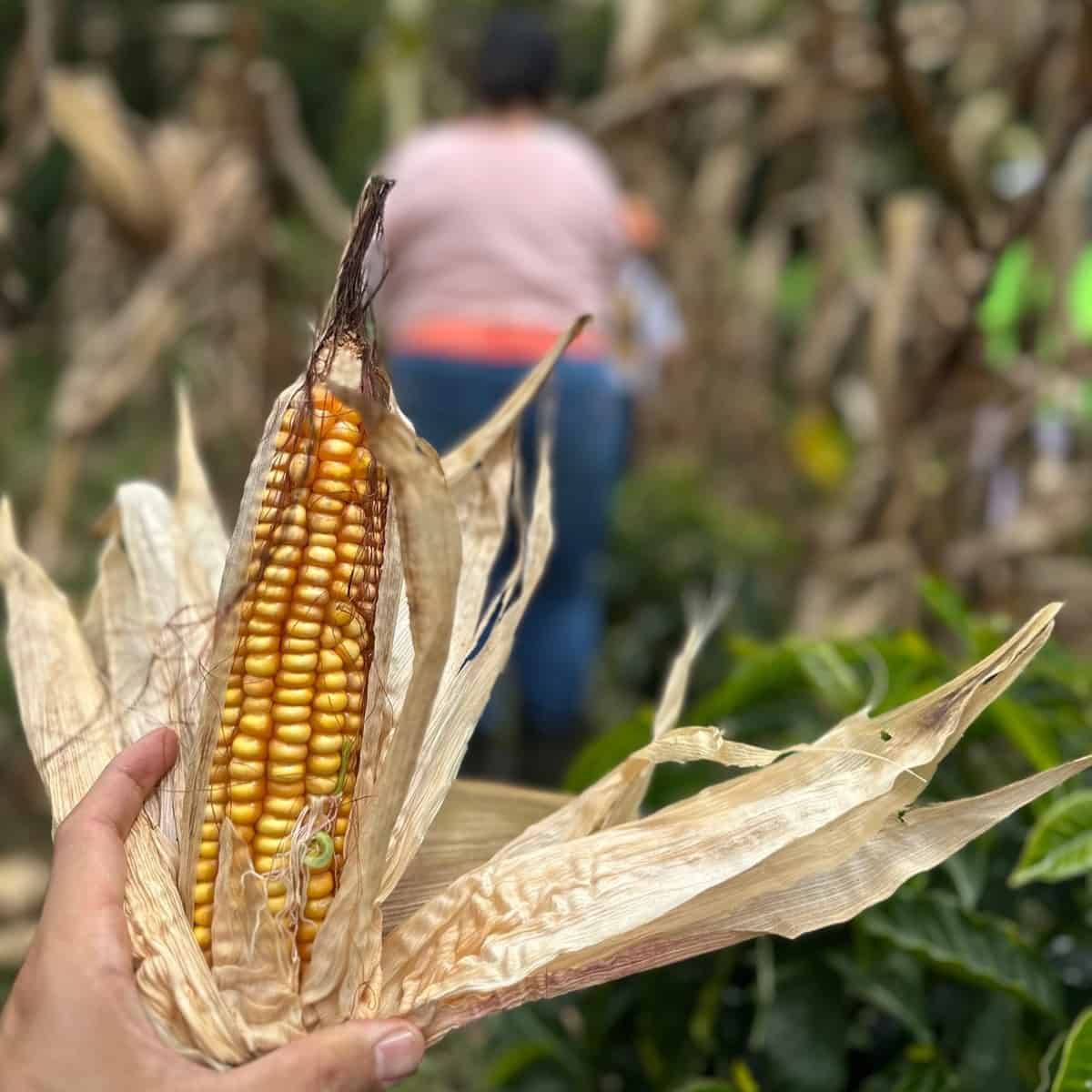
Cover image: Zea mays by maiofg / iNaturalist CC BY-NC