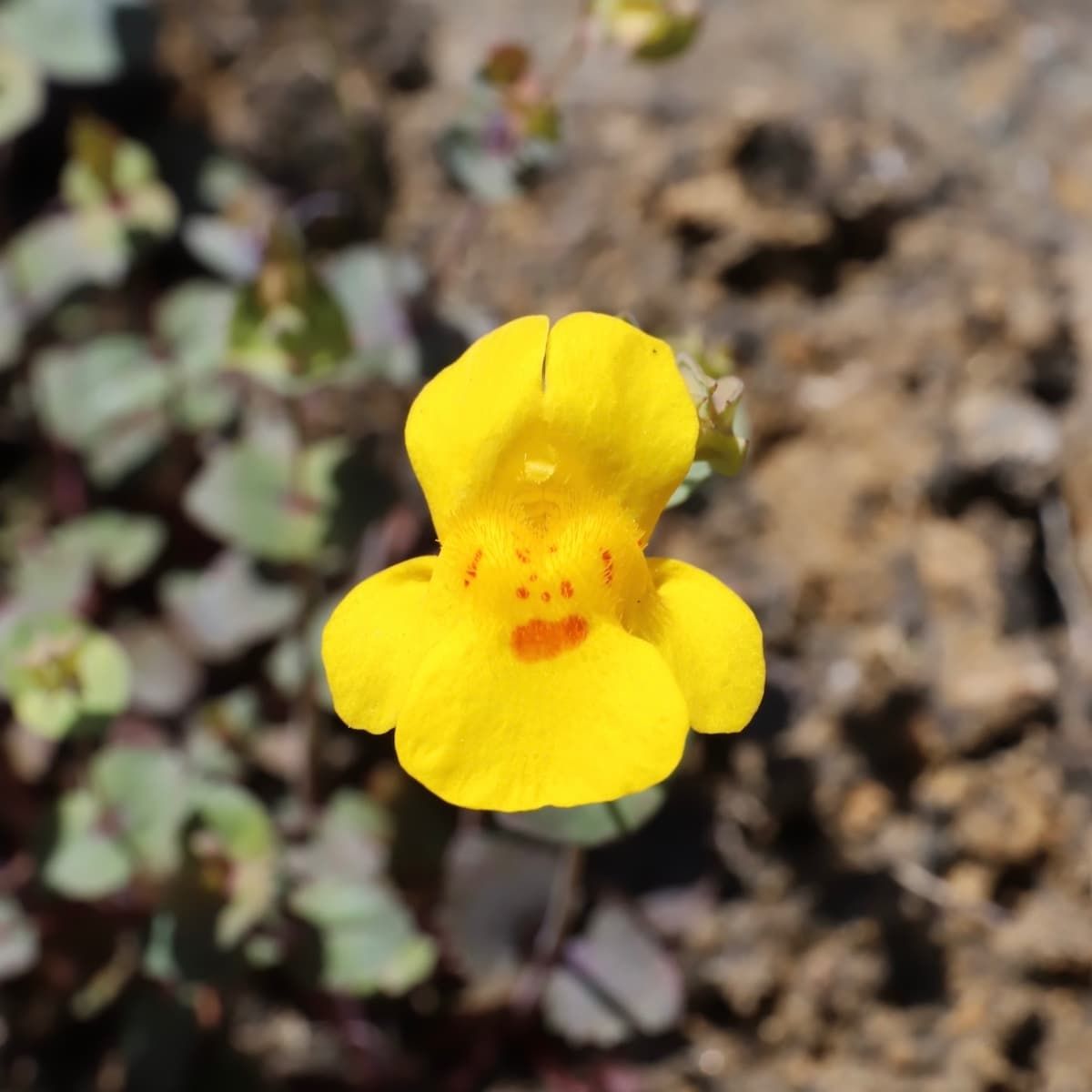

Here's this week’s round up of the most shared items on Bluesky. For a change I’ve put a Mimulus as the cover photo rather than Arabidopsis, as Mimulus was the topic of the most popular paper. Papers behind a paywall are marked 💰otherwise they're free to access at time of checking.
How this works
We scan posts by people on the Botany Auto list and pull out the entries with links to papers. Every time a paper gets a post written about it it gets 4 points. It gets 3 points for a repost and 1 point for a like.
We try to add people to the Botany Auto post, if they post about Botany (doesn't have to be links to papers) around 20% of the time or more. The belief is that because the list as a whole shares an interest in plants, it's this material that tends to rise to the top.
If you think you should be on the Botany Auto list, but aren't, please drop a message to @botany.one on Bluesky.
1. Maintenance of phenotypic divergence in two sympatric monkeyflowers with weak reproductive isolation
Arenas-Castro, H. et al. · bioRxiv · 1 post · 69 likes · 25 reposts on Bluesky
Sympatric species often exhibit permeable reproductive barriers, yet many of them coexist as phenotypically distinct entities. One way to account for this apparent paradox is that selection on loci that underlie divergent traits render them less likely to cross species boundaries. Chromosomal rearrangements can further help counterbalance the homogenizing effects of hybridization if they capture sets of locally adaptive alleles, suppressing recombination among them. Here, we extensively sequenced two young, co-occurring monkeyflower species, Mimulus glaucescens and M. guttatus , that exhibit minimal reproductive isolation and extensive gene flow, but nonetheless are phenotypically distinct.
Jenn Coughlan @jenncoughlan.bsky.social · on Bluesky
So proud of this manuscript- lead by the fantastic @henryarenas.bsky.social with two undergraduates (Cage Cochran and Quinn Evans) each doing a Herculean effort during their honors theses, and Hongfei Chen helping out tremendously with lab work.
www.biorxiv.org/content/10.6...
2. The dual trxG/PcG protein ULTRAPETALA1 modulates H3K27me3 and directly enhances POLYCOMB REPRESSIVE COMPLEX 2 activity for fine-tuned reproductive transitions 💰
Geshkovski, V. et al. · Nature Plants · 1 post · 51 likes · 22 reposts on Bluesky
Here we demonstrate that the plant-specific ULTRAPETALA1 (ULT1) protein, previously reported as a trxG factor antagonizing the PRC2 enzymatic subunit CURLY LEAF (CLF), also exhibits a pro-PRC2 function, increasing H3K27 trimethylation levels at over 1,000 genes.
Vangeli Geshkovski @vgeshkovski.bsky.social · on Bluesky
Happy to finally see this out in a peer-reviewed form 🧬🌱 Congrats to everyone who contributed!
www.nature.com/articles/s41...
3. Pollen release during buzz pollination depends on vibration amplitude and floral vibration transmission, but not on spectral composition 💰
Vallejo-Marin, M., Magitteri, A., Jafferis, N. · Journal of Experimental Biology · 1 post · 54 likes · 15 reposts on Bluesky
Bees use vibrations across behavioural contexts, including a specialised foraging routine in which they vibrate flowers to release pollen (floral vibrations). Floral vibrations often have complex spectral properties, combining fundamental frequencies and their harmonics, yet their functional consequences remain unknown. We experimentally replicated bee buzzes with identical fundamental frequency (300 Hz) but different harmonic content (0, 2, or 4 harmonics) to determine their effect on pollen release, a key functional outcome for both the bee and the flower.
Mario Vallejo-Marin @nicrodemo.bsky.social · on Bluesky
Did you know that bee buzzes on flowers are rich in harmonics? We investigated how harmonics, which give musical instruments their unique sounds, affect buzz pollination. Very happy to see this paper published @jexpbiol.bsky.social Thanks @hfspo.bsky.social for the support! doi.org/10.1242/jeb....
 View on Bluesky →
4. Melatonin seed priming: A climate‐smart, green strategy to enhance abiotic stress tolerance in plants
Raza, A. et al. · Journal of Integrative Plant Biology · 3 posts · 22 likes · 18 reposts on Bluesky
Melatonin seed priming (MSP) is rapidly emerging as a green and climate‐smart strategy for enhancing plant stress tolerance… This review synthesizes recent mechanistic insights into how MSP confers stress tolerance across diverse species by modulating redox signaling, hormonal homeostasis, and stress‐related gene networks.
Ali Raza @aliraza6.bsky.social · on Bluesky
Check out our🆕 #OpenAccess review on how #melatonin seed #priming strengthens plant #resilience against #abiotic stresses. We discuss emerging #molecular insights and future #breeding strategies toward designing next-generation, stress-smart #crops 🪴🌾🧬
🖇️ onlinelibrary.wiley.com/doi/10.1111/...
 View on Bluesky →
5. Biomethane produced from maize grown on peat emits more CO2 than natural gas
Evans, C. D. et al. · Nature Climate Change · 1 post · 29 likes · 18 reposts on Bluesky
Cultivation of maize for biomethane production has expanded rapidly, including on drained peat soils. The resulting soil CO 2 emissions at the point of feedstock production are largely overlooked when assessing biogas climate mitigation potential. On the basis of field-scale flux measurements, we calculate that soil CO 2 emissions from biomethane feedstock production on drained peat exceed embodied emissions for an equivalent amount of natural gas by up to a factor of three.
ThünenPeat @thuenenpeat.bsky.social · on Bluesky
Sehr interessant & wichtig ist auch die Studie unserer Kolleg:innen aus UK, die auf bis zu 3mal so hohe Emissionen durch Biogas aus Mais auf organischen Böden als durch Erdgas kommen.
👉 www.nature.com/articles/s41...
6. A wheat immune receptor pair executes cell death through a helper MLKL
Bennett, J. W. et al. · bioRxiv · 2 posts · 18 likes · 11 reposts on Bluesky
Here, we investigate the mechanism of an immune receptor pair comprising the wheat NLR Rwt3.6.8 NLR (R3NLR) and an MLKL protein, Rwt3.6.8 associated kinase (R3AK). Using Nicotiana benthamiana transient expression assays we confirmed that both R3NLR and R3AK are required for cell death in response to blast pathogen effectors PWT3, PWT6 or PWT8.
bioRxiv Plant Bio @biorxiv-plants.bsky.social · on Bluesky
A wheat immune receptor pair executes cell death through a helper MLKL https://www.biorxiv.org/content/10.64898/2026.08.07.743466v1
View on Bluesky →7. Fijiyama: a registration tool for 3D multimodal time-lapse imaging
Fernandez, R., Moisy, C. · Bioinformatics · 3 posts · 28 likes · 5 reposts on Bluesky
Fijiyama, a Fiji plugin built upon biomedical registration algorithms, is aimed at non-specialists to facilitate automatic alignment of 3D images acquired either at successive times and/or with different imaging systems. Its versatility was assessed on four case studies combining multimodal and time series data, spanning from micro to macro scales. Availability and implementation Fijiyama is an open source software (GPL license) implemented in Java.
Cédric Moisy @cedric-moisy.bsky.social · on Bluesky
2/3 – 🌱 Nature doesn't have a pause button...
Fortunately, Fijiyama does the next best thing: it aligns 3D scans over time so scientists can follow the same tissues as plants grow. 👀
A time-lapse — in 3D. 🔬🌱🍇
🔗 doi.org/10.1093/bioi...
🔗 doi.org/10.1016/j.pl...
#Science #Time #Fiji #3D #SMIYC
 View on Bluesky →
8. The evolutionary origins of streptophyte multicellularity
Darienko, T. et al. · New Phytologist · 1 post · 20 likes · 9 reposts on Bluesky
Over their more than 1 billion years of evolutionary history, streptophytes have repeatedly transitioned between unicellular, simple multicellular and complex multicellular forms... We argue that streptophyte multicellular evolution is best explained by regulatory changes at the cellular level rather than gene gain or loss alone. Variation in cell division patterns, polarity establishment, cell wall sensing and intercellular connectivity plays a central role in shaping body plan diversity.
New Phytologist @newphyt.bsky.social · on Bluesky
#TansleyReview: The evolutionary origins of streptophyte multicellularity
de Vries et al.
👇
📖 nph.onlinelibrary.wiley.com/doi/10.1111/...
#LatestIssue #PlantScience @jandevries.bsky.social @caeciliafkunz.bsky.social
 View on Bluesky →
9. Beyond prediction: Why experimental structural biology remains essential in plants 💰
Palayam, M. & Shabek, N. · Current Opinion in Plant Biology · 1 post · 18 likes · 9 reposts on Bluesky
Here, we discuss how experimental structural biology continues to advance plant biology by revealing mechanisms underlying hormone perception, immune receptor activation, transporter function, and enzymatic regulation.
Nitzan Shabek @shabeklab.bsky.social · on Bluesky
check out our latest review.
Beyond prediction: Why experimental structural biology remains essential in plants.
www.sciencedirect.com/science/arti...
10. SuB3: a simple nuclear–cytoplasmic subcellular fractionation protocol for localization studies of nucleic acids and proteins in plants 💰
Rodríguez, F. S. et al. · Journal of Experimental Botany · 1 post · 16 likes · 9 reposts on Bluesky
Here, we present a simple, rapid, and cost-effective protocol for the fractionation of nuclear and cytoplasmic components directly from diverse plant tissues that does not require protoplastization.
Journal of Experimental Botany @jxbotany.bsky.social · on Bluesky
🔬🌱 TECHNICAL INNOVATION 🌱🔬
Rodríguez et al. present SuB3, a simple, fast, and inexpensive method to separate nuclear and cytoplasmic contents of plant cells to study where genes are active and how they are regulated.
🔗 doi.org/10.1093/jxb/...
#PlantScience 🧪
 View on Bluesky →
11. Isolation and characterization of a potato cDNA corresponding to a 1-aminocyclopropane-1-carboxylate (ACC) oxidase gene differentially activated by stress
Zanetti, M. E. · Journal of Experimental Botany · 1 post · 18 likes · 8 reposts on Bluesky
1‐Aminocyclopropane‐1‐carboxylate (ACC) oxidase enzyme catalyses the final step in ethylene biosynthesis, converting 1‐aminocyclopropane‐1‐carboxylic acid to ethylene. A cDNA clone encoding an ACC oxidase, ST‐ACO3, was isolated from potato (Solanum tuberosum L.) by differential screening of a Fusarium eumartiiinfected‐tuber cDNA library. The deduced amino acid sequence exhibited similarity to other ACC oxidase proteins from several plants species.
12. UVfinder: a tool to extract bryophyte sex-linked gene copies from the GoFlag408 probe set
Kim, S. et al. · bioRxiv · 1 post · 15 likes · 8 reposts on Bluesky
Target enrichment sequencing using probe sets like GoFlag 408 has revolutionized phylogenetics, yet recent genomic data indicate that some probes may be sex-linked, potentially introducing topological conflict while also allowing studies of sex-specific evolutionary processes. To test for sex-linkage across the bryophytes, we developed UVfinder, a pipeline designed to identify sex-linked GoFlag loci across published moss genomes and enable sex-aware downstream analyses. Applying UVfinder to 50 dioicous moss genomes, we identified 93 probes that exhibit sex-linkage in one or more lineages, providing genomic evidence for neo-sex chromosome formation via autosome-sex chromosome fusion and gene translocation.
13. Engineering ultra-low-gliadin wheat for celiac disease using an integrated RNAi, CRISPR, and doubled haploid strategy
Marín-Sanz, M. et al. · Journal of Experimental Botany · 1 post · 18 likes · 7 reposts on Bluesky
The growing prevalence of gluten-related disorders in humans has driven the development of wheat varieties with reduced immunogenic gluten. This study aimed to integrate RNA interference (RNAi) and CRISPR genome editing within a doubled haploid (DH) platform to overcome challenges of gene redundancy and polyploidy in wheat gliadins. We generated DH lines from crosses between RNAi and CRISPR lines and elite wheat cultivars, enabling stable fixation of multiple genetic modifications in a single generation.
14. Bees attend primarily to aversive costs, not pollen rewards, to avoid exploitation by floral mimics 💰
Novinger, A. N. et al. · Behavioral Ecology · 1 post · 19 likes · 6 reposts on Bluesky
Using a signal detection theory (SDT) framework, we investigated how bumble bee decisions respond to experimental manipulations of costs and benefits within an intersexual floral mimicry system in which unrewarding female flowers imperfectly mimic pollen-rewarding male flowers (models). Using a fully factorial design, we increased the cost of visiting mimics (by adding quinine), increased the benefit of visiting models (by adding pollen), increased both simultaneously, and left them unchanged (control). As predicted by SDT, increasing mimic costs led to a conservative bias: bees made more correct rejections, but fewer correct detections.
15. Multiplication of peat moss (Sphagnum L.) species for climate action
Parsons, J. et al.· Journal of Experimental Botany · 1 post · 10 likes · 8 reposts on Bluesky
Here, we review state of the art research with a focus on the establishment of a peat moss collection and their growth in vitro, especially in photobioreactors.
16. Shedding light on plant proteolysis: genetically encoded fluorescent sensors as tools for profiling protease activities 💰
Fernández-Fernández, Á. D. et al. · The Plant Cell · 1 post · 13 likes · 7 reposts on Bluesky
In this study, we developed and characterized a set of genetically encoded Förster resonance energy transfer (FRET)-based reporters for the detection of various proteolytic activities in plants. Our sensors reliably reported the activity of specific proteases, exhibiting a performance comparable to previously established detection systems.
17. ClearDepthIAS enables automated high-throughput quantification of roots in soil-grown taproot crops 💰
Rajurkar, A. B. et al. · Plant Physiology · 1 post · 12 likes · 7 reposts on Bluesky
Here, we present ClearDepthIAS, a high-throughput imaging and analysis platform that enables non-destructive, automated quantification of root architecture traits in taproot system crops.
18. Nonuniform temperature and light relationships of moss‐associated nitrogen fixation across climates
Ma, Y., Rousk, K. · New Phytologist · 1 post · 12 likes · 7 reposts on Bluesky
Nitrogen (N) fixation by moss‐associated cyanobacteria is a key N source in terrestrial ecosystems and thereby a critical limiting factor for ecosystem productivity. However, the responses of this process to variation in key abiotic factors are unknown. In particular, the lack of knowledge on how these responses vary across climates limits our ability to estimate and predict the global importance of this key ecosystem function. We established N fixation response curves in dominant mosses across five ecosystems with different climates, from arctic to tropical forests, to light (0–1500 μmol m −2 s −1 ), moisture (0–100% moss moisture), and temperature (< 10–40°C), and derived key physiological traits from these.
19. Reconstruction of speciation by modification of major-effect genes in Petunia
Lüthi, M. et al. · Current Biology · 1 post · 11 likes · 7 reposts on Bluesky
Here, we explore the role of major-effect genes in the evolutionary shift from hawkmoth to bee pollination in Petunia. By modifying six genes in the ancestral hawkmoth-pollinated P. axillaris phenotype, we created a mimic of the bee-pollinated P. secreta flower that is indistinguishable from this naturally evolved species both in its visual appearance and in behavioral assays.
20. GSNOR-dependent nitric oxide homeostasis promotes recovery from repeated climate stress across generations in Arabidopsis thaliana
Rachna Behl et al. · bioRxiv · 2 posts · 7 likes · 7 reposts on Bluesky
Climate change exposes plants to recurrent and interacting stresses, yet the extent to which these effects persist across generations, and the mechanisms involved, remain unclear. We propagated Arabidopsis thaliana wild type (WT, Col-0) and nitric oxide homeostasis mutant gsnor1-3 (hereafter, gsnor-ko) for five successive generations.
Cover image: Erythranthe glaucescens by Joey Santore CC BY-NC