
If a tree bears fruit in the middle of the jungle and no animal goes to eat it, does its species really have a chance to survive and grow? The answer is surprising: seventy percent of individual trees in Madagascar receive a single visit from lemurs over a year and a half. A recent paper published in Oikos, led by Jadelys Tonos, Hasinavalona Rakotoarisoa, and Onja H. Razafindratsima, followed this hidden drama in the Ranomafana National Park. Between mid-2022 and the end of 2023, the researchers spent thousands of hours observing the lemurs to precisely record which trees they ate in and where they dispersed the seeds.
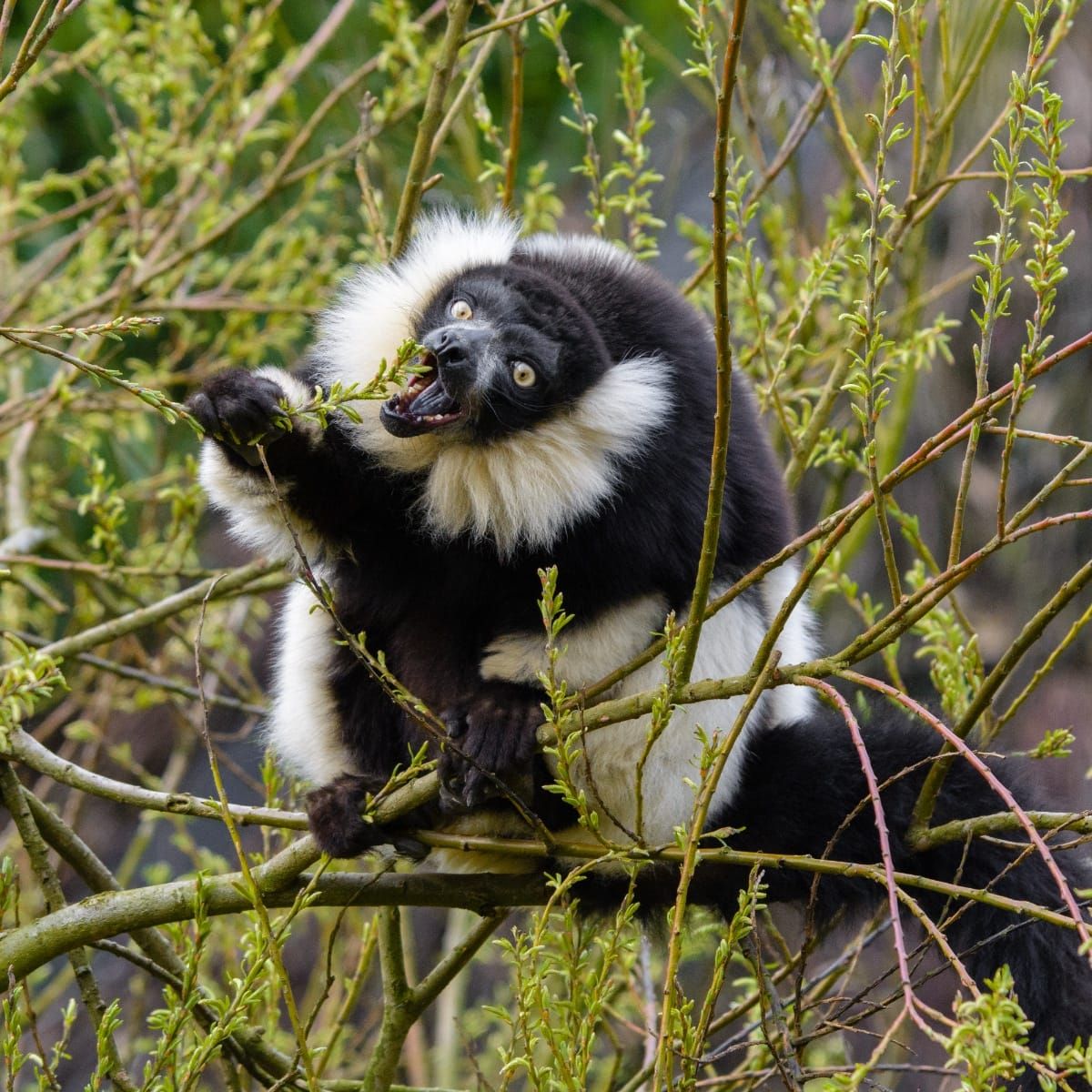
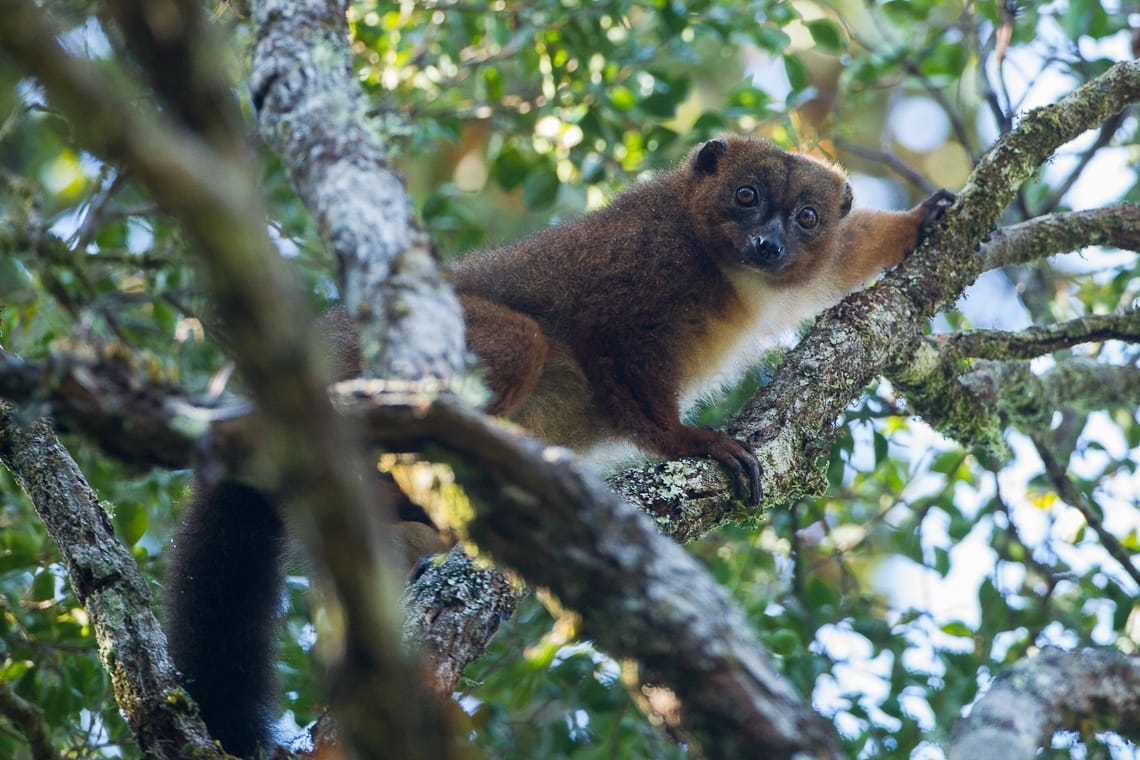
In this wonderful true story, the main actors responsible for spreading life are three fruit-loving lemur species. These primates stand out for being the largest-bodied seed dispersers in many of the island's ecosystems. Due to their large size, they are the only animals capable of swallowing, transporting, and dispersing a wide variety of large seeds that other small species cannot process. Thus, in this biological scenario, we find the lemur Varecia variegata editorum alongside its forest companions Eulemur rufifrons and Eulemur rubriventer.
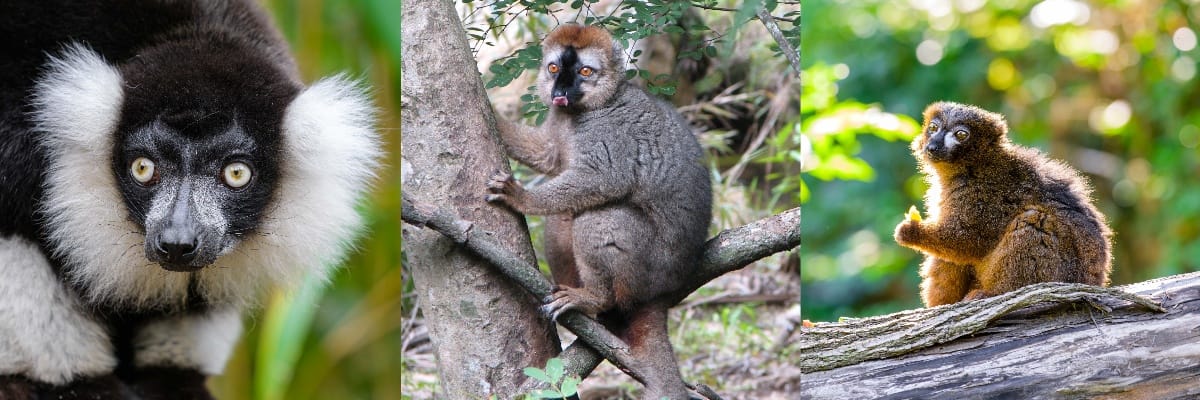
Each of these species possesses unique behaviour and social structure when foraging for food, which directly influences their daily travels through the rainforest. The lemur Varecia variegata editorum is the most robust of all, preferring to live high in the forest canopy, and takes advantage of its flexible groups to subdivide and "camp out" in the most valuable trees, defending them for several days. On the contrary, Eulemur rufifrons travels in large groups that move quickly from one resource to another because they deplete food rapidly. Finally, Eulemur rubriventer moves in small family clans, exploiting plants meticulously and constantly.
By following these movements, the researchers found a strikingly uneven forest network. Most of the trees received only a single visit, while a very small minority of favoured trees attracted repeated visits. This select group was composed of large trees packed with heavy fruit crops, some of which were visited more than twenty times, and up to forty-two times, during the study. Surprisingly, when grouping the data traditionally by entire plant species, these important individual variations completely disappeared.
When analysing the interaction networks, the scientists discovered that relationships at the individual plant level are much more specialised and less connected than those at the species scale. To understand what attracts the primates, the authors analysed the physical characteristics of the vegetation in detail. The analysis determined that only tree size, measured by trunk diameter, and the volume of its fruit crop positively influence the visits. External factors such as total fruit abundance in the ecosystem or the plant richness of the environment did not show a real influence in the predictive models.
This causes new plants not to grow uniformly across the entire rainforest floor, but rather in densely populated patches. These accumulations create areas of high competition for sunlight and nutrients, altering the processes that guide the regeneration of the tropical forest. Therefore, the loss of large trees due to environmental degradation can completely destabilise these individual interaction networks. In the end, this study demonstrates that the individual tastes of frugivorous lemurs operate as the true architects designing the forest structure of Madagascar.
Understanding these hidden mechanisms reminds us that nature conservation requires looking far beyond general averages. Protecting the future of Madagascar consists not only in saving an endangered species, but also in safeguarding the invisible bonds that unite each animal with each tree. Only by paying attention to these fascinating individual decisions and the secrets of animal behaviour will science be able to ensure the long-term coexistence and functioning of the entire ecosystem.
READ THE ARTICLE
Tonos J, Rakotoarisoa H, Razafindratsima OH. 2026. Inequalities in intraspecific plant–lemur interactions drive seed dispersal patterns. Oikos. https://doi.org/10.1002/oik.11808
Spanish and Portuguese translation by Erika Alejandra Chaves-Diaz.
Cover picture by Mathias Appel (Wikimedia Commons, CC0 1.0).



.jpg?ref=botany.one)
.jpg?ref=botany.one)
.jpg?ref=botany.one)