
It feels like autumn is finally arriving here. For the first time there's a slight bite in the air, though it's still warm. If summer is slow to leave here, I wondered how the other hemisphere was doing. My Firewatch shows fires in every state of Australia, except Tasmania. This week's interview is with Heloiza L. Zirondi, who studies wildfire in the Brazilian Cerrado, is a reminder that fire passes and things regrow. I'm not sure how much comfort that is, if you're in the middle of it.
We also have three transcripts of the videos that came out this week, that I made during coffee breaks. I might start embedding videos when I'm less wooden, but that will take a while. There will be another email sharing what we've posted, as well as the stories you're sharing on Mastodon and Bluesky, and career postings at the usual time.
Until then, take care,
Alun (webmaster@botany.one)
On Botany One
Going With the Flow: How Chemical Cues Shape Plant Strategies
Barley plants make small talk with neighbors to communicate growth and defense strategies.
Should Cities Fight or Embrace Changing Nature?
Urban biodiversity is changing around us, forcing us to decide when to resist change, when to accept it and when to guide it.
Heloiza L. Zirondi: Seeking The Burning Question
Botany One interviews Dr Heloiza Zirondi, a plant and fire ecologist looking to understand plant regeneration in the Brazilian Cerrado, the most diverse savannah in the world.
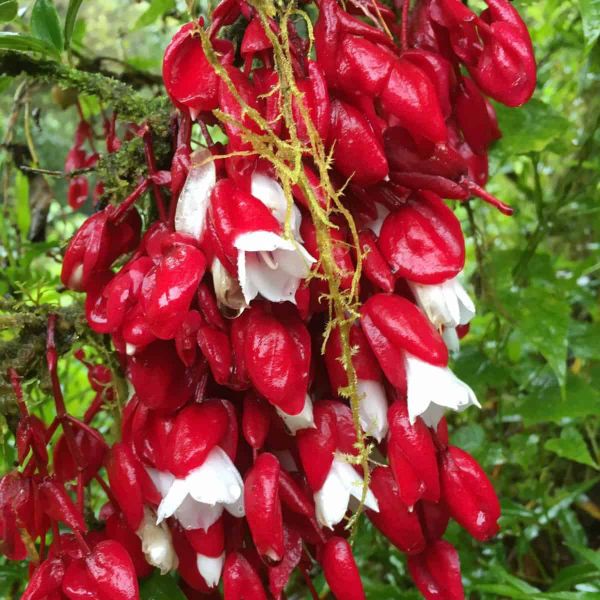
Not Just New Cats: The New Botanical Species Discovered in Ecuador’s Centinela Ridge
Two new members of the African violet family have been identified.
When Does a Partnership Stop Working? Hornworts Reveal the Hidden Complexity of Symbiosis With Cyanobacteria
Hornworts and cyanobacteria show that even ancient partnerships can depend on where, when and how their partners meet.
- The unappreciated pollinators of Northern Europe
- A plant one biologist said should be impossible
- How does a leaf know when to die?
There was also Science Shared, Sudoku Garden celebrated Fiji Day, and Ludwigia alternifolia was plant of the week. You can also see last week's Week in Botany too.
In AoBC Publications
- Generalized pollination of morphologically specialized Vincetoxicum hirundinaria (Apocynaceae, Asclepiadoideae)
- Synchrony of floral volatile emission with diurnal pollinators of possible decomposition mimic Asarum savatieri (Aristolochiaceae)
- Morphological, anatomical, and mechanical variation in cactus spines across species and stem developmental positions
News & Views
Plant Cuttings is three (and still free…)
Plant Cuttings celebrated its third birthday on 7th October, 2026. Reflecting on the year’s 52 posts this post offers particular insight into the site’s book reviews.
plantcuttings.uk
Guano mining left Lady Elliot Island a barren wasteland. Now it's a tropical oasis - ABC News
Lady Elliot Island sat bare, bleak and silent for 100 years after guano miners ravaged it, leaving a moonscape devoid of life. Then in the 1960s, one family started planting trees.
newsapp.abc.net.au
The chocolate formerly known as lost
The Quest to Save the World’s Most Coveted Chocolate is an engaging story in Smithsonian Magazine about Ecuador’s ancient, iconic Nacional cacao. It was published three years ago, but I only just came across it. It rang a bell, so I went back through the archive. And there was lots more there than I suspected.
agro.biodiver.se
Invasive ragweed is rewriting its genome as it conquers new territory
An invasive weed responsible for severe pollen allergies around the world has revealed how rapidly plant genomes can change as species colonise new environments.
monash.edu
How tree roots associate with rhizosphere soil microbial communities in subtropical forests
Forests depend on a complex web of life beneath the ground. The rhizosphere, soil surrounding tree roots, is home to countless bacteria and fungi that help trees obtain nutrients, defend against disease, and cycle carbon and nitrogen. But we know surprisingly little about how different tree species influence these underground communities.
fesummaries.wordpress.com
Monitoring forests from space: a new era of forest monitoring and protection
Space technology is helping us protect something closer to home: our forests.
fao.org
Beyond tree rings: The hidden history of long-lived herbs
If you want to study growth and longevity, trees are remarkably convenient organisms. A tree keeps much of its history inside its trunk. Each year adds another layer of wood, leaving a record that may tell us how old the tree is and also how fast it grew throughout its life.
plantlifebelowground.wordpress.com
Colonisation, not climate change, first primed these forests to burn
For more than 800 years, frequent cultural burning kept this land as stable, open woodland.
theconversation.com
Hidden teamwork: how plant root molecules interact with bacteria to unlock essential nutrients from soils
A new study, led by Paul Schulze-Lefert from the Max Planck Institute for Plant Breeding Research in Cologne in collaboration with Ricardo F.H. Giehl at the Leibniz Institute of Plant Genetics and Crop Plant Research in Gatersleben, revealed how Arabidopsis plants adapt their chemical communication with the bacterial root microbiota to maximise the acquisition of bio-unavailable iron from acidic or calcareous soils.
mpipz.mpg.de
BSBI staffer confirms new species of Giant Waterlily
It can be seen from outer space. It was first spotted in a post on social media. And its identity as a new species was confirmed by a BSBI staff member!
bsbi.org
Science Shared
Three botany papers widely shared on Bluesky this past week were:
1. NO VEIN is an ancestral immunity protein involved in plant-virus interaction
Lågeide, E. et al. · bioRxiv · 1 post · 67 likes · 31 reposts on Bluesky
Here we show that NO VEIN (NOV), a plant protein previously characterized for its essential developmental roles in Arabidopsis thaliana, shares domain composition and structural similarity with Tiamat, a bacterial antiphage protein. In light of the antiviral function of the bacterial protein, we asked whether NOV is involved in plant-virus interactions.
Gal Ofir @galofir.bsky.social · on Bluesky
A new plant-bacteria immunological connection in the first preprint of our group at @mpi-bio-fml.bsky.social @plantevolution.bsky.social!
Straight from the top of Mt. Olympus ⛰️🦅
Led by Eirik @eiriklag.bsky.social, in collaboration with @geminiteamlab.bsky.social
www.biorxiv.org/content/10.6...
 View on Bluesky →
2. Arabidopsis cysteine protease RD19 limits RBOHD-generated ROS production in pattern triggered immunity
Hessler, G. et al. · bioRxiv · 2 posts · 39 likes · 25 reposts on Bluesky
Plants perceive pathogenic threats through receptors localized at the plasma membrane and inside cells to initiate pattern-triggered immunity (PTI) and effector-triggered immunity (ETI), respectively. PTI and ETI pathways are interconnected and partially converge on the EDS1-PAD4-ADR1 branch which stimulates anti-pathogen defence. Besides these canonical immune pathways, proteolysis plays a pivotal role in immunity by regulating the abundance and activities of diverse components. We previously identified Arabidopsis papain-like cysteine protease RD19 as a PAD4 interactor and showed that RD19 promotes resistance to host-adapted pathogens. Here, we investigated the contribution of RD19 to bacterial flg22 and nlp20 elicited PTI responses which exhibit, respectively, partial and high PAD4 dependence.
Giuliana Hessler @giurassicpark.bsky.social · on Bluesky
🌱New preprint 🎉
I am happy to share this last work of my PhD research!
We uncover a novel role of cysteine protease RD19 in immunity. RD19 regulates RBOHD-generated ROS and is required for induced resistance responses.
www.biorxiv.org/content/10.6...
More details in the thread below! 🧵
3. Large‐scale nuclear and plastid phylogenomic analyses inform an updated Angiosperm Phylogeny Group classification: APG V
Byng, J. W. et al. · Journal of Systematics and Evolution · 1 post · 19 likes · 18 reposts on Bluesky
We present here a revision of the APG classification that considers the extensive recent analyses of hundreds of nuclear and plastid genes for many angiosperm species.
Journal of Systematics and Evolution @journalsysevo.bsky.social · on Bluesky
APG V, the 5th community-based classification of flowering #plants, is now available!
This revision of the APG #classification marks a shift from mainly #plastid-based classification to nuclear-#genome-informed #systematics.
🆓 doi.org/10.1111/jse....
@wileyecology.bsky.social
You can see the full list with more details at Science Shared: October 10.
Careers on Bluesky
Please note these are not jobs I am offering. Nor can I help you with any visa requirements. At time of writing there are around 60 other jobs posted at Botany One.
Research Leader - Landscape Ecology and Ecosystem Science // Kew
careers.kew.org/vacancy/rese...
We are seeking an outstanding ecologist or environmental scientist with expertise in spatial ecology, ecosystem science or ecological modelling to lead applied ecosystem research at Kew.
Technical Specialist - Plant Biotechnology and Synthetic Biology // Melbourne
uniroles.com.au/display-job/...
You will support the Plant SynBio Australia initiative, contributing to the development of innovative plant biotechnology and synthetic biology tools.
Technical Specialist - Plant Transformation // Melbourne
uniroles.com.au/display-job/...
Based within the La Trobe Institute for Sustainable Agriculture & Food (LISAF), you will contribute to cutting-edge research in plant gene editing, synthetic biology and biomanufacturing.
Postdoctoral Research Fellow in Crop Quantitative Genetics // Brisbane
uq.wd3.myworkdayjobs.com/en-GB/uqcare...
Conduct univariate and multivariate statistical analyses of large, multidimensional crop datasets to investigate Genotype-by-Environment-by-Management interactions.
Tropical Botany Researcher & Horticulturist // Trento
www.bgci.org/job/tropical...
The position combines tropical plant ecology research with the horticultural management of living botanical collections, focusing on Tanzania and the Eastern Arc Mountains.
Teaching Fellow in Plant Ecology // Swansea
www.jobs.ac.uk/job/DTD836/t...
In this post, you will be contributing to our BSc and MSc teaching in Terrestrial Ecology, including ecological survey techniques and design, plant identification/ID skills, domestic and overseas field courses.
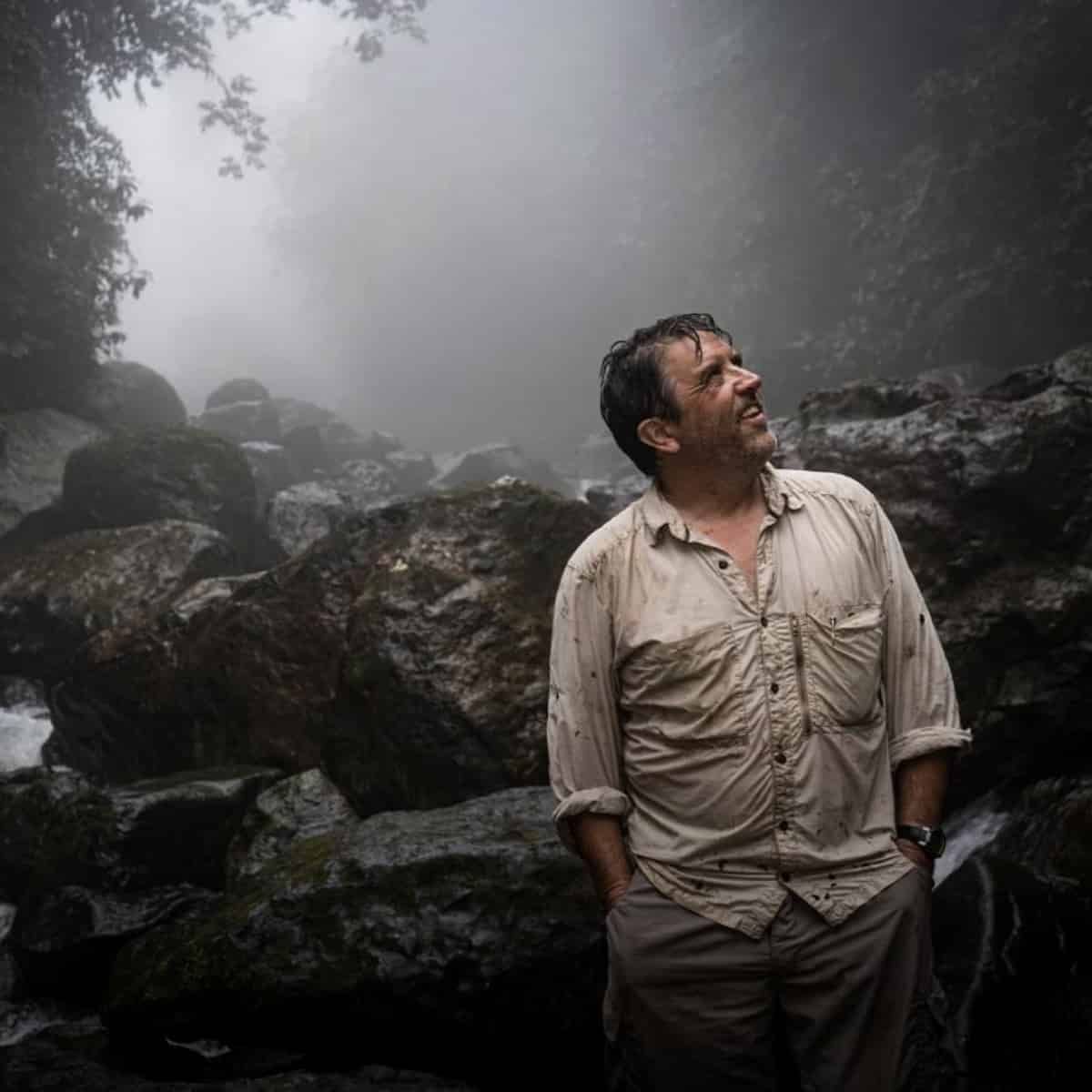
Cover Image: Clark during his 2022 expedition to Centinela, when he collected the specimen now recognized as a new Monopyle species. Photo credit: Camilo Restrepo-Villarroel.