
Nature is full of partnerships between organisms, but even relationships considered beneficial do not always work in the same way. In hornworts, an ancient group of land plants, this complexity can be seen in their relationship with cyanobacteria of the genus Nostoc. While the plants receive nitrogen fixed by the cyanobacteria, Nostoc finds a protected, resource-rich environment within hornwort tissues. A new study, however, shows that this partnership may be far less predictable than it seems.
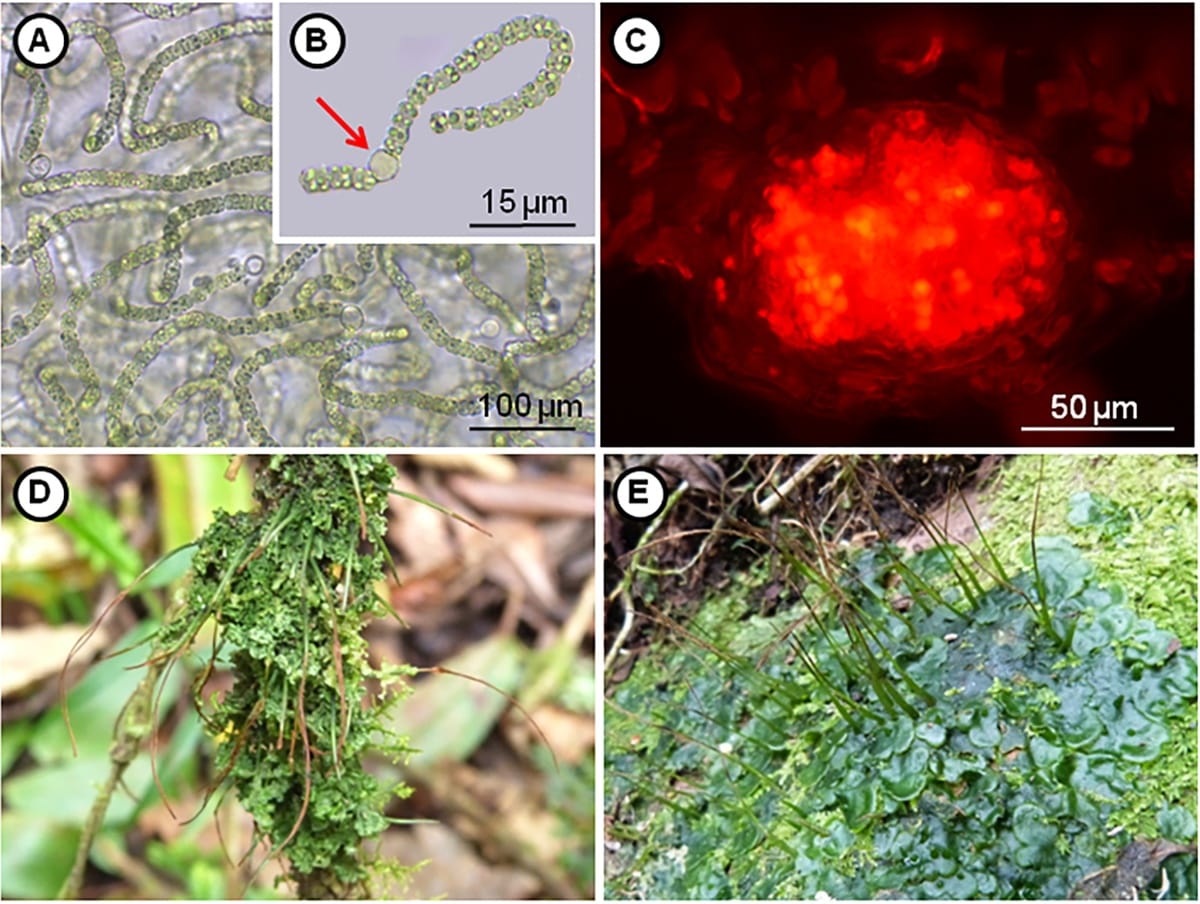
Dr Gabriel Peñaloza-Bojacá and colleagues investigated how Nostoc affects the early developmental stages of two hornwort species from the Brazilian Atlantic Forest, Nothoceros vincentianus and Dendroceros crispus. The researchers monitored plant survival and growth for 154 days, cultivating them in the presence or absence of a Nostoc strain originally h Nothoceros vincentianus.
The relationship between hornworts and Nostoc is particularly interesting because it begins early in the lives of these plants. Small mucilage clefts formed on the ventral surface of the h act as entry points for hormogonia, motile filaments produced by the cyanobacterium. Once the association is established, specialised Nostoc cells called heterocytes participate in atmospheric nitrogen fixation. The hornwort gains access to biologically fixed nitrogen, while the cyanobacterium receives shelter and resources provided by the plant. A single hornwort can even host different cyanobacterial strains, showing that this partnership is far from a simple relationship between two fixed partners.
Given this apparently beneficial relationship, it would be reasonable to expect that adding
Nostoc to the cultures would favour hornwort development. The results, however, were more complicated. Dendroceros crispus developed well throughout the experiment, whereas Nothoceros vincentianus showed lower survival and growth when cultivated in the presence of the cyanobacterium. Curiously, it was from Nothoceros vincentianus that the Nostoc strain used in the experiment had originally been isolated.
This apparent contradiction may reveal something important about the nature of the symbiosis itself. The Nostoc strain used had been isolated from a natural population of Nothoceros vincentianus different from the one that provided the spores used in the experiments. Previous studies have already indicated that hornworts may show low specificity towards their cyanobacterial partners, while still selecting differently among the partners available in the environment. Thus, belonging to the same host species does not necessarily mean that every combination of plant and Nostoc will work in the same way.
The experiment brought another surprise when hornwort spores were grown alongside the cyanobacteria. Although cyanobacteria capable of colonising the plants were present in the culture medium, and the young hornworts developed pores that would normally allow them to enter, the endosymbiosis was not fully re-established. In other words, plants and cyanobacteria were growing side by side, but they were unable to fully establish the partnership observed in nature.
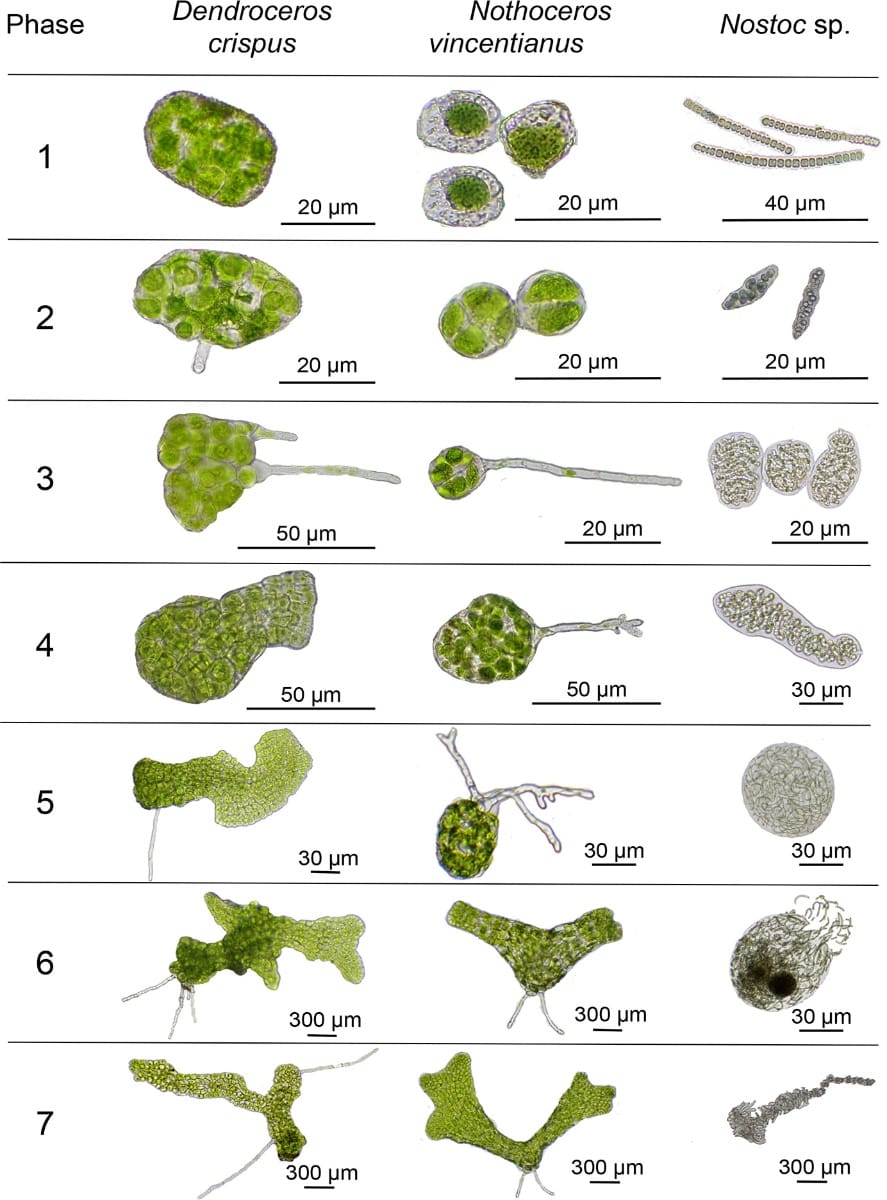
The plants’ own developmental stages may help explain some of these differences. Nothoceros vincentianus begins development from unicellular spores, whereas Dendroceros crispus has multicellular, chlorophyllous spores. The authors suggest that the early presence of Nostoc may have created competition for resources during the germination of Nothoceros vincentianus. The multicellular spores of Dendroceros crispus, by contrast, appear to have been more resistant to this potential competition.
Thus, when the partners meet may be just as important as the identity of the partners themselves.
These findings highlight a fundamental challenge in studies of symbiosis: reproducing an interaction in the laboratory does not necessarily reproduce the conditions that allow it to function in nature. Even carefully controlled experiments remove organisms from a much wider network of environmental influences. The origin of the cyanobacterium, the plant population, developmental stage, competition for resources, and other microorganisms present in the environment may all help determine whether the partnership becomes established and what benefits it provides.
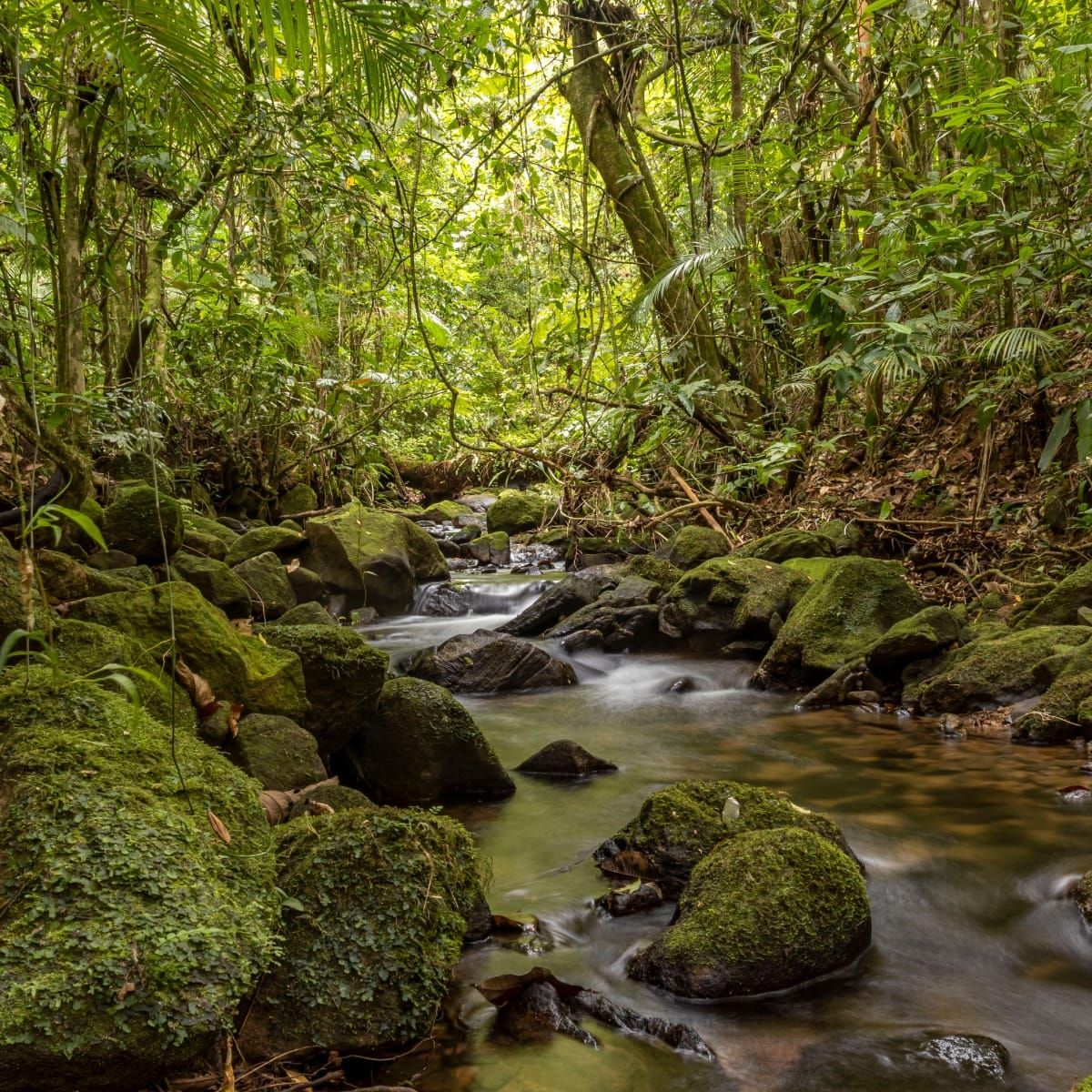
This is precisely where the Atlantic Forest becomes particularly important. The authors highlight that species from highly diverse ecosystems may provide valuable systems for investigating how ecological complexity shapes symbiotic relationships. In natural environments, hornworts do not choose their partners inside a Petri dish: they encounter different cyanobacterial strains in soils, on rocks and tree trunks, and within equally complex microbial communities. Understanding this diversity may help reveal why some associations become established while others apparently fail.
READ THE ARTICLE:
Peñaloza-Bojacá GF, Oliveira MF, Figueredo CC, Maciel-Silva AS. 2026. Hornwort-cyanobacteria interactions: exploring ontogeny in Nothoceros vincentianus and Dendroceros crispus growing together with Nostoc cyanobacteria. Anais da Academia Brasileira de Ciências 98. https://doi.org/10.1590/0001-3765202620241009
Portuguese translation by Pablo O. Santos
Cover picture by Jefferson Guimarães Santana (Pexels)