
Hello everyone, I'm (Alun) back for this week. I've been busy with a couple of things. One problem I'm working with is how we can work best with conferences.
Sponsorship is a fairly obvious answer, but we don't have any revenue so our budget for this has to be tiny. Looking at next year, I think I'd rather help smaller conferences where we can make a difference rather than contributing to bigger events. But I'd also like see if there are other ways we could help. For example, Juniper Kiss produced a focus month that tied in with State of the World's Plants and Fungi. A month might be a lot for a small conference, but a week highlighting the event, and some of the speakers, could allow us to help networking and visibility and offer something extra for a small event.
Currently, it's at the stage where I'm setting up lots of ideas to see what gets knocked down easiest. If you have any ideas you'd like to suggest then now's the time because we plan to have a meeting for strategy in December.
However, the next email with the week's stories, along with the latest botanical news, from Mastodon and Bluesky, and career opportunities, will be with you a little earlier than at, at the usual time next week.
Until next time,
Alun (webmaster@botany.one)
On Botany One
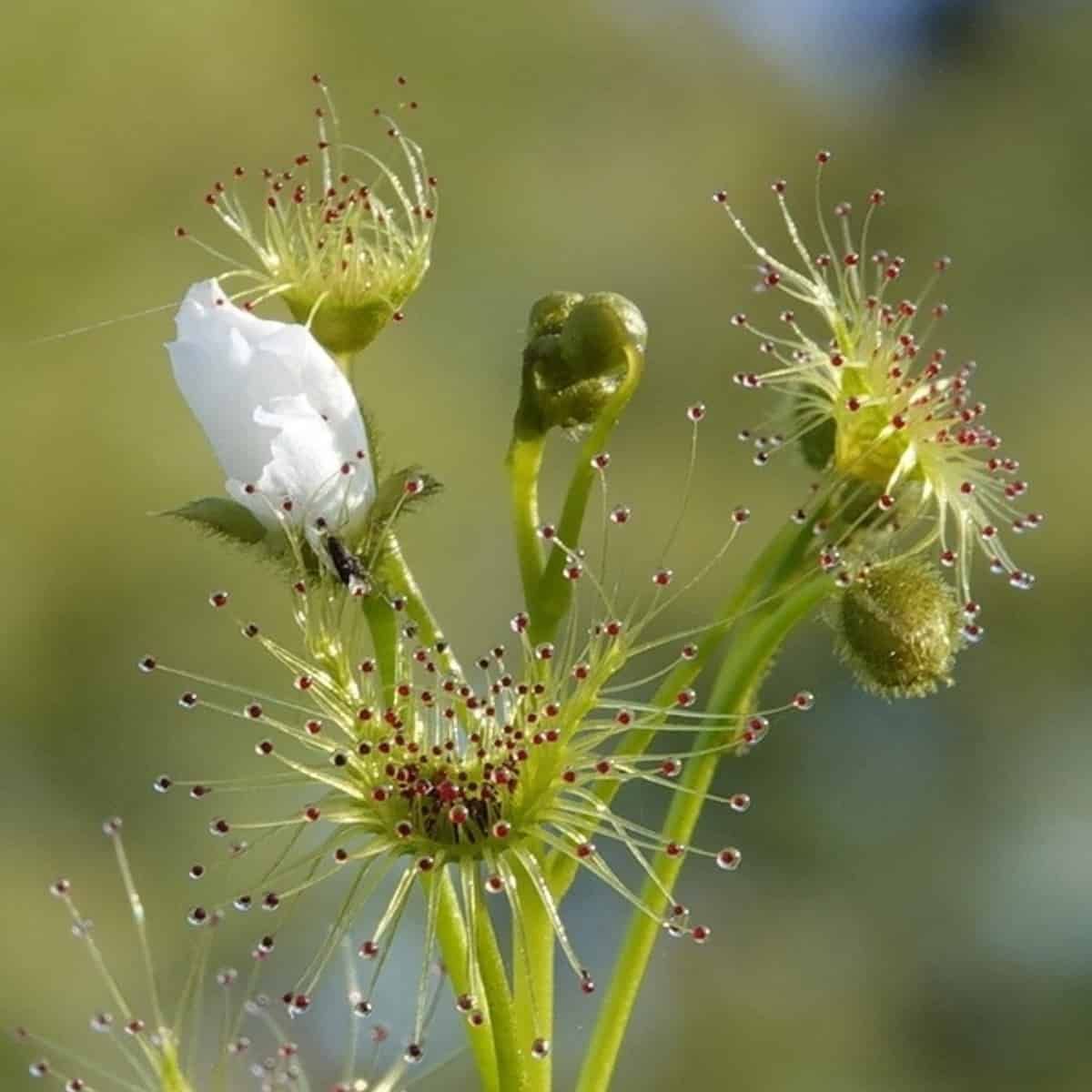
With Drosera hookeri, Danger Lurks Next Door
A study reveals how a carnivorous plant lures its own pollinators into traps and why self-pollination secures its survival.
No Kelp, No Tourism
Marine heatwaves have devastated Tasmania’s giant kelp forests, forcing a decline in diving and triggering a collapse in regional tourism.
Lydiane L. S. Bastos: Bringing Artificial Intelligence With the Restoration of the Amazon
Botany One interviews Dr Lydiane Lucia de Sousa Bastos, a seed biologist combining ecology, imaging and artificial intelligence to improve the conservation and restoration of Amazonian forests.
What Happens to Wild Bees When People Disappear?
After the evacuation of Japan’s Fukushima region, wild bees flourished in unexpected ways, revealing how nature responds when human activity disappears.
Billboards in the Meadow: Why Flower Size Matters More Than a Sea of Petals
More flowers do not always mean more bees. In nature’s visual marketing, floral display size commands pollinator attention and explains why a sea of tiny flowers can easily go unnoticed from the air.
This week's Sudoku Garden celebrated the observation of a rare plant, and Plant of the Week was the Cranberry. You can also see last week's Science Shared and last week's Week in Botany.
In AoBC Publications
- The thousand natural shocks: an Overview of the Special Issue on Plant Senescence
- Resilience to drought – new frontiers towards climate-smart crops and cropping systems
- Trophic plasticity and fungal partner shifts in early-diverging species of Cremastra and Oreorchis illuminate mycoheterotrophic evolution in Calypsoinae
News & Views
Pollinators don’t care about genome size!
Damian Vaz de Sousa, Connor Ryan, Michelle Greve, Kenneth C. Oberlander This is a plain language summary of a Functional Ecology research article which can be found here. New plant species can aris…
fesummaries.wordpress.com
Interview with Dean McCullough, BSBI Training Officer - Botanical Skills BSP-NI
Today's interview is between Rebecca Mason (RM), BSBI Communications Volunteer, and Dean McCullough (DMcC), who is Training Officer - Advanced Botanical Skills with our Botanical Skills (Northern Ireland) Project (BSP-NI). Dean's role is to deliver a range of training events and opportunities, and to support the National Plant Monitoring Scheme in Northern Ireland.
bsbi.org
Long-term climate change reshapes grassland community functional strategies without compromising functional diversity
Grasslands are experiencing several aspects of climate change at the same time. Warmer temperatures, more frequent droughts and rising carbon dioxide (CO₂) can all affect plants, but they may not change plant communities in the same way.
fesummaries.wordpress.com
Obituary Prof. Dr. Jörg Kudla
The Institute of Plant Biology and Biotechnology mourns the loss of Professor Kudla, who passed away on Sunday, 15 November 2026, at the age of 63.
uni-muenster.de
November 14, 2026: Lyman Woods
3:00 p.m., sunny, 45F
The leaves are rustling-dry and the Lonicera maackii still packed with pale leaves this afternoon. The sun is out, it is cool, and we nothing to do this evening, nothing to prepare for. It is a good afternoon for a long walk.
botanistsfieldnotes.com
Announcing the 2027 ASPB Plantae Fellows
ASPB is happy to announce the 2027 Plantae Fellows, an impressive group ready to bring their best to this resource for the global plant science community.
plantae.org
Can a plant’s neighbours and previous wounds influence where insects lay their eggs?
When an insect chooses a plant to feed on or lay its eggs, it can rely on chemical cues, such as the plant’s smell and taste. But these signals are not fixed.
fesummaries.wordpress.com
Passing the torch
This is the last time I’ll be posting the Plant Science Research Weekly series, so I thought I’d start with a little history. This series began in November 2016, with the name “What We’re Reading”…
plantae.org
News - New research unlocks nature's multilayered defences against crop pests and viruses
Researchers from the University of Nottingham, in collaboration with Syngenta and Keele University, have discovered how a commercial barley hybrid uses three complementary natural defences to protect itself against aphids and the damaging viruses they spread. The findings could help breeders develop crops with stronger natural protection against pests and diseases.
nottingham.ac.uk
Uncovering how plants survive
Hidden World by Kevin Tarner & Rachel Hughes explores how plants defend against various stresses and how humans utilise some of these defences.
plantcuttings.uk
Science Shared
Three botany papers widely shared on Bluesky this past week were:
1. Native architecture of a mitochondrial oxphosome
Melnik, M. et al. · bioRxiv · 1 post · 146 likes · 50 reposts on Bluesky
Mitochondrial cristae are the primary bioenergetic units of eukaryotic cells, yet the molecular principles that dictate their morphologies remain largely unknown. Using in situ cryo-electron tomography and integrative modeling, we resolve the native organization of the respiratory machinery in the diatom Phaeodactylum tricornutum.
Mariia Melnik @mariiamelnik.bsky.social · on Bluesky
Have you ever seen the crazy shapes of mitochondrial cristae that exist in nature? In our in situ study (and my first PhD project ⚡), we leveraged the power of cryoET to describe molecular architecture of tubular cristae in diatom Phaedactylum tricornutum. www.biorxiv.org/content/10.6...
View on Bluesky →2. An extracellular contractile injection system for receptor-mediated protein delivery into plant cells
Legendre, M. G. et al. · Nature Nanotechnology · 1 post · 69 likes · 43 reposts on Bluesky
Protein delivery into plant cells remains a major barrier in plant biotechnology. The Photorhabdus virulence cassette (PVC) is an extracellular contractile injection system, a phage tail-like bacterial nanomachine that naturally delivers proteins into insect host cells. Here we retargeted PVCs to plants by engineering their tail fibres to recognize the plant cell surface receptor FLAGELLIN SENSITIVE 2 (FLS2).
Gozde Demirer @prof-gozde.bsky.social · on Bluesky
Delivery remains a major bottleneck in plant engineering. Many plant species and cell types are difficult to access with the tools needed to study and engineer them. Our paper in Nature Nanotechnology introduces a new approach to targeted delivery into plant cells!
www.nature.com/articles/s41... 🧵👇
 View on Bluesky →
3. Experimental context shapes interpretation of immune outputs in Arabidopsis
Moreno‐Pérez, A., Sha, H., Coaker, G. · New Phytologist · 2 posts · 57 likes · 33 reposts on Bluesky
Pattern recognition receptors (PRRs) activate plant immunity through recognition of extracellular immunogenic patterns, including microbe‐associated molecular patterns (MAMPs). PRR activation is commonly assessed using different experimental systems, including sterile‐grown seedlings and soil‐grown rosettes. We systematically compared Arabidopsis PRR immune outputs triggered by the bacterial MAMPs elf18 and flg22 across a range of concentrations in seedlings and rosettes using assays for reactive oxygen species (ROS), cytosolic calcium influx, mitogen‐activated protein kinase (MAPK) activation, and seedling growth inhibition (SGI).
Gitta Coaker @gittacoaker.bsky.social · on Bluesky
Why do different plant immune assays give different results? Our new paper compares PRR immune outputs across tissues and MAMP concentrations. Readouts are not interchangeable, and experimental context matters.
Many thanks to @alba-mp.bsky.social for leading experiments!
doi.org/10.1111/nph....
You can see the full list with more details at Science Shared: November 21.
Careers on Bluesky
Please note these are not jobs I am offering. Nor can I help you with any visa requirements. At time of writing there are around 60 other jobs posted at Botany One.
Post Doc Res Assoc-CY Yoo Lab // Utah
www.higheredjobs.com/faculty/deta...
The Yoo Lab in the School of Biological Sciences seeks a postdoctoral research to study protein complexes of phytochrome B, a plant light and temperature sensor, using proximity labeling in Arabidopsis.
Assistant/Associate Project Scientist // Berkeley
www.higheredjobs.com/faculty/deta...
University of California, Berkeley seeks applications for an Assistant Project Scientist in the Luan Lab, in the area of protein biochemistry and cell biology of plants.
Postdoctoral Researcher, RS Plant-fungal interactions // London
www.jobs.ac.uk/job/DTR055/p...
We are seeking a highly motivated and enthusiastic Postdoctoral Researcher to join the research group of Dr Silvia Pressel in the Science Department, Natural History Museum, London.
University Assistant Professor/Associate Professor // Cambridge
www.jobs.ac.uk/job/DTQ482/u...
We welcome applicants working in all aspects of crop biology, especially those developing and implementing intelligent software for AI-guided crop improvement.
Postdoctoral Research Associate // Durham
www.jobs.ac.uk/job/DTR486/p...
Applications are invited for Computer Vision, Image Processing and Generative AI to contribute to CHLORIS (Computational Herbarium Learning for Optical Reconstruction and Identification Systems).
Postdoctoral Research Associate // Edinburgh
www.jobs.ac.uk/job/DTS614/p...
Your main focus will be integrating physiological field measurements with remote sensing data to quantify vegetation productivity and seasonal activity across Antarctic landscapes.
Cover Image: Drosera hookeri by John Cull Public Domain