
Dearest Gentle Reader,
It seems the botanical world has been positively scandalous this week! In the Andes, a newly described sage has been named after none other than Lionel Messi. Meanwhile, flowers have been changing their colours as though preparing for the season's grandest ball. Some remain just as attractive to pollinators in their new attire, while others discover that bees have rather strong preferences when it comes to yellow and red.
But appearances, dear readers, are only the beginning. In Borneo, a rather ruthless vine has found a way to eliminate its enemies before they even take their first bite. And beneath the waves, an excess of nutrients is causing trouble for the tiny creatures that call seagrass meadows home. Who would have thought that plants could be involved in so much drama?
Fortunately, no botanical secret stays hidden for long at Botany One! Below, you will find this week's stories, along with the latest botanical news, conversations from Mastodon and Bluesky, and career opportunities.
Until next time,
Carlos (webmaster@botany.one)
On Botany One
Highly Nutritious Seagrass and Invertebrates in Decline
Research conducted in the British Isles shows how nitrogen enrichment can drastically reduce the abundance of small invertebrates in seagrasses.
Heat Alters Floral Colour, but Flowers Remain Conspicuous to Pollinators
A study reveals how floral chemistry reinvents itself in the Mediterranean summer to protect petals and attract pollinators.
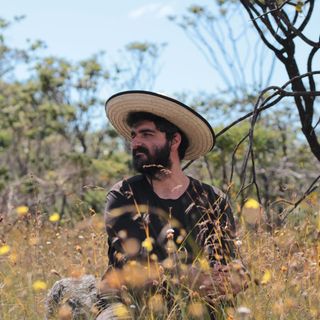
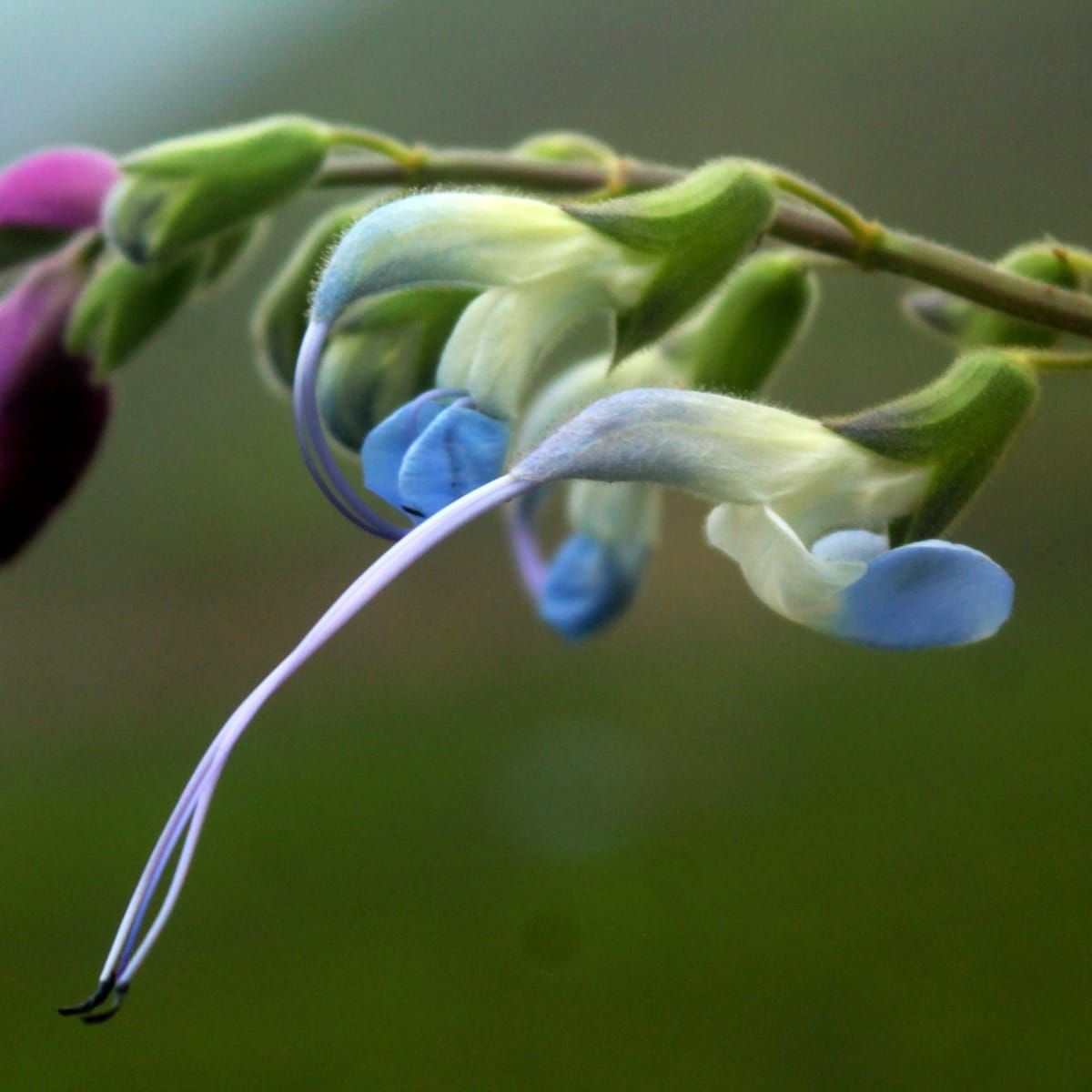
The Sky-Blue and White Flower: How a New Andean Sage Ended Up With a Very Famous Name
Botany One talks with Rolando Uría, an Argentine agronomist and Salvia specialist who, together with Peruvian researchers Paúl Gonzáles Arce and Jean Capcha-Ramos, identified a new Peruvian species that went viral thanks to its name.
When Yellow Flowers Turn Red, Do Bees Get the Message?
A 25-metre scaffold helped researchers discover that yellow flowers of a rare Chinese rainforest tree receive more bee visits than red ones.
The Vine That Eliminates Caterpillars Before Their First Bite
The arms race between plants and insects adds a new front: Aristolochia does not wait to be devoured, but executes a preemptive revenge by sacrificing its own tissue to desiccate and expel butterfly eggs at their most vulnerable stage.
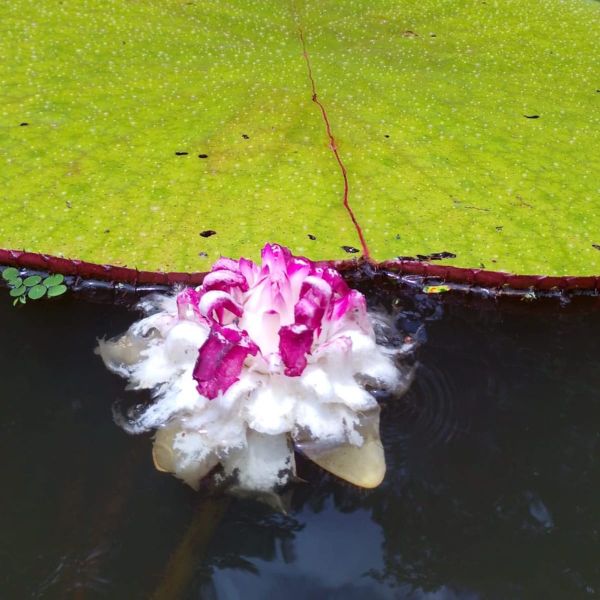
This week's Sudoku Garden commemorated Henri Dutrochet, and Plant of the Week took us to the discovery of Victoria colombiana. You can also see last week's Science Shared and Week in Botany.
In AoBC Publications
- Simulation of annual productivity and water dynamics of the winter wheat–summer maize production system
- Fungal taxa transported by long-distance migratory birds to the boreal north
- Plant–soil feedbacks and seed dispersal through space and time: toward an integrative framework
News & Views
Tree Search - Ancient Tree Inventory
Use our map to take a look at the trees that have been recorded across the UK.
ati.woodlandtrust.org.uk
Once thought safe, South Island's giant wētā are disappearing
Conservationists fear the clock is ticking for New Zealand's "large and charismatic" Southern Alps giant wētā.
rnz.co.nz
Bristol aims to become UK’s first ‘wetland city’ and reduce flood risk
Five-year project will create wildlife corridors by building wetlands and increase access to green and blue spaces
theguardian.com
Severe drought worsens climate change forecasts for cacti
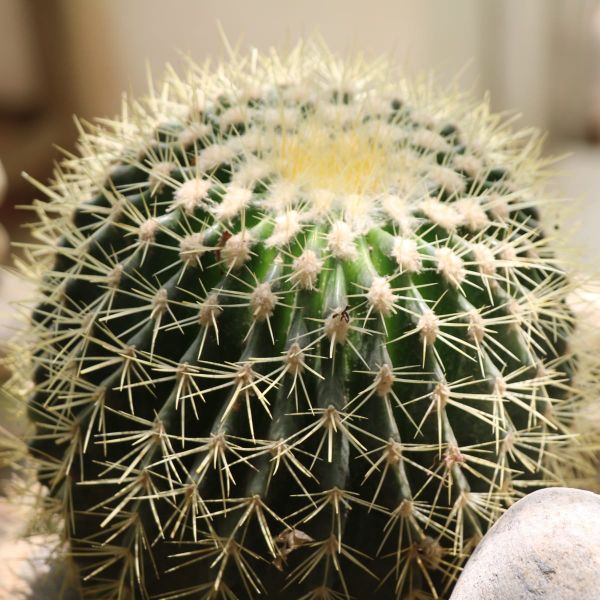
A 'Nature' study coauthored by members of the IUCN Species Survival Commission (SSC) Cactus and Succulent Plants Specialist Group (CSSG) finds severe drought worsens climate change forecasts for cacti: over a quarter of nearly 1,000 species could lose at least 80% of suitable habitat by 2100, informing updated Red List assessments.
iucn.org
Insects, human societies and the things that make life worth living – another new paper about why these small animals matter!
Over the past few weeks I’ve written about two new review papers that I’ve co-authored with international colleagues. The first looked at the importance of insects for birds, mammals an…
jeffollerton.co.uk
Planting trees: Bringing beauty and biodiversity to your garden - Cambridge University Botanic Garden
botanic.cam.ac.uk
Tomorrow’s forests: how and why to make them more resilient? A public consultation
OptFORESTS invites the forest community to share its needs, challenges, and best practices on forest genetic resources and resilience through three online questionnaires. Open until 30 November 2026.
optforests.eu
Cambridge Botanic Lights 2026 - Cambridge University Botanic Garden
botanic.cam.ac.uk
Natural capital: how much is a wetland worth to the economy? | Active Sustainability
Wetland conservation is not just essential for protecting the environment and biodiversity, it has important economic benefits and brings about better well-being in society.— Read on www.activesust…
thegoodtree.blog
Science Shared
Three botany papers widely shared on Bluesky this past week were:
1. Severe drought and warming increase the extinction risk of cacti
Pillet, M. D. et al. · Nature · 1 post · 122 likes · 44 reposts on Bluesky
Here we integrate new spatial data on severe drought, including compounding effects of warmer temperatures, with a comprehensive curated dataset of cactus occurrences (648,316 records) and species distribution models to assess how severe drought alters projected suitable climatic area for 993 species of Cactaceae, a highly threatened family that is commonly considered drought tolerant.
Discussed on Bluesky by @bjenquist.bsky.social.
2. How to build a shoot: insights from Physcomitrium patens
Howe, S. A., Moody, L. A. · New Phytologist · 2 posts · 44 likes · 25 reposts on Bluesky
The evolution of body plans with multiple cell layers provided structural rigidity and enabled tissue specialisation, which were both essential for the colonisation of land by plants.
Laura Moody @moodytomato.bsky.social · on Bluesky
Delighted to share our New Phytologist Tansley insight: “How to build a shoot: insights from Physcomitrium patens”. A big shoutout to my PhD student Simon Howe for his excellent work on this paper, and for producing some mosstastic figures (moss-terpieces!). Read it here: doi.org/10.1111/nph....
View on Bluesky →3. A large phylogenetic tree for euphyllophytes
Carruthers, T. et al. · Applications in Plant Sciences · 1 post · 39 likes · 21 reposts on Bluesky
We generated a phylogenetic tree (and 1000 bootstrap trees) with divergence times that span euphyllophytes.
Botanical Society of America @botsocamerica.bsky.social · on Bluesky
A large phylogenetic tree for euphyllophytes. New #AppsPlantSci research by @tomacarruthers.bsky.social, @blackrim.bsky.social, et al introduces a dated phylogenetic framework that enables major insights into #PlantEvolution doi.org/10.1002/aps3... #botany #angiosperms #evolution #phylogeny
View on Bluesky →You can see the full list with more details at Science Shared: November 14.
Careers on Bluesky
Please note these are not jobs I am offering. Nor can I help you with any visa requirements. At time of writing there are around 60 other jobs posted at Botany One.
Great opportunity to work with modeling carbon dynamics across tropical forests at JPL!
citjpl.wd5.myworkdayjobs.com/Jobs/job/JPL...
Posted by @lufalves.bsky.social
Do you want to do a PhD studying convergent evolution?
Join my lab at Uppsala and use buzz-pollinated flowers as a model system to study floral convergence. You can work with diverse flowers, bees, and robots. To learn more and apply, follow the link. uu.varbi.com/en/what:job/...
Please share!
Posted by @nicrodemo.bsky.social
The scholarships for master and PhD students in the plant sciences are offered from the “Freundeskreis des Botanischen Gartens in Mainz”.
Details on scholarships: gem.uni-mainz.de/registration
Posted by @plantsciencedbg.bsky.social
Cover Image by Jean Capcha Ramos via iNaturalist CC BY 4.0