
It's a diverse selection of papers this week. As usual, papers behind a paywall are marked 💰. Otherwise, they're free to access at time of checking.
How this works
We scan posts by people on the Botany Auto list and pull out the entries with links to papers. Every time a paper gets a post written about it it gets 4 points. It gets 3 points for a repost and 1 point for a like.
We try to add people to the Botany Auto post, if they post about Botany (doesn't have to be links to papers) around 20% of the time or more. The belief is that because the list as a whole shares an interest in plants, it's this material that tends to rise to the top.
If you think you should be on the Botany Auto list, but aren't, please drop a message to @botany.one on Bluesky.
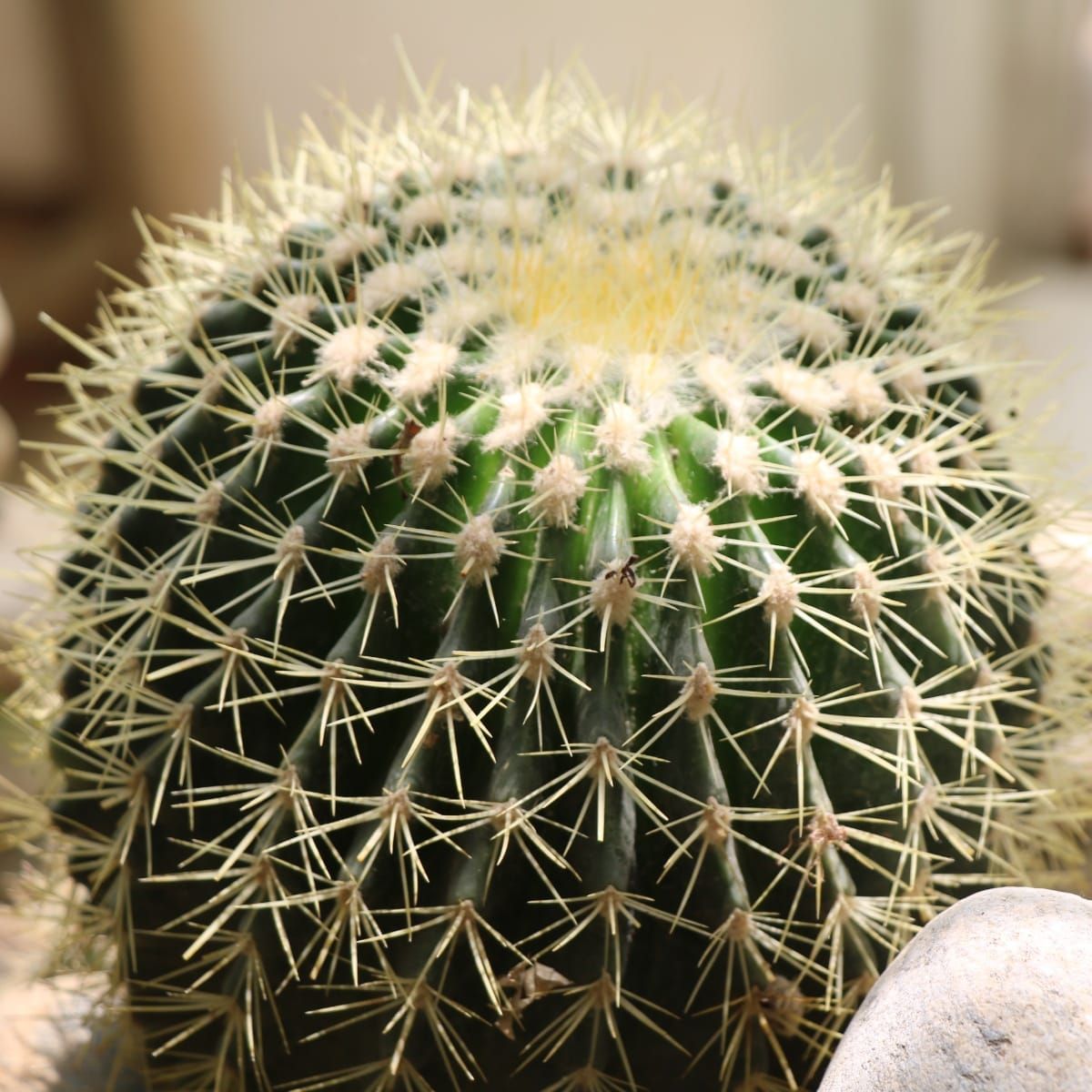
1. Severe drought and warming increase the extinction risk of cacti
Pillet, M. D. et al. · Nature · 1 post · 122 likes · 44 reposts on Bluesky
Here we integrate new spatial data on severe drought, including compounding effects of warmer temperatures, with a comprehensive curated dataset of cactus occurrences (648,316 records) and species distribution models to assess how severe drought alters projected suitable climatic area for 993 species of Cactaceae, a highly threatened family that is commonly considered drought tolerant.
Discussed on Bluesky by @bjenquist.bsky.social.
2. How to build a shoot: insights from Physcomitrium patens
Howe, S. A., Moody, L. A. · New Phytologist · 2 posts · 44 likes · 25 reposts on Bluesky
The evolution of body plans with multiple cell layers provided structural rigidity and enabled tissue specialisation, which were both essential for the colonisation of land by plants.
Laura Moody @moodytomato.bsky.social · on Bluesky
Delighted to share our New Phytologist Tansley insight: “How to build a shoot: insights from Physcomitrium patens”. A big shoutout to my PhD student Simon Howe for his excellent work on this paper, and for producing some mosstastic figures (moss-terpieces!). Read it here: doi.org/10.1111/nph....
View on Bluesky →3. A large phylogenetic tree for euphyllophytes
Carruthers, T. et al. · Applications in Plant Sciences · 1 post · 39 likes · 21 reposts on Bluesky
We generated a phylogenetic tree (and 1000 bootstrap trees) with divergence times that span euphyllophytes.
Botanical Society of America @botsocamerica.bsky.social · on Bluesky
A large phylogenetic tree for euphyllophytes. New #AppsPlantSci research by @tomacarruthers.bsky.social, @blackrim.bsky.social, et al introduces a dated phylogenetic framework that enables major insights into #PlantEvolution doi.org/10.1002/aps3... #botany #angiosperms #evolution #phylogeny
View on Bluesky →4. When insects smell like plants: how sensory bias shapes insect pheromone evolution
Darragh, K. · Evolution · 1 post · 45 likes · 18 reposts on Bluesky
Here, I propose that adaptation of insect sensory systems to plant chemistry biases the origin and diversification of insect pheromones.
Kathy Darragh @kdarragh.bsky.social · on Bluesky
I had fun writing this insight piece for Evolution on the role of sensory bias in shaping insect pheromone evolution! academic.oup.com/evolut/artic...
View on Bluesky →5. A hidden T-DNA-linked inversion-duplication is associated with a light-dependent Arabidopsis mutant phenotype
del Pilar Martinez, M. et al. · Plant Cell Reports · 1 post · 33 likes · 18 reposts on Bluesky
A hidden T-DNA-linked genomic rearrangement alters gene dosage and exacerbates light-dependent phenotypes in Arabidopsis, highlighting the importance of structural genome validation for reliable interpretation of mutant phenotypes.
Boas Pucker @bpucker.bsky.social · on Bluesky
Why is long-read-based genotyping important when working with T-DNA lines?
Have a look at this example: doi.org/10.1007/s002...
@puckerlab.bsky.social
#Genomics #LongReads #PlantSciences
6. Waterlogging adaptation in mangroves: a review of aeration through aerenchyma and its functions
Inoue, T. · Journal of Experimental Botany · 1 post · 28 likes · 14 reposts on Bluesky
This review focuses on studies related to aerenchymal tissues and their functions in mangrove trees, particularly from the perspective of the hypoxic tolerance of trees, which is crucial for understanding ecophysiological mechanisms underlying mangrove tree growth and evaluating functions of mangrove ecosystems.
Journal of Experimental Botany @jxbotany.bsky.social · on Bluesky
Mangrove trees have exposed above-ground roots and a connected lacunae structure inside the roots. These traits exist across families that independently invaded tidal flats and are an adaptation to repeated tidal flooding – Tomomi Inoue doi.org/10.1093/jxb/...
View on Bluesky →7. Floodproof mustards: adaptation strategies in wild
Brassicaceae
Mustroph, A., Mandáková, T. · Journal of Experimental Botany · 1 post · 20 likes · 12 reposts on Bluesky
This review summarises anatomical, physiological, and molecular strategies of flooding adaptation in wild Brassicaceae, with a focus on the ecologically diverse tribe Cardamineae.
Journal of Experimental Botany @jxbotany.bsky.social · on Bluesky
In this review, Mustroph & Mandáková summarise the anatomical, physiological and molecular strategies of flooding adaptation in wild Brassicaceae species, with a primary focus on the diverse and ecologically versatile tribe Cardamineae. doi.org/10.1093/jxb/...
View on Bluesky →8. Phytoglobin 1 in plant hypoxia acclimation and development: integrating oxygen sensing, nitric oxide homeostasis, and redox balance
van der Wijk, E., Xu, J., Sasidharan, R. · Journal of Experimental Botany · 1 post · 17 likes · 11 reposts on Bluesky
Here we provide an overview of the current understanding of how PGB1 biochemistry, localization, and regulatory architecture are connected and of relevance for hypoxia acclimation.
Journal of Experimental Botany @jxbotany.bsky.social · on Bluesky
Phytoglobin 1 acts as a central hub linking hypoxia signalling with nitric oxide turnover and redox–metabolic regulation during plant developmental and stress responses – van der Wijk et al. 🔗 doi.org/10.1093/jxb/...
View on Bluesky →9. C4 photosynthetic pathway fluxes in transgenic rice plants
Baccolini, C. et al. · Nature Plants · 1 post · 12 likes · 12 reposts on Bluesky
Here we developed new transgenic rice lines and protocols to detect C4 cycle activity: CO2 fixation into C4 acids by the carboxylation of a C3 compound, decarboxylation, refixation of CO2 by Rubisco and regeneration of the C3 donor.
Crop Science @cropsci.bsky.social · on Bluesky
C4 photosynthetic pathway fluxes in transgenic rice plants www.nature.com/articles/s41... #CropScience #CropSci
View on Bluesky →10. Genetic and molecular networks mediating potato tuber development
Sinha, D. et al. · New Phytologist · 2 posts · 12 likes · 9 reposts on Bluesky
In this review, we provide a comprehensive overview of the genetic and molecular mechanisms underlying underground and aerial tuber formation, their regulation by antituberigen factors, key genes controlling stolon‐to‐tuber transitions, the role of StSWEET‐StSUT transporters in establishing the source–sink relationship essential for tuber development, and the evolution and global dissemination of modern potato cultivars.
Crop Science @cropsci.bsky.social · on Bluesky
Genetic and molecular networks mediating potato tuber development nph.onlinelibrary.wiley.com/doi/10.1111/... #CropScience #CropSci @newphyt.bsky.social
View on Bluesky →11. Roots to simplicity: when evolution removes a key organ
Fairburn, R., Ware, A., Bishopp, A. · New Phytologist · 2 posts · 15 likes · 7 reposts on Bluesky
We identify several ecological niches/life habits in which rootless vascular plants have evolved: aquatic environments, canopies, arid environments, and carnivory.
12. Decomposition and mycorrhizal suppression of saprotrophs remain stable after wildfire and clearcut disturbance in boreal forests
Callebaut, T. et al. · New Phytologist · 2 posts · 18 likes · 5 reposts on Bluesky
We quantified mycorrhizal suppression of saprotrophs and decomposition in needle and humus litter through a root‐exclusion experiment in 31 sites across wildfire (4–375 yr since disturbance) and clearcut chronosequences (1–109 yr since disturbance) in northern Sweden.
13. Multiplexed profiling of transcriptional regulators in plant cells
Alamos, S. et al. · Nature Biotechnology · 1 post · 16 likes · 6 reposts on Bluesky
Here we present enrichment of nuclear trans -elements reporter assay in plants with sequencing (ENTRAP-seq), a high-throughput method that introduces protein-coding libraries into plant cells to drive a nuclear magnetic sorting-based reporter, enabling multiplexed measurement of regulatory activity from thousands of protein variants.
14. From plant blindness to plant awareness: a narrative and visual framework for botanical literacy
Navarro, L. · Annals of Botany · 2 posts · 10 likes · 5 reposts on Bluesky
In this Perspective, I argue that narrative and visual storytelling can help shift attention from plant invisibility to plant awareness.
15. Managing water on plant leaf surfaces: roles and regulation of hydrophobicity
Hashimoto, S., Itoh, J. I. · Journal of Experimental Botany · 1 post · 10 likes · 6 reposts on Bluesky
This review integrates current understanding of the biological significance of hydrophobicity in maintaining plant fitness, the hierarchical surface architectures such as epidermal roughness and epicuticular wax crystals that determine hydrophobicity, and the molecular genetic pathways that control these structures.
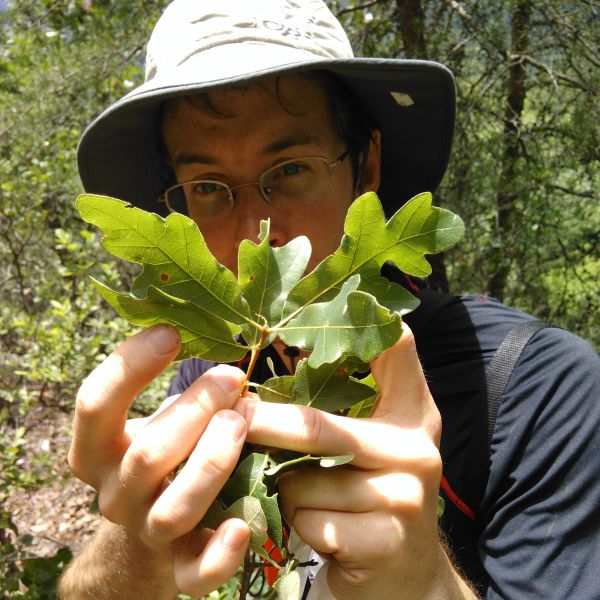
16. Assessing the population genetics of Quercus tardifolia and other red oaks in west Texas
Koontz, A. C. et al. · International Journal of Plant Sciences · 4 posts · 10 likes · 2 reposts on Bluesky
Here, we describe our research delineating species boundaries in a group of red oaks found in the Chisos and Davis Mountains of west Texas, with a focus on Quercus tardifolia, the lateleaf oak, which was thought to have gone extinct in 2011 before its identification in Big Bend National Park in 2022 and other locations thereafter.
17. A developmentally scheduled inhibitory polarity circuit centers the stomatal pore
Lebecq , A. et al. · 1 post · 12 likes · 5 reposts on Bluesky
Here we show that pore position arises from a combination of pole avoidance and gradient centering in the membranes and wall dividing sister guard cells.
18. Successful predictive modeling of pollen fitness phenotypes is enabled by measures of expression specificity
Mueller, S. A. F. et al. · The Plant Cell · 1 post · 8 likes · 6 reposts on Bluesky
We leveraged a large set of fluorescently-marked insertional mutations, the Ds-GFP lines, to link fitness effects to specific genes.
19. Metabolic Snorkeling – The Metabolic Interaction Between Plant Organs and Tissues with different Oxygen Availabilities
Herfurth, F., Fürtauer, L., van Dongen, J. T. · Journal of Experimental Botany · 1 post · 11 likes · 5 reposts on Bluesky
The apparent metabolic interplay between hypoxic and normoxic tissue can facilitate the plant to endure differing oxygen availabilities between tissues and organs without active oxygen circulation. Here, we define this mechanism as ‘metabolic snorkeling’.
20. Direct regulation of a tRNA modification enzyme by ppGpp links stress signaling to translational control and biofilm development
Trinquier, A. E. et al. · Science Advances · 1 post · 10 likes · 5 reposts on Bluesky
We show that the alarmone guanosine tetraphosphate (ppGpp) directly inhibits MnmE (TrmE), a conserved tRNA-modification GTPase required for methylaminomethyl (mnm) modification of wobble uridine.
Cover image by Nabin K. Sapkota (Wikimedia Commons, CC BY-SA 4.0).