
Plants are incredibly diverse, and so are botanists! In its mission to spread fascinating stories about the plant world, Botany One also introduces you to the scientists behind these great stories.
Today, we have Dr Sean Hoban. Hoban thinks of himself as a conservation biologist first: he wants to understand how plants and their populations work, but what he ultimately seeks is to see that knowledge used in the real world. His team integrates ideas and tools from botany, evolution, and ecology to help conserve plants both in situ and ex situ.
Hoban is a Senior Scientist and Tree Conservation Biologist at The Morton Arboretum near Chicago. The Arboretum has been researching and conserving trees for more than a hundred years, while also working with communities and educators to foster a love of trees and to share knowledge about tending to them, so it’s a good home for me. His research includes understanding small and declining populations, identifying threats to genetic diversity, prioritising plant species for conservation, and figuring out how well seed banks and botanic gardens conserve diversity. Hoban is also interested in seed dispersal, biogeography, and how forests respond to increasing drought and heat.
One of the most central areas of Hoban's work focuses on translating conservation science into practical tools, including conservation gap analyses for botanic gardens and indicators for monitoring genetic diversity at national and global scales, such as under the Convention on Biological Diversity. You can follow his work at his lab website, LinkedIn and Bluesky.
What made you become interested in plants?
I think it started with two things happening when I was young. One was becoming aware of the deforestation crisis. Amazon deforestation was frequently in the news when I was growing up, and I remember my shock at the scale of what was being lost. It was probably my first realisation that something as enormous and vital for life as a forest could be threatened by humans.
At the same time, I did a lot of hiking and camping in my teenage years. I fell in love with being under a tree canopy and started paying attention to the trees themselves, not just forests as scenery, but individual species and how different they could be. I became interested in looking closely at trees and thinking about how they survive: how they reproduce, tolerate stressful conditions, and persist for such long periods.
Those two interests, fascination with forests and concern about their loss, came together in my interest in plant conservation biology.
What motivated you to pursue your current area of research?
I’ve always been drawn toward applied science. I love understanding how the natural world works, but I also want science to be in the service of society. I want to help us become better caretakers of the world around us. That motivation has shaped the questions I choose and the scale at which I work.
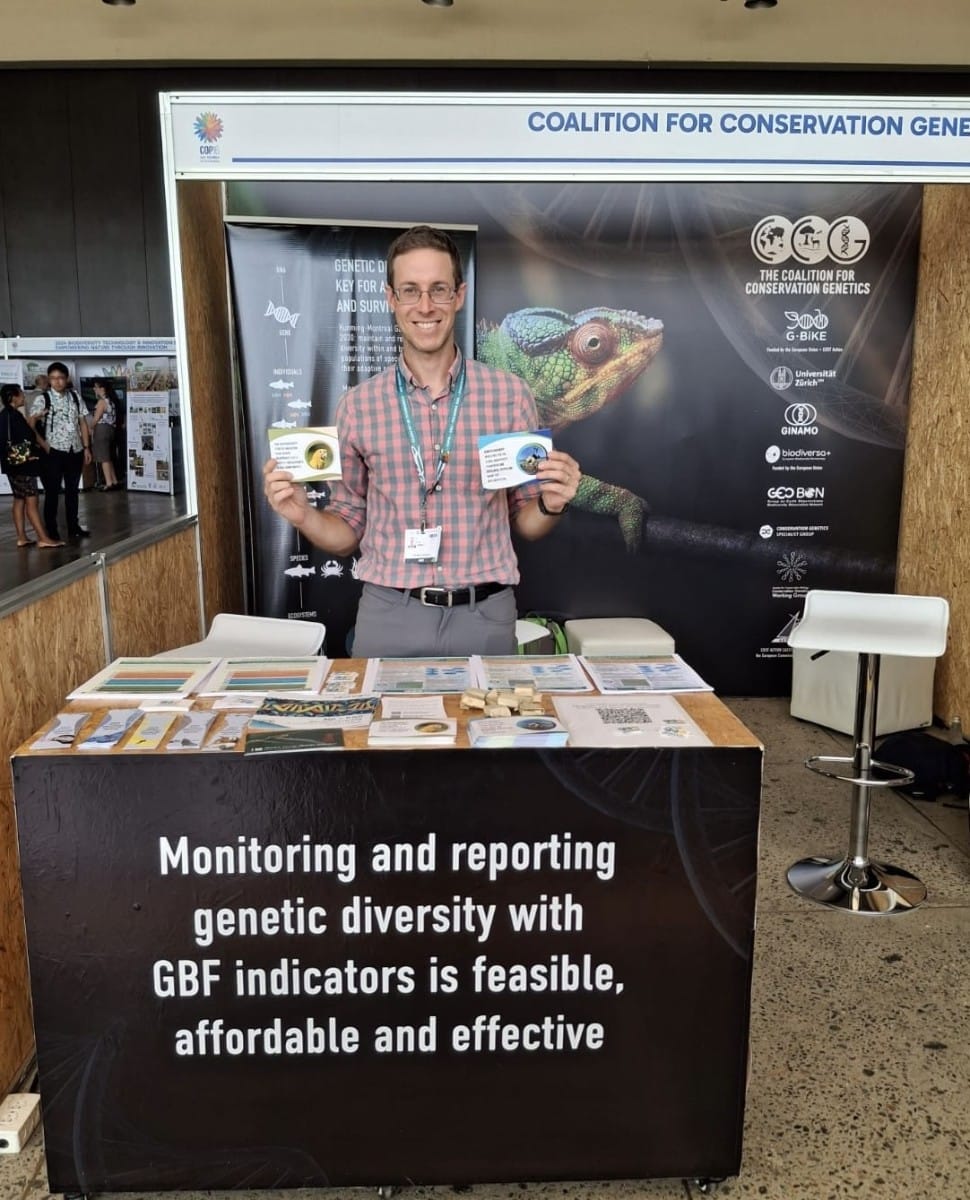
It is also why a significant part of my research has moved toward conservation policy and developing tools that other people can actually use. For example, I’ve worked on conservation gap analyses that help identify which species and populations are not yet sufficiently protected by botanical gardens. I also helped create, test, improve, and train people on how to work with indicators of genetic diversity that countries can use to monitor and then take action to restore nature, under national and international commitments.
I love being a part of the process of moving from scientific knowledge to conservation action. And I love bringing more academic scientists out into the policy and management space. We can learn an enormous amount about genetic diversity, ecology, and threats to species, but ultimately we need to turn that knowledge into decisions: What should we conserve? How? And how can we tell whether our efforts are working?
What is your favourite part of your work related to plants?
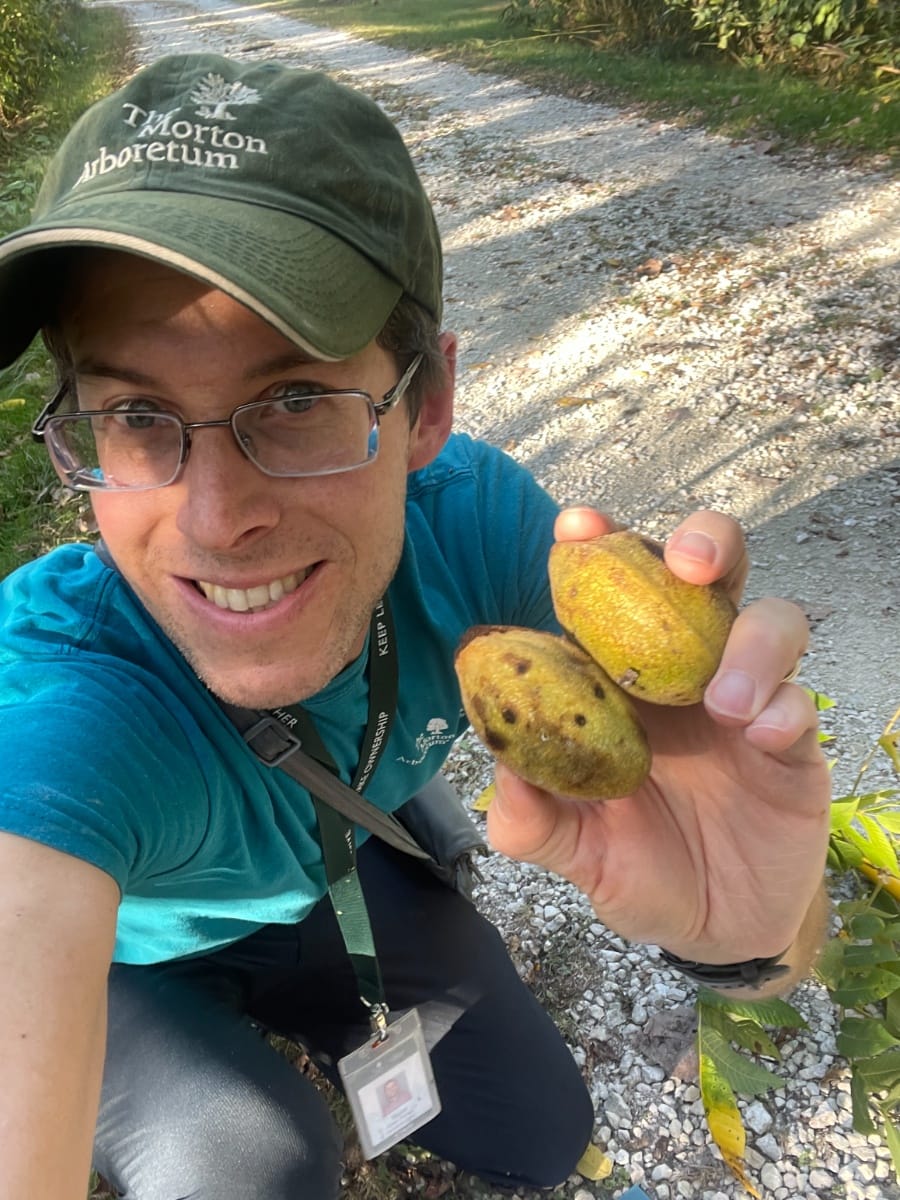
I love seeds. I am fascinated by seeing a plant produce seeds, watching how those seeds disperse, and then seeing seedlings establish and grow. A seed is such a small piece of life, but inside it is the species’ genetic inheritance and the possibility of a whole new plant.
Seeds also connect many parts of my research. Dispersal determines how populations are connected across landscapes, and across time, from years to millennia. Seed collection is one of our important tools for ex situ conservation and something I’ve been privileged to take part in, actually helping add to the living collections at The Morton Arboretum. And regeneration in wild populations, whether seedlings can establish and survive, is fundamental to whether a population or forest will persist into the future.
There is also something wonderful about seeing and holding (and planting) seeds. A lot of my work involves genetic data, computer models, large datasets, and conservation policy, which can become abstract. Finding seeds, or seeing seedlings emerge, brings everything back to the plant itself. It is a reminder of what the analyses and conservation plans are intended to protect.
Are any specific plants or species that have intrigued or inspired your research? If so, what are they and why?
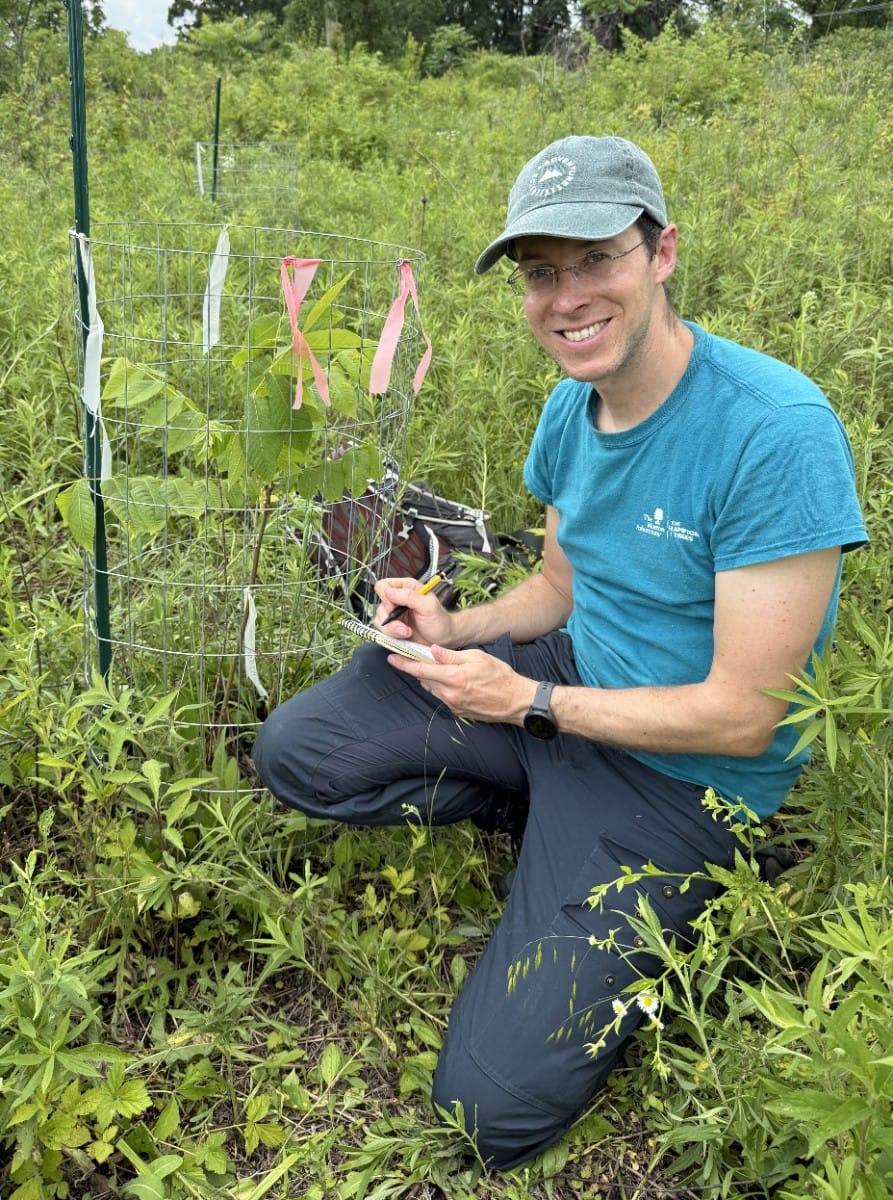
I’ve worked intensively with the butternut tree (Juglans cinerea) for 20 years, and it is a tree that continues to inspire me. Butternut is a North American tree with considerable ecological and historical importance, but its populations have declined severely because of an introduced fungal disease, butternut canker.
What fascinates me is that butternut is a survivor. The disease and decline situation is serious, but unlike the American chestnut, butternut has not been devastated to quite the same degree. Mature trees still survive, reproduce, and, under the right conditions, can thrive. That means there is real potential for conservation and restoration.
A lot of our team’s and our collaborators’ work now asks what those " right conditions " are. How much light does butternut need? What forest management practices help it regenerate? What soils and habitats are best? And how much of survival and disease response is related to genetics?
I like working on a species where there are difficult conservation problems but also genuine reasons for optimism. With enough knowledge and effort, we have an opportunity to help this tree persist and recover. If you are reading this and interested in participating, you can be part of it!
Could you share an experience or anecdote from your work that has marked your career and reaffirmed your fascination with plants?
One of the things I’ve enjoyed most about working on butternut is not a single field experience, but the community of people around the tree. I’ve had the opportunity to work with an extraordinary variety of people: researchers, students, retired foresters, land managers, naturalists, and people who love the land for agriculture or for bird watching, as well as Martin Kratt, one of the Kratt Brothers, who has become involved in butternut conservation.
Two colleagues of mine now lead a monthly conference call that brings together about 30 butternut researchers and enthusiasts across the continent. Some people have spent decades working with this species and bring an incredible depth of knowledge; others are students or people encountering these questions for the first time. It is a very supportive and affirming group, united by wanting to understand and conserve this tree.
That experience has reminded me that conservation is collaborative. No single researcher or institution has all the knowledge needed to save a species. Plants can bring together people with very different backgrounds and expertise, sometimes over generations. The community and our shared sense that we might help butternut recover is continually rewarding and reaffirming.
What advice would you give young scientists considering a career in plant biology?
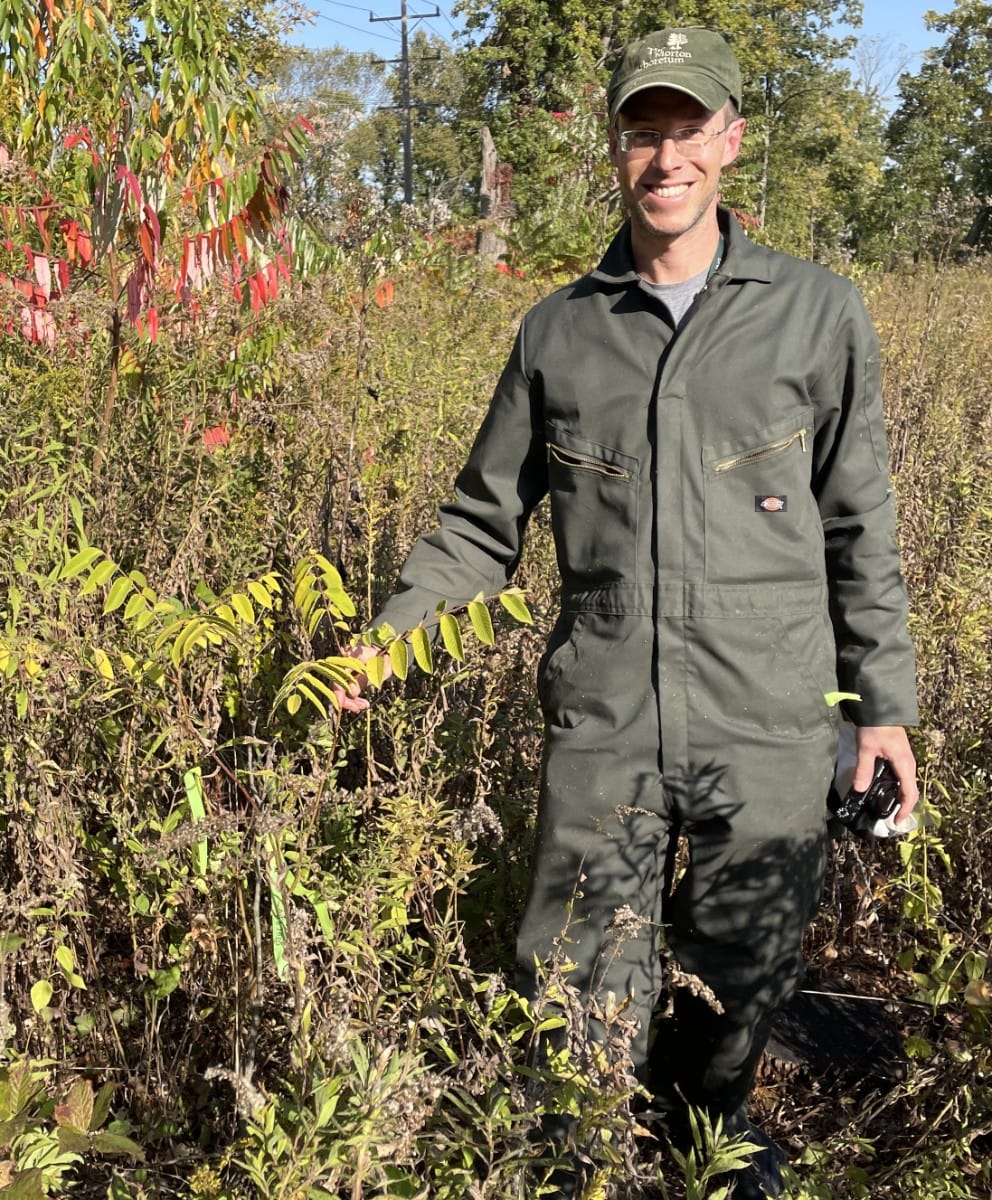
Be interdisciplinary. Some of the most interesting and important questions in plant biology are between traditional fields, and many conservation problems cannot be solved from a single perspective.
My own work has taken me through genetics, ecology, botany, computer modeling, biogeography, fieldwork, seed conservation, and eventually policy. I didn’t begin my career knowing that I would work across all of those areas. Often I learned something because it was the tool I needed to answer the next question.
I would encourage young scientists to develop strong expertise in something, but not let that expertise be a boundary. Learn quantitative and computational skills, but also learn natural history. Spend time in the field. Talk to people in other disciplines. Learn how conservation practitioners and policymakers think about problems by talking to them in person. And learn to communicate your science to people who don’t share your speciality.
Be widely curious. Being willing to cross disciplinary boundaries can lead you to questions and new areas of work that you would never have anticipated.
What do people usually get wrong about plants?
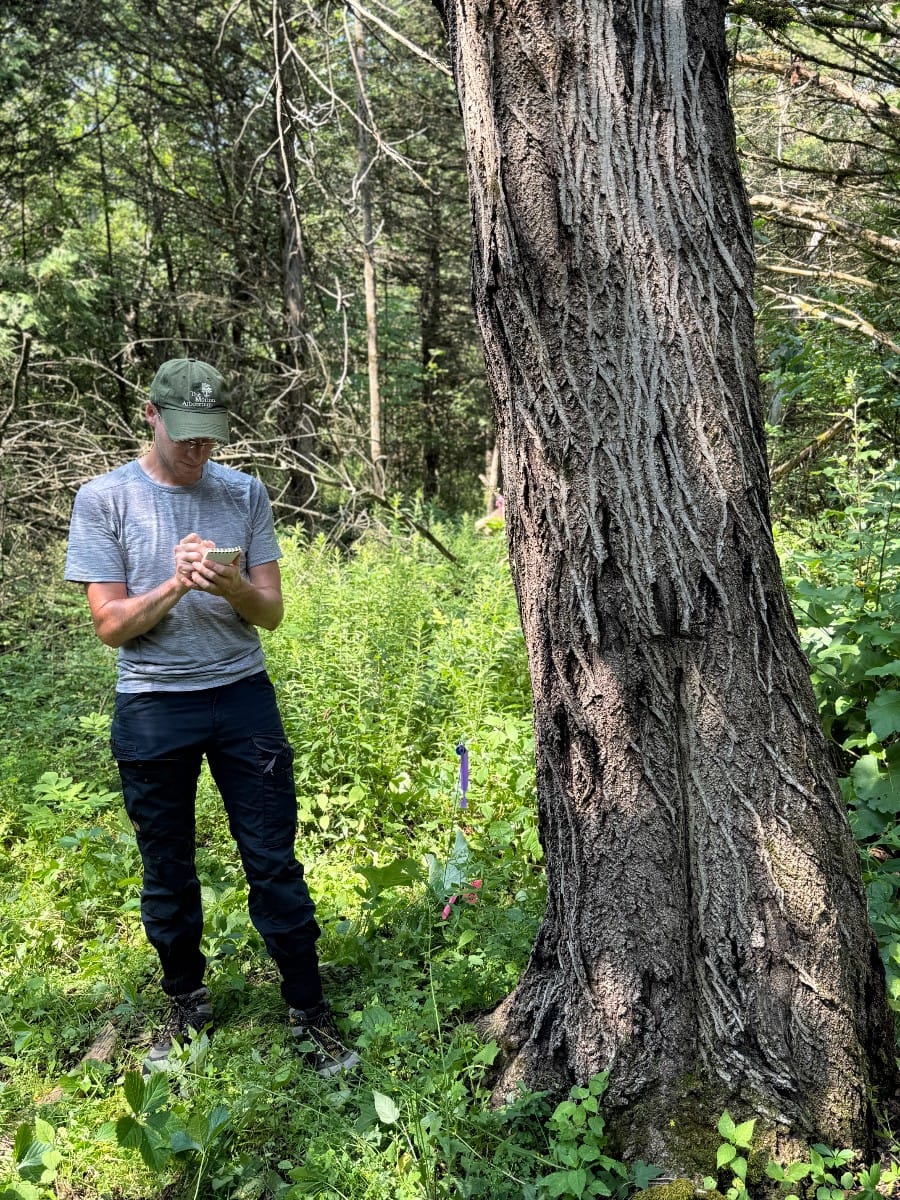
I think people often underestimate how much diversity exists within a plant species. We tend to think of a species as a single thing: a white oak is a white oak, and conserving the species means making sure enough individuals survive. But individuals and populations can be genetically very different from one another. A population at the dry edge of a species’ range may contain different adaptations from one growing in a cooler or wetter environment. Losing populations can therefore mean losing unique genetic diversity even when the species itself has not gone extinct.
I experienced this recently when seeing beech trees from across Europe in a common garden. Their leaf colour, growth form, and response to drought varied dramatically by population! That matters so much in a rapidly changing world. Conservation isn’t only about keeping species on the planet; it is also about maintaining enough variation within species for them to remain resilient and continue evolving.
I also think plants are often perceived as passive. But when you study their genetics, reproduction, behaviour, responses, and movement across landscapes, you see dynamic stories: migration, adaptation, hybridisation, population expansion and contraction, and exchanges of genes over large distances. A forest may look still, but biologically and evolutionarily it is living and changing.
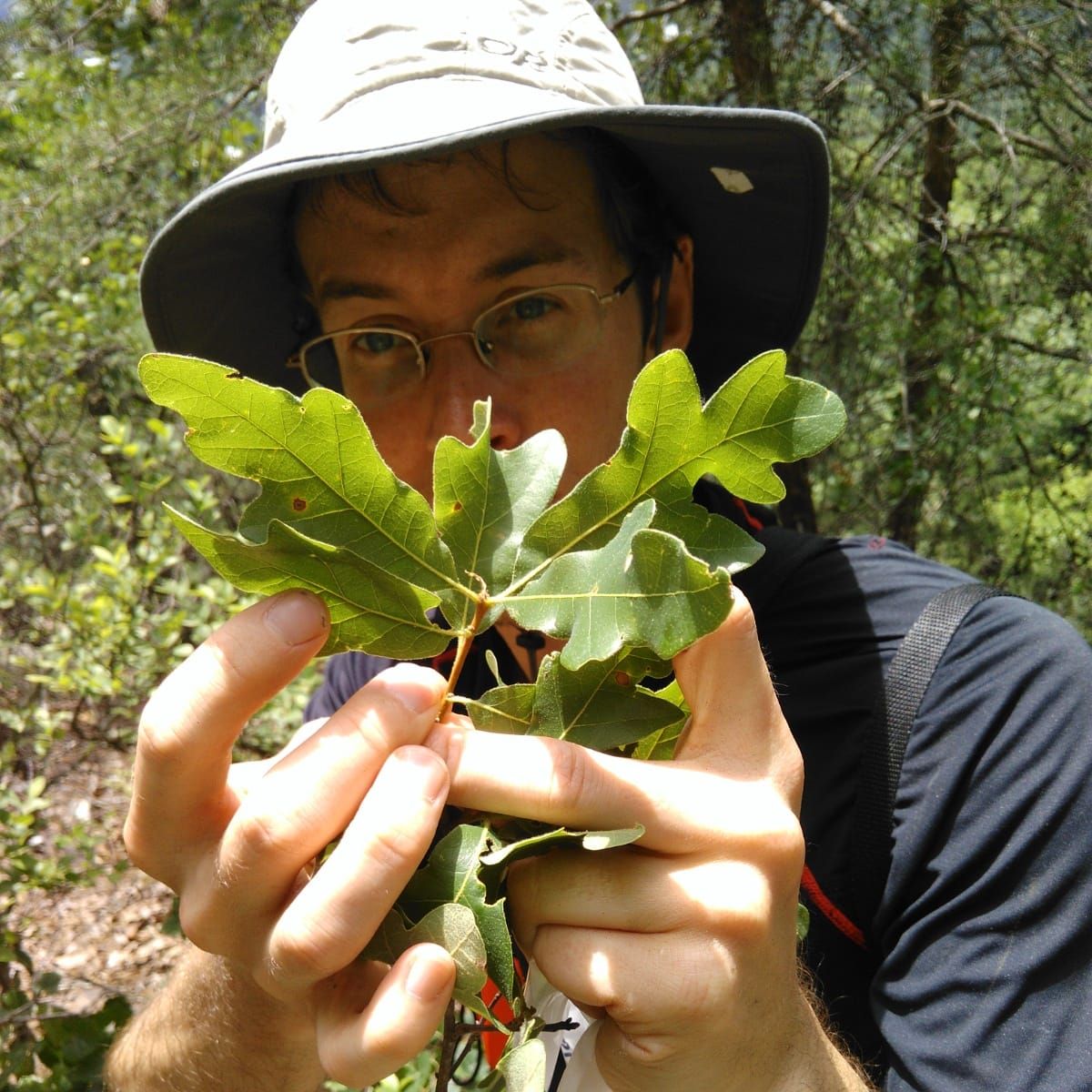
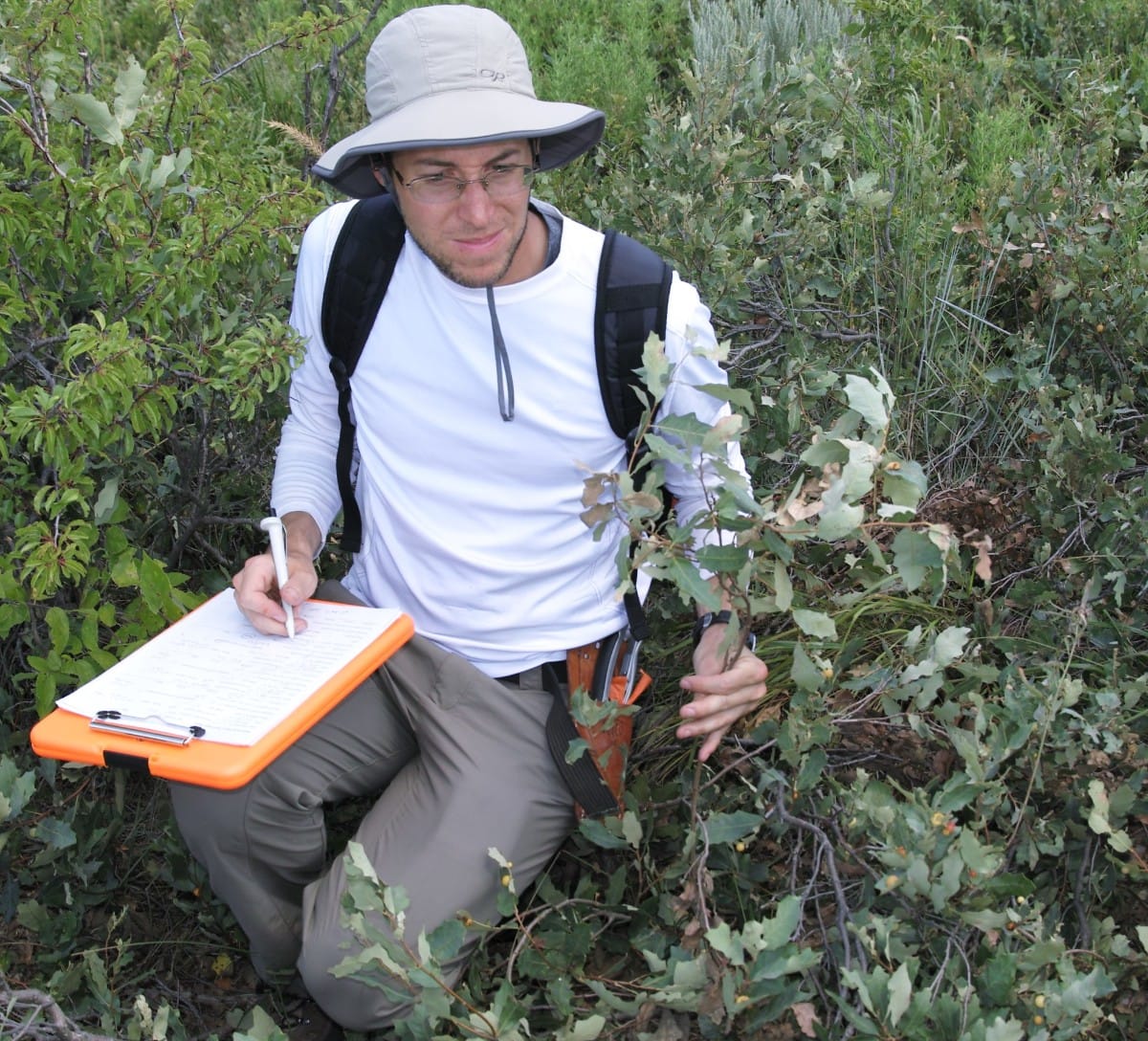
Cover picture: Hoban examining a leaf of the IUCN Critically Endangered Quercus boyntonii to assess whether it might be a hybrid. Photo by Sean Hoban.
Hoban wants to disclose that he used ChatGPT to streamline some of the interview answers, but the answers are real and primarily written by him.