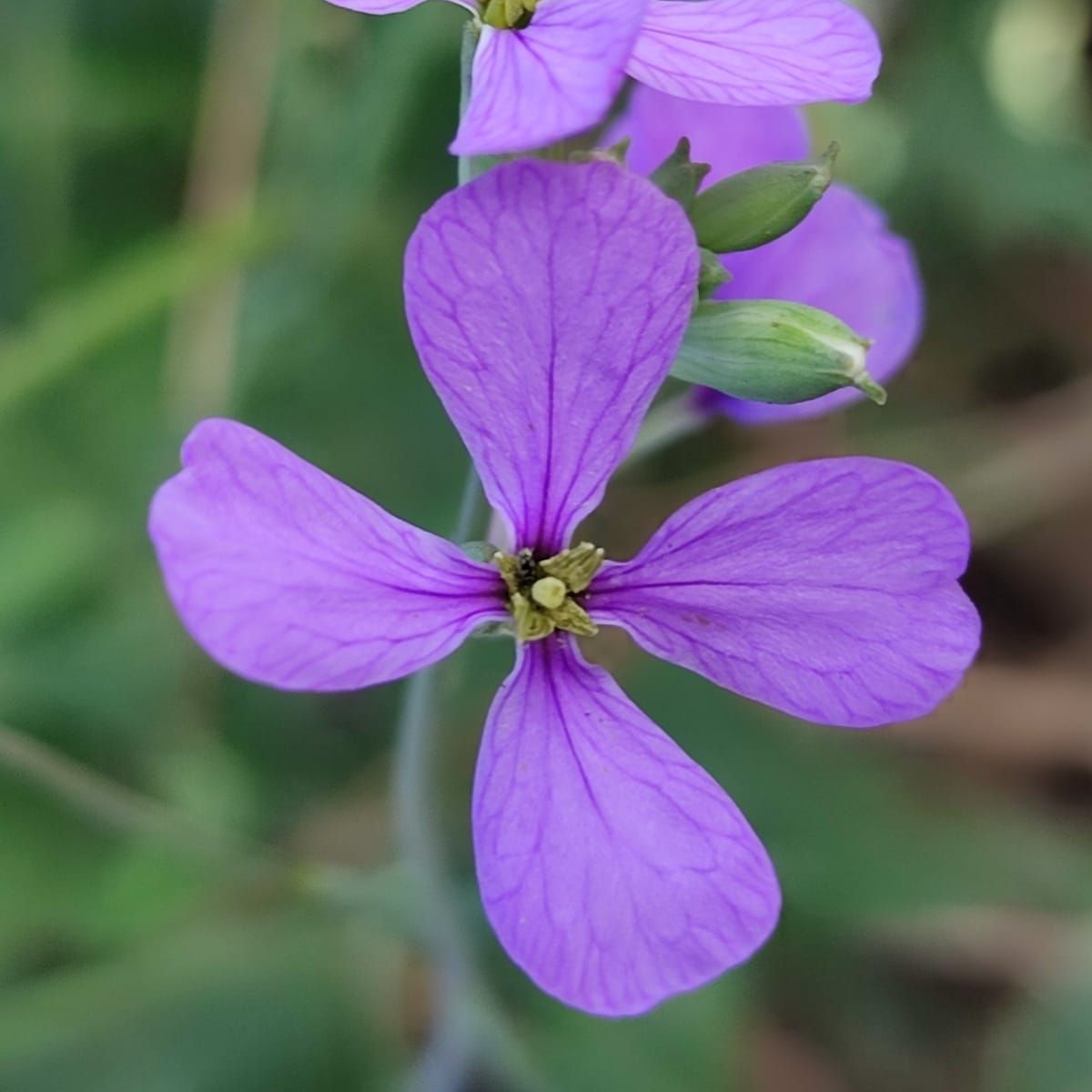

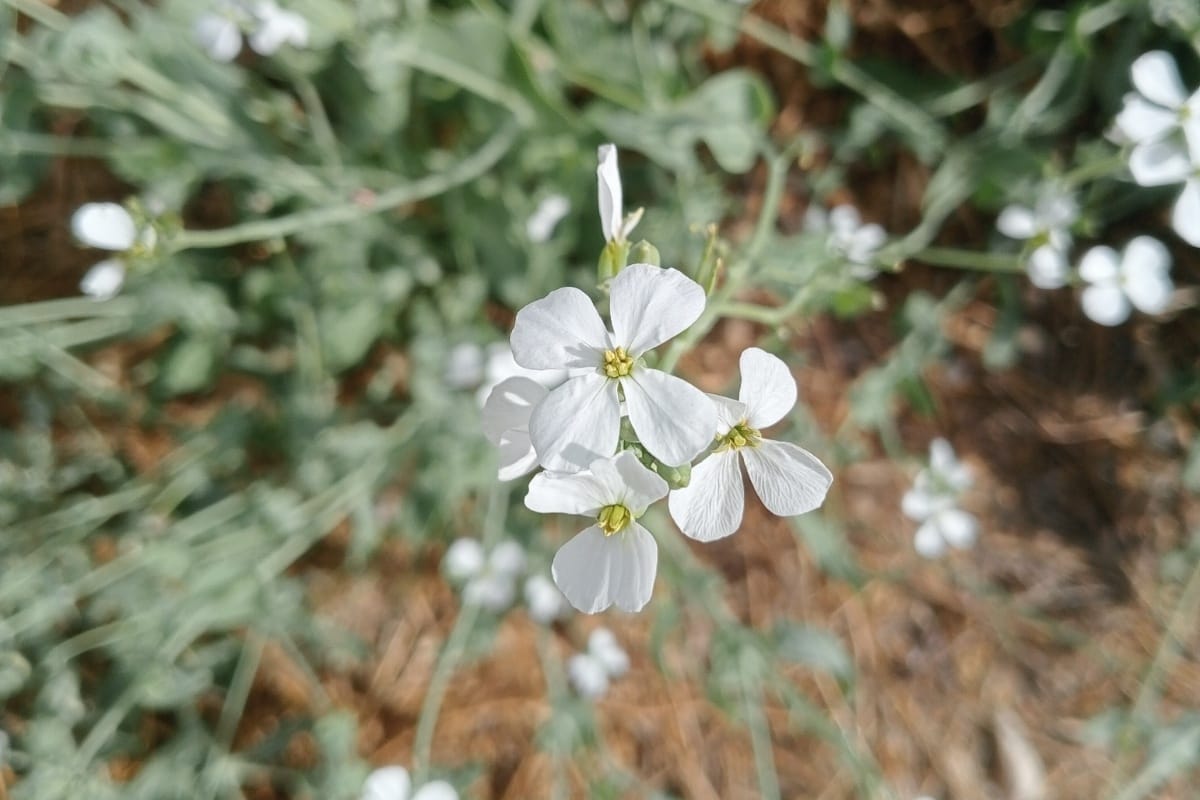
In the Mediterranean spring, you can find a plant called Moricandia arvensis, a species belonging to the cabbage and mustard family, bearing large lilac flowers. However, upon returning a few months later in the arid summer amidst high temperatures, you will find the very same plant looking completely different: with smaller, white flowers. But why? You might assume that the scorching sun simply bleached the petals, wouldn’t you?
This visual change is neither a substitution of one plant for another nor a mutation. It is phenotypic plasticity, the capacity of an organism to express different characteristics in response to environmental conditions. A study published in the American Journal of Botany revealed that there is a sophisticated chemical engineering behind this phenomenon and that, to the eyes of a bee, the summer white is just as striking as, or even more conspicuous than, the spring lilac.
At temperatures exceeding 30 °C to 35 °C, anthocyanins, the plant pigments responsible for shades of purple, blue, and red, are highly sensitive and readily degrade under elevated temperatures. To understand what was happening to the floral tissues, researchers collected petals across different seasons and analysed their chemical profile in the laboratory. And no, the white flower was not merely a “faded version”!
But first, allow me a brief explanation, please.
The colour we perceive in flowers is largely related to the presence of pigments in the petals. These compounds absorb certain wavelengths of light and reflect others, which then reach our eyes. In the flowers of Moricandia arvensis, anthocyanins are linked to the lilac coloration observed during spring.
However, flowers also contain other important compounds, such as flavonoids. Some of these, particularly flavonols, strongly absorb ultraviolet (UV) radiation. Although this property is invisible to us, it can substantially influence the appearance of flowers to insects, many of which can perceive this portion of the light spectrum.
In addition to contributing to the visual signals perceived by pollinators, certain flavonoids exhibit antioxidant properties and can help protect tissues against environmental stress. Thus, a shift in pigment composition can simultaneously alter a flower’s appearance and its protective traits.
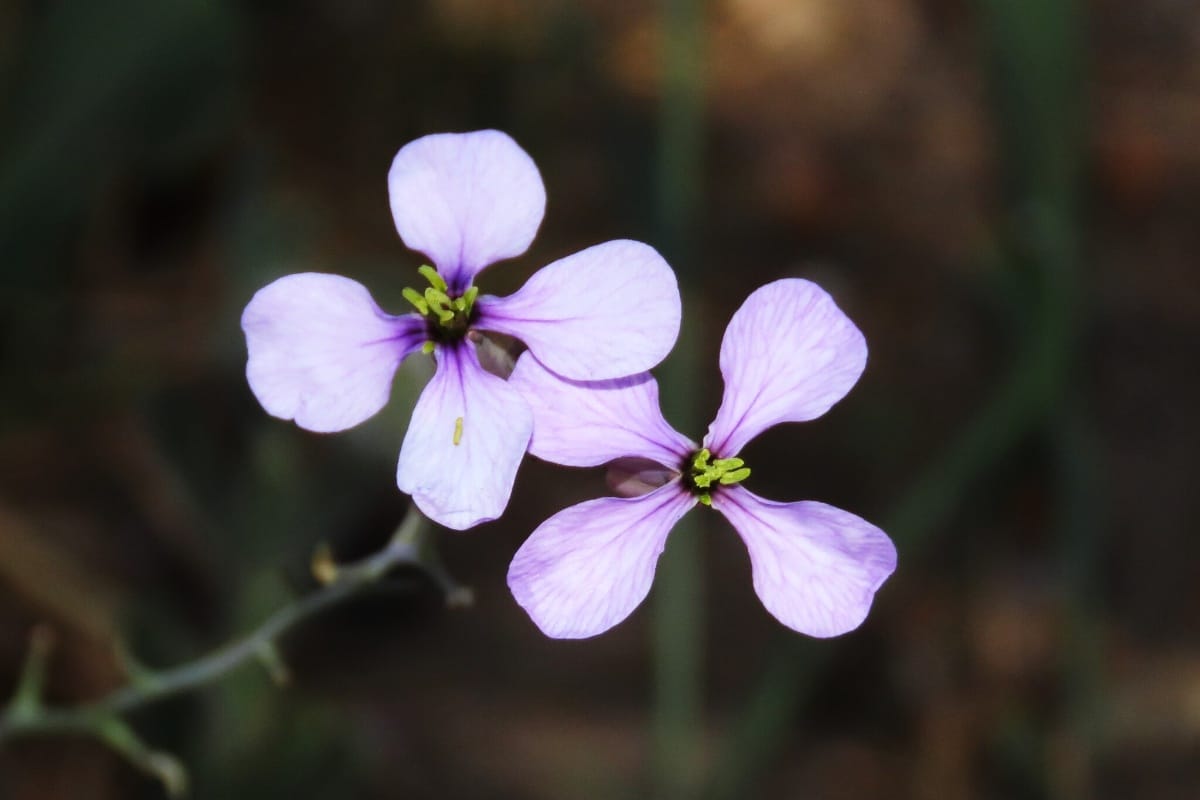
Consequently, the white flower is far from being weakened or washed out. The researchers discovered that it produces twice as many phenolic compounds compared to the lilac flower, and in much higher concentrations. Furthermore, there is a protective shield against desiccation. Compounds such as ferulic acid and flavonols flood the floral tissues. These molecules act as potent antioxidants, shielding floral cells from the scorching sun and preserving viable pollen. Meanwhile, in spring, petals contain around 5.3 mg/g of anthocyanins. But in summer, it is goodbye to anthocyanins, this value drops to almost zero.
In short: heat “switches off” the production of one pigment, but redirects the metabolic machinery to create a biological sunscreen.
And what about the pollinators’ eyes? The flavonols that protect the flower from heat chemically absorb UV radiation. In spring, the lilac flower reflects UV. In summer, thanks to a deluge of flavonols acting as sunscreen, the white flower reflects virtually no UV. By modelling how light reflected from the petals reaches insect eyes, researchers discovered that, to a bee’s vision, the lilac flower appears as a blend of blue and ultraviolet. The white flower, however, is perceived quite differently, projecting into the blue-green range.
Against the backdrop of each season, such as green vegetation in spring and bare soil in summer, the scientists found that the white flower stands out clearly to bees and flies, achieving an even greater chromatic contrast than the lilac flower. To test this, the researchers simulated what would happen if the summer white flower lacked these UV-absorbing flavonols. The flower would simply blend into the background, becoming virtually invisible to bees.
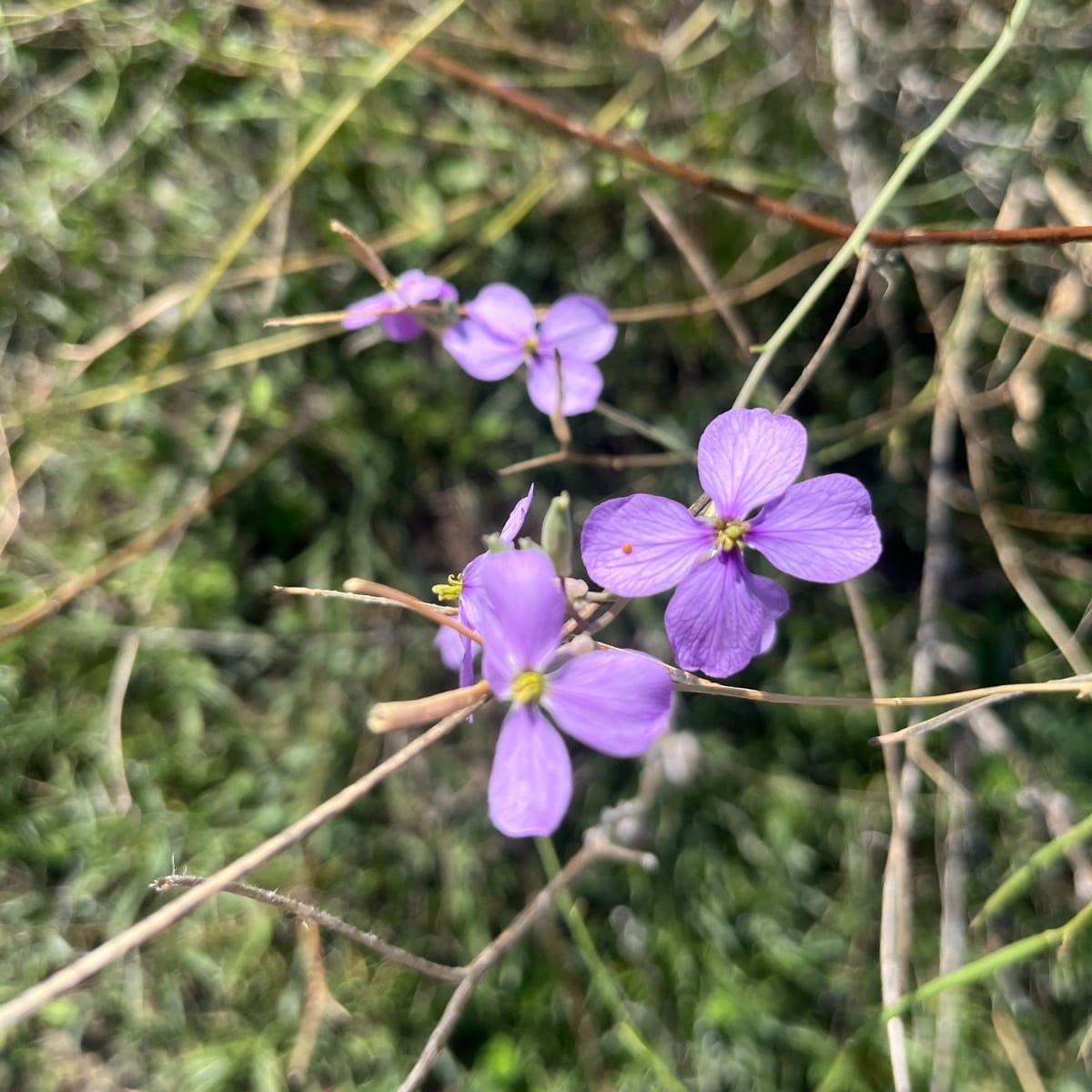
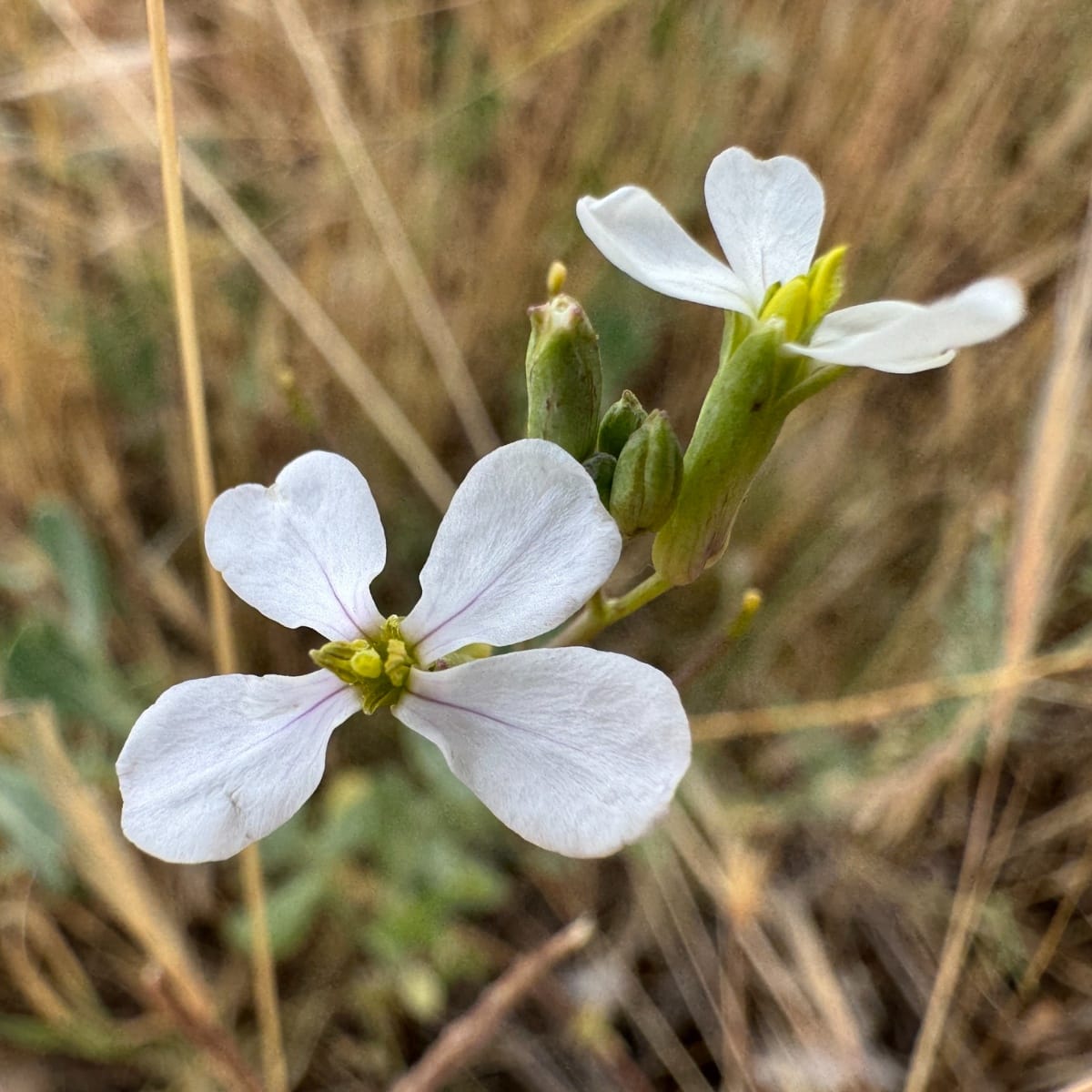
Lilac flowers of Moricandia arvensis against green vegetation during spring (left) and white flowers against the dry background during summer (right). Photos by nachocalata (iNaturalist, CC BY-NC 4.0) and Miguel Angel Lorca (iNaturalist, CC BY-NC 4.0), respectively.
The ability of Moricandia arvensis to remodel its flowers across seasonal transitions demonstrates how evolution shapes multifunctional solutions in nature. First, as a physiological shield, where the flower synthesises substances that protect its petals and pollen grains from severe thermal damage, aiding its physical survival. At the same time, it acts as an ecological beacon, turning that very same chemical barrier into a powerful visual signal that ensures the plant continues to attract the pollinator community.
Rather than succumbing to the heat, the plant reinvents itself: it changes colour, dons invisible armour, and carries on its vital dialogue with insects.
READ THE ARTICLE:
Narbona E, Perfectti F, González‐Megías A, et al.. 2025. Heat drastically alters floral color and pigment composition without affecting flower conspicuousness. American Journal of Botany 113. https://doi.org/10.1002/ajb2.70096
Portuguese translation by Andressa Luna.
Cover picture by Pere Valls (iNaturalist, CC BY-NC 4.0).