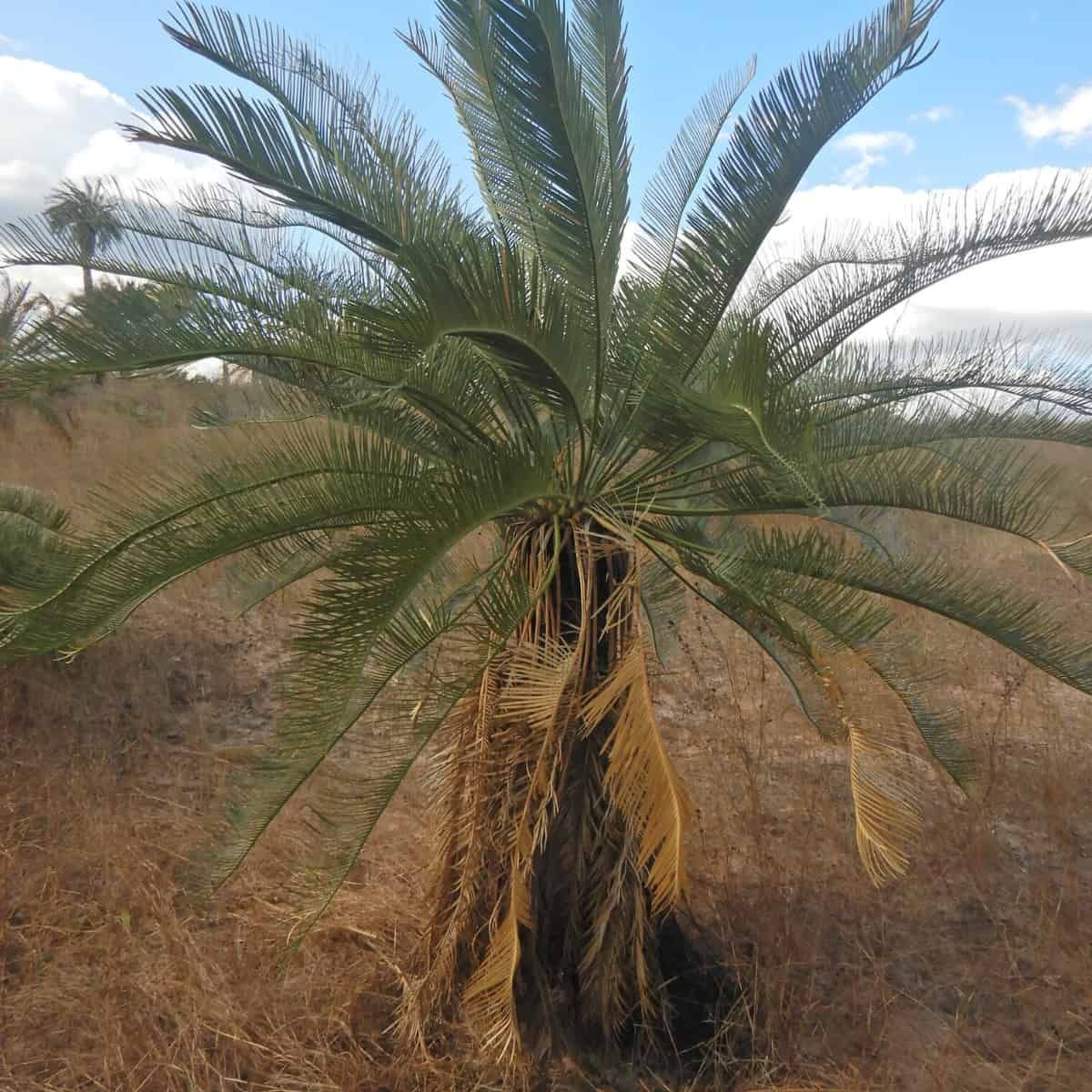

Australia is notorious for flora and fauna that are poisonous, and that includes the food. Georgia Lloyd and colleagues at Monash University have been examining Cycas angulata seeds. These are seeds eaten by the indigenous peoples of Australia, but they do it with thousands of years of tradition that turns something poisonous into something you can eat.
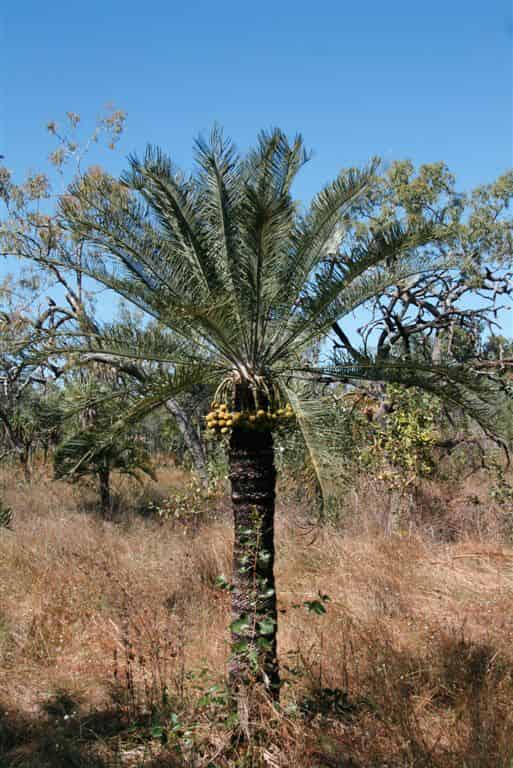
The seed is about a centimetre or so across, and has an outer fleshy layer, a couple of other layers and an inner kernel. The kernel is known to be poisonous, but the seed isn’t that well characterised. So the team used a technique called Liquid Chromatography-Tandem Mass Spectrometry to find out more about what’s inside the seeds.
As expected the kernel has poisons, and the Yanyuwa ferment the kernel to remove the toxins. But, the chemistry results show that Cycas angulata seed flesh contains lots of macrozamin, which breaks down to become the same poison as in the kernel. It’s possible that, pound for pound, the flesh is just as much of a problem as the kernel. In a related cycad, earlier work found the same. So why choose the innermost part to eat? Another group, the Noongar, ate Macrozamia riedlei using a similar fermentation method, but when they did this it was the flesh they fermented to remove toxins. It seems that the choice of layer of seed to eat may be a cultural matter rather than a response to how poisonous a seed layer is.
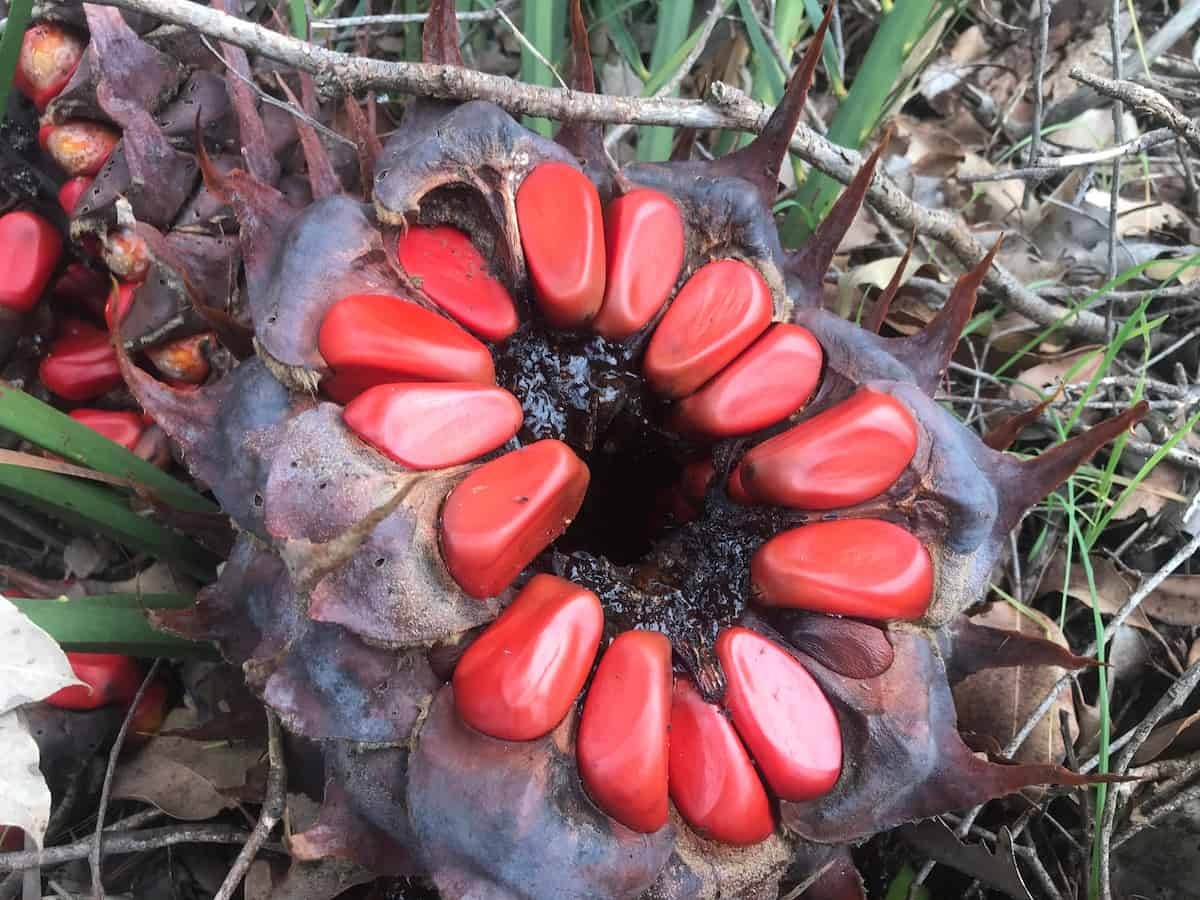
This toxicity makes seed dispersal a problem. It had been thought that extinct giant birds ate the flesh and excreted the more poisonous kernel. But if the flesh is also toxic, then these dispersers had have to have some tolerance to that. And it’s not just birds that eat cycad seeds. Possums do too, and it’s not clear if they have evolved a tolerance. These days Cycas angulata often grows in groves. Is that how it has always grown, or is it a result of a disperser becoming extinct?
The analysis allows scientists to start asking questions about cross-species comparisons of toxicity. But it’s also a reminder that the indigenous peoples have knowledge about these plants too, and it’s worth learning from them to avoid unnecessary, and maybe painful, errors.
READ THE ARTICLE
Lloyd, G., Holt, P., Maher, K., and Gleadow, R.(2026) Integrated LC/MS–MS approaches reveal toxicity differences across seed layers of Cycas angulata. Annals of Botany. Available at: https://doi.org/10.1093/aob/mcag169.
Cover image: Cycas angulata by A CC BY-NC