
A difficult week for me this week as all three top papers are genetics and a little beyond me. As usual, papers behind a paywall are marked 💰 otherwise they're free to access at time of checking.
How this works
We scan posts by people on the Botany Auto list and pull out the entries with links to papers. Every time a paper gets a post written about it it gets 4 points. It gets 3 points for a repost and 1 point for a like.
We try to add people to the Botany Auto post, if they post about Botany (doesn't have to be links to papers) around 20% of the time or more. The belief is that because the list as a whole shares an interest in plants, it's this material that tends to rise to the top.
If you think you should be on the Botany Auto list, but aren't, please drop a message to @botany.one on Bluesky.
1. Gene functional-state covariance reveals modular structure in the Arabidopsis thaliana dispensable genome
Bird, K. A. et al. · bioRxiv · 1 post · 104 likes · 42 reposts on Bluesky
Classical multilocus theory predicts that selection acting on combinations of loci can maintain non-random associations among allelic states, causing selection to act on multilocus genotypes rather than individual alleles. Across eukaryotic species, pangenome studies have documented thousands of genes that vary in functional status between individuals, yet this variation is analyzed as if each gene evolves independently. Here we test for non-random association within the dispensable pangenome across 1,012 natural genotypes of Arabidopsis thaliana to better understand the structure and evolution of eukaryotic pangenomes.
Discussed on Bluesky by @stairwaytokevin.bsky.social.
2. SRF3 couples cellular iron homeostasis and defense responses through ubiquitin-dependent nano-organization
Platre, M. P. et al. · Science Advances · 1 post · 48 likes · 23 reposts on Bluesky
Here, we identify a rapid iron regulatory mechanism centered on the plasma membrane receptor kinase STRUBBELIG RECEPTOR FAMILY 3 (SRF3), which integrates bacterial immune signaling with ferrous iron homeostasis. Perception of flagellin triggers a burst of reactive oxygen species that induces a rapid and transient depletion of the labile ferrous iron pool. This state promotes SRF3 ubiquitination and clathrin-dependent endocytosis, a process required to restore intracellular ferrous iron levels while dampening immune responses.
Wolfgang Busch @rootstrapping.bsky.social · on Bluesky
Plants balance iron and immunity at the cell surface. Our new paper reveals how ubiquitin reorganizes the receptor SRF3 to coordinate both, and how this co-ordination works. Huge shoutout to Matt Platre who spearheaded and drove this tour de force! www.science.org/doi/10.1126/...
View on Bluesky →3. Advances in single-cell proteomics: label-free quantification of over 3500 protein groups from individual Arabidopsis thaliana seedling cells
Stolze, S. C. et al. · Plant and Cell Physiology · 2 posts · 39 likes · 20 reposts on Bluesky
Recent single-cell omics studies in plants, primarily focused on gene expression and its regulatory landscape, have underscored the importance of monitoring cell-type-specific responses, as well as cellular heterogeneity and distinct cell states within the same cell type (Nobori, 2025). Protein abundance and activity are not always reflected by transcript levels, highlighting the potential of single-cell proteomics to provide complementary insights into plant biological systems.
Hiro Nakagami @grandpahiro.bsky.social · on Bluesky
Happy to share the results of our first attempt at single-cell proteomics using Arabidopsis protoplasts, led by @sara-stolze.bsky.social, with support from @brukercorporation.bsky.social and Cellenion.
doi.org/10.1093/pcp/...
4. Comparing the development of naturally colonised and planted temperate forests across a 60‐year chronosequence
Hughes, S. et al. · Journal of Applied Ecology · 1 post · 40 likes · 14 reposts on Bluesky
Natural colonisation is proposed as a cost‐effective alternative to tree planting for combatting climate change and promoting biodiversity. However, in temperate regions, few studies have compared the development of planted and naturally colonised forests across the spatial or temporal scales needed for generalisable results to inform policy and practice. We identified a paired space‐for‐time chronosequence spanning >60 years of naturally colonised and planted forest patches (forest creation types), all adjacent to mature forest. We compared forest structure across forest ages and examined differences in tree community composition in naturally colonised sites.
Markus Eichhorn @markuseichhorn.bsky.social · on Bluesky
Which is better for woodland creation: planting native species, or natural colonisation? The answer depends on your measure of success. New paper by Hughes et al. 🧪🌲🌳🌍 besjournals.onlinelibrary.wiley.com/doi/10.1111/...
View on Bluesky →5. Animal Pollination Under Human-Induced Rapid Environmental Change
Bartomeus, I., Arroyo-Correa, B., Montes-Pérez, N. · Annual Review of Environment and Resources · 1 post · 28 likes · 17 reposts on Bluesky
Pollination is a key ecological function that ensures plant reproductive success and has important implications at multiple levels of biological organization. Animal pollination emerged 280 million years ago and promoted the diversification of angiosperms and pollinators. Currently, 90% of flowering plant species, including most crops, require animals to maximize their reproduction. However, human-induced rapid environmental change is threatening these mutualistic interactions.
iBartomeus @ibartomeus.bsky.social · on Bluesky
[new paper] Animal Pollination Under Human-Induced Rapid Environmental Change
www.annualreviews.org/content/jour... Writing this review was really inspiring, and it was a pleasure to work with two young talented scientists @blancaac.bsky.social and @nermonper.bsky.social cc @ebdonana.bsky.social
6. A Blast Fungus Effector Targets a Tubby-like F-box Protein to Suppress Plant Immunity
Saado, I. et al. · bioRxiv · 1 post · 10 likes · 8 reposts on Bluesky
The blast fungus Magnaporthe oryzae is one of the most destructive pathogens of rice, secreting effector proteins that reprogram host cells to enable infection. Identifying plant targets of these fungal effectors is central to understanding how blast disease is established, but the targets and mechanisms of most effectors remain unknown. Here, we show that a Zinc finger (ZiF)-family effector, Tie1, targets the rice Tubby-like protein (TLP) family, which are membrane-associated plant immunity regulators whose exact functions have not been defined.
bioRxiv Plant Bio @biorxiv-plants.bsky.social · on Bluesky
A Blast Fungus Effector Targets a Tubby-like F-box Protein to Suppress Plant Immunity https://www.biorxiv.org/content/10.64898/2026.10.15.759101v1
View on Bluesky →7. Ten rules for robust taxonomy in ecological datasets
Ferreira de Lima, R. A. et al. · New Phytologist · 3 posts · 10 likes · 5 reposts on Bluesky
Accurate taxonomy, including species identification and naming, underpins ecological inference, yet taxonomic information in ecological datasets is often inconsistently recorded or weakly standardized. With the increasing integration of ecological datasets across taxa and regions, datasets with poor taxonomic practices can hinder data exchange and propagate errors. We propose 10 rules to improve the storage and management of taxonomic information in ecological datasets.
New Phytologist @newphyt.bsky.social · on Bluesky
✨ Paper spotlight ✨
(🧵 1/6) Ten rules for robust taxonomy in ecological datasets
nph.onlinelibrary.wiley.com/doi/10.1111/...
 View on Bluesky →
8. Shining Light on Late Blight
Govers, F. · Annual Review of Phytopathology · 1 post · 16 likes · 5 reposts on Bluesky
In this retrospective on my journey in science, I shine light on the ins and outs of the late blight pathogen Phytophthora infestans. While studying plant pathology, I became fascinated by the molecular mechanisms that govern the development of cells and organisms and ended up unraveling intimate plant–microbe interactions.
Sophien Kamoun @kamounlab.bsky.social · on Bluesky
Hard to imagine a better place or moment than Dublin 🇮🇪 to read Francine Govers sweeping Annual Reviews retrospective of her remarkable scientific career: Shining Light on Late Blight
A fascinating journey through decades of discoveries on Phytophthora infestans www.annualreviews.org/content/jour...
9. Ayahuasca plant genomes reveal retrotransposon-derived centromeres and contrasting routes to DMT and β-carbolines
Qiu, R. et al. · bioRxiv · 1 post · 12 likes · 6 reposts on Bluesky
Ayahuasca, used religiously for centuries by Amazonian Indigenous peoples and increasingly studied for its therapeutic potential, owes its psychoactivity to two plants: Psychotria viridis supplies N,N -dimethyltryptamine (DMT), whereas Banisteriopsis caapi supplies β-carbolines that render DMT orally active. Here we show that the two plants have distinct genome histories: P. viridis is hexaploid (2 n = 6× = 66), consistent with autopolyploidy, and B. caapi is diploid (2 n = 2× = 20).
André Marques @amarques.bsky.social · on Bluesky
Happy to have contributed to this awesome collaboration work with Yang Qu and my Brazilian colleagues!
Ayahuasca plant genomes reveal retrotransposon-derived centromeres and contrasting routes to DMT and β-carbolines
www.biorxiv.org/content/10.6...
10. The ascorbate–glutathione cycle coming of age
Foyer, C. H., Kunert, K. · Journal of Experimental Botany · 1 post · 10 likes · 6 reposts on Bluesky
Concepts regarding the operation of the ascorbate–glutathione cycle and the associated water/water cycle in the processing of metabolically generated hydrogen peroxide and other forms of reactive oxygen species (ROS) are well established in the literature. However, our knowledge of the functions of these cycles and their component enzymes continues to grow and evolve.
Journal of Experimental Botany @jxbotany.bsky.social · on Bluesky
📚 FROM THE ARCHIVE 📚
The ascorbate–glutathione cycle sits at the core of redox regulatory networks. Ascorbate, glutathione and reactive oxygen species link energy metabolism to signalling pathways but also serve many other functions.
📝 Foyer & Kunert
🔗 doi.org/10.1093/jxb/...
#PlantScience 🧪
 View on Bluesky →
11. Metabolic convergence on TOR signaling in the chestnut blight fungus and its regulation by host plant signals
Ko, Y. et al. · New Phytologist · 2 posts · 9 likes · 4 reposts on Bluesky
Transcriptomic analysis of the chestnut blight fungus Cryphonectria parasitica identified 22 core genes regulated by Cryphonectria hypovirus 1 (CHV1) infection and sectorization. Twelve genes with common phenocopies were analyzed: all mutants displayed restricted colonial growth, intense pigmentation, hyperbranched terminal hyphae with swollen globose cells, and reduced conidiation. Although gene‐specific mutant phenotypes existed, responses to most stressors were similar to those of the wild‐type.
12. Linking genomic variation to floral trait adaptation across species boundaries
Acoca‐Pidolle, S., Wessinger, C. A., Hileman, L. C. · New Phytologist · 1 post · 7 likes · 6 reposts on Bluesky
Flowers are highly diverse in shape, scent, and colour and may differ strikingly even among closely related species. Floral traits experience correlational selection favouring trait combinations that maximise plant reproduction, leading to outstanding questions on how floral trait divergence evolves in closely related species. In this review, we take a quantitative genetic perspective and ask whether and how the genetic architecture of floral trait divergence depends on adaptation to specific pollination systems and how it informs on the dynamics of the assembly of floral traits during divergence.
13. Sulfur as a central integrator of plant–microbe interactions: from nutrient cycling to immune signalling and microbiome assembly
Elkatmis, B. et al. · Journal of Experimental Botany · 1 post · 9 likes · 5 reposts on Bluesky
Sulfur is an essential macronutrient that underpins plant growth, stress resilience, and immunity. Beyond its role in primary metabolism, sulfur is incorporated into a diverse array of secondary metabolites that mediate plant–microbe interactions. In this review, we summarize current knowledge on how microbial sulfur metabolism contributes to plant sulfur nutrition and how plant-derived sulfur-containing compounds shape microbial community assembly and disease outcomes.
14. Fire-stimulated flowering enhances multiple plant fitness components
Gegunde, J., Castellanos, M. C., Pausas, J. G. · Annals of Botany · 1 post · 13 likes · 3 reposts on Bluesky
Fire is a key ecological driver shaping reproductive strategies in fire-prone ecosystems. One distinctive strategy is fire-stimulated flowering, whereby plants flower more profusely under post-fire conditions than in the absence of fire. Despite its widespread occurrence, the reproductive benefits of this strategy remain poorly quantified. We hypothesized that fire-stimulated flowering is an adaptive strategy that enhances plant fitness by increasing success across multiple reproductive stages.
15. High-throughput screening and structure-guided design of small molecules enable modulation of SAL–PAP stress signaling
Khin, N. C. et al. · Journal of Experimental Botany · 1 post · 9 likes · 4 reposts on Bluesky
Chloroplasts sense environmental stress and activate chloroplast-to-nucleus retrograde signalling, reprogramming nuclear gene expression for plant acclimation. One such pathway is regulated by the phosphatase, SAL, which hydrolyses the nucleotide signal 3'-phosphoadenosine 5'-phosphate (PAP), a by-product of secondary sulfur metabolism. In Arabidopsis thaliana, genetic loss of AtSAL1 elevates PAP and enhances stress tolerance but causes pleiotropic growth defects. To uncouple stress signalling from genetic pleiotropy, we conducted a high-throughput in vitro screen of 13 000 small molecules and identified V20, a competitive inhibitor of AtSAL1 with 3-fold greater potency than the known Li+ inhibitor.
16. Engineering an Escherichia coli – Saccharomyces cerevisiae consortium for 2-phenylethyl glucosinolate biosynthesis 💰
Wajn, W. T. et al. · Journal of Experimental Botany · 1 post · 9 likes · 4 reposts on Bluesky
Glucosinolates are sulfur-rich plant specialized metabolites with applications in nutraceutical and agricultural biotechnology. Microbial production of complex glucosinolates derived from chain-elongated amino acids remains constrained by difficult-to-express key biosynthetic enzymes. Here, we report the first microbial biosynthesis of 2-phenylethyl glucosinolate (2PE) through a modular engineering strategy combining Escherichia coli and Saccharomyces cerevisiae.
17. Apoplast multi‐omics profiling during fungal infection uncovers new players of basal and early induced immunity in Arabidopsis thaliana
Davière, A. et al. · New Phytologist · 1 post · 9 likes · 4 reposts on Bluesky
The extracellular space in plant tissues, known as the apoplast, remains one of the least characterized cellular compartments. The apoplastic fluid, akin to mammalian extracellular fluid, serves as the primary interface between pathogens and their host. It allows the exchange of signalling molecules, coordinates host cell responses and enables the circulation of pathogen effectors that modulate the immune response. We describe here a comprehensive multi‐omics analysis of the apoplastic washing fluids content just 6 h after the onset of Arabidopsis thaliana infection with Botrytis cinerea , a fast‐killing necrotrophic fungus.
18. Heterosis in crosses between remnant populations of the rare prairie forb Silene regia : Implications for restoration genetics
Turner, I. A. et al. · American Journal of Botany · 1 post · 6 likes · 5 reposts on Bluesky
Calls to adopt seed‐sourcing strategies in biological restoration that preserve local adaptation while maximizing genetic variation (e.g., regional admixture provenancing) are increasingly common. Heterosis, the increased fitness of progeny from crosses between populations relative to progeny from crosses within populations, could provide an added benefit under such strategies. We quantified heterosis in crosses between three small remnant populations of the rare prairie forb Silene regia.
19. Same-sex neighbours grow better than opposite-sex neighbours across three plant species
Fang, S. et al. · Annals of Botany · 2 posts · 7 likes · 3 reposts on Bluesky
Plants recognize their neighbours through above- and belowground signaling, adjusting their growth strategies to maximize individual performance and maintain species coexistence. Dioecious plants are common in nature, but it is unknown whether they can recognize the sex of neighbouring plants and how they affect their performance. We analyzed the root-based sexual recognition mechanisms in the seedlings of three dioecious species with different life forms including Spinacia oleracea (herb), Siraitia grosvenorii (vine) and Diospyros morrisiana (tree). Seedlings were planted in treatments that tested for the interaction of plant sex (female/male) and neighbour density (a single, two same-sex and two opposite-sex plants).
20. Blue Light Promotes Root Iron Acquisition via a Shoot CRY–HY5 Signaling Module in Arabidopsis 💰
Jakhar, P. et al. · Plant Physiology · 1 post · 7 likes · 4 reposts on Bluesky
Iron (Fe) is an essential element for almost all living organisms, and its deficiency severely impacts crop productivity and human health. While the mechanisms underlying iron uptake and accumulation are well studied, the role of light in modulating iron homeostasis remains poorly understood. In this study, we report that blue light enhances iron accumulation thereby positively regulating iron homeostasis in Arabidopsis thaliana.
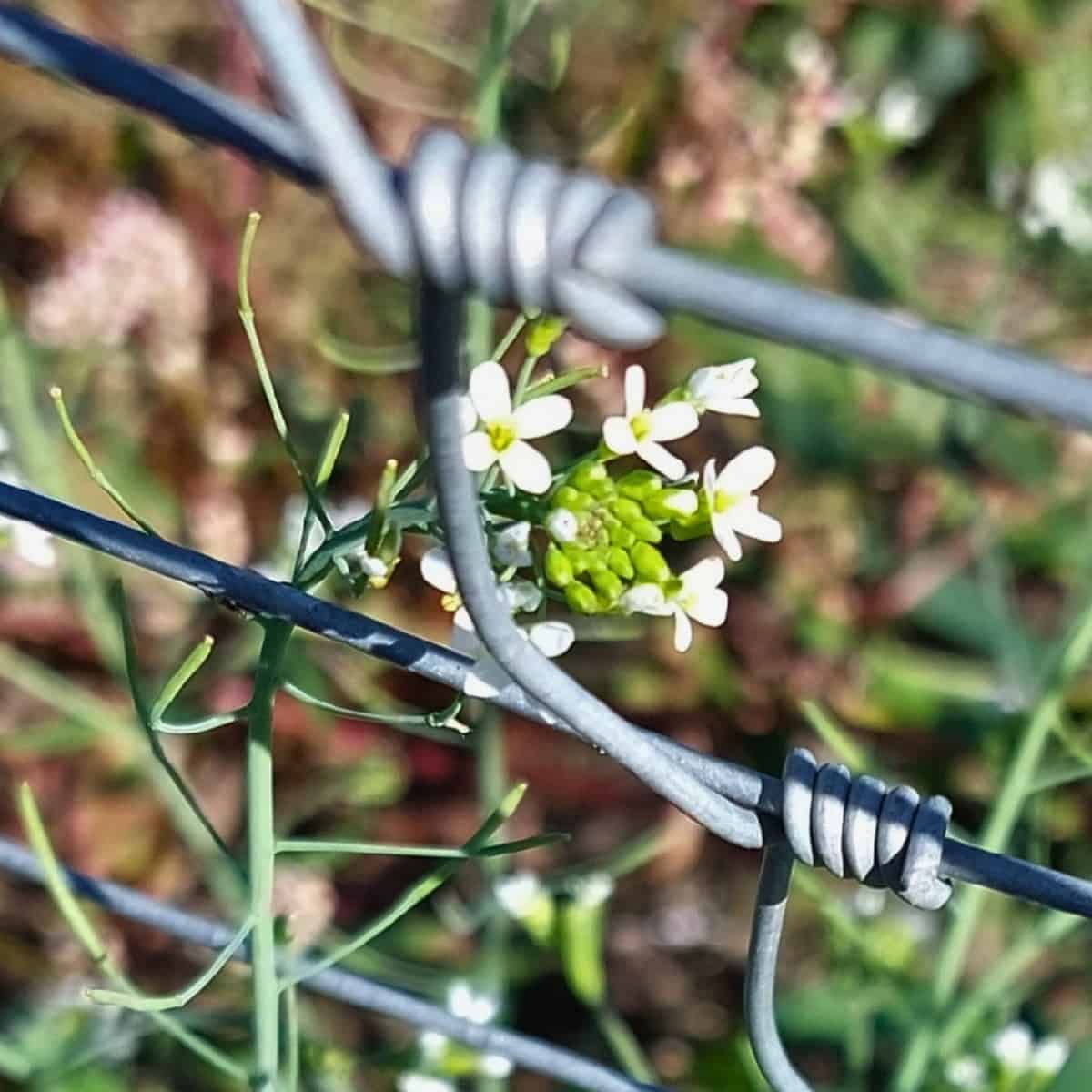
Cover image: Arabidopsis thaliana by ingridemma CC BY-NC