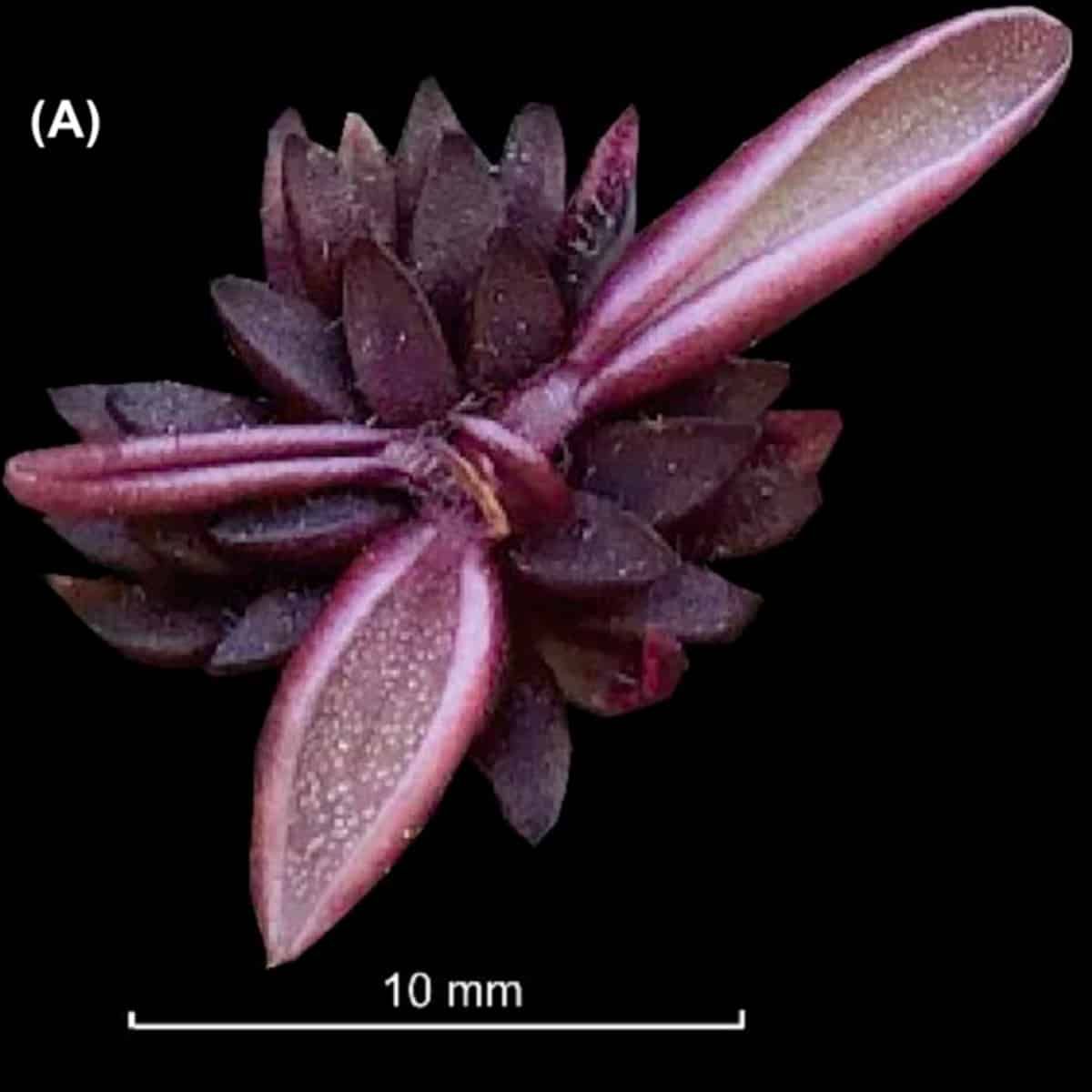

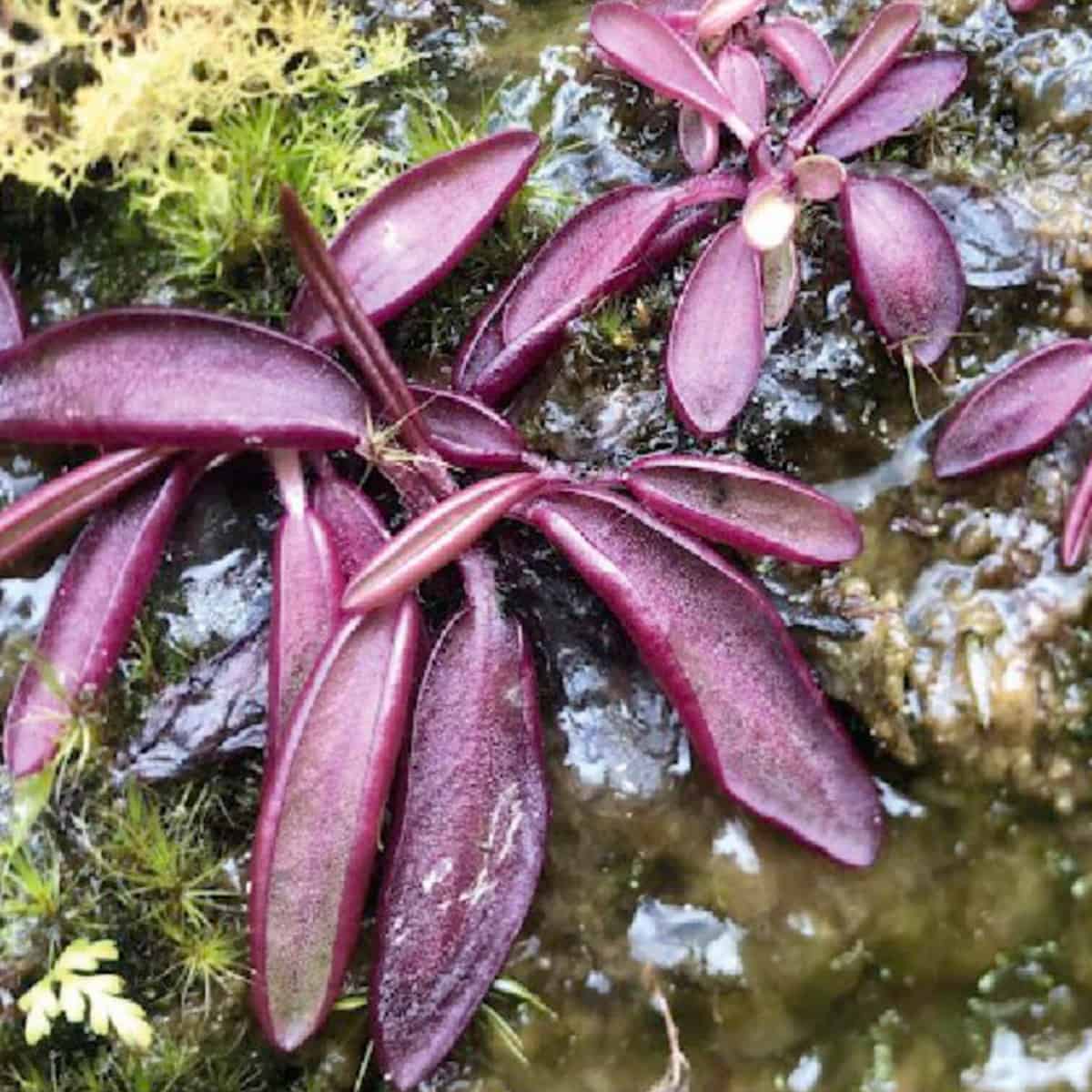
A butterwort is a killer. It's a carnivorous plant that traps insects on its leaves like flypaper and digests them. They can be small killers, no bigger than your thumbnail.
A team of botanists were surveying them closely in the cloud forest of Hidalgo in Mexico, when they noticed something odd. Some butterworts on a cliff face were the wrong colour.
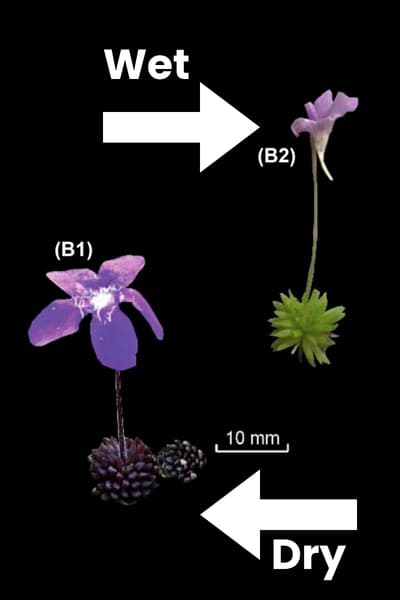
The closest species they knew, Pinguicula crassifolia, overwinters green. These were purple, until they got wet, when they turned green. Let them dry, and the purple comes back.
This cliff is the only place anyone has found it. Just one wall, north-facing on the mountainside. The botanists asked people living nearby, is it found anywhere else? No, was the reply.
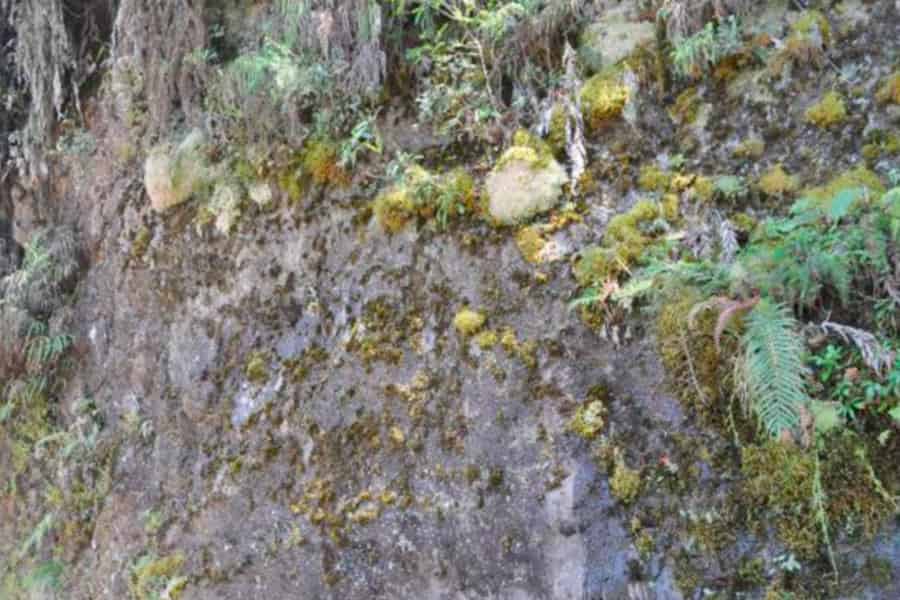
So they did the only thing you can do with a plant in such a small location. They walked the cliff wall and counted, by hand, every one they could see. They found fewer than 250 mature plants. That's the species.
Other butterworts blush. This one isn't unique in that. But it was Brenda Muñoz-Vazquez who stopped at that wall, looked closer, and found something nobody had described. It carries her name now: Pinguicula brendae.
The name is unusual. It's comparatively rare for a plant to be named after a woman, and if it is, it's often because they're mythological, or just because they're a relative. Getting the epithet from the female discoverer makes it a rare name.
That name could be a lifeline, because now it has a chance to be listed as “critically endangered”. That is vital for a species that’s under threat from goats, fire or plain bad luck.
Uploaded as social media posts to Bluesky, Mastodon & YouTube.
READ THE ARTICLE
Ramírez, E., Shimai, H., and Hernández, A. (2026) Pinguicula brendae (Lentibulariaceae) sp. nov., a carnivorous plant from a tropical montane cloud forest in Hidalgo, Mexico. Nordic Journal of Botany, 2026(7). Available at: https://doi.org/10.1002/njb.05065.
Cover image: Pinguicula brendae Rodríguez-Ramírez et al. 2026