
Just as our bodies change over time, so do flowers. As they develop and age, their colours may shift, their scents can become stronger or weaker, and the amount of nectar they produce can decrease.
These changes are more than an appearance question. Pollinators rely on visual and chemical cues to locate flowers and assess the rewards they offer. In other words, a change in flower colour may even signal that a bloom has already been visited or that its rewards are running out.
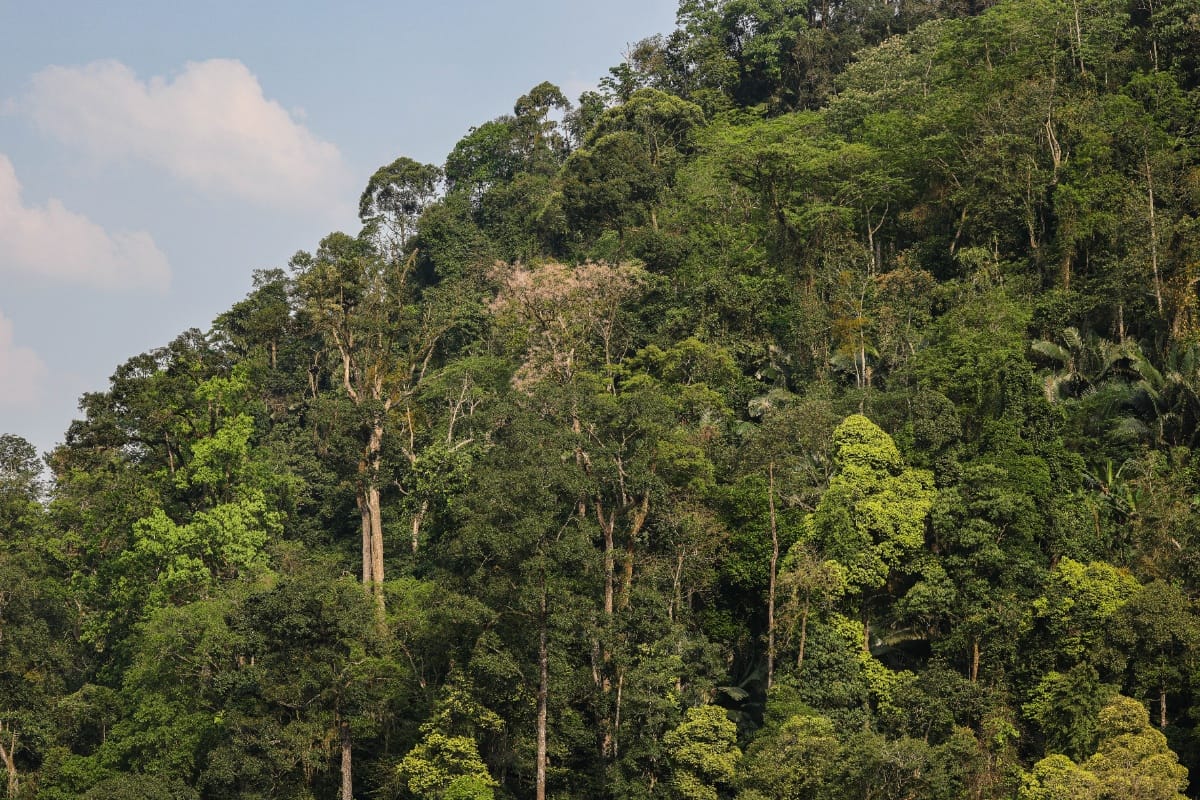
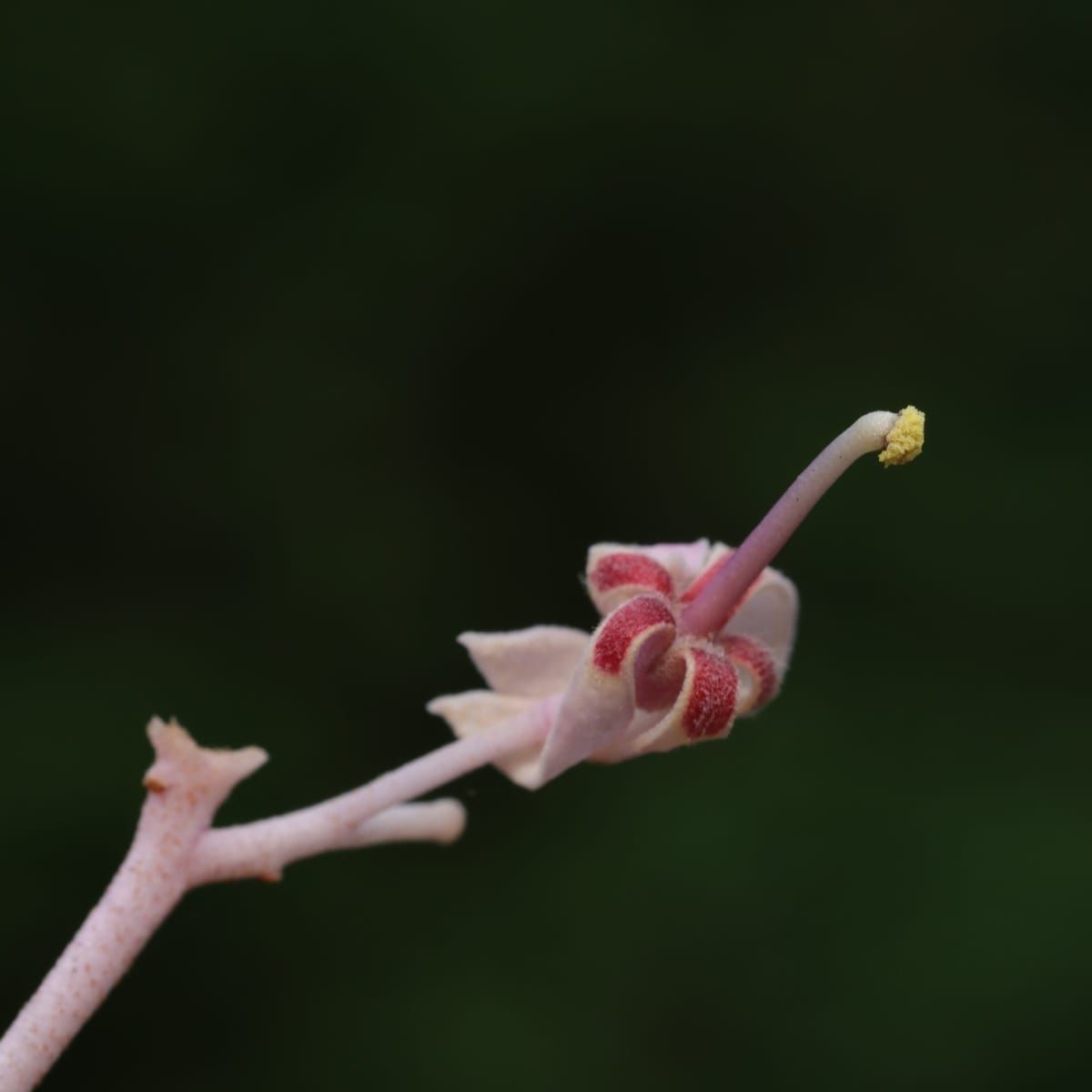
A rare rainforest tree in southern China offers an intriguing opportunity to investigate these signals. Reaching up to 30 meters in height, Firmiana daweishanensis has flowers that change from yellow to orange and then red as they develop. Found in a restricted area and with a small population, this tree is a priority for conservation. Understanding how it reproduces and which insects visit its flowers could help researchers identify factors that may limit its reproductive success and maintain its populations.
With this in mind, Bo-Qiang Wang and his team examined a single Firmiana daweishanensis tree in the rainforest canopy of Yunnan, China. They were interested in investigating whether the changing colours were associated with differences in insect visitation and whether floral visitors contributed to fruit production.
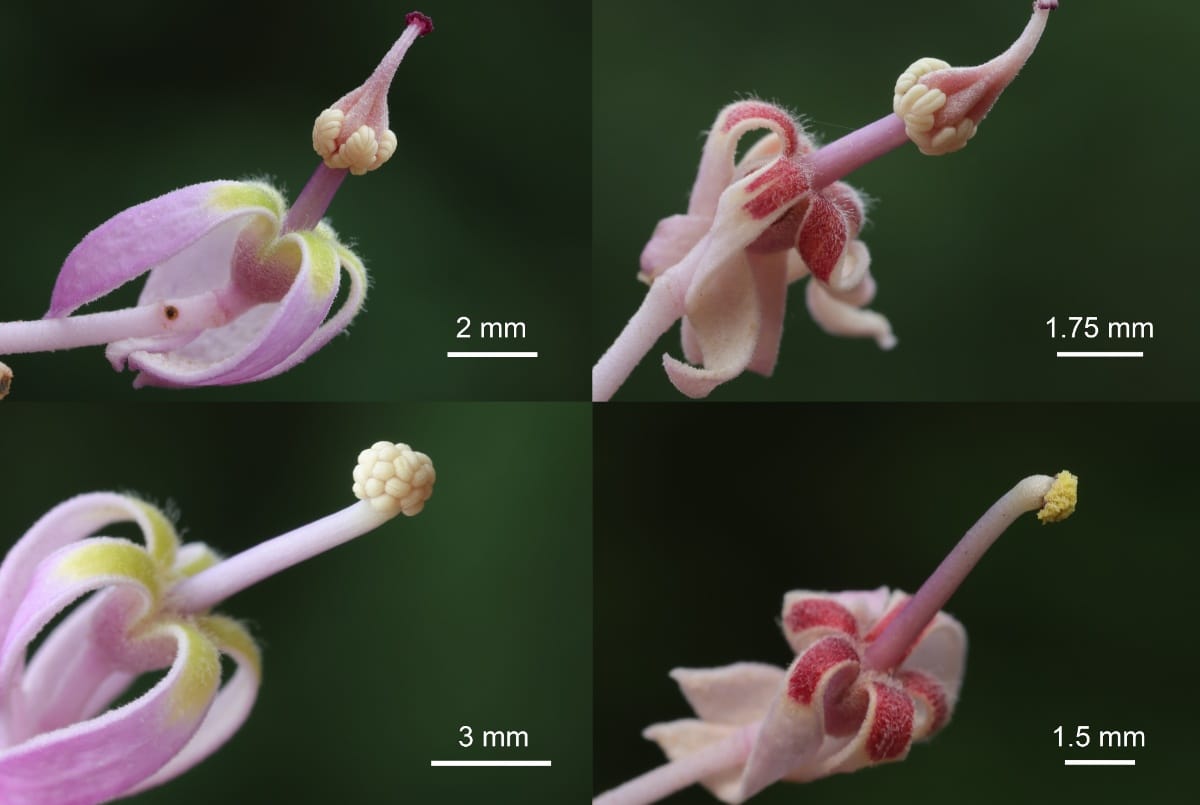
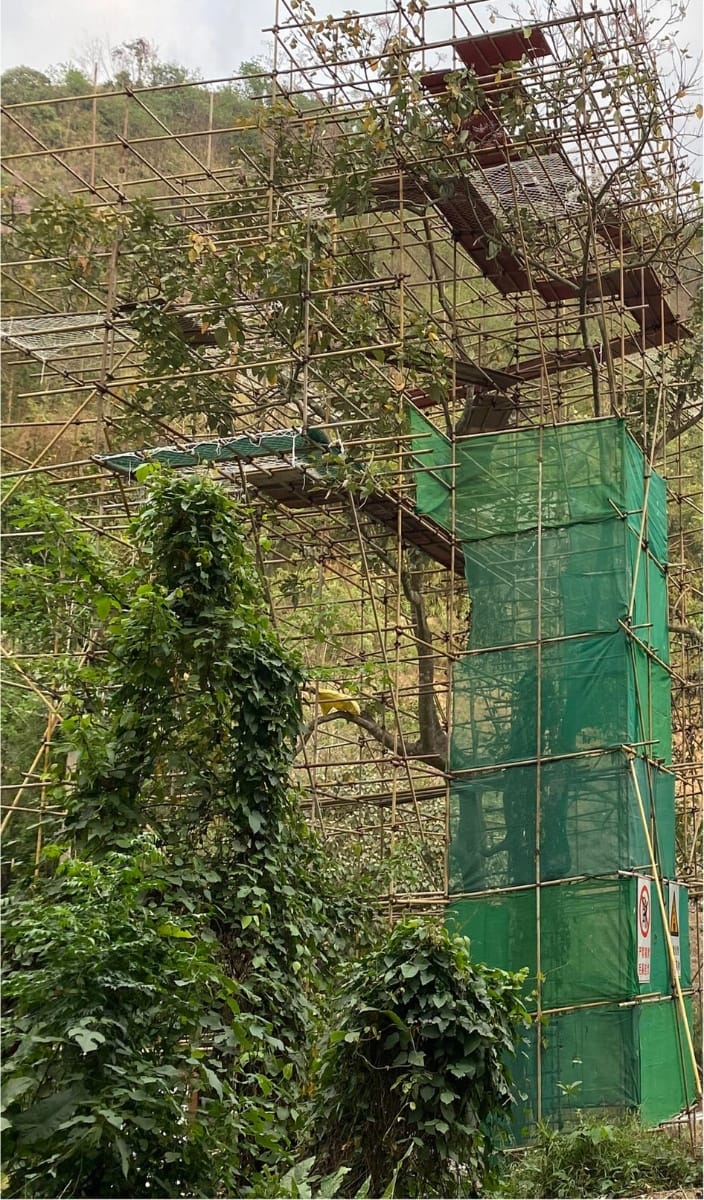
As reaching the flowers of this plant is not an easy task, they built a 25-metre scaffold high above the forest floor. From there, they recorded insect visits and measured floral scent, nectar production, colour reflectance and reproductive function as flowers aged. Furthermore, they set up an experiment to compare fruit production in flowers left open to visitors, protected from them, and hand-pollinated with pollen from the same tree.
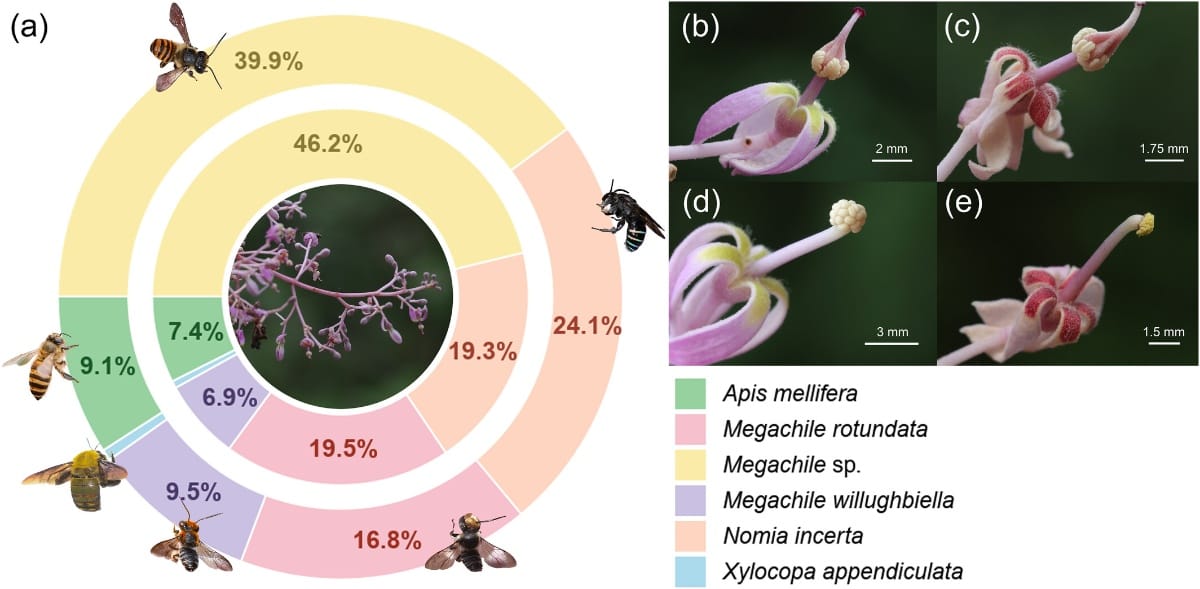
They found that yellow flowers received five to six times as many insect visits as red flowers, with bees from the genus Megachile being the most frequent visitors (46.2 per cent of all visits). But colour is only one part of the story.
Yellow flowers released more linalool, a fragrant chemical involved in communication between plants and insects. Furthermore, yellow flowers stood out more strongly against a green background in a model of bee vision, tended to present greater nectar availability and reproductive function than the red ones.
Together, these findings suggest that the shift from yellow to red coincides with changes in several signals and rewards pollinators found on the flowers. However, the study could not determine which of these differences, if any, drove insect behaviour.
The fruit production experiments showed that exposed flowers produced fruit in only 6.19 per cent of cases, while flowers isolated from visitors or pollinated with pollen from the same tree produced none. This suggests that floral visitors play an important role in fruit production. The failure of flowers pollinated with pollen from the same tree also raises the possibility that Firmiana daweishanensis needs pollen from another individual to reproduce successfully, but further experiments are needed to confirm this.
So, what can a changing flower tell us? In Firmiana daweishanensis, the shift from yellow to red is accompanied by changes in scent, nectar availability and reproductive function. Together, these characteristics may form a combination of signals that helps insects assess flowers at different stages of development. Yet researchers still do not know which signals matter most to visiting insects. And because the study focused on a single tree, further research is needed to establish whether the same patterns occur in other individuals and populations. Protecting a rare tree like that one means more than keeping it standing. It also means safeguarding the forest and the pollinators that may hold the key to its future.
READ THE ARTICLE:
Wang, B. Q., Xiao, S. Y., Li, C. J., Ping, Y. M., Zhang, J. G., Sun, W. B., & Yang, J. (2026). Pollinator visitation within a single crown of the rare rainforest tree Firmiana daweishanensis is associated with floral colour change. Ecology and Evolution, 16(10), e74490. https://doi.org/10.1002/ece3.74490
Portuguese translation by Victor H. D. Silva
Cover picture by Bo-Qiang Wang.