
Imagine scrolling through Instagram and coming across a plant that turns out to be a species unknown to science. That is precisely how the story of this week's plant, Victoria colombiana, began!
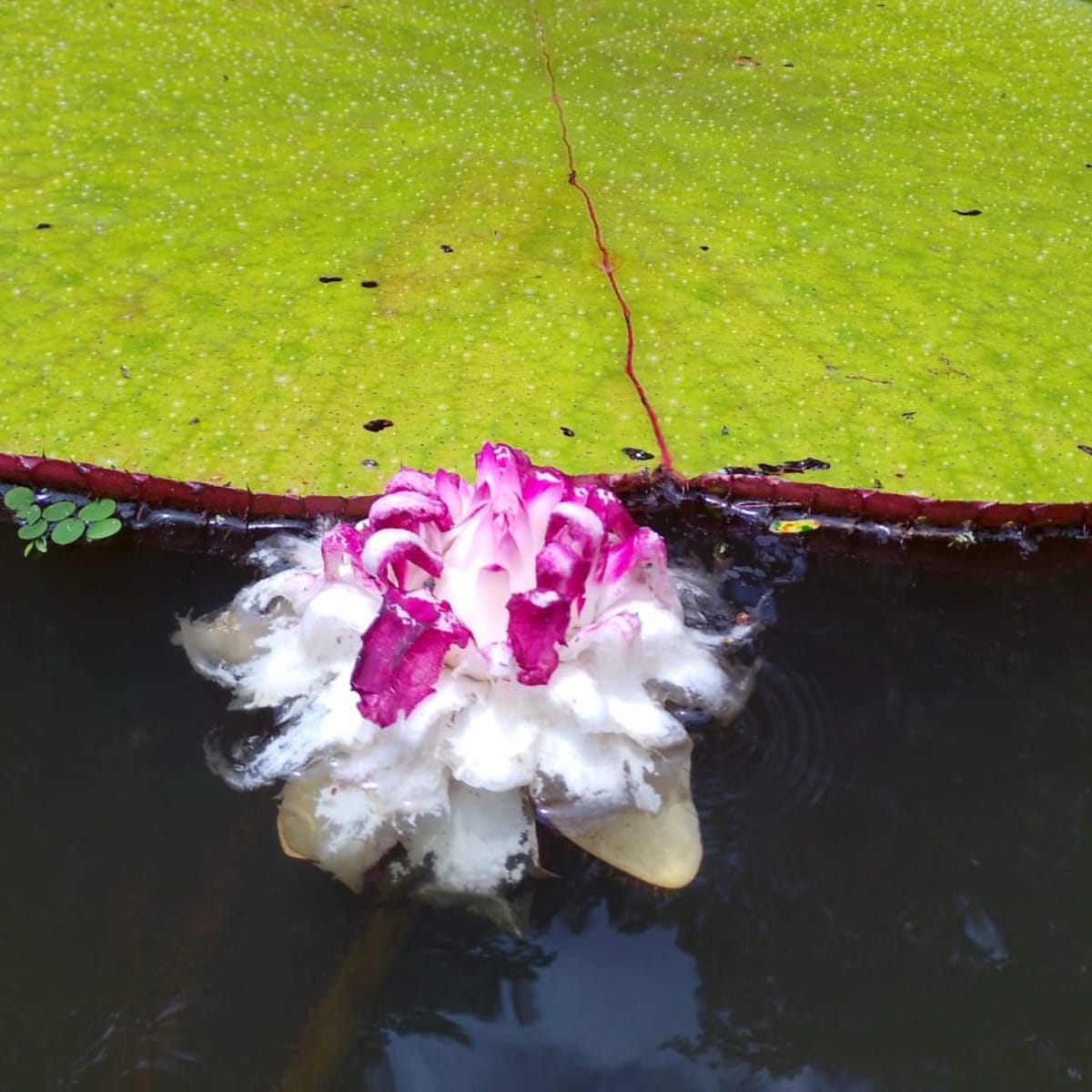
Victoria is a genus of aquatic plants belonging to the waterlily family (Nymphaeaceae), famous for producing some of the largest floating leaves in the plant kingdom, sometimes exceeding three metres in diameter. These gigantic leaves are supported by a remarkable network of ribs on their underside, which also bears numerous sharp prickles. Their flowers are equally fascinating: they open white on the first night and turn pink on the second, attracting beetles that help with pollination.
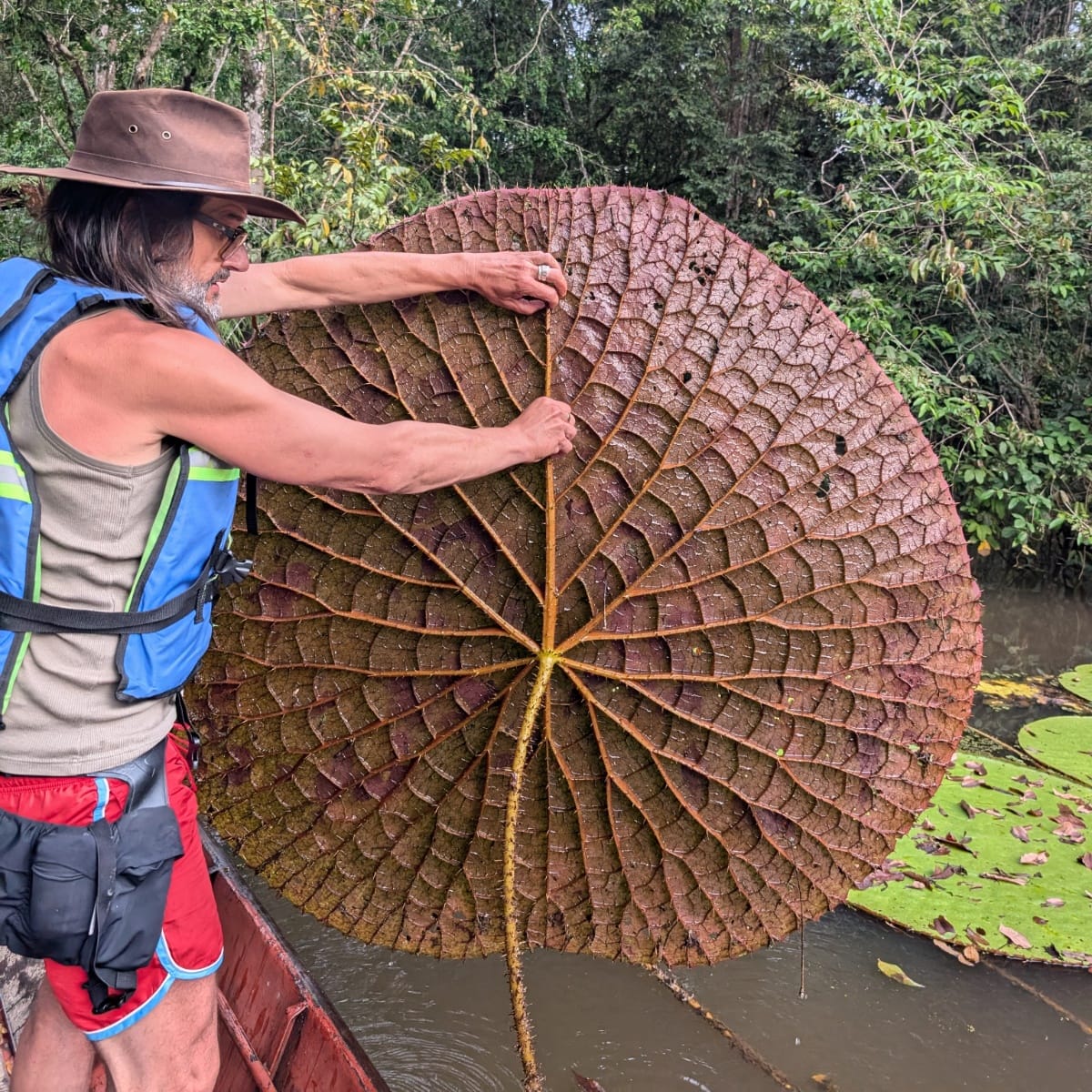
In 2021, Carlos Magdalena —a waterlily specialist at the Royal Botanic Gardens, Kew, famously known as the Plant Messiah— came across Instagram photographs taken by Jeremiah Haris of a giant waterlily growing in the region of Inírida, in eastern Colombia, near the borders of Venezuela and Brazil. Although the plant had initially been identified as Victoria amazonica, something about the pictures caught his attention: the waterlily was growing somewhere no Victoria species had previously been recorded.
After spotting the Instagram photographs, Magdalena began exploring satellite images of the region and found what appeared to be giant waterlily leaves floating in several lagoons. He then joined forces with researchers from Bogotá's botanical garden and members of local Indigenous communities to organise an expedition in July 2024. However, after five days exploring the flooded forests, the team had found only two individuals, neither of which was flowering. Without flowers, they lacked the material needed to formally describe the species, and their return flight was fast approaching.
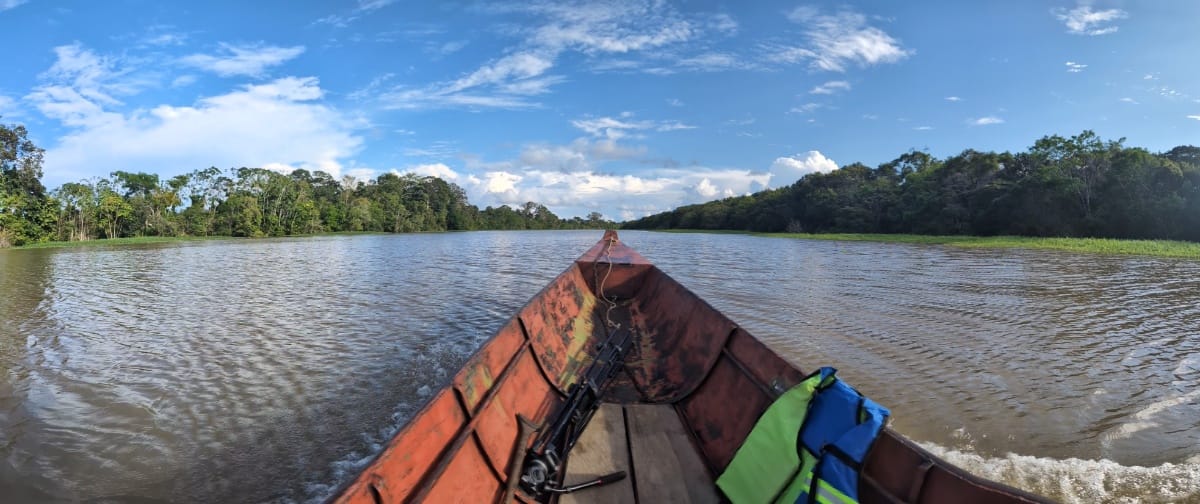
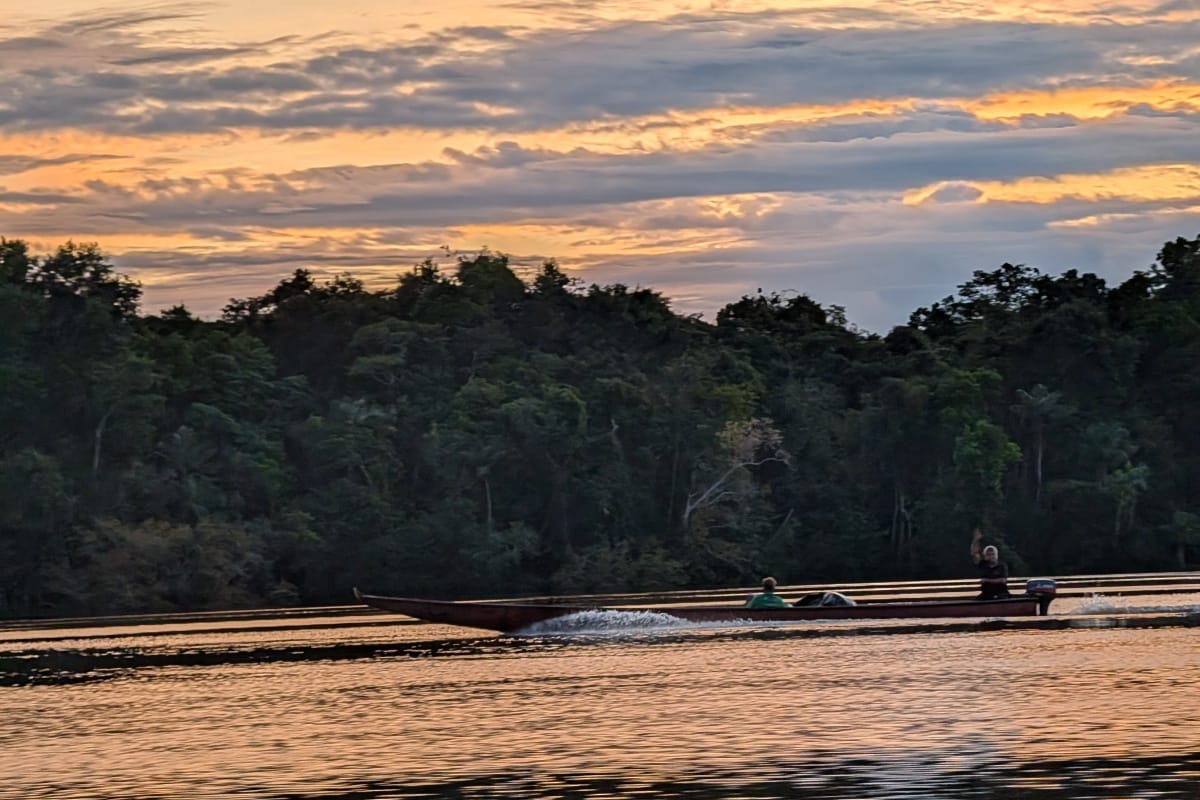
Just when everything seemed lost, something extraordinary happened. At 11 pm, on the night before their flight home, Magdalena shared his frustration with Gustavo Melo, their boatman and a member of the Indigenous Tucano community. To everyone's surprise, Melo knew exactly where to find more plants! So, at 1 am, the team ventured into the flooded forest in complete darkness, trusting Melo's knowledge of the region to guide them. Shortly before sunrise, they reached a small lake where five additional waterlilies were growing, including one in flower! The team finally had the specimens they needed and even managed to catch their flight back to Bogotá. You can read the full account of this remarkable expedition in Kew's announcement.
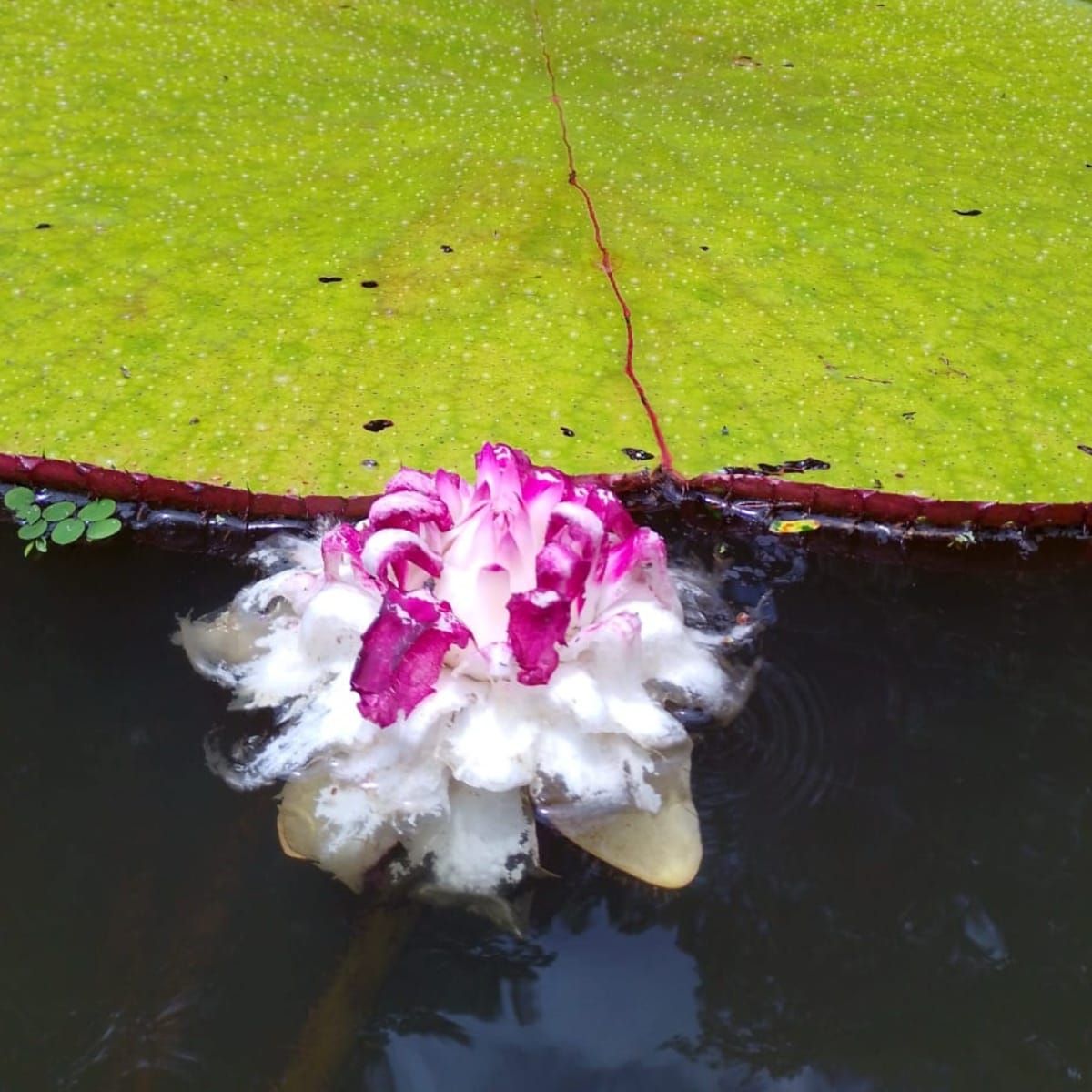
So, what makes Victoria colombiana different from its relatives? Although it closely resembles Victoria amazonica, it has several distinctive features. Its flowers have shorter, more densely packed prickles that are surprisingly flexible, while its ovary has a somewhat square outline rather than the rounded shape found in Victoria amazonica. These differences, together with its geographical distribution, led researchers to describe it as a new species in a study published last month.
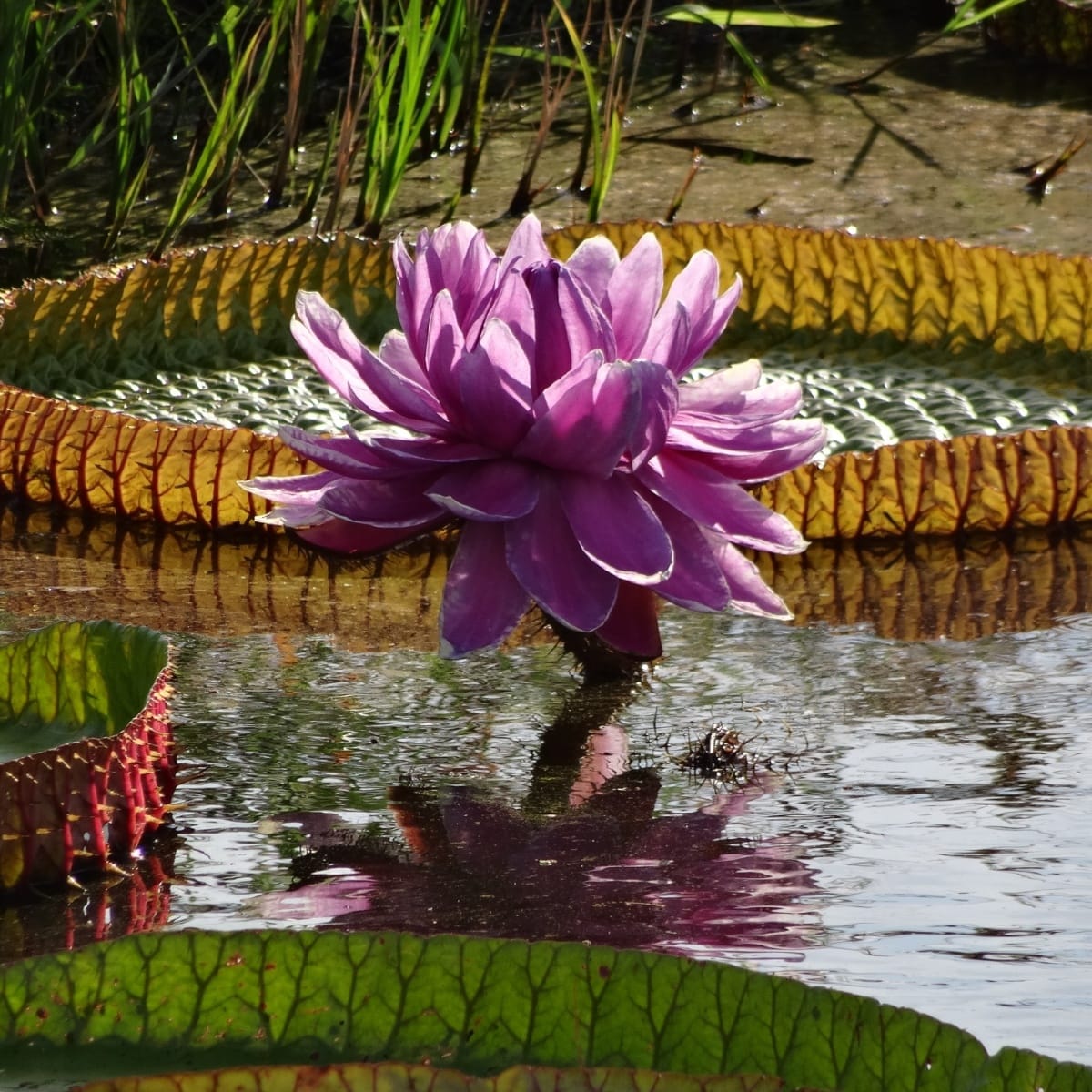
Victoria colombiana (left, Photo by Nilo Rodriguez) and Victoria amazonica (right; Photo by fernanda_santos via iNaturalist, CC BY-NC 4.0).
However, the discovery raises another question: how could such an enormous plant have gone unnoticed by scientists for so long? After all, its leaves can reach around two metres across, making them visible even in satellite photographs! One explanation is that these plants inhabit remote lagoons within seasonally flooded forests, where accessing populations can be challenging. Moreover, researchers found that the leaves were much easier to spot in satellite images taken when water levels were low, providing an additional challenge for anyone trying to locate them.
Perhaps the most intriguing aspect of this discovery is what it tells us about the evolution of giant waterlilies. Researchers found that different Victoria species tend to occur in separate river basins across South America. Because their seeds cannot survive drying out and are thought to disperse mainly through rivers and floodwaters, changes in river courses and the isolation of river basins over millions of years may have contributed to the evolution of different species. In other words, the history of these magnificent plants may be closely linked to the history of South America's rivers!
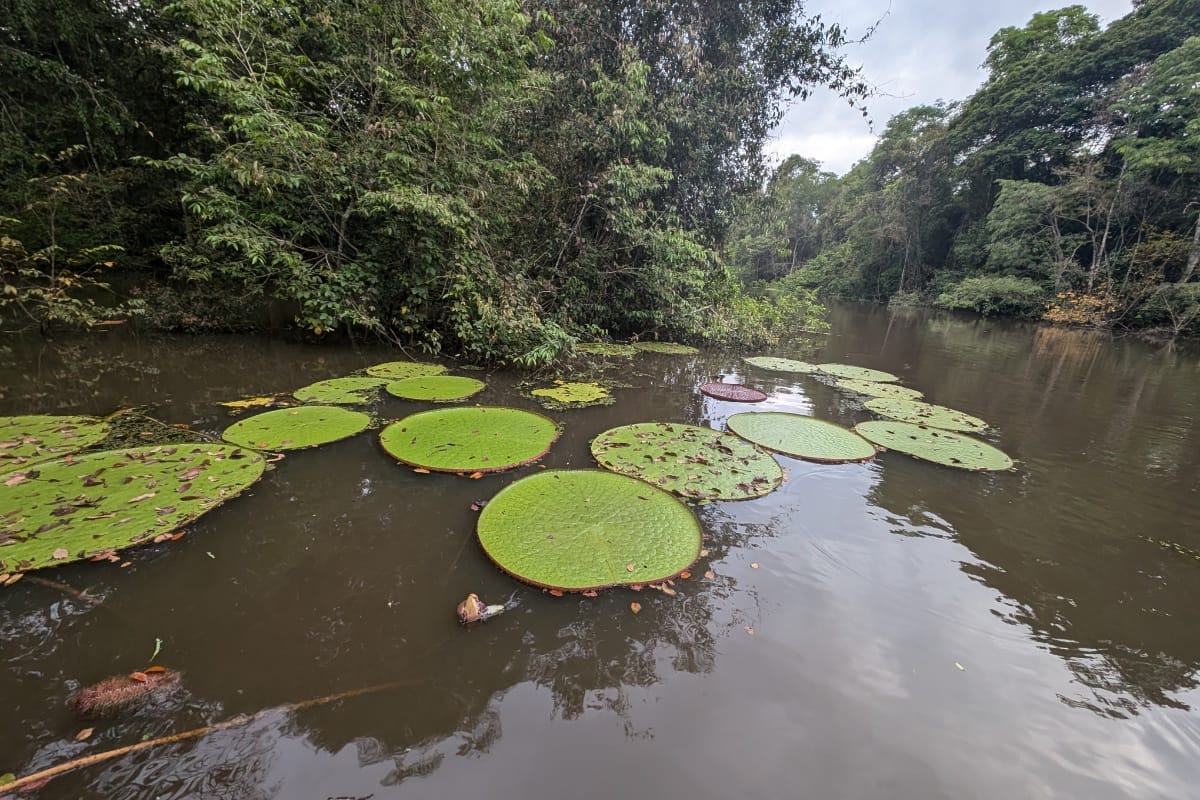
Sadly, the story also has a worrying side. Researchers at Kew estimate that only 30–50 individuals of Victoria colombiana may remain in the wild, although further surveys are needed to establish its actual population size. Conservation initiatives involving Colombian botanical gardens and Indigenous communities could therefore play an essential role in protecting this newly recognised species.
To me, Victoria colombiana is a wonderful reminder that botanical discoveries can begin in the most unexpected places, even on social media! However, recognising this species took much more than an Instagram photograph: it required satellite imagery, fieldwork and the knowledge of people who were already familiar with these plants and their environment. And if a plant large enough to be spotted from space remained unrecognised by science until now, imagine how many more botanical surprises might still be waiting for us!
Cover picture: Victoria colombiana bud by Nilo Rodriguez