
Hello everyone. I've wondered what would happen if, for example, one of my internal organs exploded and I had to take some time off. For the past few weeks Sarah Covshoff, Carlos Ordóñez-Parra and Juniper Kiss have been showing that there'd be no problem at all. My thanks go to them for keeping everything running smoothly.
This week I've been to the State of the World's Plants and Fungi Symposium at Kew. This has been the reason for our Digital Botany month, and Juniper has her reflections on the month here. I think it's worked out well, and I can foresee doing something similar for other conferences next year. I think it might be more helpful for smaller conferences where people are introducing themselves, so we might be looking for sponsorship / communication agreements with events involving PhD students or ECRs next year. We'll need a proper post-mortem of this event before we can commit to anything.
I have other things to write about, but they can wait till next week when we'll be sharing the latest Botany One stories, botanical news, conversations from Mastodon and Bluesky, as well as career postings. at the usual time.
Until then, take care,
Alun (webmaster@botany.one)
On Botany One
Digital Botany Focus Issue Week 5:
 Ben Carson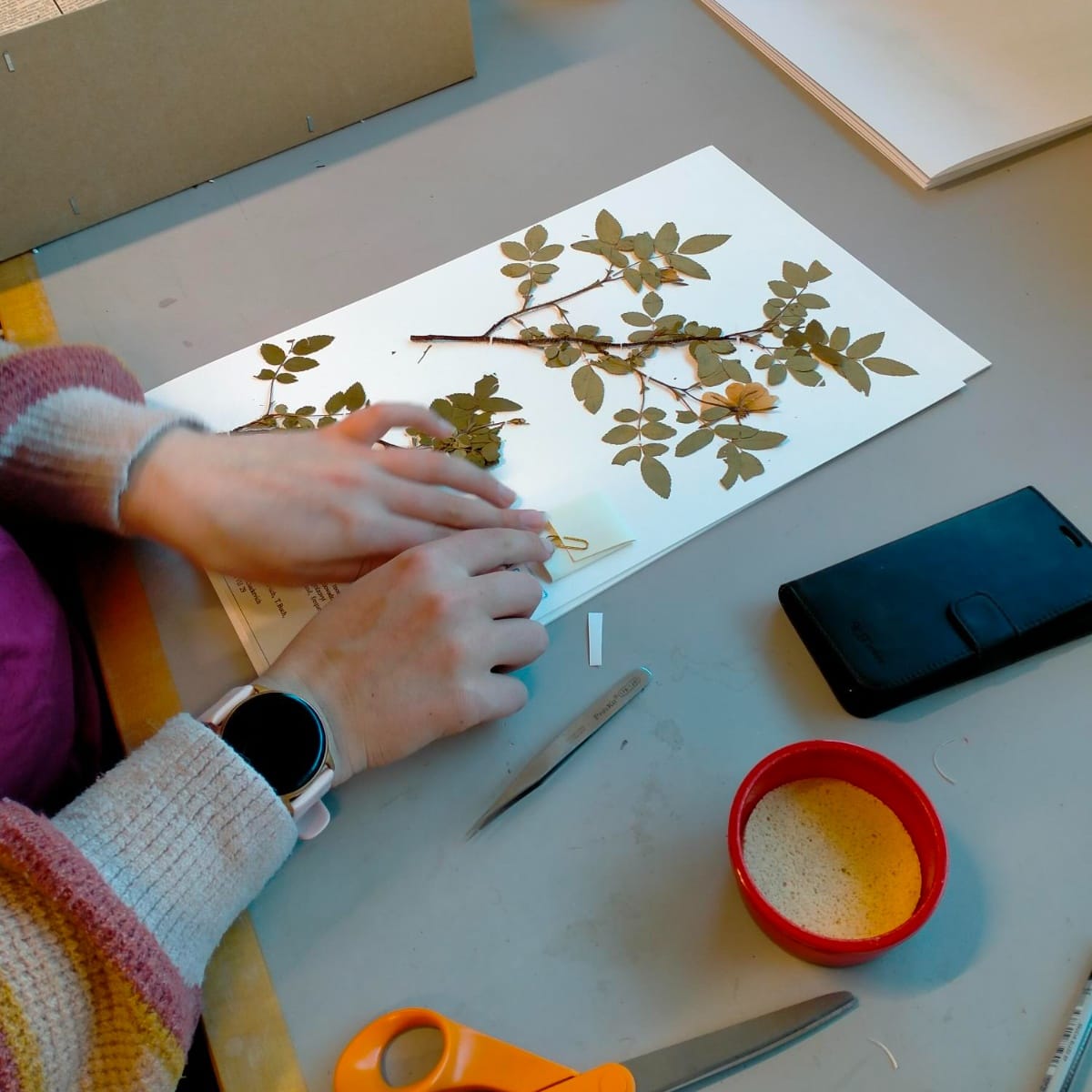
 Juniper Kiss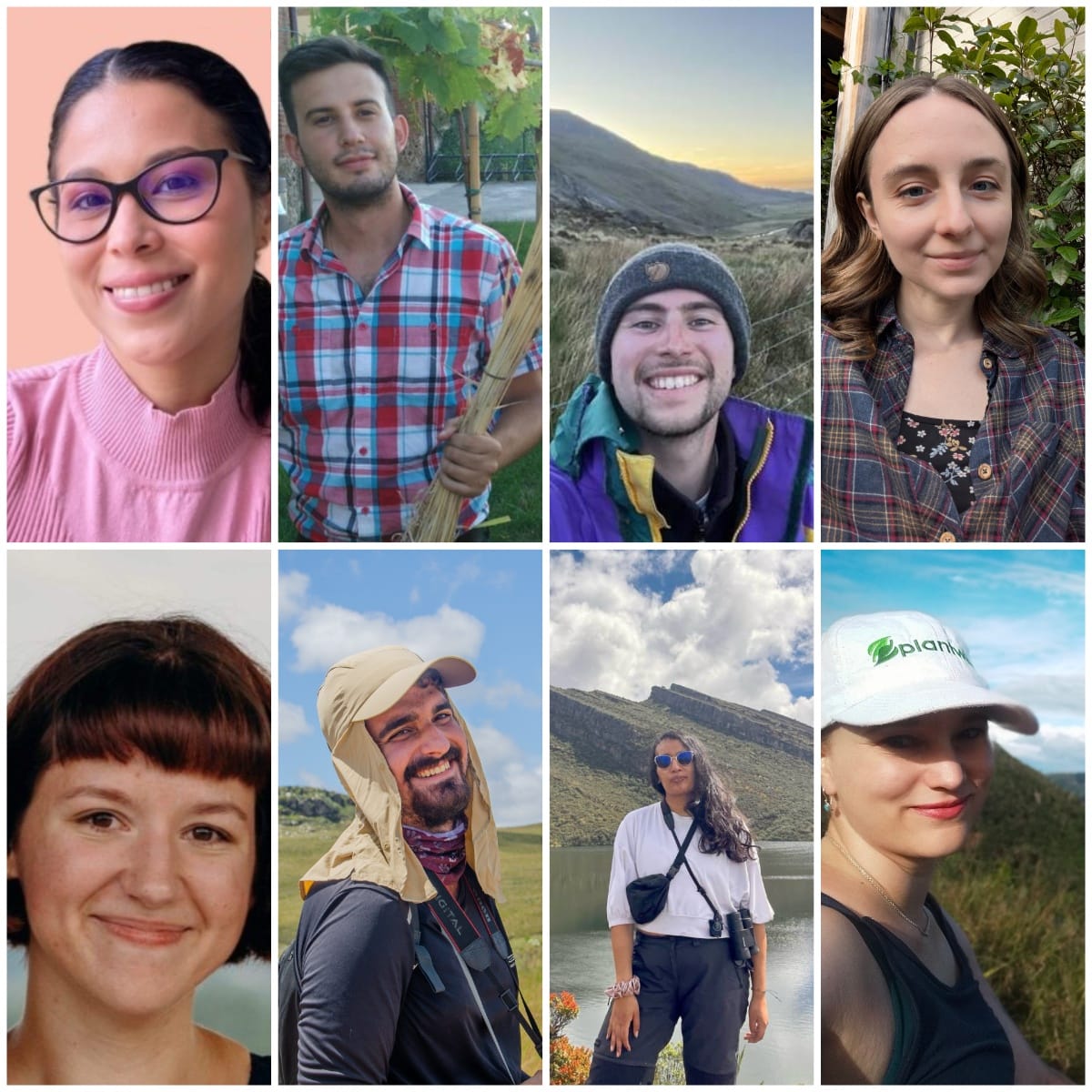
Other Articles
How Seeds Travelled Through Plant History
From fruit-eating animals to wind and self-launching seeds, flowering plants have changed their travel strategies as climates shifted over millions of years.
Chris Thorogood: "We Can’t Live Without Plants"
Botany One interviews Dr Chris Thorogood, who aims to foster a greater care and attention for plants through science and art.
The Flower That Tells Pollinators to Move On
In Saxifraga fortunei, a yellow-to-red colour change in the pistil may tell hoverflies and honeybees which flowers are still worth visiting.
Can plants remember a stressful past?
Scientists find that rice can tell stories of a hard winter to future generations and prepare them for survival.
There was also Science Shared, Sudoku Garden, Plant Hunt and Lemna minor was plant of the week. And there's last week's Week in Botany too.
In AoBC Publications
- Effects of nitrogen on floral scent and other reproductive traits in two closely related species of Ipomopsis and their hybrids 🆓
- Maternal sex influences seed dormancy in a gynodioecious species 🆓
- PlantModules.jl: A framework for modular plant modelling 🆓
News & Views
Growing 1,066-acre Willow Fire near Leadville sends smoke into Summit County
A wildfire that grew to more than 1,000 acres in a matter of hours near Leadville in the evening Sunday, June 28, sent smoke rolling into Summit County and led emergency officials to ask residents not to call 911 unless they detect a distinct column of smoke or flames.
summitdaily.com
Māori names restored to five Auckland regional parks
Five Auckland regional parks have had Māori names and narratives restored.
rnz.co.nz
A prolific evolutionary biologist caught faking data decades ago notches a new retraction
Anders Møller, an influential evolutionary biologist from Denmark, somehow survived the blow to his reputation after a high-profile retraction and a finding of scientific misconduct more than 20 years ago. But a new retraction is once again raising the question of whether that fraud was just a blip in his impressive publication record or further proof, as some claim, that much of Møller’s work rests on a shaky foundation.
retractionwatch.com
Scientists identify the “point of no return” in dying leaves
Before a leaf dies, plants recover nutrients that the rest of the plant can reuse for growth and survival. Researchers at Umeå Plant Science Centre have now identified a metabolic “point of no return” linked to the amino acid arginine.
upsc.se
Mary-Dell Chilton, NC biochemist who revolutionized agriculture, dies at 87
Mary-Dell Chilton was determined to challenge a prevailing scientific theory: that a bacterium could alter the genes of trees. But as she set out to prove the theory wrong, she instead discovered its truth — and in the process, helped turn science fiction into reality.
newsobserver.com
What is a seed bank?
Poster by Andrea Kučerová, F. Curtis Lubbe, & Jitka Klimešová from the Institute of Botany of the Czech Academy of Sciences. Although we focus a lot on belowground plant organs and buds, seeds are also an important part of plant life and population regeneration. In this poster, we discuss the seed bank, such as how seeds may enter into long dormancy and variation among seeds.
plantlifebelowground.wordpress.com
Les arbres profitent-ils à tous les Montréalais?
Les arbres profitent-ils équitablement aux gens vivant sur l’île de Montréal? Quand on s’y attarde, la canopée révèle un portrait insoupçonné de la ville.
ici.radio-canada.ca
Why paying peer reviewers works, according to a journal’s editor-in-chief
A biology journal that paid peer reviewers found that the approach cut the time to a first editorial decision by 85% and maintained high-quality reviews.
nature.com
Why Meadows are National Treasures - Explore an Ancient Lamas Meadow with Us
Visit the ancient lamas meadow, Lugg Meadows, with us and meet members of the community who cherish the connections that we share with these incredibly special places.
PlantLife/youtube.com
Did you know publicly-funding science supports American farms?
Meet Isako “Izzi” Di Tomassi, a plant pathologist who studies plant disease so crops can grow into healthy food and power our economy. Izzi’s research helps farmers identify disease in their potato plants to better protect their harvests. A powerhouse of nutritional content, the mighty spud also powers our economy, contributing to over $1 trillion in our economy, with the largest producers in Idaho, Washington, Colorado and other states.
Partnership for Public Service/linkedin.com
Science Shared
Three botany papers widely shared on Bluesky this past week were:
The TARGET OF RAPAMYCIN (TOR) kinase controls shade-mediated hypocotyl elongation responses in Arabidopsis.
Courbier, S. et al. · bioRxiv
Plants perceive neighboring vegetation through an enrichment of far-red light (shade) in the environment. These changes in light quality trigger molecular and physiological responses aimed at outgrowing competitors, collectively known as the shade avoidance syndrome. In this study, we identify the TARGET OF RAPAMYCIN (TOR) complex 1 (TORC1), a major growth-regulating hub in eukaryotes, as a driver of shade-mediated growth responses in plants.
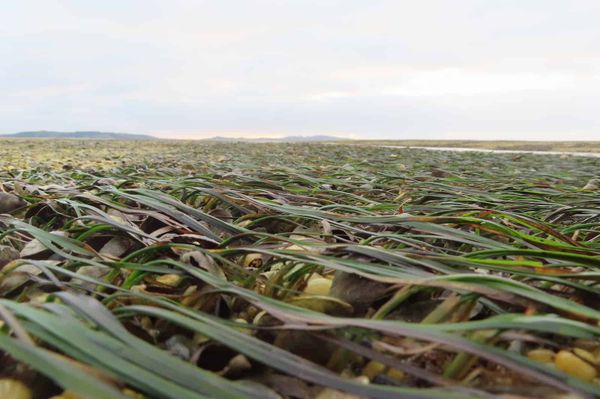
Seagrasses provide a novel ecosystem service by trapping marine plastics
Sanchez-Vidal, A. et al. · Scientific Reports
There is strong evidence that the seafloor constitutes a final sink for plastics from land sources. There is also evidence that part of the plastics lying on the shallow seafloor are washed up back to the shoreline. However, little is known on the natural trapping processes leading to such landwards return. Here we investigate microplastics and larger plastic debris within beached seagrass remains including balls (aegagropilae) made of natural aggregates of vegetal fibers intertwined by seawater motion.
Agrobacterium. A Memoir 💰
Chilton, M. D. · Plant Physiology
This little memoir is not a review; the reader is directed to current authoritative Agrobacterium reviews with genetic (23) or cell biology emphasis (24). Likewise, this is not an update on recent advances in plant genetic engineering, which are the subject of a recent book (13). Rather, I invite you to join me on a foray through the story of Agrobacterium transformation of plant cells
You can see the full list with more details at Science Shared: July 4.
Careers on Bluesky
Please note these are not jobs I am offering. Nor can I help you with any visa requirements. At time of writing there are around 86 other jobs posted at Botany One.
Research Assistant / Research Associate (Fixed Term) // University of Cambridge
www.jobs.ac.uk/job/DSC641/r...
An exciting opportunity is available for a Postdoctoral Researcher to join the group of Prof. Jake Harris at the Department of Plant Sciences.
Historical and bibliographic research on pesticide use in Eastern Europe (M/F) // Paris
emploi.cnrs.fr/Offres/PASS/...
This internship is part of the "Remed-Chlor" project which was launched in 2022 and is dedicated to the multidisciplinary study of soil decontamination in Guadeloupe.
Historical and bibliographic research on pesticide use in China (M/F) // Paris
emploi.cnrs.fr/Offres/PASS/...
This internship is part of the "Remed-Chlor" project which launched in 2022 and is dedicated to the multidisciplinary study of soil decontamination in Guadeloupe.
Technical Officer- Field based, GRDC Root Phenotyping // University of Adelaide
uniroles.com.au/display-job/...
This GRDC project directly aims to provide pre-breeders with powerful new tools to assess and enhance root traits.
Technical Officer - Controlled environment, GRDC Root Phenotyping // University of Adelaide
uniroles.com.au/display-job/...
This GRDC project directly aims to provide pre-breeders with powerful new tools enhance root traits critical.
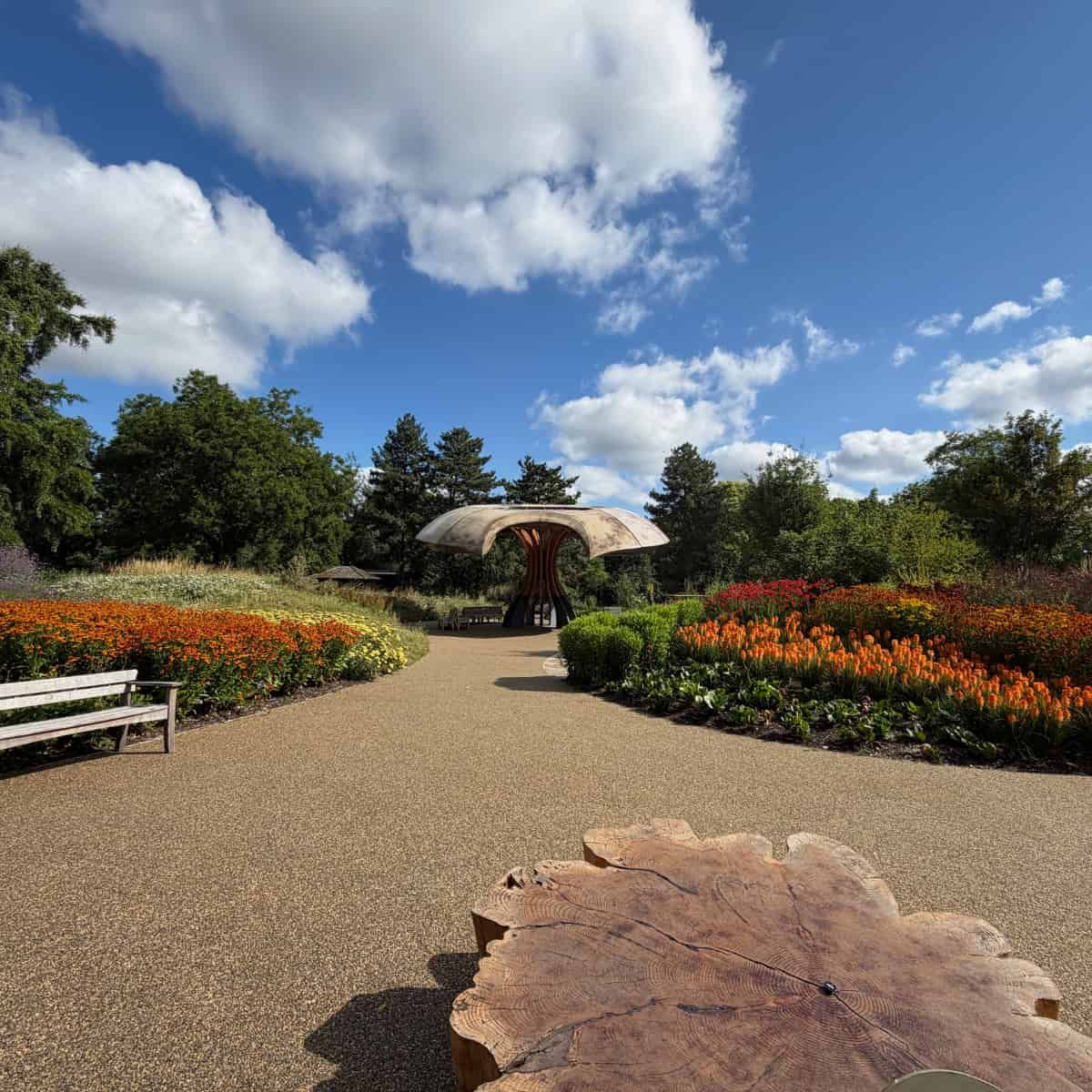
Cover Image: The Carbon Garden at Kew.