
Here's a round up of the top papers you've been sharing this week on Bluesky. Papers behind a paywall are marked 💰otherwise they're free to access at time of checking.
How this works
We scan posts by people on the Botany Auto list and pull out the entries with links to papers. Every time a paper gets a post written about it it gets 4 points. It gets 3 points for a repost and 1 point for a like.
We try to add people to the Botany Auto post, if they post about Botany (doesn't have to be links to papers) around 20% of the time or more. The belief is that because the list as a whole shares an interest in plants, it's this material that tends to rise to the top.
If you think you should be on the Botany Auto list, but aren't, please drop a message to @botany.one on Bluesky.
The TARGET OF RAPAMYCIN (TOR) kinase controls shade-mediated hypocotyl elongation responses in Arabidopsis.
Courbier, S. et al.
Plants perceive neighboring vegetation through an enrichment of far-red light (shade) in the environment. These changes in light quality trigger molecular and physiological responses aimed at outgrowing competitors, collectively known as the shade avoidance syndrome. In this study, we identify the TARGET OF RAPAMYCIN (TOR) complex 1 (TORC1), a major growth-regulating hub in eukaryotes, as a driver of shade-mediated growth responses in plants.
Sarah Courbier @scourbier.bsky.social · on Bluesky
I've got something to "TORC" about! 😅
After 4 years building this project at @biologyunifreiburg.bsky.social, I'm so excited to share that my first independent preprint is now online! ✨
I hope you like it:
doi.org/10.64898/202...
A short thread... 🧵
#PlantSci #PlantScience
Seagrasses provide a novel ecosystem service by trapping marine plastics
Sanchez-Vidal, A. et al. · Scientific Reports
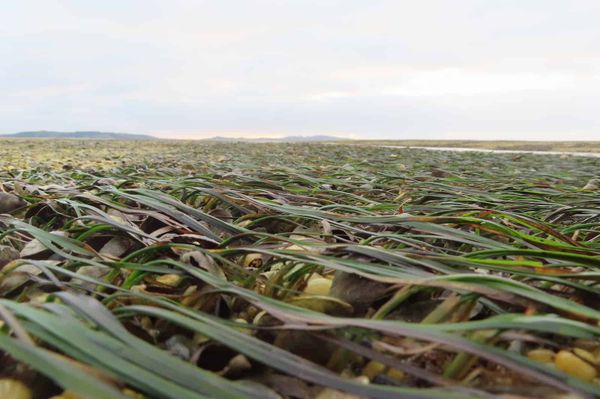
There is strong evidence that the seafloor constitutes a final sink for plastics from land sources. There is also evidence that part of the plastics lying on the shallow seafloor are washed up back to the shoreline. However, little is known on the natural trapping processes leading to such landwards return. Here we investigate microplastics and larger plastic debris within beached seagrass remains including balls (aegagropilae) made of natural aggregates of vegetal fibers intertwined by seawater motion.
Miguel A Gómez Serrano @gomezserrano-ma.bsky.social · on Bluesky
Hace poco se describió uno de los servicios ecosistémicos de las praderas de Posidonia oceanica: la extracción de plásticos del fondo marino: www.nature.com/articles/s41...
Las bolas de Neptuno (restos de rizomas de Posidonia), atrapan plásticos y los sacan a la playa tras los temporales. 👇 Doy fe
 View on Bluesky →
Agrobacterium. A Memoir 💰
Chilton, M. D. · Plant Physiology
This little memoir is not a review; the reader is directed to current authoritative Agrobacterium reviews with genetic (23) or cell biology emphasis (24). Likewise, this is not an update on recent advances in plant genetic engineering, which are the subject of a recent book (13). Rather, I invite you to join me on a foray through the story of Agrobacterium transformation of plant cells
Marc Somssich @somssich.bsky.social · on Bluesky
I can highly recommend Mary-Dell's autobiographical article in @plantphys.bsky.social:
"Agrobacterium. A Memoir"
academic.oup.com/plphys/artic...
It's always best to read about great scientific discoveries from the scientists themselves.
#PlantScience
Origin and diversity of leaf vein patterns
Robil, J. M., Scarpella, E. · Journal of Experimental Botany
We have all felt at the touch the vein stripes in a grass leaf or have seen against the sun the vein mesh in a fallen leaf. Those veins distribute water to and collect sugars from all leaf areas. How vein networks evolved and develop is therefore a key question in biology. Here we address that question for vascular plants, in whose leaves veins are thought to be arranged in either grids or webs. We will see that those are just two instances of the natural diversity of vein patterns, which evolved independently multiple times.
Journal of Experimental Botany @jxbotany.bsky.social · on Bluesky
🕸️ DARWIN REVIEW 🕸️
Robil & Scarpella show that vein patterns are more diverse than commonly thought, and identification of vein precursor cells is arbitrary and inconsistent across species, thus challenging current understanding of vein patterns 🌿
🔗 doi.org/10.1093/jxb/...
#PlantScience 🧪
 View on Bluesky →
Anticipate, acclimate, recuperate and remember: How spatiotemporal signal integration controls flooding stress resilience in plants 💰
Rodriguez-Cisneros, C. et al. · Journal of Experimental Botany
Flooding is a major abiotic stress that restricts terrestrial plant growth and survival. A plant tissue’s ability to avoid or sustain critical oxygen deprivation (hypoxia) and subsequent re-oxygenation damage is vital for its survival. Submergence triggers rapid ethylene and hypoxia signalling that in turn control acclimation responses, promoting plant resilience. Interestingly, an extensive range of additional environmental and internal factors were shown to influence these canonical signalling pathways associated with flooding acclimation and tolerance. Here, we discuss how such integrative ethylene- and hypoxia-dependent signalling enables plants to anticipate and prepare for potential flooding-induced hypoxia stress, fine-tune acclimation according to the environmental and internal metabolic context, and effectively orchestrate re-oxygenation responses.
Sjon Hartman @hartman-plantlab.com · on Bluesky
Now out in its full copy-edited form, check it out 😍🌱🌊
#plantscience
doi.org/10.1093/jxb/...
Replication-independent eviction of the histone variant H2B.8 reveals chromatin reprogramming during seed imbibition
Simon, L. et al. · Nature Communications
The transition from seed to seedling involves major changes in nuclear organization and gene expression, yet the extent to which this developmental transition requires chromatin reprogramming remains largely unexplored. Here, we report that Arabidopsis dry seed embryos accumulate the histone variant H2B.8, which contributes to higher-order chromatin organization by forming spatial clusters that structure the 3D nuclear space.
Aline Probst @alineprobst.bsky.social · on Bluesky
Have you ever wondered how the epigenome is modified during the transition from seed to seedling?
Here, we show that water uptake by Arabidopsis seeds triggers the eviction of the H2B variant H2B.8, thereby revealing replication-independent chromatin reprogramming.
www.nature.com/articles/s41...
Food web complexity underlies biodiversity effects on ecosystem functioning 💰
Barnes, A. D. et al. · Nature
Biodiversity change has elicited widespread concern over the consequences for functions and services provided by ecosystems. Despite extensive evidence for a positive effect of biodiversity on ecosystem functioning within a single trophic level, how this biodiversity effect varies with multi-trophic food web structure remains unresolved even though most ecosystems contain two to six trophic levels. We investigate how food web complexity modulates biodiversity–ecosystem functioning relationships in nature by quantifying energy fluxes as proxies for two principal ecosystem functions8—primary consumption and predation—in 318 highly resolved, complex food webs from marine, lake, stream and soil ecosystems.
Andrew Barnes @barnesecodiv.bsky.social · on Bluesky
Published today in @nature.com, our study shows that the #foodweb trophic structure is critical for #ecosystemfunctioning.
Read it here: rdcu.be/frxEl
This has been an incredibly rewarding collaboration with many amazing scientists! 🌐🧪🦑🍁🌱
@waikatouniversity.bsky.social @idiv-research.bsky.social
 View on Bluesky →
Greater than 99% consensus on human caused climate change in the peer-reviewed scientific literature
Lynas, M., Houlton, B. Z., Perry, S. · Environmental Research Letters
While controls over the Earth’s climate system have undergone rigorous hypothesis-testing since the 1800s, questions over the scientific consensus of the role of human activities in modern climate change continue to arise in public settings. We update previous efforts to quantify the scientific consensus on climate change by searching the recent literature for papers sceptical of anthropogenic-caused global warming. From a dataset of 88125 climate-related papers published since 2012, when this question was last addressed comprehensively, we examine a randomized subset of 3000 such publications. We also use a second sample-weighted approach that was specifically biased with keywords to help identify any sceptical peer-reviewed papers in the whole dataset. We identify four sceptical papers out of the sub-set of 3000, as evidenced by abstracts that were rated as implicitly or explicitly sceptical of human-caused global warming. In our sample utilizing pre-identified sceptical keywords we found 28 papers that were implicitly or explicitly sceptical. We conclude with high statistical confidence that the scientific consensus on human-caused contemporary climate change—expressed as a proportion of the total publications—exceeds 99% in the peer reviewed scientific literature.
James Bullock @jmbecologist.bsky.social · on Bluesky
Just a reminder - despite what some claim, there is no debate among scientists whether climate change is caused by humans
“the scientific consensus on human-caused contemporary climate change exceeds 99% in the peer reviewed scientific literature”
iopscience.iop.org/article/10.1...
Taxonomic Revision of Corsia (Corsiaceae) Reveals Over‐Estimated Mycoheterotroph Diversity in Papuasia: 25 Species Become 10
Hatt, S. A., Lamei, P. · Feddes Repertorium
Corsia (Corsiaceae) is a remarkable genus of achlorophyllous, fully mycoheterotrophic plants distributed across New Guinea, the Solomon Islands, and Northern Australia. The genus has often been considered an example of adaptive radiation amongst mycoheterotrophic plants, with 25 narrowly endemic species, most known from just one or two specimens. The previous revision by van Royen in 1972 recognized 25 species from just 45 specimens. Here, we present a comprehensive taxonomic revision of Corsia based on the c. 150 specimens now available, including critical re‐examination of type material.
Discussed on Bluesky by @scottzona.bsky.social.
What determines transfer of carbon from plants to mycorrhizal fungi?
Bunn, R. A. et al. · New Phytologist
Biological Market Models are common evolutionary frameworks to understand the maintenance of mutualism in mycorrhizas. ‘Surplus C’ hypotheses provide an alternative framework where stoichiometry and source–sink dynamics govern mycorrhizal function. A critical difference between these frameworks is whether carbon transfer from plants is regulated by nutrient transfer from fungi or through source–sink dynamics. In this review, we: provide a historical perspective; summarize studies that asked whether plants transfer more carbon to fungi that transfer more nutrients; conduct a meta-analysis to assess whether mycorrhizal plant growth suppressions are related to carbon transfer; and review literature on cellular mechanisms for carbon transfer.
New Phytologist @newphyt.bsky.social · on Bluesky
✨ Paper spotlight ✨
(🧵 1/7) What determines transfer of carbon from plants to mycorrhizal fungi?
nph.onlinelibrary.wiley.com/doi/10.1111/...
 View on Bluesky →
Crossing the PAL crossroads: De novo gene birth in plant scent diversification and the pathogenic arms race 💰
Khan, M. S. S. et al. · Journal of Experimental Botany
Journal of Experimental Botany @jxbotany.bsky.social · on Bluesky
🌸🧬 VIEWPOINT 🧬🌸
Khan et al. explore how newly evolved de novo genes shape both floral scent and plant defence, revealing their role in the evolutionary arms race between plants and pathogens.
🔗 doi.org/10.1093/jxb/...
#PlantScience 🧪
 View on Bluesky →
Evidence for a trade‐off between growth rate and xylem embolism resistance in 22 Eucalyptus species
Pan, T. et al. · New Phytologist
ARC Centre of Excellence for Plant Success @coeplantsuccess.bsky.social · on Bluesky
📢 New publication 'Evidence for a trade-off between growth rate and xylem #embolism resistance in 22 #Eucalyptus species' by Tiantian Pan et al. in @newphyt.bsky.social 🧪
#drought
doi.org/10.1111/nph....
The genetic and regulatory framework of cuticular wax formation: insights from model plants to cereal crops 💰
Niu, J. et al. · Journal of Experimental Botany
Journal of Experimental Botany @jxbotany.bsky.social · on Bluesky
🌾💧 REVIEW 💧🌾
This review reveals how plants build a waxy surface barrier. It summarizes the genetic regulations, especially in cereals, and discusses how the knowledge guides the design of resilient crops - Niu et al.
🔗 doi.org/10.1093/jxb/...
#PlantScience 🧪
 View on Bluesky →
Opening the black box: in situ imaging of arbuscular mycorrhizal fungal structures in soil using synchrotron‐based micro‐CT
Braunmiller, H. M. et al. · New Phytologist
New Phytologist @newphyt.bsky.social · on Bluesky
Opening the black box: in situ imaging of arbuscular mycorrhizal fungal structures in soil using synchrotron-based micro-CT
Braunmiller et al.
nph.onlinelibrary.wiley.com/doi/10.1111/...
 View on Bluesky →
PERSPECTIVE: organelle positioning as a principle of metabolic regulation and stress tolerance
Fernie, A. R. et al. · The Plant Journal
The Plant Journal @theplantjournal.bsky.social · on Bluesky
🔎𝐏𝐞𝐫𝐬𝐩𝐞𝐜𝐭𝐢𝐯𝐞
🌱 Plant metabolism depends not only on what organelles do, but also on where they are
Find it here👉 doi.org/10.1111/tpj.70987
✍️ AR Fernie, G Decros, J Multhoff, J Sippel, JO Niemeier, P Barreto, A Sampathkumar, U Sonnewald, and M Schwarzländer
AI, Comparative Advantage, and the Next Decade of Ecological Research
Drake, J. M. · Ecology Letters
Markus Eichhorn @markuseichhorn.bsky.social · on Bluesky
Is the golden age of field-based ecology only just about to begin? An interesting argument that AI will displace demand for computational skills but increase the need for real data. 🧪🌏
View on Bluesky →Soil fertility controls on tropical forest productivity and mortality: synthesis and roadmap
Wong, M. Y. et al. · New Phytologist
New Phytologist @newphyt.bsky.social · on Bluesky
✨ Paper spotlight ✨
(🧵 1/7) Soil fertility controls on tropical forest productivity and mortality: synthesis and roadmap
nph.onlinelibrary.wiley.com/doi/10.1111/...
 View on Bluesky →
Cerrado plant traits (CPT): a database of functional traits across vegetation types in a global biodiversity hotspot
Amaral-Garcia, L. et al. · Annals of Botany
Annals of Botany @annbot.bsky.social · on Bluesky
🎉Great news! The paper ‘Cerrado plant traits (CPT): a database of functional traits across vegetation types in a global biodiversity hotspot’ in @annbot.bsky.social by Lara Amaral-Garcia et al. is now #free for 2 weeks 🧵(1/10)
👉 doi.org/rdct
@leveg.bsky.social
#AoBpapers #Botany #PlantScience
 View on Bluesky →
Dune restoration must consider species that need open and early successional dune habitats 💰
Gómez-Serrano, M. Á. · Nature Ecology & Evolution
Miguel A Gómez Serrano @gomezserrano-ma.bsky.social · on Bluesky
El hábitat óptimo de nidificación de las aves litorales es la franja de la playa seca donde se depositan los restos mareales y se desarrollan las dunas embrionarias: www.nature.com/articles/s41...
Poner una pasarela de madera justo encima y paralela a la orilla es una buena forma de destruirlo.
 View on Bluesky →
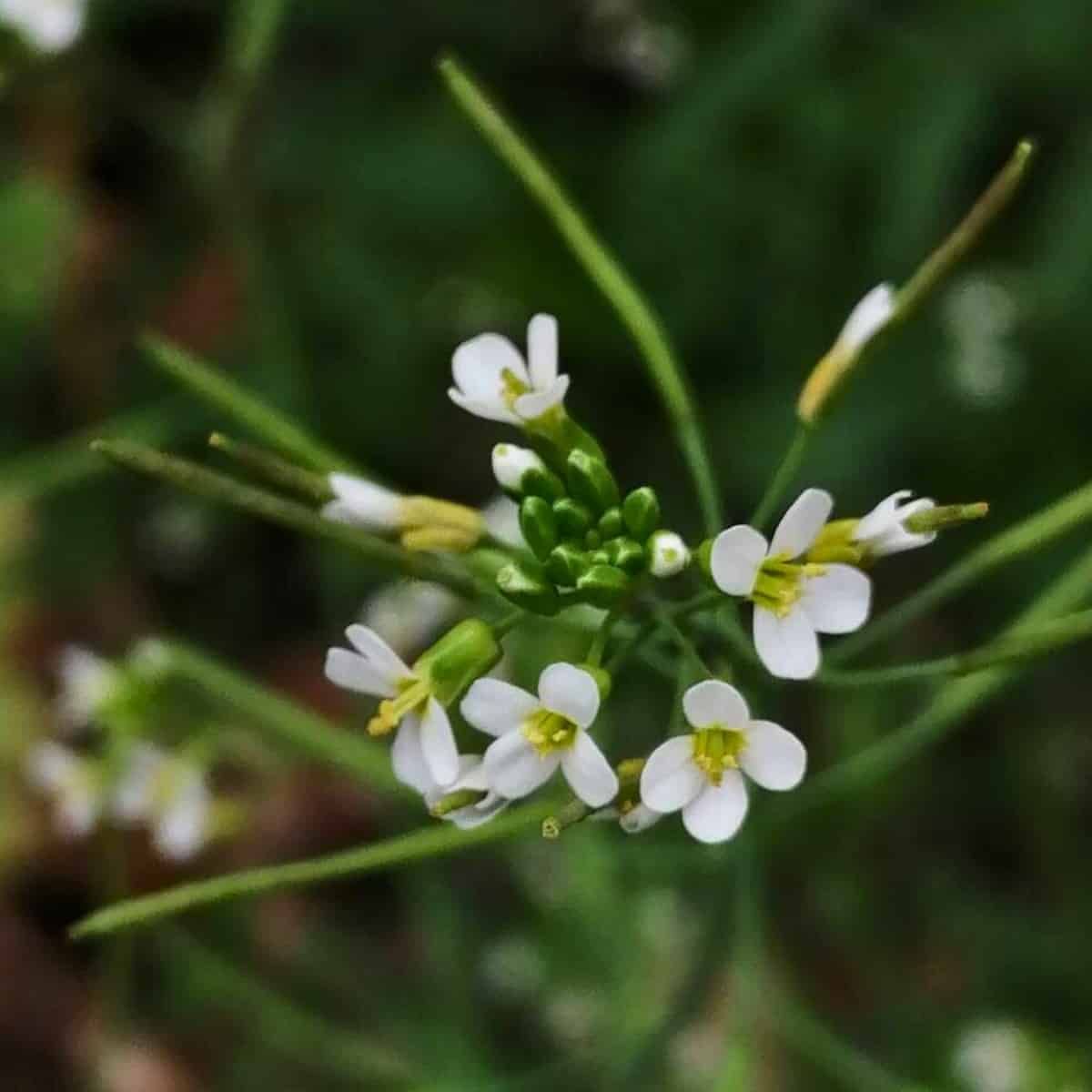
Cover image: Arabidopsis thaliana by Mallol Camprubí Albert CC BY-SA via Pl@ntNet