
Have your grandparents ever told you tales of a brutal winter that’s become part of your family lore? If so, you’re in good company. Some plants may also “remember” their family stories, not through words, but biology.
In an article published in Cell, Xianwei Song and colleagues show that cultivars of rice originally sensitive to cold can build up a form of “memory” that helps their descendants survive – and thrive – in winter.
“We subjected cold-sensitive rice to multigenerational cold stress and identified a line with acquired stable inheritance of cold tolerance,” write Song and colleagues in their article.
When they investigated the source of the acquired cold tolerance, they found that it stemmed from subtle marks on the parental DNA that were transmitted to the next generations, not mutations to the DNA itself. These types of inherited marks are called “epigenetic mutations”, and in this case they provided a “memory” for cold.
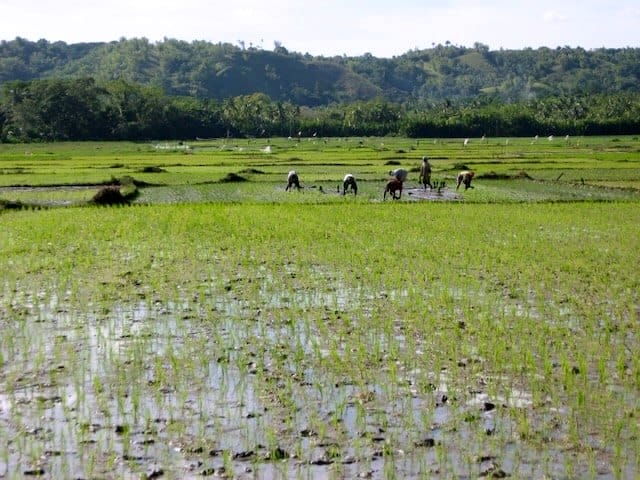
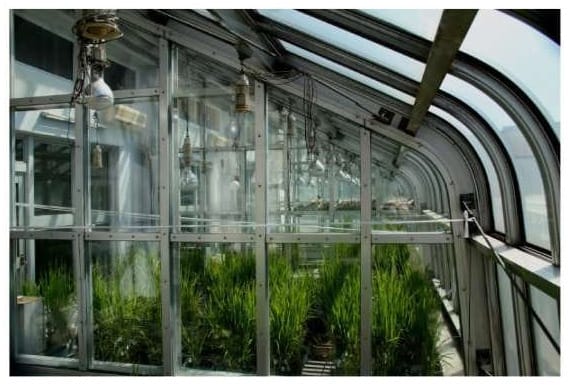
Rice was originally domesticated in warm areas of southeast China. Gradually, over the history of agricultural spread, this warm-adapted crop moved north to colder climates. During this transition, some individuals developed tolerance to low temperatures and passed this ability on to their offspring via their seeds. To understand how rice plants did this, Song et al. kept warm-adapted rice in low temperatures during the flowering time, knowing that rice flowers are sensitive to cold. The idea was simple: if the sensitive flowers survive and still produce seeds, then the parents might be able to transfer their “experience” into their seeds and create a living memory. These researchers then collected the seeds and repeated their experiments in the next generation. After a few generations, they found that some plants continued to produce large numbers of seeds despite the cold. This finding indicated that plants can indeed pass learned information about cold to their offspring and then use that information to preserve yield.
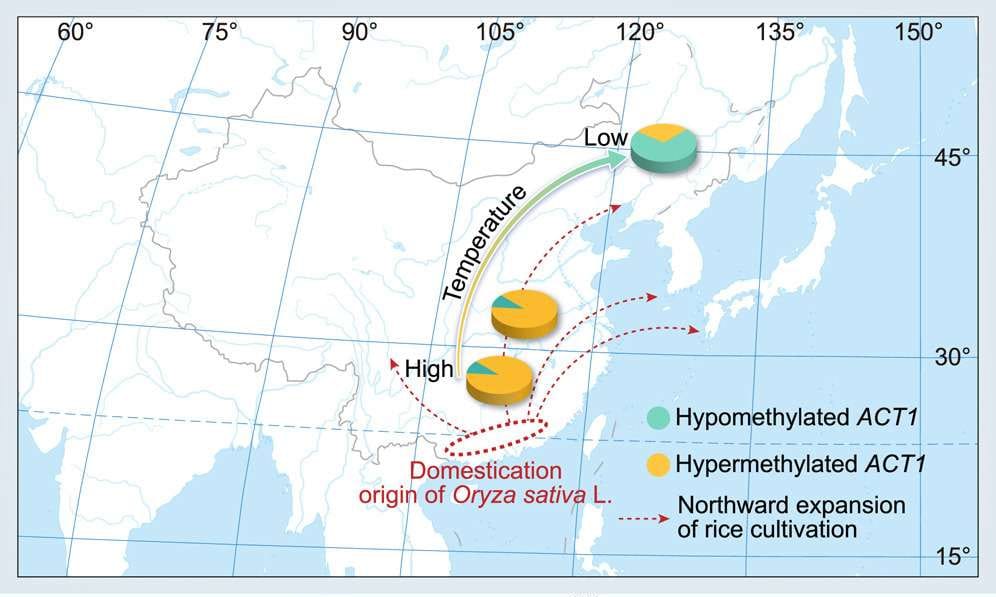
For a long time, scientists and philosophers credited the ability of passing experience to the next generation solely to humans with large brains and incredible storytelling skills, as well as some animals who interact with their young and teach them life lessons. But plants do not have a brain or nervous system, and their seeds could germinate far away from the parents with no direct interaction. This raises an important question: how can plants pass on any "experience” at all?
Traditionally, the answer has been DNA mutation or “adaptation”.
DNA of each organism is like a cookbook; it contains all the recipes – or genes – needed to build and maintain an organism. Each gene influences some traits, and changes in the structure of DNA, like mutation (rewriting, adding, or deleting the text in the cookbook), can affect those traits.
Song et al. investigated whether cold tolerance in rice can be the result of mutation in DNA, by searching for mutations in the cold-tolerant individuals. But, to their surprise, the DNA of the cold-tolerant rice plants was identical to their warm-adapted ancestors; they did not find any mutation. Instead, they found out that rice plants inherited cold tolerance by the mechanism of “epigenetics”. Through epigenetic changes, the main structure of the DNA – the “text” – remains untouched, but changes appear as small chemical changes; imagine sticky notes, yellow highlights, or a piece of tape masking the text without erasing it, all highlighting which part of the text to focus on and which part to skip.
Epigenetics is a known method that plants use to keep a record of their experience when interacting with their environment. It can be used to transfer “stories” of hardship to the next generation, while priming for effective coping strategies. In a study published in Plant Molecular Biology, a team of scientists found that, like rice, barley shows “stress memory”. In this research, they found that offspring of plants that have experienced heat stress produce less chlorophyll and invest in chemicals that are necessary to fight heat. In an opinion article, researchers propose that when plants experience cold, they can modify the chemistry of their cell walls – the interface of plant cells with their environment. This rearrangement of cell wall chemistry helps plants respond to environmental harshness properly. They propose that cell walls can remember the experience and store it as short-term or long-term memory.
These findings are exciting; not only do they open doors to the unknown world of plant perception, but they are especially helpful for agriculture. If plants can remember stress, tell a story, and pass on resilience against harsh environments to the next generation, then scientists may be able to develop tougher varieties of crops without altering DNA. This biological “memory”, also called “Ecological Memory”, empowers plants – despite being sedentary – to learn from experience and prepare for future challenges.
In a changing climate, this kind of inherited memory could prove invaluable, like in the newly cold-tolerant varieties that Song et al. found. The rice memory in their study is almost as if parent plants are leaving a note for their children: “Do not forget your jacket, my dear.” With this note, they help their offspring explore new territories, even those with harsher conditions.
READ THE ARTICLE: Song, X., Tang, S., Liu, H., Meng, Y., Luo, H., Wang, B., Hou, X., Yan, B., Yang, C., Guo, Z., Wang, L., Jiang, S., Deng, X., and Cao, X.(2025) Inheritance of acquired adaptive cold tolerance in rice through DNA methylation. Cell, 188(16), pp. 4213-4224.e12. Available at: https://doi.org/10.1016/j.cell.2025.04.036.
READ MORE:
Elkelish, A., Alqudah, A., Alhudhaibi, A., Alqahtani, H., Börner, A., and Thabet, S.(2025) Inherited endurance: deciphering genetic associations of transgenerational and intergenerational heat stress memory in barley. Plant Molecular Biology, 115(2). Available at: https://doi.org/10.1007/s11103-025-01571-z.
Shikata, H., Yoshinari, A., Asaoka, M., and Takahashi, D.(2025) Memory in the wall: expanding our understanding of the roles of plant cell walls. New Phytologist, 249(1), pp. 56-72. Available at: https://doi.org/10.1111/nph.70677.https://doi.org/10.1111/nph.70677
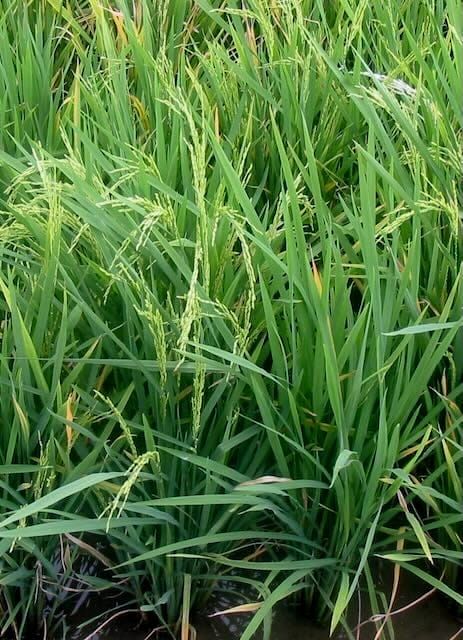
Cover Image: Rice, courtesy of Sarah Covshoff. All Rights Reserved.
Edited by Sarah Covshoff.