
Photosynthesis sustains almost all life on Earth, but its main molecular engine is far from perfect. The enzyme Rubisco, responsible for fixing atmospheric carbon dioxide (CO₂), is notoriously slow and often makes a costly mistake: instead of capturing CO₂, it reacts with oxygen (O₂). This problem reduces photosynthetic efficiency and limits plant productivity. Over the course of evolution, various organisms have developed solutions to overcome this limitation by concentrating CO₂ close to Rubisco. Among these solutions are pyrenoids, microscopic structures best known from algae. But there is a surprising exception among land plants: hornworts.
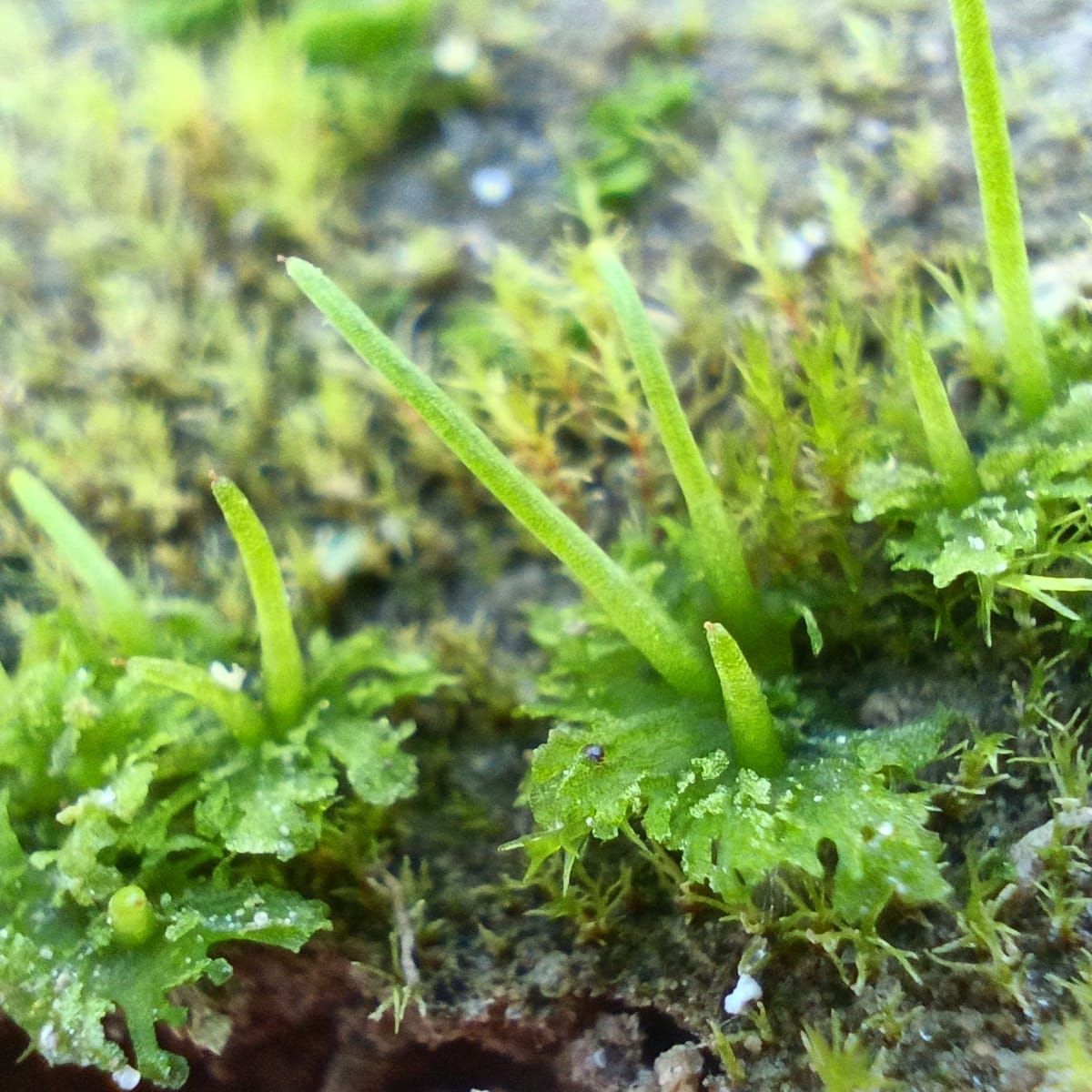
In a new review, Robison and colleagues show why these small bryophytes deserve special attention. Hornworts are the only known terrestrial plants that possess pyrenoids, Rubisco-rich compartments capable of increasing the availability of CO₂ for photosynthesis. More than an evolutionary curiosity, these structures may offer valuable clues for improving the photosynthetic efficiency of crop plants.
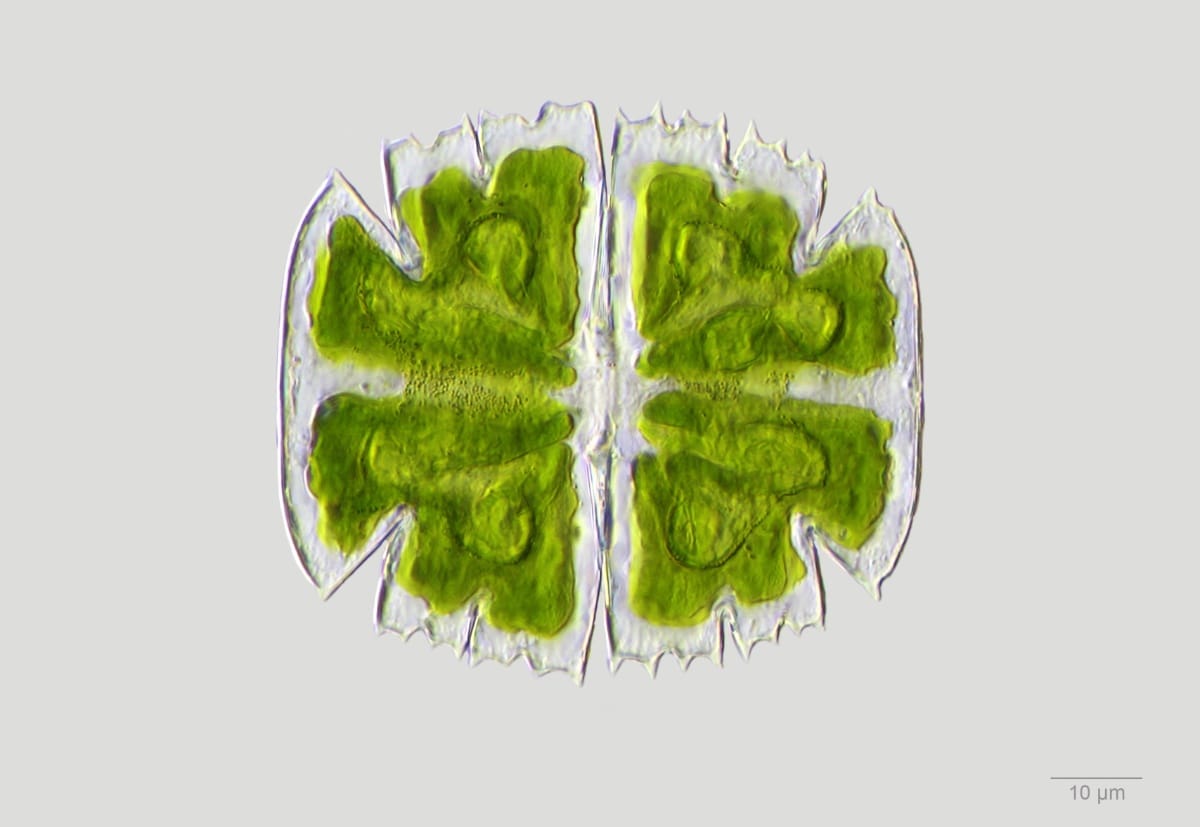
Although pyrenoids have been widely studied in algae, those found in hornworts arose independently. This means that these organisms reached a similar functional solution through a different evolutionary pathway. For the authors, this convergence makes hornworts a particularly interesting system for understanding how carbon-concentrating mechanisms can evolve in terrestrial environments, where water availability and CO₂ diffusion pose different challenges from those found in aquatic settings.
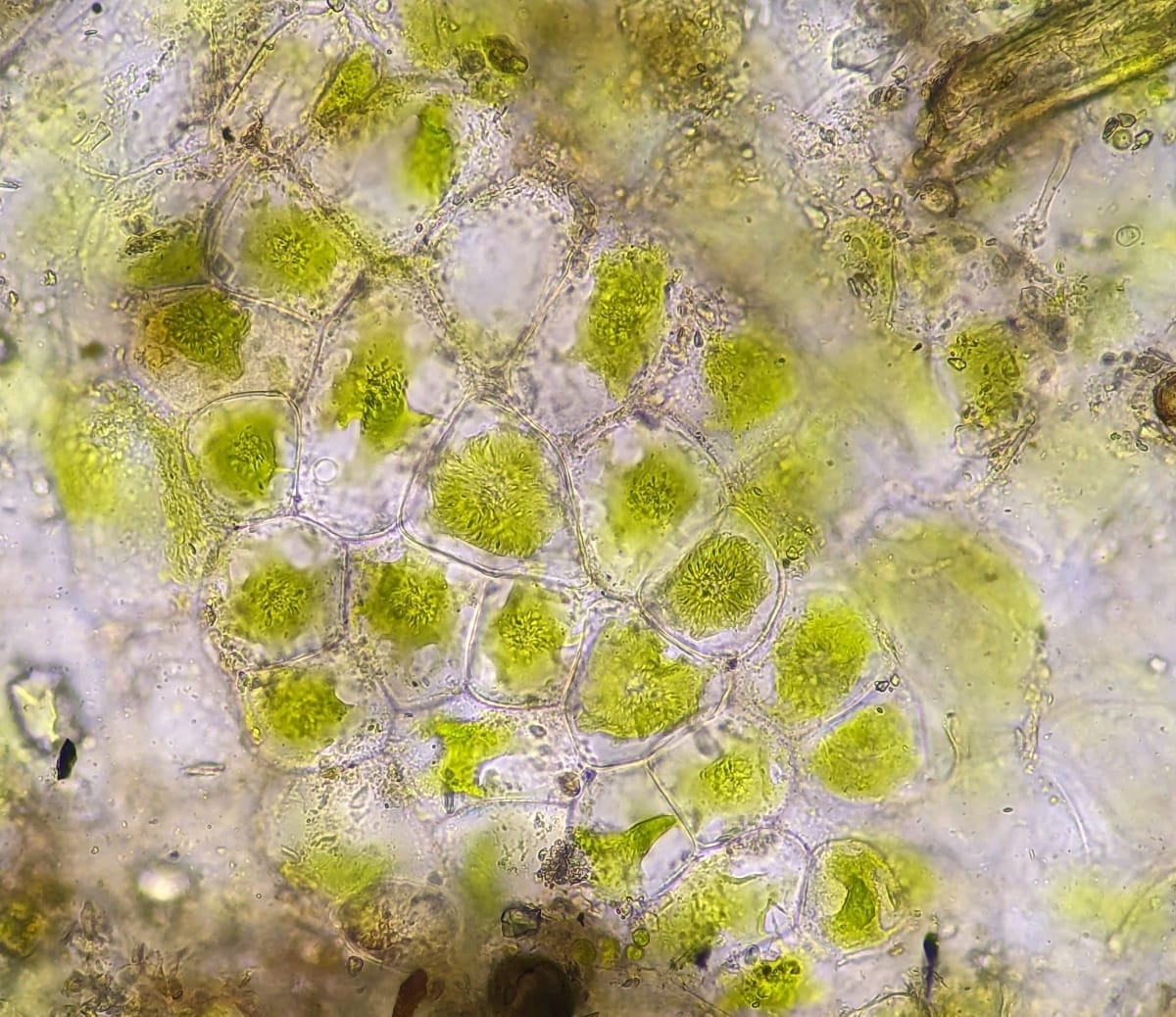
The review brings together more than a century of research and reveals that hornwort pyrenoids are far more diverse than previously thought. Different lineages display distinct architectures, ranging from compact, well-defined structures to more irregular forms traversed by thylakoid membranes. This diversity suggests that there is no single way to build an efficient carbon-concentrating system.
One of the most intriguing aspects concerns the way these structures are assembled. In algae such as Chlamydomonas, pyrenoid formation depends on specialised proteins that promote Rubisco aggregation. In the hornwort Anthoceros agrestis, condensation appears to be driven by an unusual version of the Rubisco small subunit itself. The protein that stimulates condensation has a terminal extension capable of promoting self-association, allowing Rubisco to organise into a condensed matrix without relying on the same set of proteins found in algae.
Another interesting point is that hornwort pyrenoids appear to be relatively stable. Whereas some algae rapidly reorganise these structures in response to environmental conditions, the pyrenoids of Anthoceros agrestis show a more constitutive behaviour, remaining present even under different CO₂ concentrations.
From an evolutionary perspective, the study reinforces the idea that the search for greater photosynthetic efficiency can produce similar solutions in lineages that are very distantly related. The existence of a carbon-concentrating mechanism in such an ancient group of terrestrial plants suggests that multiple evolutionary routes can lead to the same goal: increasing CO₂ availability for Rubisco, supporting higher photosynthetic rates and greater plant growth.
But perhaps the most interesting implication lies outside evolutionary biology. According to the authors, hornwort pyrenoids may inspire future strategies for photosynthetic engineering. Rather than trying to transfer algal systems wholesale into crop plants, a more realistic approach could combine components already present in hornworts with algal mechanisms for carbon transport and concentration. This modular strategy may represent a more feasible path towards improving carbon-use efficiency in cultivated plants.
By connecting evolution, physiology and biotechnology, the review shows that hornwort pyrenoids are far more than small green spheres inside chloroplasts. They represent a sophisticated evolutionary solution to the challenges of photosynthesis and, possibly, a source of inspiration for the development of the crop plants of the future.
READ THE ARTICLE:
Robison TA, Villarreal A JC, Li FW, Gunn LH. 2026. Hornwort pyrenoids: a terrestrial exception with engineering lessons. Plant Physiology. https://doi.org/10.1093/plphys/kiag247
Portuguese translation by Pablo O. Santos.
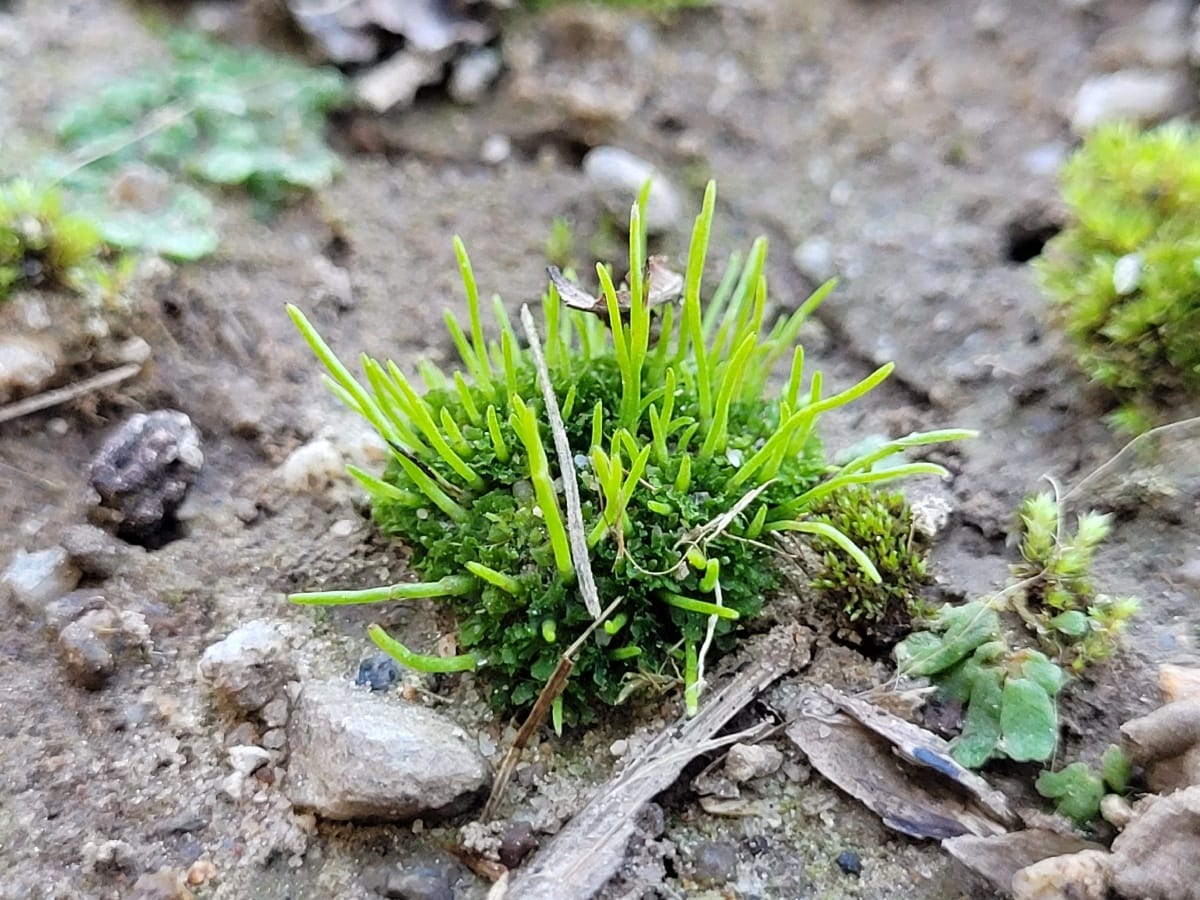
Cover picture: Anthoceros agrestis by Михаил Языков (iNaturalist, CC BY 4.0).