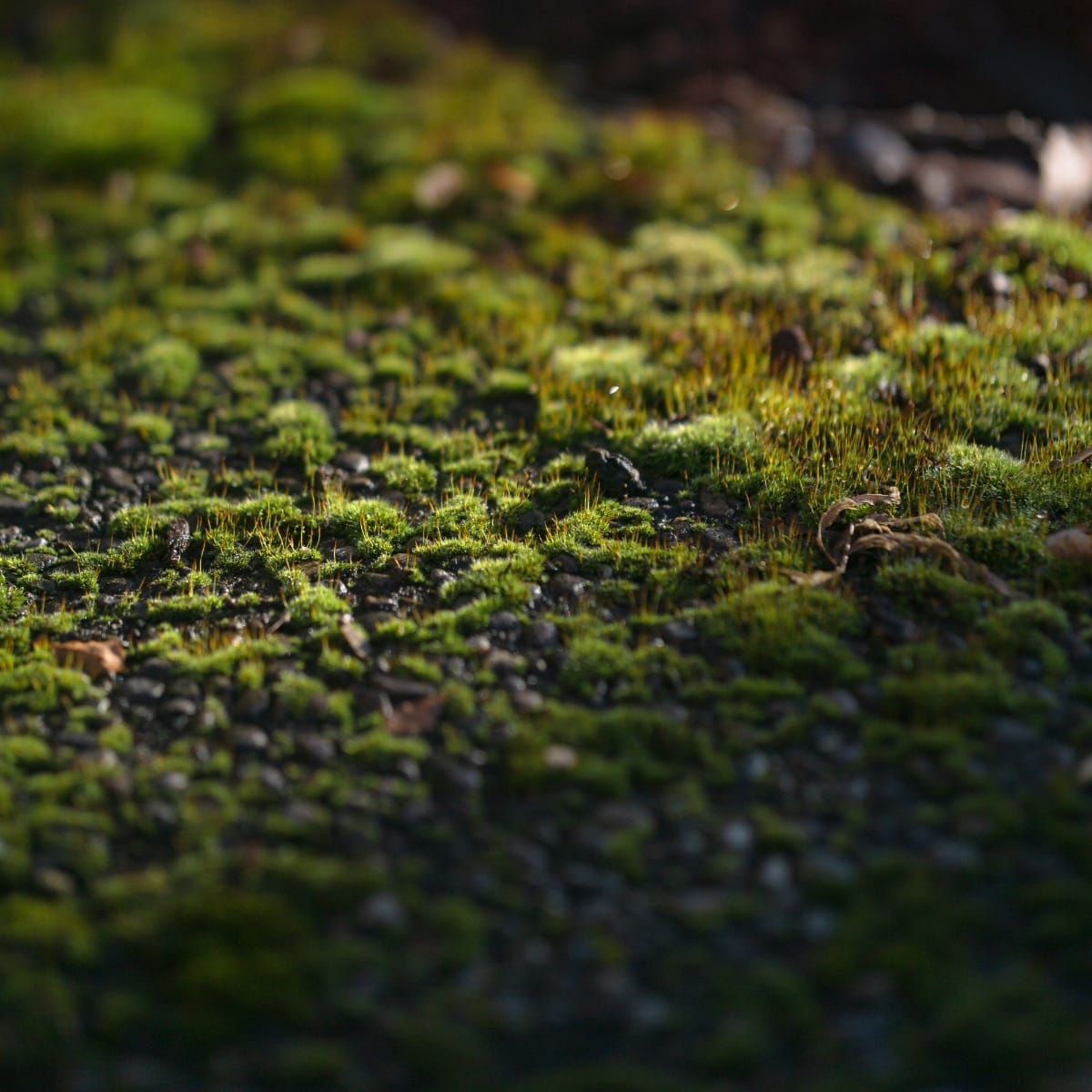

When we think about restoring a degraded environment, trees and other vascular plants usually receive most of the attention. But recovery can begin much closer to the ground. Biological soil crusts, or biocrusts, are communities formed by mosses, lichens, cyanobacteria and other microorganisms that live on the soil surface. Despite being easily overlooked, they can help stabilise soil, retain water and contribute to nutrient cycling, making them important allies in ecological restoration.
The problem is that putting these organisms back into a degraded area does not mean they will be able to stay there. If moss fragments are directly introduced into degraded areas, they can end up being buried, displaced or simply fail to find enough water and suitable conditions to establish. Researchers have therefore been looking for ways to protect and transport these small organisms to the places where they need to grow.
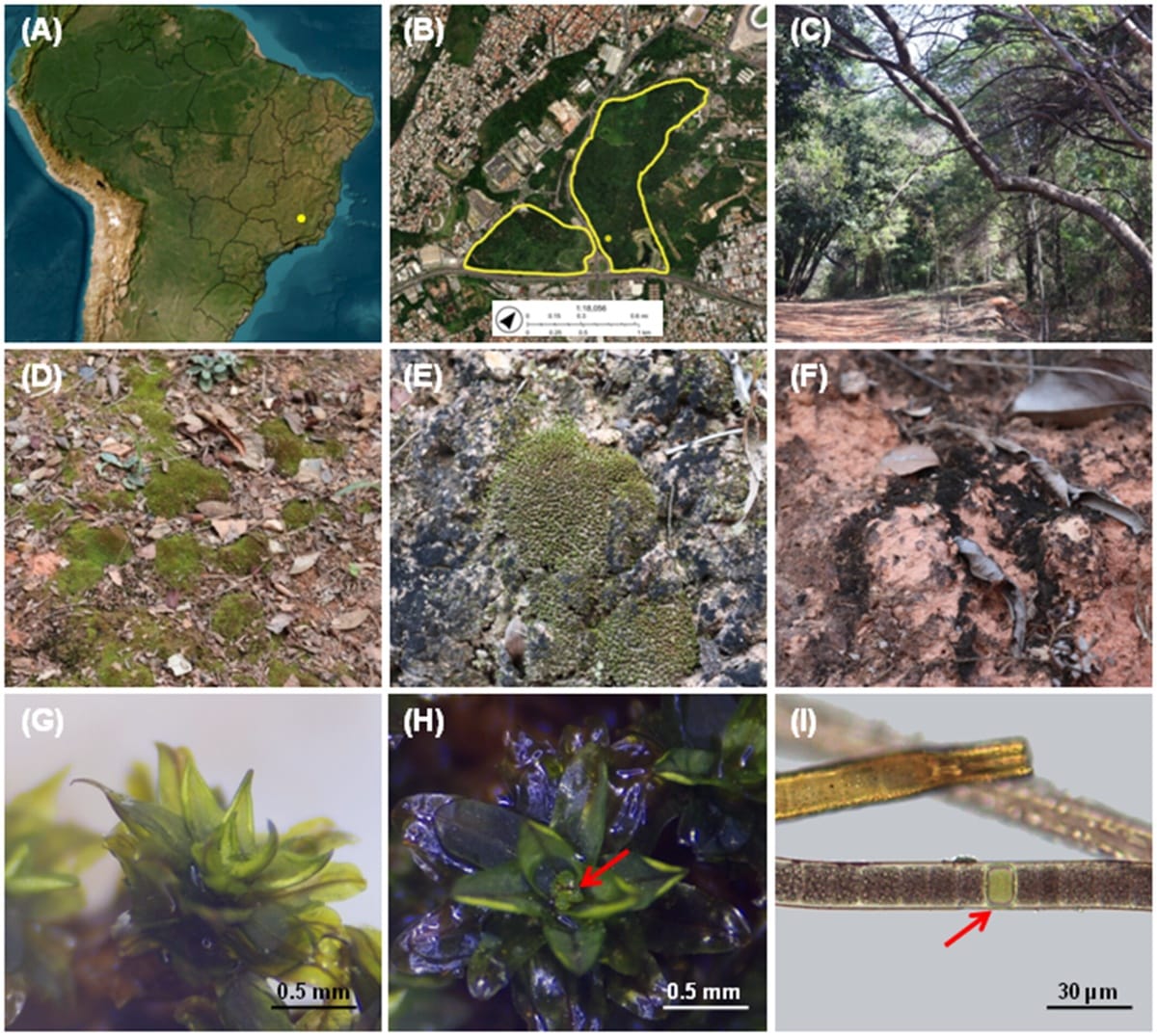
In a new study, Oliveira and colleagues tested a solution that literally fits on a fingertip: pellets containing moss fragments. The researchers developed small discs made from materials including sand, clay and a biodegradable glue, incorporating fragments of Hyophila involuta, a moss found in the biocrusts of the study area. The idea was to create a simple structure that concentrated the living fragments and could be easily transported and applied to the soil.
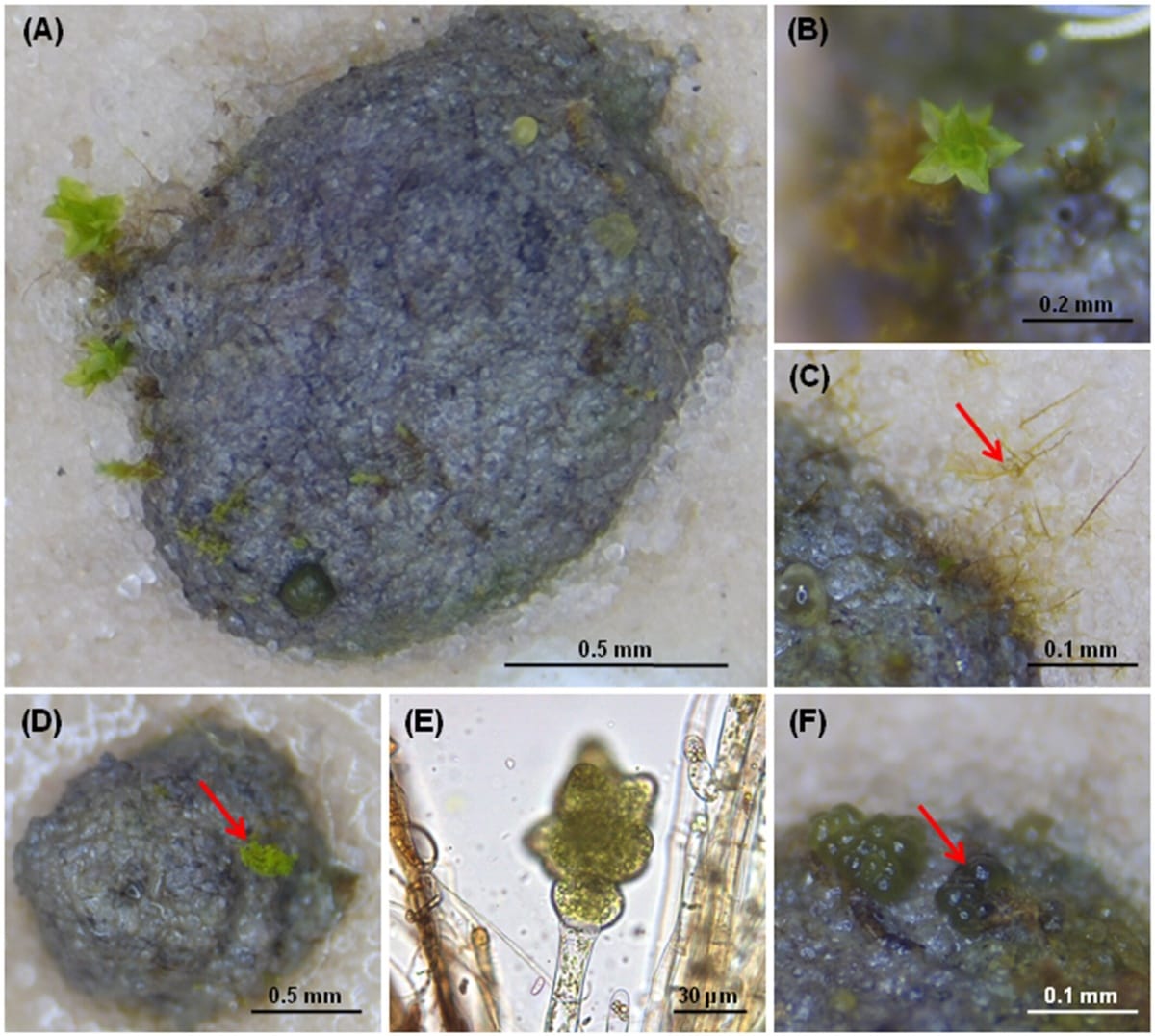
In the laboratory, the small discs quickly began to show signs of life. Fragments of Hyophila involuta produced filaments, asexual reproductive structures and new buds. Some filaments even grew beyond the pellets and spread onto the surrounding substrate. After the first few weeks, more than 90% of the pellets showed signs of establishment, demonstrating that the structure could act as a small starting point for moss growth.
The pellets ended up hosting more than just the moss that had been placed inside them. Cyanobacteria also appeared on their surfaces during the experiment. They were not the same cyanobacteria initially found associated with the moss used to produce the pellets, suggesting opportunistic colonisation. Although the researchers did not investigate this community in detail, the observation raises an interesting possibility: these small discs might function not only as supports for mosses, but also as starting points for the development of more complex biocrust communities.
But a much bigger question was waiting outside the laboratory: what would happen when these pellets encountered the real world?
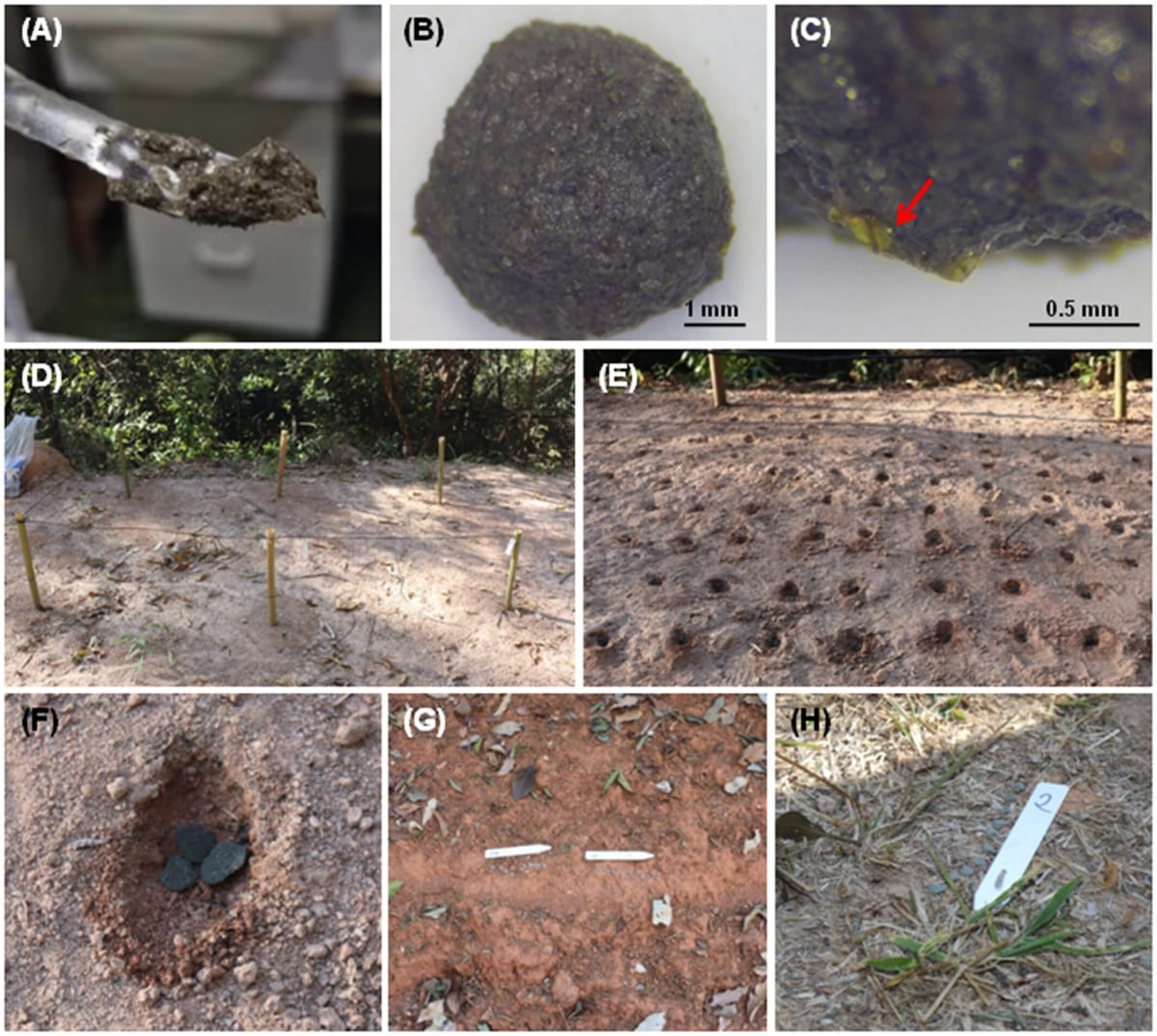
When they were taken into the field, the outcome was very different. During the eight weeks of monitoring, the researchers observed no moss establishment. Many pellets were displaced from their original positions or became partially covered by soil and leaves. Even those that remained relatively intact had to face something that a laboratory dish can hardly reproduce: changes in water availability, periods of desiccation and other environmental fluctuations.
Interestingly, one potential problem appeared to be less important than expected. Because the formulation contained organic compounds, the researchers also wanted to find out whether the pellets might become food for ants. The ants showed little interest. No pellets were carried into the nest during the observation period, and the ants seen near the pellets in the field experiment appeared to be more interested in the water added during irrigation than in the discs themselves.
The contrast between the laboratory and the field is precisely one of the most interesting parts of the study. The pellets showed that moss fragments remain capable of regenerating and establishing when they encounter favourable conditions. In the natural environment, however, the challenge does not seem to end with producing a good inoculum. Conditions must also be created to keep it in place, provide access to moisture and prevent it from being buried before it has a chance to grow.
This does not mean that the pellets have reached a dead end. On the contrary, the study provides a foundation for discovering what needs to be improved so that what works in the laboratory can also work outside it. Increasing the amount of propagules, improving resource availability, stabilising the substrate and preventing pellets from being displaced or buried are among the possibilities that could be explored. The formulation itself is also flexible and could be tested with other species and even other components of biocrusts.
Restoring a biocrust, therefore, may depend on more than simply finding an efficient way to transport mosses to a degraded area. The real challenge may lie in preparing a small place where they can begin again. The pellets have already shown that they can carry this potential; now the challenge is to discover how to help them turn it into growth in the real world.
READ THE ARTICLE:
Oliveira MF, Mota JVLS, Maciel‐Silva AS. 2026. A pellet‐based approach for moss biocrust inoculation: high establishment under laboratory conditions, challenges in the field. Restoration Ecology. https://doi.org/10.1111/rec.70551
Portuguese translation by Pablo O. Santos
Cover picture by Chickenbunny (Pexels)