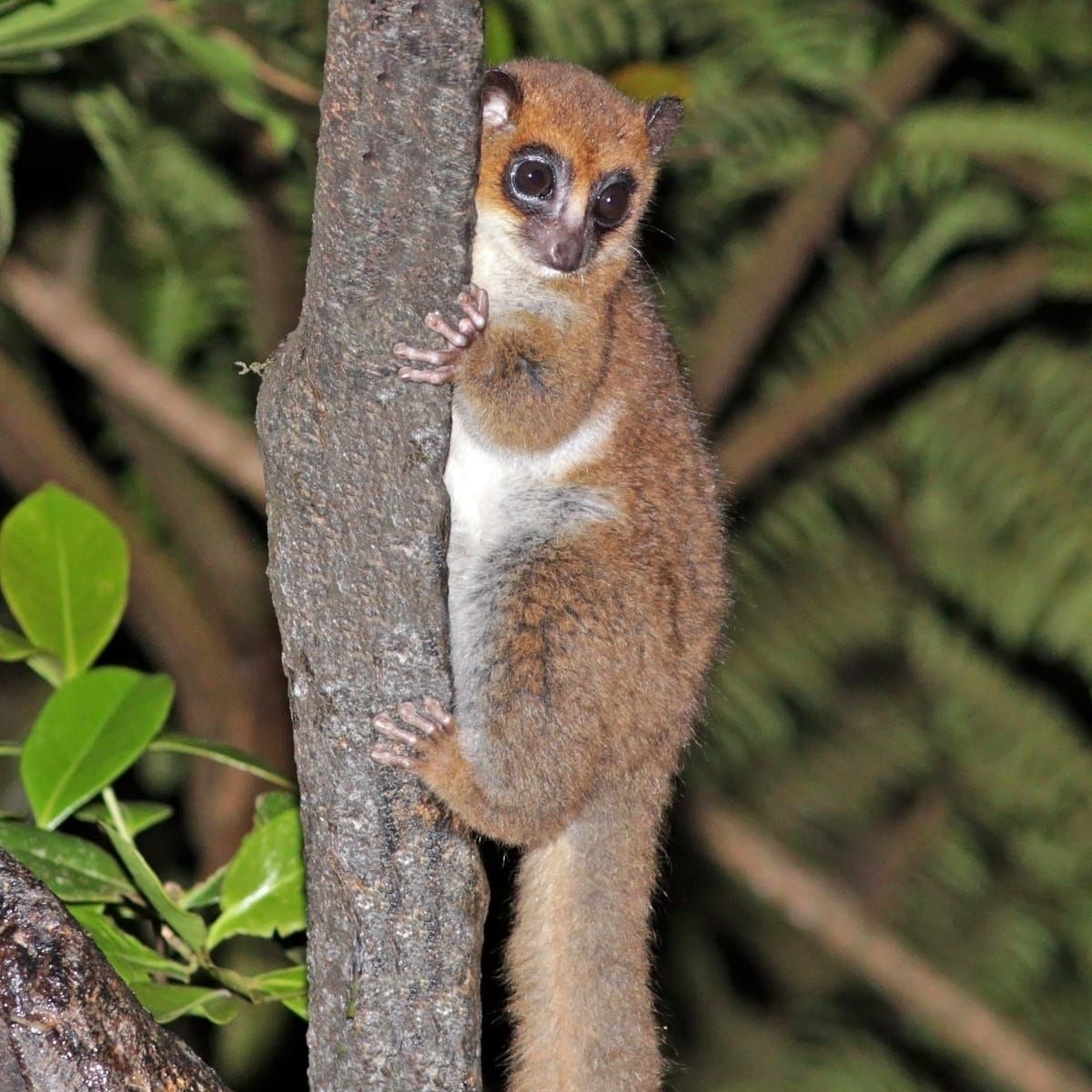

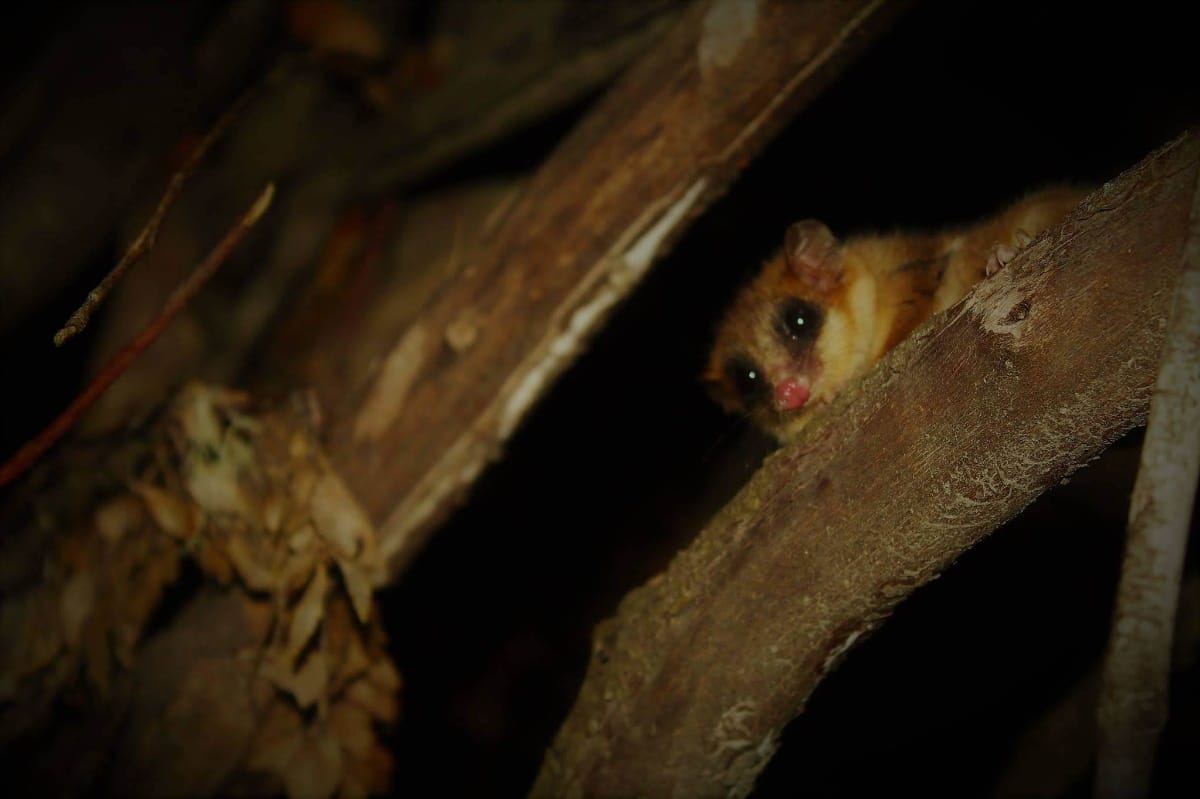
Mistletoe relies on its sticky seeds landing on suitable host tree branches to survive. In Madagascar, a surprisingly diverse community of birds visits these plants during the day to feed on their fruit, but as night falls, the story takes a fascinating turn. Two species of nocturnal lemurs are not only the most voracious consumers of Bakerella fruits, but Crossley's Dwarf Lemur has a rather peculiar planting method: after digesting the fruit, the sticky seeds adhere to its anal fur, prompting the small primate to rub its bottom against tree branches to clean itself, leaving the plant perfectly installed in its new home.
Worldwide, frugivorous birds are recognised as the primary seed dispersers of this canopy hemiparasite. In fact, mistletoe is thought to have originally arrived in Madagascar from Africa via passerine birds. To understand the true roles of birds and primates in this unique ecosystem, a team of researchers set out to quantify these interactions in the rainforests of Ranomafana National Park. The study focused on observing 35 host trees heavily infected with three common mistletoe species in the area: two from the genus Bakerella and one from the genus Viscum.
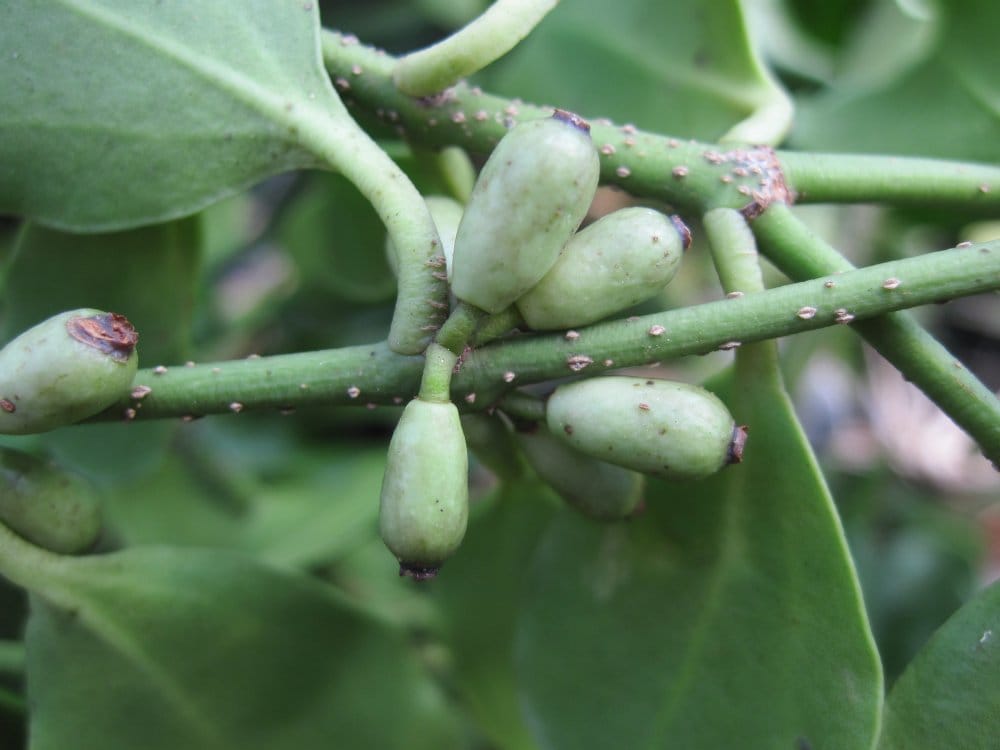
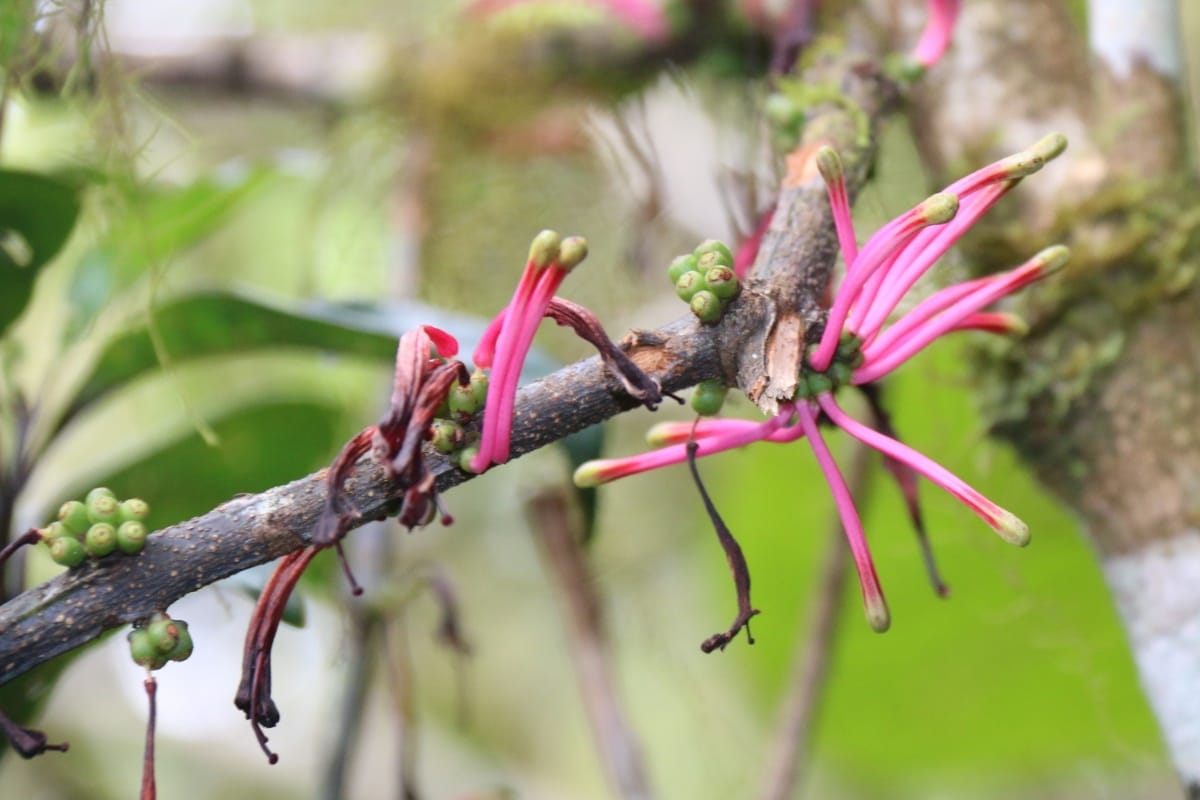
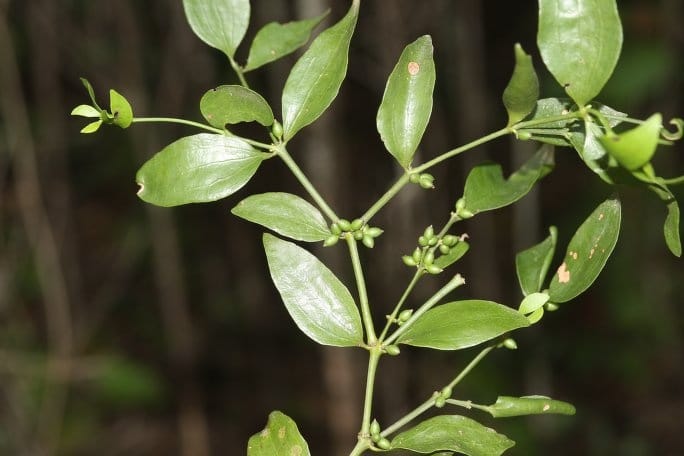
Mistletoe species studied in the Malagasy canopy. From left to right: Bakerella clavata, Bakerella gonoclada, and Viscum cuneifolium. These canopy hemiparasites rely on nocturnal lemurs and frugivorous birds to transport their sticky seeds to the bark of host trees. Source: Nivohenintsoa Rakotonirina (CC BY 4.0) via GBIF, leithallb (CC BY-NC) via iNaturalist, and Fortunat Rakotoarivony(CC BY-NC) via Tropicos.
During observations covering dawn peak activity for birds and nighttime for lemurs, scientists recorded that mistletoes attract an unsuspected diversity of animals. They documented visits by 30 bird species and seven lemur species, though only 16 bird species and four lemur species actively consumed fruit. Surprisingly, the vast majority of interactions were non-feeding, as 71% of all visits were from animals using the plant simply as habitat or a foraging substrate. In terms of behaviour, birds were hasty visitors, staying for less than a minute in most cases, whereas lemurs like Crossley’s Dwarf Lemur could spend up to 61 minutes perched in the mistletoe.
When analysing fruit removal rates, researchers found that nocturnal fruit removal by lemurs significantly outpaced daytime consumption by birds for both Bakerella species. This intense nighttime feast is not driven by resource scarcity: mistletoe fruiting coincides with the period of peak fruit availability in the rainforest, showing that lemurs target it by real preference ahead of their hibernation period. There is also a fascinating evolutionary clue in the fruits' appearance. Even when ripe, mistletoe fruits remain an inconspicuous green colour, suggesting they evolved not to catch the eye of diurnal birds, but to be detected by the keen sense of smell of nocturnal mammals.
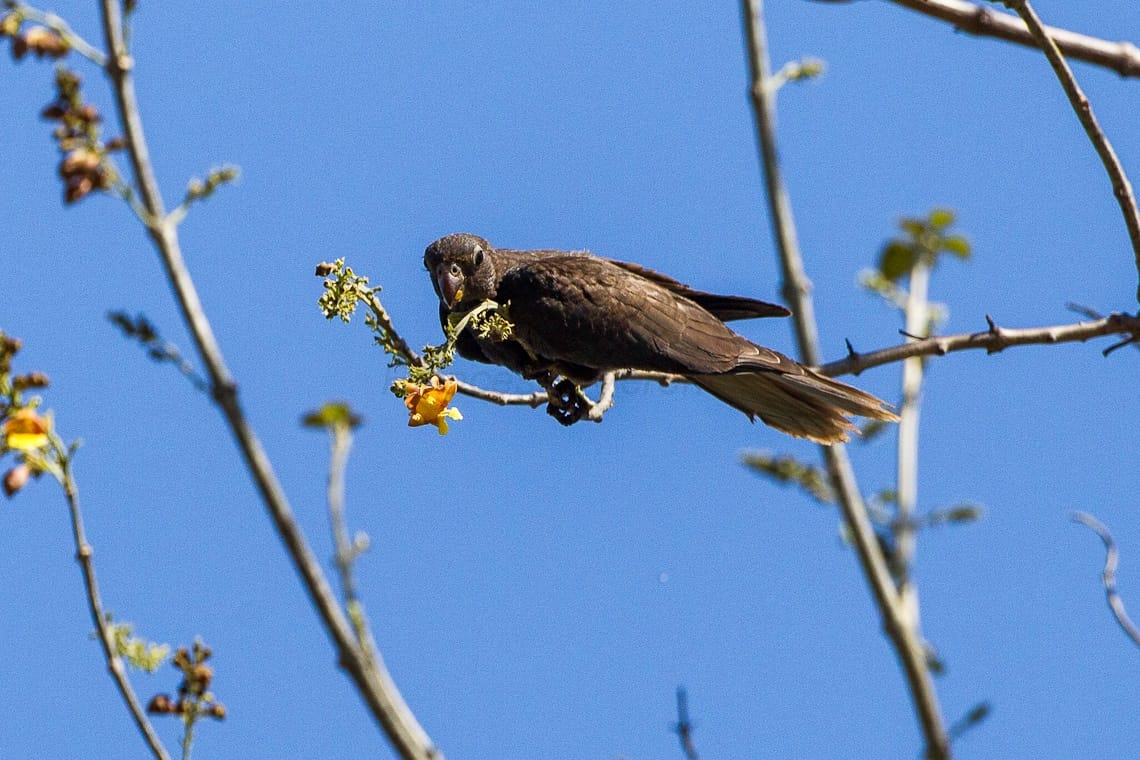
In terms of actual seed dispersal success, critical differences emerged between the two groups. While droppings from most birds tended to fall uselessly onto understory shrubs where seeds cannot establish, Crossley's Dwarf Lemur was observed depositing or rubbing intact seeds directly onto host tree branches, enhancing their viability. However, birds have an exceptional ally: the Lesser Vasa Parrot (Coracopsis nigra). As a messy eater, this parrot often discards the exocarp, causing sticky seeds to adhere to its beak or feathers. By wiping its beak against branches to clean itself, it accidentally yet effectively plants the mistletoe, balancing the scales for species like Viscum cuneifolium.
These findings suggest that, unlike other tropical regions where mistletoes rely on highly specialised bird mutualists, in Madagascar the plant has forged vital partnerships with more generalist and opportunistic frugivores. The method used by Crossley’s Dwarf Lemur represents the first confirmed observation of mistletoe seeds being secondarily deposited onto branches via excreted seeds adhering to animal fur, combining gut passage with external transport. Intriguingly, this mammalian dominance finds an evolutionary echo on the other side of the world in South America, where a small arboreal marsupial, the Monito del Monte (Dromiciops gliroides), plays an identical role for local mistletoes.
Beyond their quirky ecology, these parasitic plants serve as keystone resources in the forest, offering crucial fallback food in degraded habitats to endangered species like sifaka lemurs. Ensuring the future of these biological wonders inextricably requires protecting both the mistletoes and the surprising nocturnal architects that keep their populations thriving.
READ THE ARTICLE
Fenosoa ZSE, Razafindratsima OH, Rakotomanana HF, et al.. 2026. Mistletoe Visitation and Fruit Removal by Birds and Lemurs in a Malagasy Rainforest. Biotropica 58. https://doi.org/10.1111/btp.70252
Spanish and Portuguese translation by Erika Alejandra Chaves-Diaz.
Cover picture by Charles J. Sharp (CC BY-SA 4.0)





.jpg?ref=botany.one)

_Ranomafana.jpg?ref=botany.one)