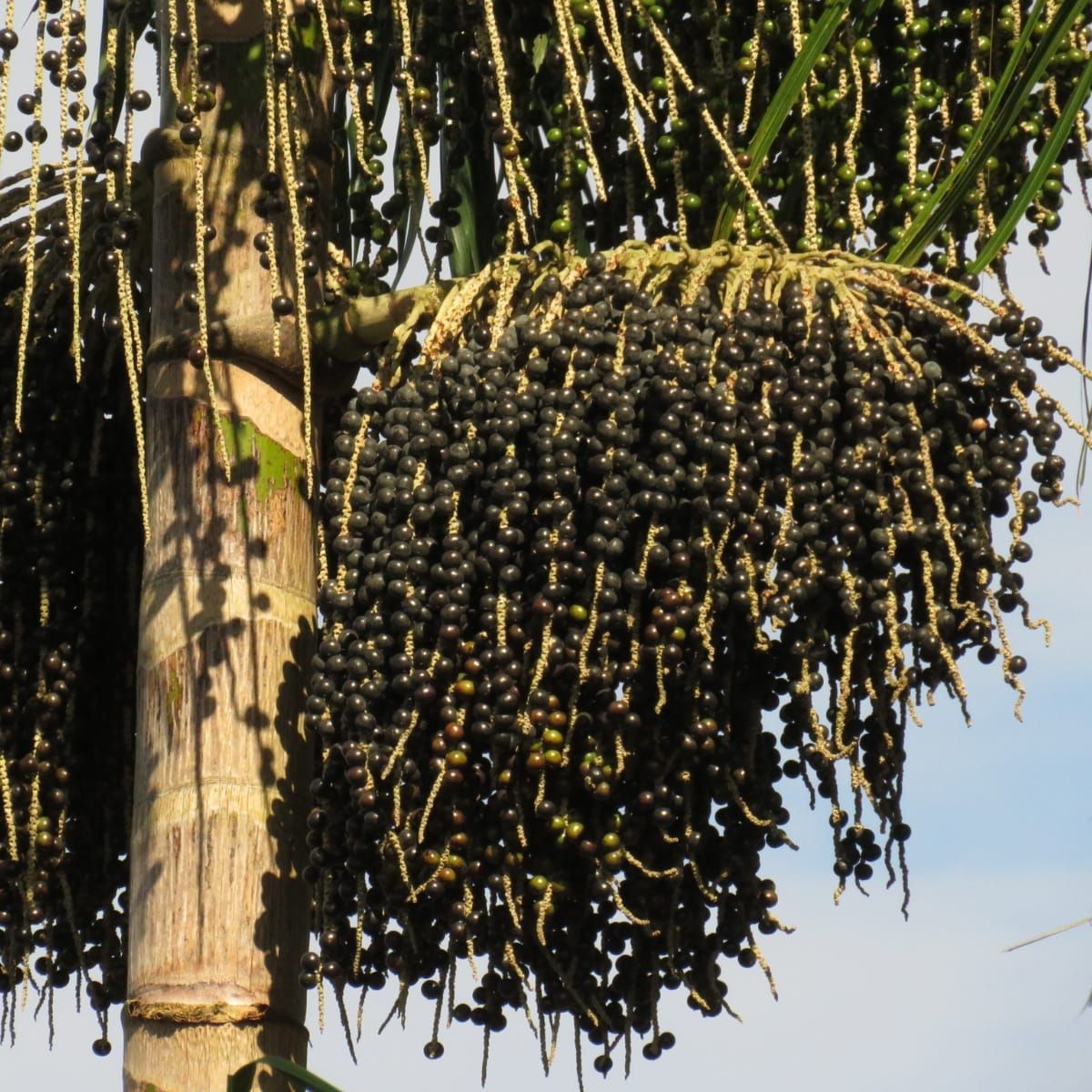

Açaí has conquered the world, generating millions of euros and supporting countless families across the Amazon region. But how do these fruit-laden bunches actually come to life?
Unlike many agricultural crops that depend on the wind or the honeybee Apis mellifera, the açaí palm has very particular partners. Until now, it was widely believed that small beetles carried out most of the work in tropical palms. However, in a recent study published in Neotropical Entomology, researchers monitored thousands of flowers within an experimental plantation and quantified the structure of the floral visitor community, identifying the effective pollinators of the açaí palm (Euterpe oleracea) in the state of Amazonas, Brazil.
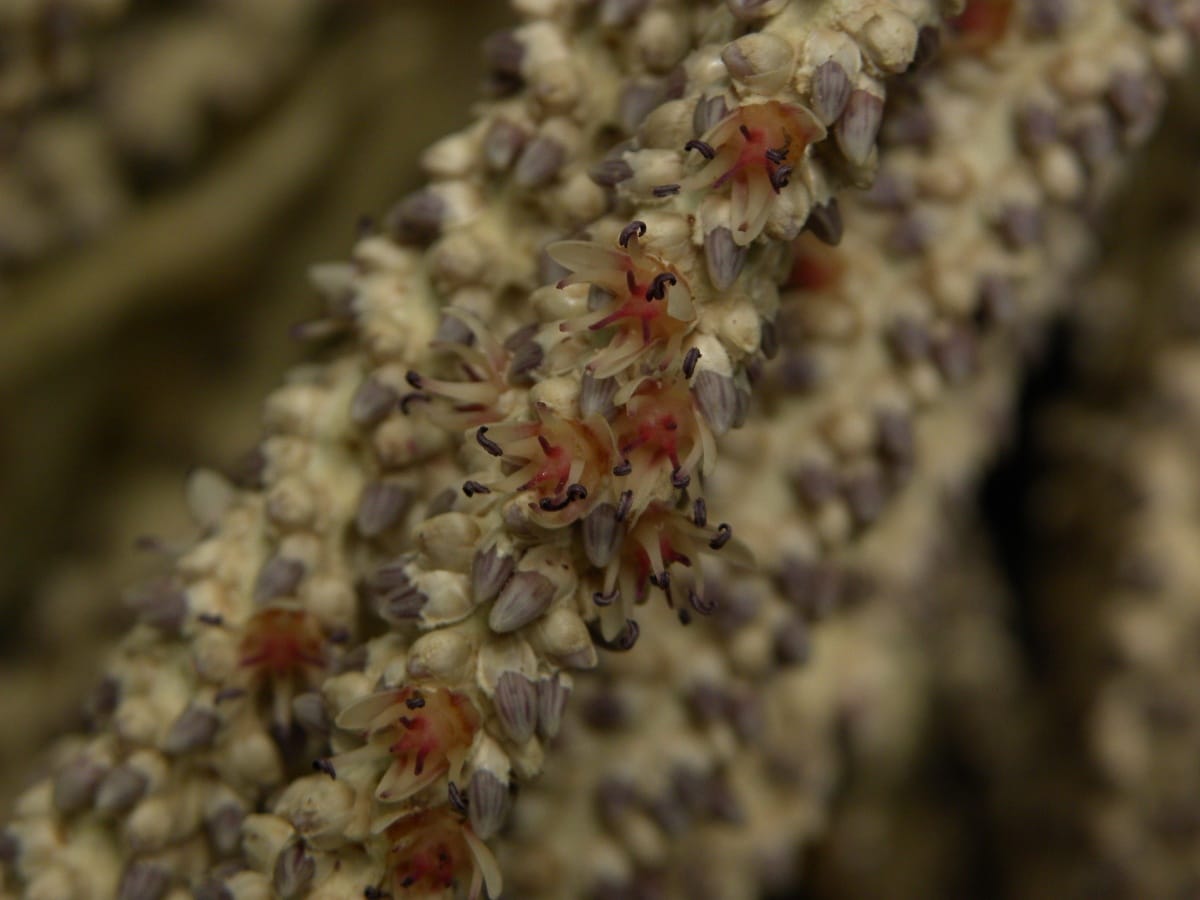
The açaí palm has a distinctive characteristic. The very same plant produces both male and female flowers, but at entirely separate times, a phenomenon known as protandrous dichogamy. In other words, the pollen-laden male flowers open first, followed days later by the female flowers. This floral biology requires pollen vectors to move between flowers so that cross-pollination can occur. Therefore, for fruit to set, a pollinator must undertake two essential journeys: first, visit a male flower and become dusted with pollen, and second, fly to a female flower and deposit that pollen during its foraging bouts. If the insect only visits male flowers, it does not pollinate, making it merely an opportunistic consumer.
Upon examining the bodies of the insects under a microscope, the researchers discovered that native stingless bees are the true workhorses of açaí. Two native species stood out as efficiency champions: Trigona williana and Partamona ferreirai. Both were frequently observed on both male and female flowers, carrying substantial pollen loads.
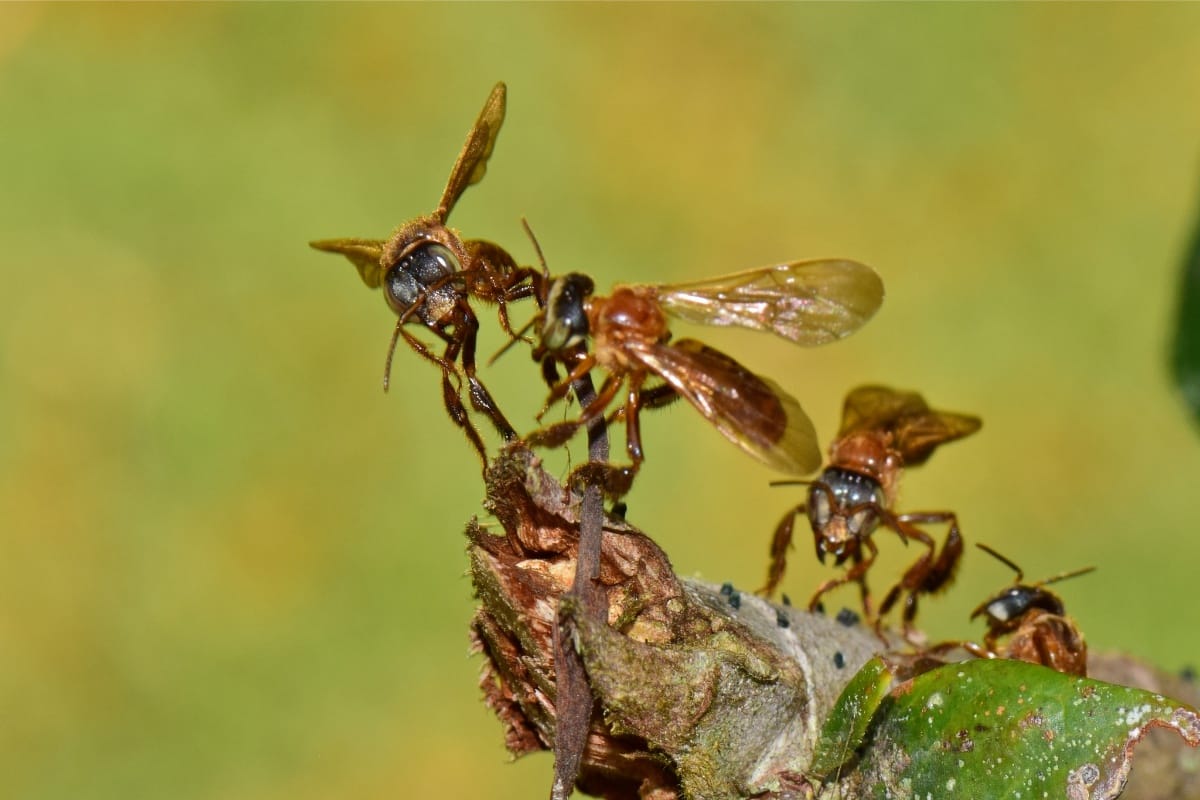
Contrary to classical models for tropical palms, beetles (Curculionidae) did not act as significant pollinators, and the well-known Apis mellifera scarcely appeared on female flowers, focusing solely on gathering pollen from male blooms.
Many of these native bees build their nests within specific substrates and are challenging to manage in commercial hives. Because of this, the most effective way to ensure an abundant açaí harvest is to preserve the native forest surrounding the plantations. It is intact woodland that provides the shelter and food these industrious workers need to keep pollinating the açaí palms. Therefore, this study not only provides new information on the actual pollinators of this emblematic Brazilian species, but also highlights the need for preserved native forest to ensure its continuous and promising production.
READ THE ARTICLE:
Ladislau, J. V., Hipólito, J., Moreira, E. F., Mahlmann, T., de Oliveira, M. L., & Krug, C. (2026). Native Bees as Key Pollinators of Açaí (Euterpe oleracea) in the Central Amazon. Neotropical Entomology, 55(1), 35. https://doi.org/10.1007/s13744-026-01383-w
Portuguese translation by Andressa Luna.
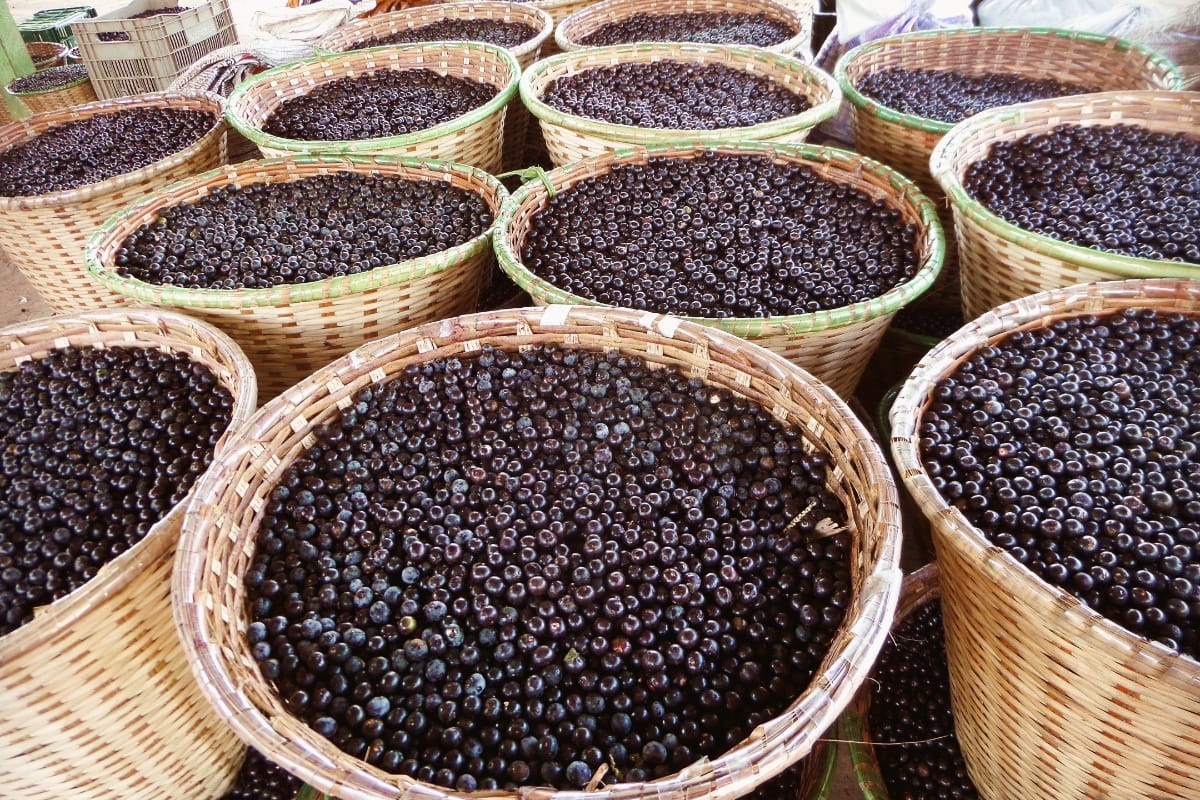
Cover Picture: Fruits of Euterpe oleracea (Açaí). Photo by Renata Xavier (iNaturalist, CC BY-NC 4.0)