
Bryophytes are surprisingly efficient travellers. Their tiny spores can be carried by the wind over long distances and withstand adverse environmental conditions. Some have been found viable after years and, under exceptional conditions, even centuries. Yet long-distance dispersal and long-term viability are not necessarily the same thing.
In a new study, Dr Belén Albertos and colleagues investigated how long bryophyte spores remain viable and what this may mean for their ecology and conservation. The researchers studied the spores of four moss species: Funaria hygrometrica, Ulota crispula, Lewinskya iberica and Lewinskya acuminata, to find out whether they could be as long-lived as seeds and spores of other land plants. They also investigated whether the stage of spore maturation influences how long they remain viable.
Measuring longevity directly can be difficult when plant structures can potentially remain viable for years. To speed up this process, the researchers used a technique commonly employed in seed studies called accelerated ageing, where samples are incubated under high-humidity and temperature conditions which are known to accelerate decay. From these experiments, they calculated how long it took for spore viability to fall by half and compared the results with available data for seeds and fern spores subjected to similar conditions.
The results challenged the expectation that bryophyte spores are naturally long-lived. Under accelerated ageing, across the four species studied, the estimated time for viability to fall by half was less than six days. The three epiphytic mosses showed particularly short longevity. Funaria hygrometrica showed greater longevity, but even its fully mature spores took only 5.7 days for their viability to be reduced by half. Under the same accelerated-ageing conditions, many vascular plant seeds can remain viable for considerably longer periods.
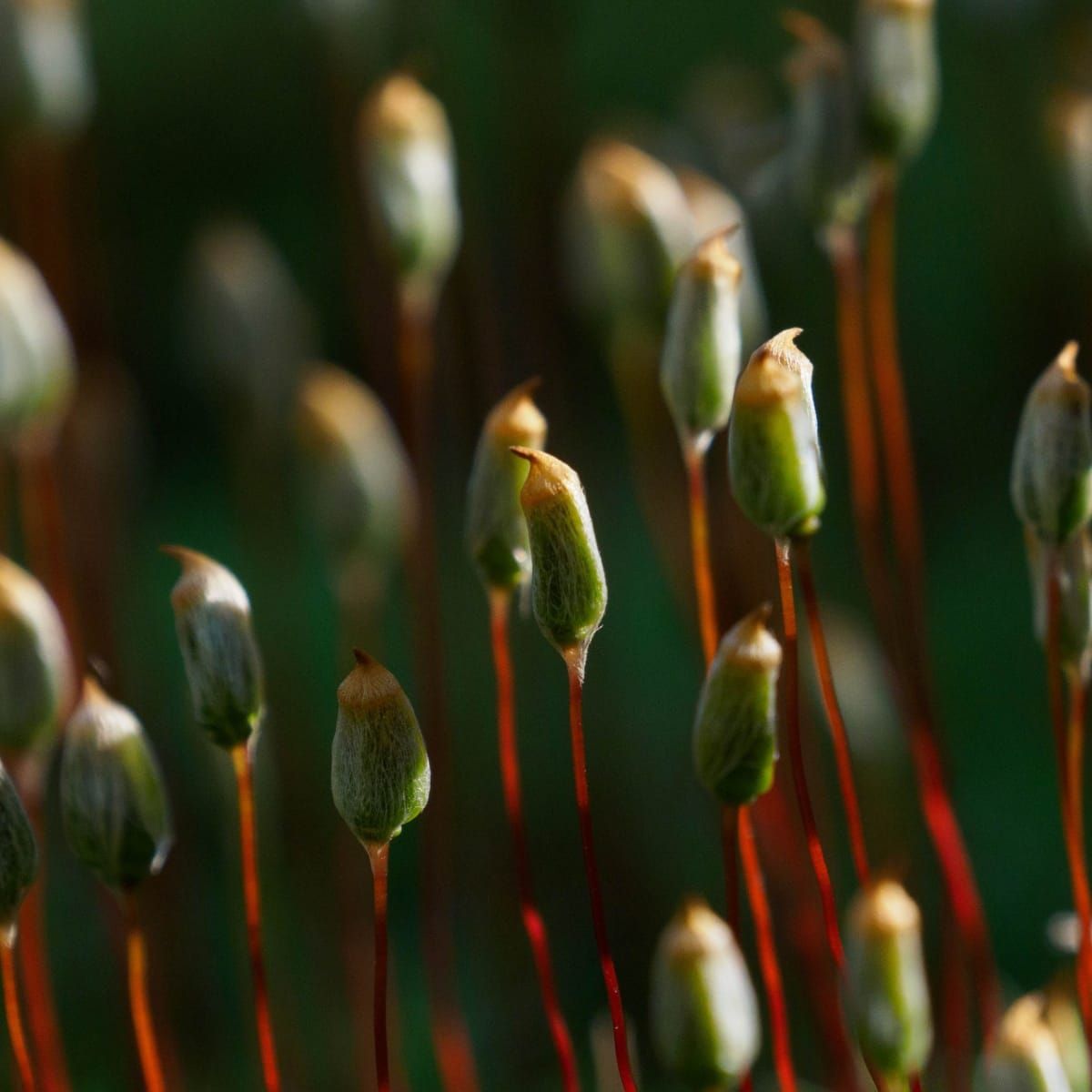
But the experiment also revealed that the time at which a spore is collected can make a difference. The researchers compared spores of F. hygrometrica taken from green, yellow and brown capsules, representing increasing stages of maturation. When stored under dry conditions, fully mature spores from brown capsules survived significantly longer. As with seeds, moss spores appear to acquire greater longevity as they mature.
But why might these spores have such short lives? The answer is not yet clear, but the authors raise an interesting possibility: the presence of chlorophyll. Some bryophyte spores retain plastids when mature. In seeds and fern spores, the retention of chlorophyll and the photosynthetic apparatus during storage has been associated with increased oxidative stress and a more rapid loss of viability. F. hygrometrica, whose mature spores apparently lose their chloroplasts, was also the longest-lived species in the experiment. However, the study did not directly test whether chlorophyll was responsible for the differences observed, so this possibility still needs to be investigated.
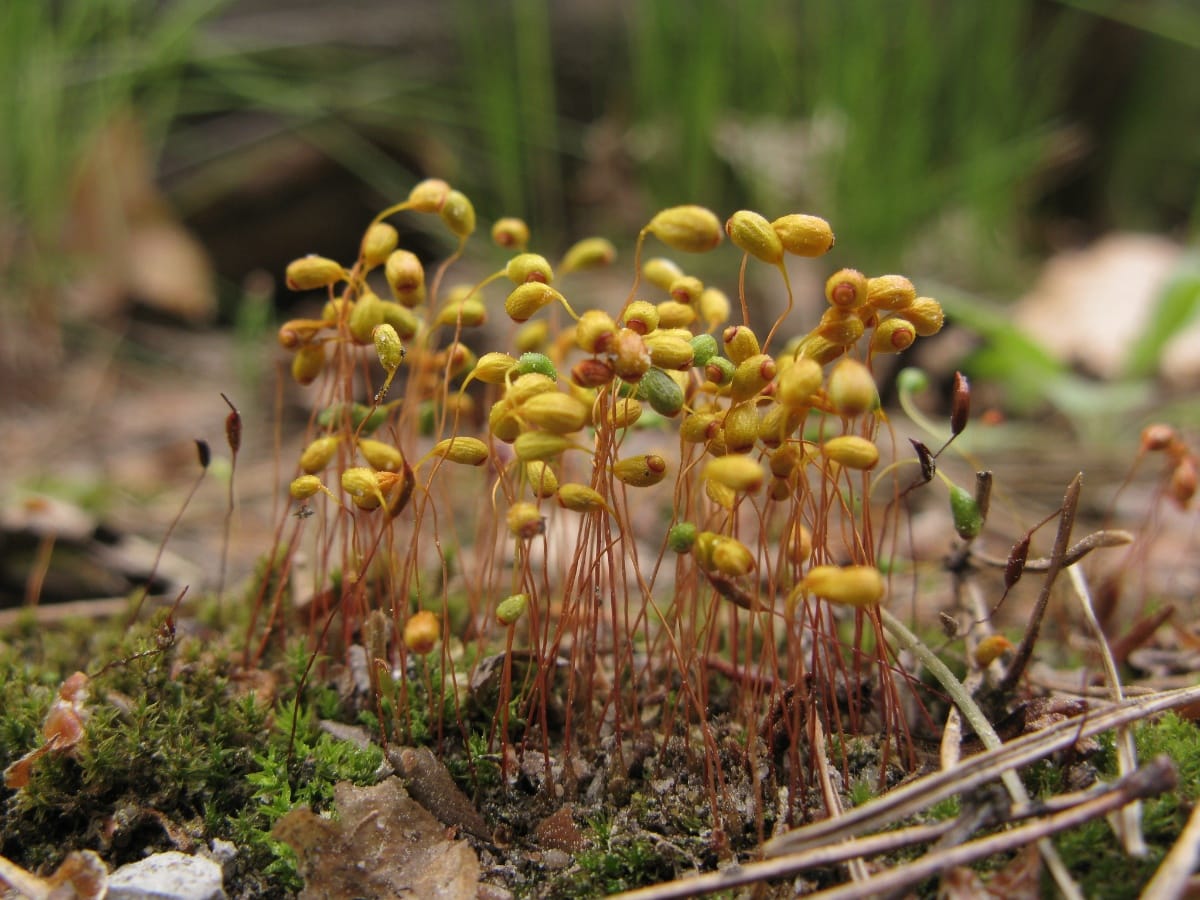
The short longevity of spores may also change how we think about bryophyte survival in nature. Just as seeds can remain in the soil, forming banks that wait for favourable conditions to germinate, bryophytes can also form banks of spores and other propagules. The results, however, suggest that some species may have a limited capacity to maintain these banks over long periods. Their persistence in the environment could therefore depend more on the continuous production and efficient dispersal of new spores. This may be particularly important for epiphytic species, whose spores land on vertical surfaces that are frequently subject to desiccation and are poorly suited to the prolonged persistence of propagules.
This finding becomes particularly important when we consider removing bryophytes from nature to conserve them in collections. Seed banks have transformed the conservation of vascular plants by allowing dry seeds to be stored at low temperatures, keeping material viable for long periods. Similar strategies have been proposed for storing bryophyte spores, but the short longevity found in this study indicates that the conditions conventionally used in seed banks may not be sufficient for all of them.
The authors point out that storing dry bryophyte spores at even lower temperatures, such as −80 °C, or using cryopreservation in liquid nitrogen at −196 °C, may represent a more suitable alternative for species whose spores rapidly lose viability.
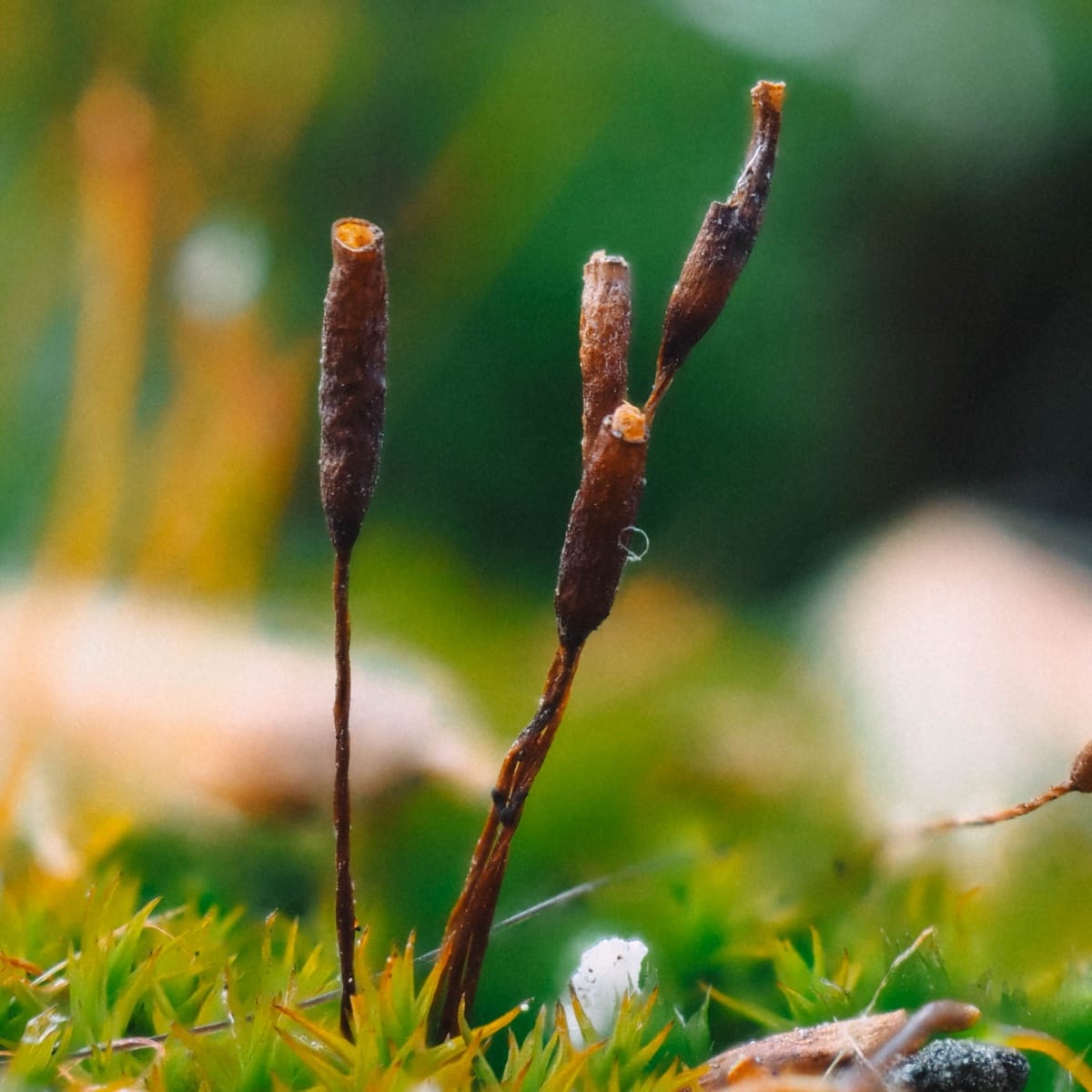
As bryophytes face habitat destruction, changes in land use and the growing effects of climate change, their conservation outside natural environments is becoming increasingly important. But conserving these plants may require much more than simply putting their spores in a freezer. It is necessary to understand how quickly they age, at what stage they should be collected, and which storage conditions can keep them viable for longer. For some of the smallest land plants, discovering how long a spore can wait may be crucial to preserving their genetic diversity for the future.
READ THE ARTICLE:
Albertos B, Ruzic A, Garilleti R, Lara F, Ballesteros D. 2026. Comparative Longevity of Bryophyte Spores: Influence of Storage Conditions, Spore Maturity, and Plant Ecology. Plants 15: 2309. https://doi.org/10.3390/plants15152309
Portuguese translation by Pablo O. Santos
Cover picture by Андрей Филоненко (Pexels)