
I should have been busier with some projects than I have been. Partly due to tackling some bureaucracy, and partly because I was slightly derailed by ThisGardenWillKillYou on TikTok, when I heard about ornamental garden hermits. These were actual people employed to live in a garden, living in isolation, to give a garden a rustic feel. I thought this was an exaggeration, then I remembered it was the English aristocracy doing this, and checked again. I can't work out if this is an example of people being reduced to objects in a denigration of human dignity, or my dream job.
If you're the kind of person who does like talking to other people, then early-bird registration for Black in Plant Science has opened. This year it's in York. All conferences have a sense of community, but I found BiPS particularly supportive. If you're on the fence about going, then it's definitely worth a trip.
There'll be another email sharing what we've posted this week as well at the stories you're sharing on Mastodon and Bluesky, and career postings. at the usual time next week.
Until then, take care,
Alun (webmaster@botany.one)
On Botany One
The Banksia That Calls Beetles in the Dark
Just like birds and mammals, nocturnal beetles can be key pollinators, helping to pollinate one of Australia's best-known native plants.
Does a Moss From Antarctica Hide New Weapons Against Cancer?
Polytrichastrum alpinum has shown promising anticancer activity in laboratory tests, reducing the survival and spread of canine mammary tumour cells.
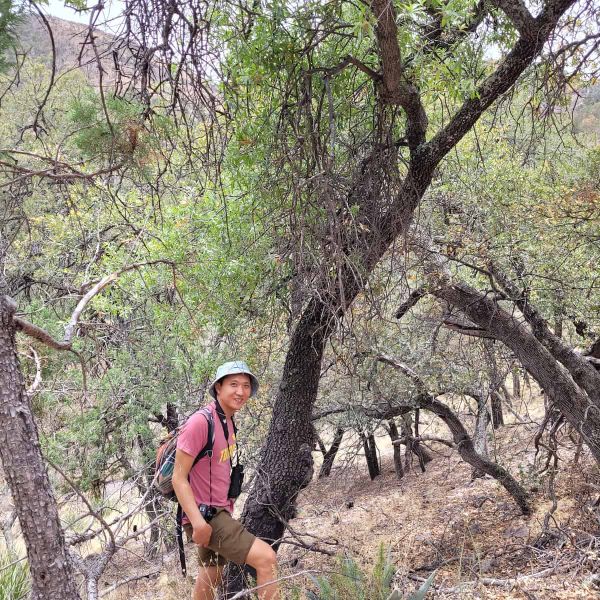
Alyssa Stewart: "There’s a New Discovery to Be Made Around Every Corner!"
Botany One interviews Dr Alyssa Stewart, an ecologist studying the diverse and sometimes surprising pollination systems of tropical plants.
A New Hope for Contaminated Soil: Wild Plants and Microbes Can Work Together to Clean Up Oil Spills
Native plant species adapted to oil seeps can cooperate with their local microbial communities to remove toxic petrochemicals from their soil environment.
How Climate and Pollinators Shape the Colour Palette of Brazilian Mountain Ecosystems
By seeing flowers through the eyes of bees and hummingbirds, researchers show why the campos rupestres remain so colourful from mountain base to peak.
There was also Science Shared, Sudoku Garden, and Melampyrum cristatum was plant of the week, because I saw a nice photo of it from Poland and was jealous. And there's last week's Week in Botany too.
In AoBC Publications
- Interplay between abiotic conditions and mycorrhizal abundance determines differentiation and potential adaptation in a Mediterranean orchid 🆓
- Trait – climate relationships of Sorghum crop wild relatives grown in a common environment 🆓
- Chemical Ecology of Willows (Salix L.): Ecological Roles, Evolutionary Dynamics, and Phytochemical Diversity 🆓
News & Views
Grandes Incendios Forestales 2026 en España
Aquí podrás ver los Grandes Incendios Forestales que se hayan producido en España durante 2026
English translation via Google: Major Forest Fires In Spain In 2026
edu.forestry.es
Wunderpflanze Moos – Vom Evolutionsbooster zum Luftreiniger
Die Erde war wüst und leer – dann kam das Moos und hat sie begrünt. Jedenfalls das Festland. Moos reinigt die Luft, baut Moore auf und kann medizinische Wirkstoffe produzieren.
English translation via Google: Miracle plant moss – From evolution booster to air purifier
swr.de
'Modest' Albrighton rose grower David Austin leaves 'exquisite legacy'
The Royal Horticultural Society says they are "deeply saddened" by the death of David J. C. Austin.
bbc.co.uk
SSE Presidential Plenary: Lessons from Weeds: Persistence and Resistance in the Anthropocene
Presenter: Regina Baucom
Lessons from Weeds: Persistence and Resistance in the Anthropocene
In this talk, I center four questions: What is a weed? What have we learned about evolution from weeds? Which traits allow weeds to persist? And what lessons can weeds teach us about persistence and resistance?
youtube.com
The Evolution Exchange: When Disagreement Turns Toxic: Academic Bullying, Harassment, and the Limits of Academic Freedom
Welcome to The Evolution Exchange. Today we're discussing an issue that affects many academics, but we often don't talk about it because it's difficult to talk about: bullying, harassment, mobbing, doxing, threats to academic freedom. Our science depends on disagreement, critique, challenging of interpretations, but sometimes these disagreements can cross a line.
evolutionsociety.org
Europe’s two tiers of genome editing
Nature Plants has existed for eleven and a half years, during which time the European Union has been constantly struggling towards a clear stance on genome engineering. Perhaps they have finally found it.
nature.com
Climate crisis-driven heat ‘sucking soils dry’ as extreme drought hits Europe
Analysis shows how heatwaves are making atmosphere thirstier, damaging water supplies, food production and power generation
theguardian.com
The return of the forgotten crop
In Malawi, indigenous crops are taking the spotlight as rainfall grows less reliable
fao.org
A million native trees planted in regional parks, Recloaking Papatūānuku
A million native trees have been planted in Greater Wellington regional parks, a milestone in efforts to reforest former grazing land through the council’s Recloaking Papatūānuku planting programme.
gw.govt.nz
Rosemary Parslow, Flora author and Vice-County Recorder for the Isles of Scilly
We are very sad to share with you that Rosemary Parslow, the BSBI's joint Vice-County Recorder (VCR) for the Isles of Scilly, has passed away following illness.
bsbi.org
Science Shared
Three botany papers widely shared on Bluesky this past week were:
1. SHOOT GRAVITROPISM 9 links sensory timing to the initial lateral root growth angle
Farkas, S. Z. et al. · Proceedings of the National Academy of Sciences · 2 posts · 93 likes · 42 reposts on Bluesky
Plants strategically respond to gravity and actively set defined growth angles. These gravitropic set-point angles (GSAs) shape the width and depth of the root system, determining soil exploration for water and nutrient uptake. Despite its physiological importance, the concept by which lateral roots establish their growth angle has remained largely unclear. Here, we show that temporal regulation of gravity responsiveness within a defined developmental phase sets the initial GSA in lateral roots.
KleineVehnLab @kleinevehnlab.bsky.social · on Bluesky
Excited to share our latest publication! 🎉
Here @sophiezoe.bsky.social reveals an early developmental time window determining initial growth direction of lateral roots.
Wonderful collaboration with @wabniklab.bsky.social and @matesf.bsky.social lab
www.pnas.org/doi/10.1073/...
@cibss.bsky.social
2. Breeding drought-tolerant crops for sustainable agriculture
Raza, A. et al. · Agriculture & Food Security · 5 posts · 31 likes · 24 reposts on Bluesky
We propose an innovative approach termed the “OGS trio,” which encompasses omics integration, genetic engineering, and speed breeding. This trio stands composed to transform efforts against drought stress, offering significant potential for developing drought-tolerant crops to achieve and food security amidst climate change.
Ali Raza @aliraza6.bsky.social · on Bluesky
Happy to share our🆕 #OpenAccess review "𝘽𝙧𝙚𝙚𝙙𝙞𝙣𝙜 𝙙𝙧𝙤𝙪𝙜𝙝𝙩-𝙩𝙤𝙡𝙚𝙧𝙖𝙣𝙩 𝙘𝙧𝙤𝙥𝙨 𝙛𝙤𝙧 𝙨𝙪𝙨𝙩𝙖𝙞𝙣𝙖𝙗𝙡𝙚 𝙖𝙜𝙧𝙞𝙘𝙪𝙡𝙩𝙪𝙧𝙚💦🌾🌿" is now published in 𝘼𝙜𝙧𝙞𝙘𝙪𝙡𝙩𝙪𝙧𝙚 & 𝙁𝙤𝙤𝙙 𝙎𝙚𝙘𝙪𝙧𝙞𝙩𝙮 | @springernature.com 🤩🎊🎉🔁
🖇️ link.springer.com/article/10.1...
✔️Congrts to all authors👏
@abioticstress.bsky.social @planteditors.bsky.social
 View on Bluesky →
3. The preprophase band is dispensable for robust cell division orientation in wood‐forming cambium stem cells
Liu, X. et al. · New Phytologist · 3 posts · 31 likes · 22 reposts on Bluesky
We investigated how cell division plane orientation is controlled in Arabidopsis thaliana (Arabidopsis) Cambium stem cells.
Thomas Greb @thomasgreb.bsky.social · on Bluesky
In an heoric endeavor, Xiomin Liu, PhD student in the lab, characterized the dynamics and topology of the cell division machinery during cambium stem cell divisions. Super fruitful collaboration with the group of Sabine Müller (@phragmoplast.bsky.social).
doi.org/10.1111/nph....
You can see the full list with more details at Science Shared: July 25.
Careers on Bluesky
Please note these are not jobs I am offering. Nor can I help you with any visa requirements. At time of writing there are around 94 other jobs posted at Botany One.
MRC Postdoctoral Research Scientist in Plant Bioengineering // London
www.jobs.ac.uk/job/DSH443/m...
Are you an experienced Plant Biologist? Sarkisyan lab is looking for a postdoctoral scientist to join the team as a Plant Bioengineer.
PhD Studentship: Nutrient Dynamics in Cover Crops and Their Implications for Sugar Beet Nutrition // Nottingham
www.jobs.ac.uk/job/DSI604/p...
You will deliver the first evidence-based framework for integrating cover crops profitably into UK sugar beet rotations
PhD Studentship: Hidden Pest-Pathogen Alliances: Unravelling the Mechanisms of Aphid-Fungal Cooperation on Wheat // Nottingham
www.jobs.ac.uk/job/DSI597/p...
This PhD studentship will investigate interactions between the fungal pathogen Fusarium graminearum and the English grain aphid.
Senior Research Technician (Agricultural Research) // University of Queensland
uniroles.com.au/display-job/...
As Senior Research Officer, you will play a critical role in supporting world-class field, glasshouse and controlled-environment research.
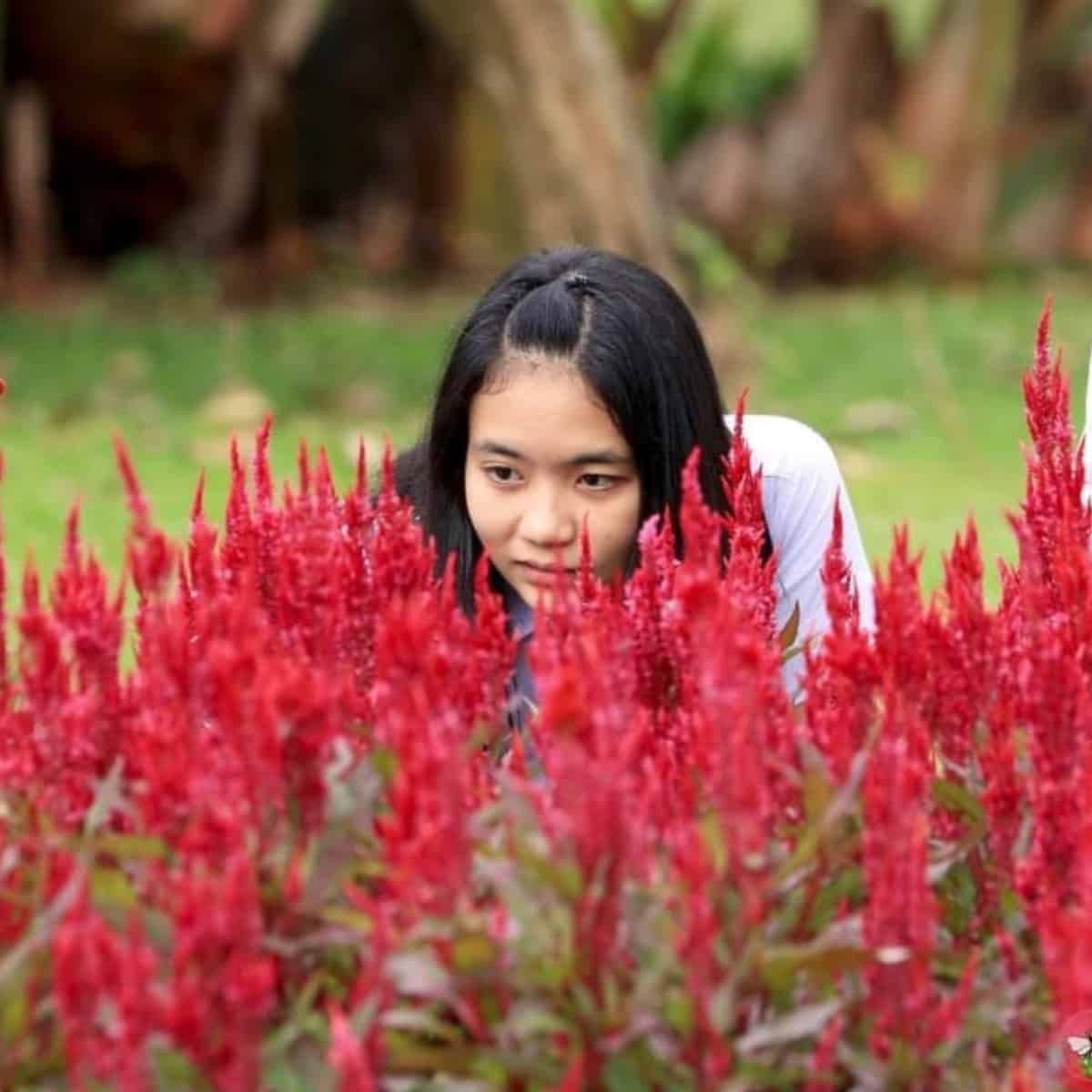
Cover Image: Alyssa Stewart observing pollinators at flowers by Nattapon Nopporncharoenkul.