
I see that Anka_w_chaszczach on iNaturalist has spotted a plant in Poland, that I’d struggle to find in the UK, though it’s rare in both. Crested cow-wheat, Melampyrum cristatum, is a member of the Orobanchaceae. This is the broomrape family, a family notorious for being parasitic plants. It’s making a seasonal appearance now that is make or break for the plant because, once winter comes, nothing but seeds survive.
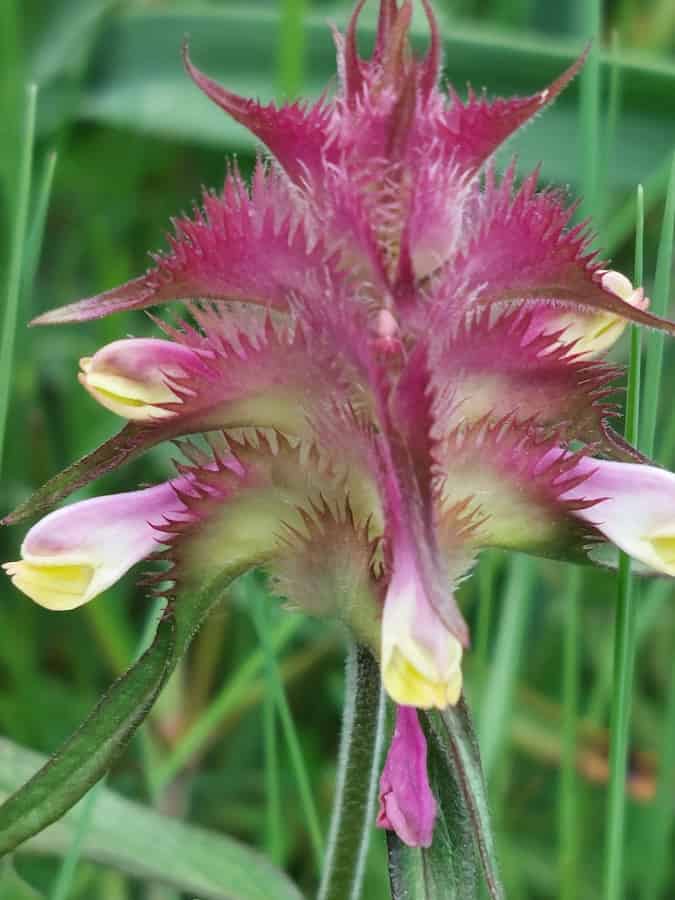
Melampyrum cristatum is better described as a hemi-parasite. It has specialised not exactly roots, called haustoria, that tap into the vascular systems of other plants. This supplies nutrients and water. The plant is a hemi-parasite, rather than a full parasite, because it’s kept the ability to photosynthesise, so it makes its own carbohydrates with a mix of carbon dioxide it has captured and stolen water.
The challenge in the UK is that it’s right at the edge of its natural range. Its home is eastern Europe extending to the UK and Spain in the west and across to Kazakhstan and eastern European Russia in the east. It’s looking for dry, calcareous or clay soils, where it can be found by woodlands, living at the margins. It’ll also be found by hedgerows that still protect a fragment of soil from a former woodland. There are a lot of woodlands and hedgerows, so why isn’t it everywhere? Well, Melampyrum cristatum has a few more requirements for a viable habitat.
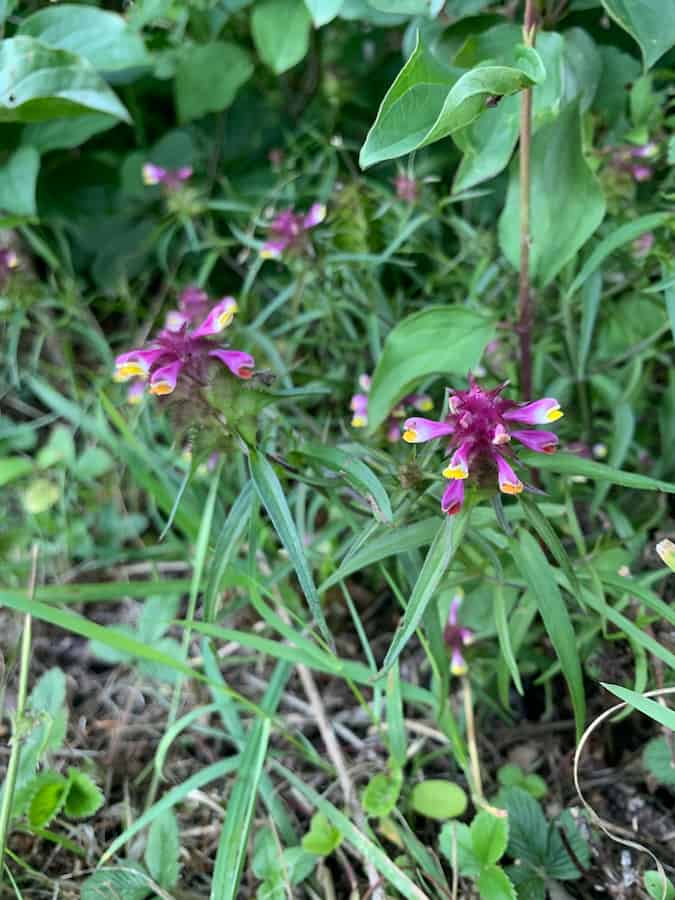
It also needs the ground kept open. Horrill says that Melampyrum cristatum is a moderately good competitor, but does best in opens stands, which means it depends on something else keeping the vegetation down. On roadside verges and ditch sides, that something is a mowing schedule. Cut a verge and the plant can come up in abundance for the next two or three years, in the open ground and the fresh seed bed the cutting has left behind. But it can take only one cut, and only early in the year. Cut it in July or later and you’ll either kill the plant outright or leave it too little time to ripen its seed.
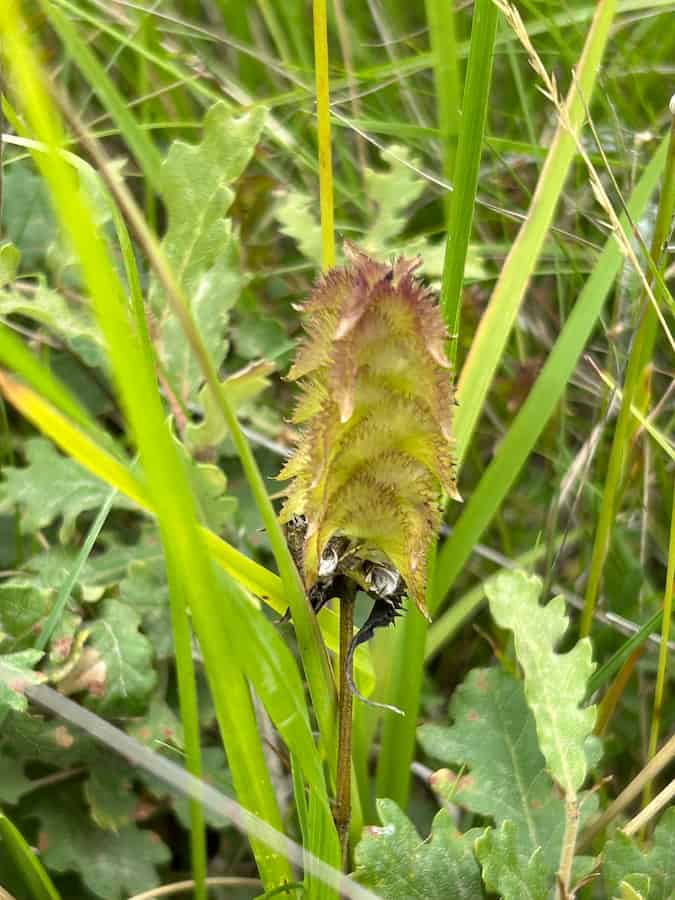
While it produces no more than four seeds per flower it has a lot of flowers. However, the seeds are heavy and have a large elaiosome, a munchable treat on the outside of the seed. This elaiosome is particularly liked by ants, which take the seeds away to eat the elaiosome. So the plant does get its seeds dispersed by the ants. But this is on the scale of metres, not kilometres.
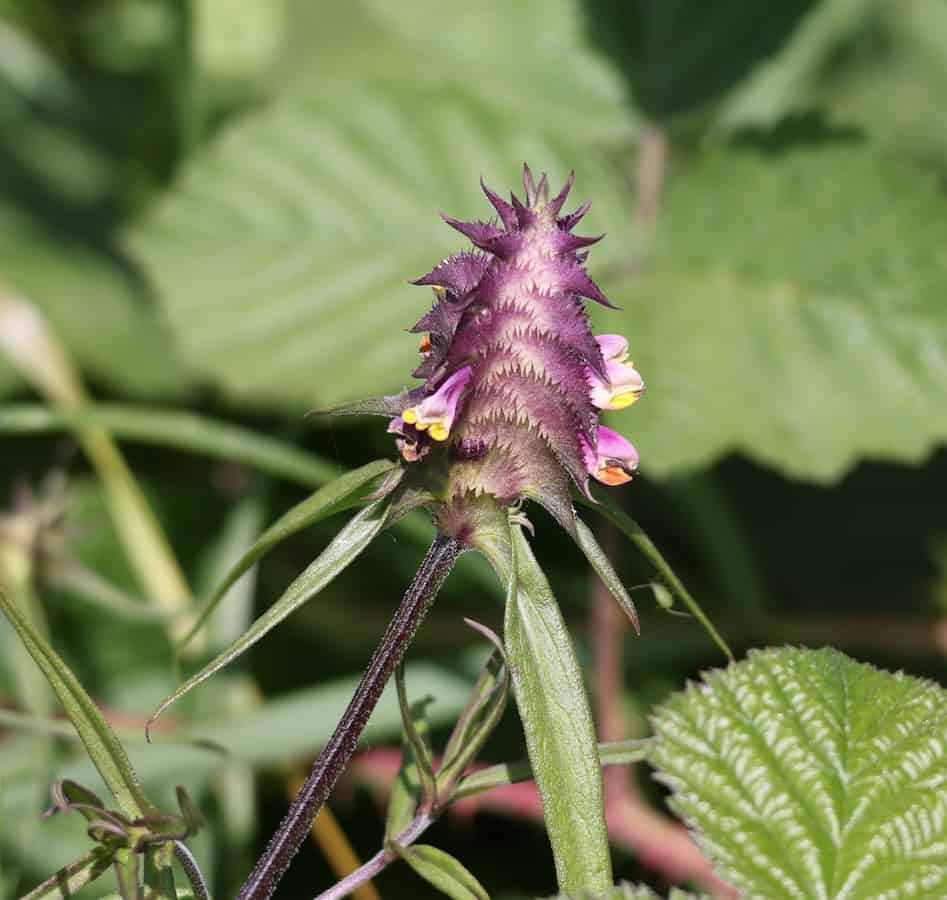
Research has also shown that hemi-parasites like Melampyrum cristatum are seen as indicators of habitats with high biodiversity. High biodiversity is something that develops with time. For Melampyrum cristatum, which isn’t often deliberately grown, this means its presence can also be a signal that a habitat is ancient, particularly alongside other tell-tale organisms, like lichen. It’s a sign that when we lose Melampyrum cristatum, we’re often losing a lot more.
Melampyrum cristatum — observations by month
Worldwide · n = 2,344
Data: iNaturalist verifiable observations.
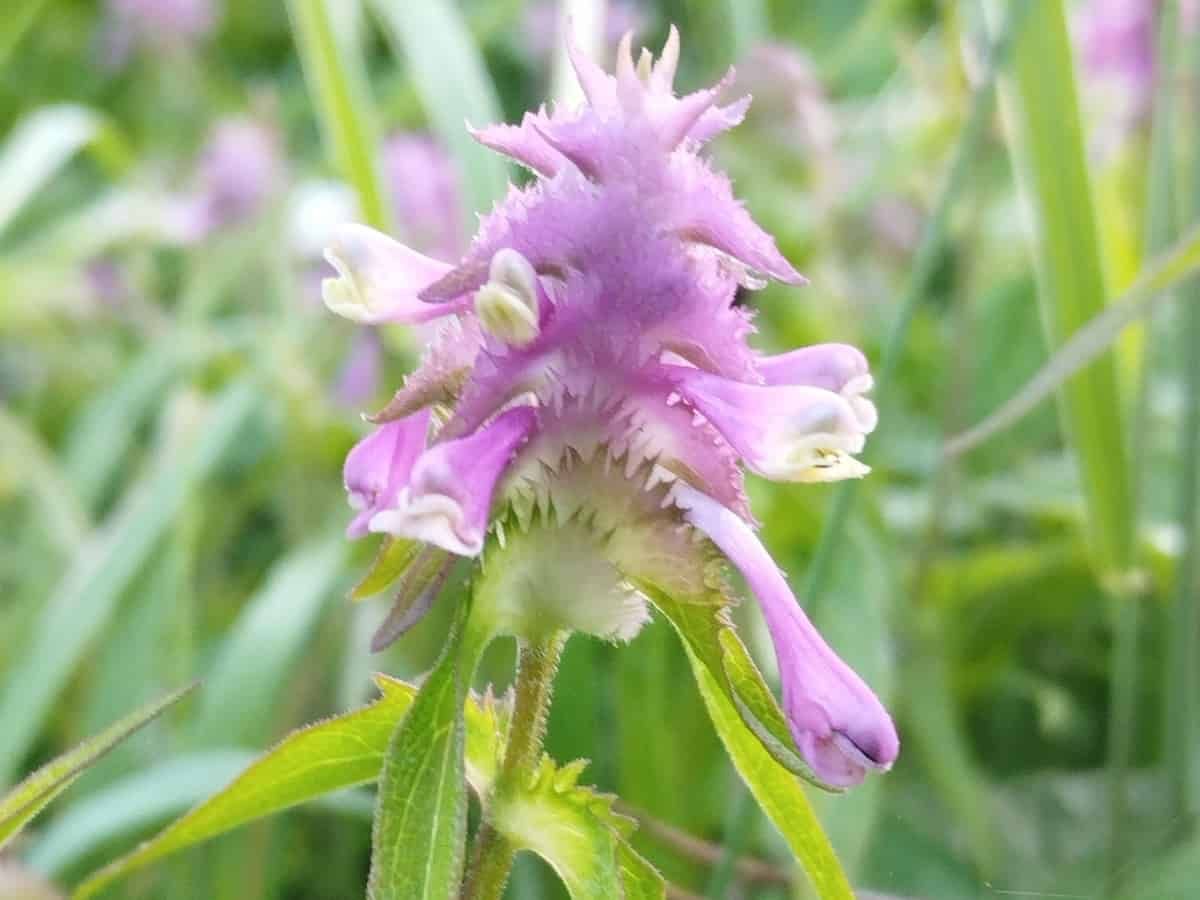
If you’d like to see it for yourself, your window is closing. You’ll be looking for plants around knee-height or below. There might not be a lot of them, and you’re looking for what appear to be pink flowers at first sight. This is because what you’ll see are the bracts, modified leaves, that can either protect a flower or bolster a display.
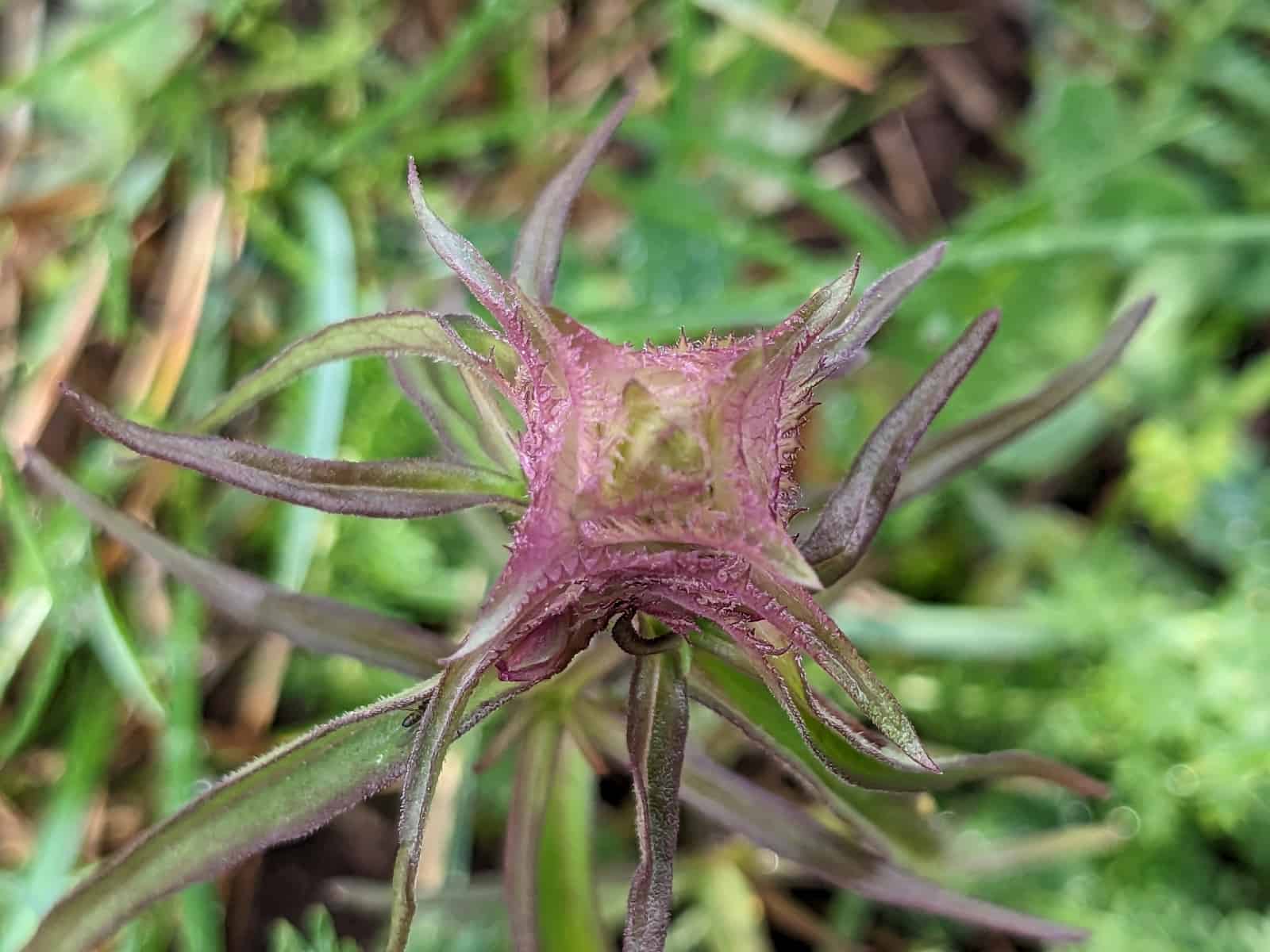
Those bracts are packed into four vertical rows at the top of the stem, which gives the whole spike a square cross-section. It’s these comb-toothed pink bracts that give the plant its crest. The small yellow flowers tucked in behind them might seem like an anticlimax. With nothing but the seeds they produce surviving into the new year, those flowers are everything.
Cover image: Melampyrum cristatum in Poland by anka_w_chaszczach CC BY-NC