
Ugh! It's been a week. It's been hot here, so the sun has been heating the bricks, and the heat at night means they don't cool off. I can't sleep in front of a fan or in a draught, so I've been slow-cooking and not sleeping for a few nights.
The website's new design went live this week. It's largely working. I spent a late evening squashing the most obvious bugs. I have a test site, which should be identical to the live site, so the biggest problems are dealt with them before you see them. This seemed like a good idea, until I spent hours trying to work out why fixes weren't working on the live site. After lot more time than I would have liked, I realised the back ends of the sites looked identical too, and I'd been constantly uploading the fixes to the test site.
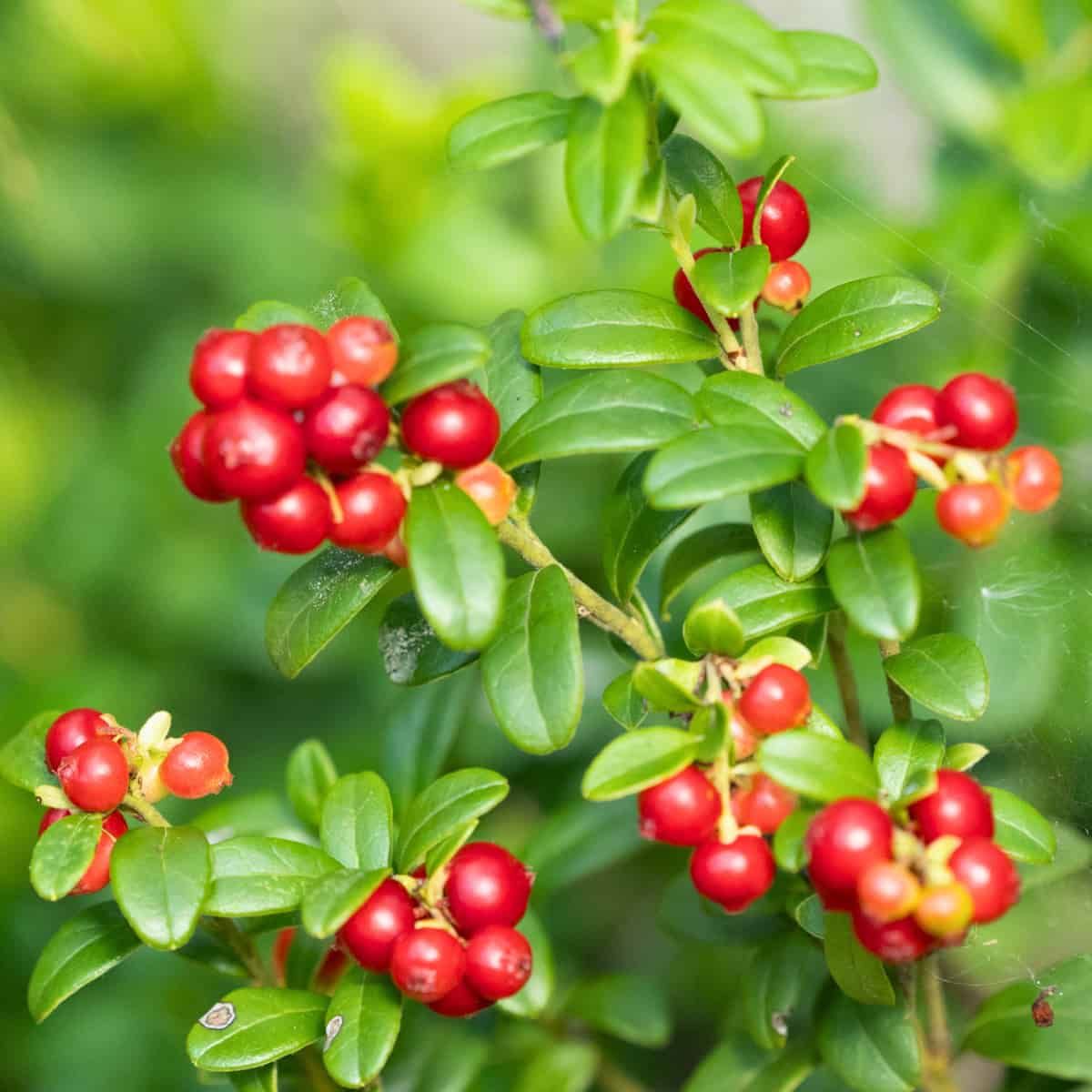
I've also made myself a tool to see what the most common observations on iNaturalist are in a location. The cover this week in lingonberry, Vaccinium vitis-idaea, from Loviisa, Finland. Over the past couple of weeks, lingonberries have been the most observed plants, which suggests some interesting meals.
There'll be another email sharing what we've posted as well as the stories you're sharing on Mastodon and Bluesky, and career postings at the usual time next week.
Until then, take care,
Alun (webmaster@botany.one)
On Botany One
Meet the Brazilian Cerrado’s Greatest Impostor
Researchers discover the first case of floral mimicry in South America, showing how a nectarless orchid poses as a Jacaranda to deceive pollinators.
Why Some Plants Need a Bear's Stomach to Sprout
To germinate in India's dry forests, some seeds must pass through a sloth bear's gut. Its digestion softens rock-hard seeds to regenerate native flora, but with an unexpected twist: it also unintentionally helps spread an invasive plant.
Aphids Leave Fingerprints on the Underside of Oak Leaves
Half the world's leaf surface faces downwards, and until recently nobody had checked whether the bacteria living there were doing anything different.
What Happens When a Climate Niche Closes
If you were to travel back in time six thousand years to North America, you could wander through Hemlock forests. There were places where it dominated forests but somehow, in the middle of the stable Holocene, something changed.
There was also Science Shared, Sudoku Garden took a trip into mycology, and Epilobium latifolium was plant of the week. You can also see last week's Week in Botany too.
In AoBC Publications
- Fire as a regeneration filter in the Arctic: effects of heat and smoke on seed germination in 25 common plant species 🆓
- Microscopic reproductive characters enable discrimination of cattail taxa in a highly admixed hybrid zone 🆓
- Two Clones, Two Paths: divergent intrinsic xylem traits and hydraulic responses to prolonged drought in poplar 🆓
News & Views
Army of volunteers races to save one of Australia's rarest orchids
It takes years of work, dozens of volunteers, picky pollinators and a special fungus to save Australia's endangered orchids. Here's why people drive from all over the country to do it anyway.
abc.net.au
How Gambian women are restoring the mangroves protecting Banjul
Trees provide a living for the women, who plant and care for them, and shield the island capital from erosion, flooding.
aljazeera.com
We still publish one paper at a time. Nobody reads science that way anymore
Publishing is stuck in one mode. Reading has already changed.
kamounlab.medium.com
Oak Leaves Harbor Distinct Microbial Worlds on Their Opposite Surfaces
A single leaf may look like a simple patch of green, but to the microscopic life that inhabits it, it is a vast landscape divided into different worlds.
english.cas.cn
Fire is both friend and foe for Australia's wildflowers
Many of Australia's floral species have evolved over millions of years alongside fire, but are bushfires becoming too frequent for some flowers to survive?
abc.net.au
AI optimization – Brian O’Meara
Optimization of papers for AI parsing?
brianomeara.info
Fossils show huge carbon emissions harm forests, not ‘green the planet’
Study of 56m-year-old leaves counters claims from Trump administration members of ‘benefits’ of fossil fuel pollution.
theguardian.com
Reflecting on the past: developing hyperspectral reflectance spectroscopy for herbarium specimens
It was an abnormally warm and balmy December in Minnesota, and Dr. Jeannine Cavender-Bares and I were in the lab. The lights were off, blinds were closed, and we had fashioned a makeshift stand to hold a large tungsten halogen lightbulb, angled perfectly to shine into the long fiber optic cable of a spectrometer connected to a leaf clip. We had just received a focusing lens to reduce a target’s measurement area, and were testing to see if it worked.
methodsblog.com
5 Native UK Grasses You Need to Know and Why - Plantlife
They might not be as colourful, but they're every bit as important and add movement and texture to our landscape.
plantlife.org.uk
The fruits of migration
As chance would have it, following my recent speculative foray into the possible connection between language and crop diversity, an essay by the great Andrea Wulf has just appeared that tells the story of how a remarkable German naturalist used breadfruit and linguistics to work out Polynesian migration patterns long before DNA or archaeology could confirm them.
agro.biodiver.se
Science Shared
Three botany papers widely shared on Bluesky this past week were:
1. Faster, bigger, more severe: Extreme wildfire spread sets the stage for forest ecosystem change in western and boreal North America
Coop, J. D. et al. · Science Advances · 1 post · 99 likes · 49 reposts on Bluesky
Here, we measure daily linear fire growth rates and assess relationships between fire spread, burn severity, and metrics of postfire landscape resilience from 3499 fires occurring between 2012 and 2023 in conifer-dominated forests of Canada and the western US. We find that as linear spread rate increases, so too does fire severity, proportion of area burned at high severity, and distance to surviving live tree seed sources.
Jonathan Coop @coopecology.bsky.social · on Bluesky
Our new paper assesses relationships between wildfire rate of spread, area burned, and severity in western + boreal North American conifer forests 2012-2023.
Take home message in the title: faster--> bigger--> more severe.
With @grumpyunclesean.bsky.social, @jessforplanet.bsky.social and more!
🔥🧪🌍
2. Tangerine: A new family of Starships from lichen-forming fungi
Tagirdzhanova, G. et al. · Proceedings of the National Academy of Sciences · 1 post · 66 likes · 44 reposts on Bluesky
Recent evidence suggests that lichens may be even more complex than previously appreciated, containing multiple microbial constituents, but how genomes of the principal fungal symbiont (which provides the majority of biomass in lichen tissue) have been shaped during evolution is largely unexplored. Recently, giant transposable elements called Starships have been found in many genomes of filamentous fungi, but to which extent they occur in lichen-forming fungi is not known. In this report, we describe a Starship element from the lichen fungus Xanthoria parietina . This element, named Tangerine , contains several genes that have signatures of horizontal gene transfer from nonlichen-forming fungi, most likely from black yeasts of the Chaetothyriales, that are often lichen-associated.
Gulnara Tagirdzhanova @metalichen.bsky.social · on Bluesky
Our study on giant transposons Starship 🚀🧬 in the genome of the lichen fungus Xanthoria is now out in @pnas.org! What did we find out about Starships in #lichen fungi? 👇Updated thread below 🖥️ 🧪 🦠 🧫 #SymbioSky 1/6
www.pnas.org/doi/10.1073/...
3. Cell-type-specific activation of broadly perceived effector-triggered immunity restricts pathogen invasion in plants
Chhillar et al. · Cell Host & Microbe · 2 posts · 70 likes · 22 reposts on Bluesky
Effector-triggered immunity (ETI) is central in plant defense, but whether all cell types execute ETI similarly remains unknown. We combined chemically imposed immune activation with single-cell transcriptomics to profile ETI responses across major leaf cell types in Arabidopsis. Despite uniform ETI perception, we find divergent transcriptional outputs: a core set of defense genes is broadly induced, while distinct cell types activate specialized immune modules.
Pingtao Ding (he/him) @dinglab.bsky.social · on Bluesky
Our work is now online @cp-cellhostmicrobe.bsky.social
Congrats to all authors @himanshuchhillar.bsky.social @leonardojo.bsky.social Amey Volkan @kaisakajala.bsky.social @jonathandgjones.bsky.social
Supported primarily by the @erc.europa.eu #StG
www.cell.com/cell-host-mi...
@unileiden.bsky.social
You can see the full list with more details at Science Shared: August 8.
Careers on Bluesky
Please note these are not jobs I am offering. Nor can I help you with any visa requirements. At time of writing there are around 130 other jobs posted at Botany One.
Research Assistant // University of Edinburgh
www.jobs.ac.uk/job/DSP512/r...
We are looking for a Research Associate to assist our study of the role of ZHOUPI genes in the cell death and breakdown of the embryo-surrounding maternal tissues of the model liverwort Marchantia polymorpha.
Postdoctoral Research Associate in Plant Biology // University of Oxford
www.jobs.ac.uk/job/DSO768/p...
Experience with confocal microscopy and/or quantitative image analysis is essential.
Field Biologist // Atlanta Botanical Garden
www.bgci.org/job/field-bi...
The Field Biologist will be part of the Conservation & Research Department team within the Southeastern Center for Conservation at the Atlanta Botanical Garden.
Postdoctoral Research Fellow (Plant Functional Ecology and Urban Greening) // Macquarie University
uniroles.com.au/display-job/...
The appointee will contribute to developing sustainable urban greening solutions and investigating the functional responses of Australian native plants.
Cover Image: Vaccinium vitis-idaea by Teemu Helonheimo / iNaturalist CC BY