
Research by microbiologists in China and Germany has confirmed what many gardeners already knew by experience: the two sides of a leaf are distinctly different places. It matters because while leaves are small, collectively they’re massive. How massive? Yin and colleagues state in their new paper that total leaf surface area is the equivalent of about twice the surface area of Earth, a massive habitat for microbes. And half of this habitat is on the underside. Gardeners know half is where aphids lurk, but till recently scientists looking at microbes on leaves treated a leaf as a whole. Now, Yin and colleagues have examined bacterial populations on both sides of leaves and found you get two different communities on either side of the leaf.
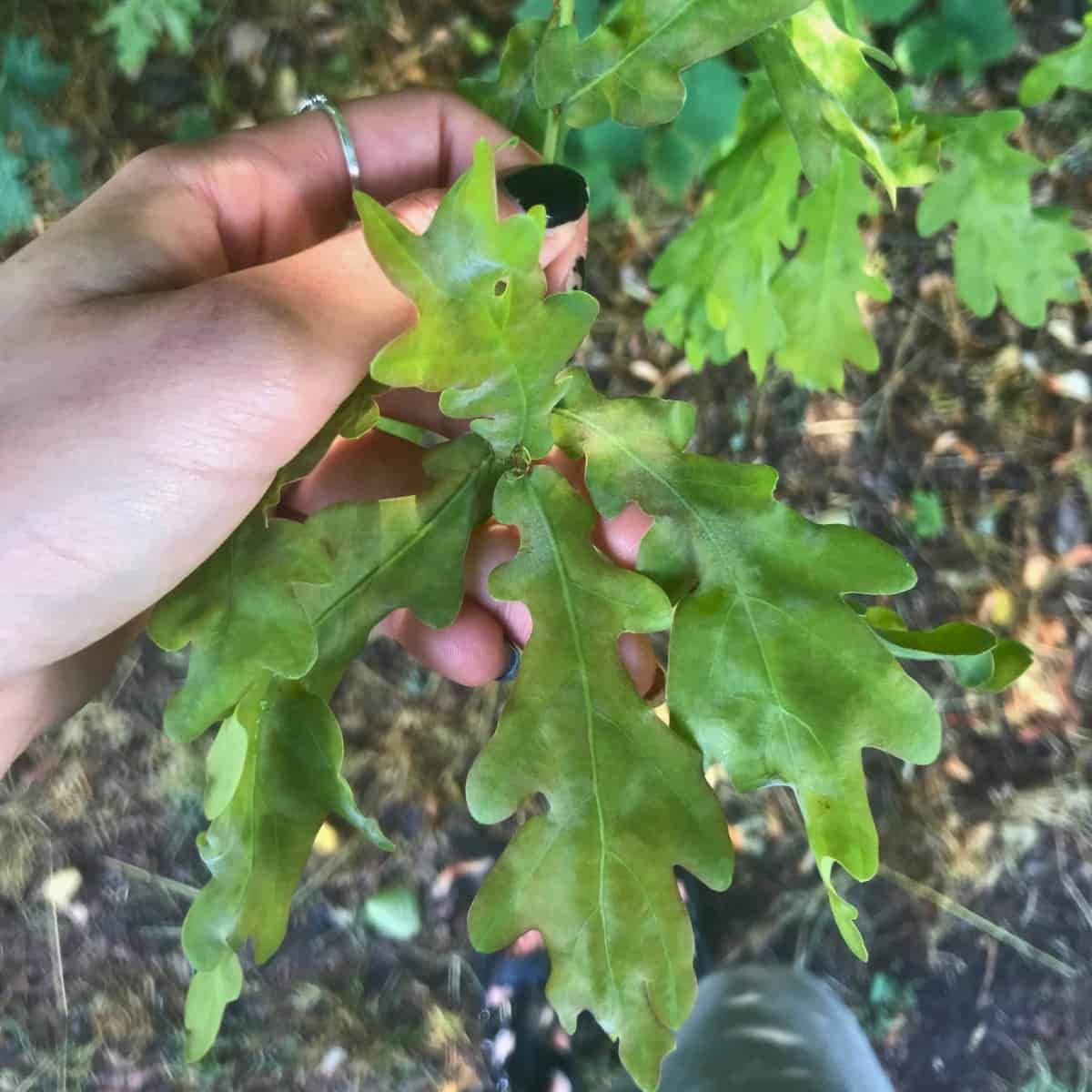
That’s no surprise, the two sides of a leaf have two different experiences of the environment. The upper side is exposed to wind, rain and sun, while the lower side is sheltered and shaded. Leaves develop to adapt to this and typically the upper side will be more water resistant, while the underside hosts the pores, stomata, that allow air in and out of the leaves. Awkwardly for me, in this case, the Quercus robur trees the team sampled had more water-repellent undersides by the stomata, which might mean that the results in this experiment differ from a typical plant.
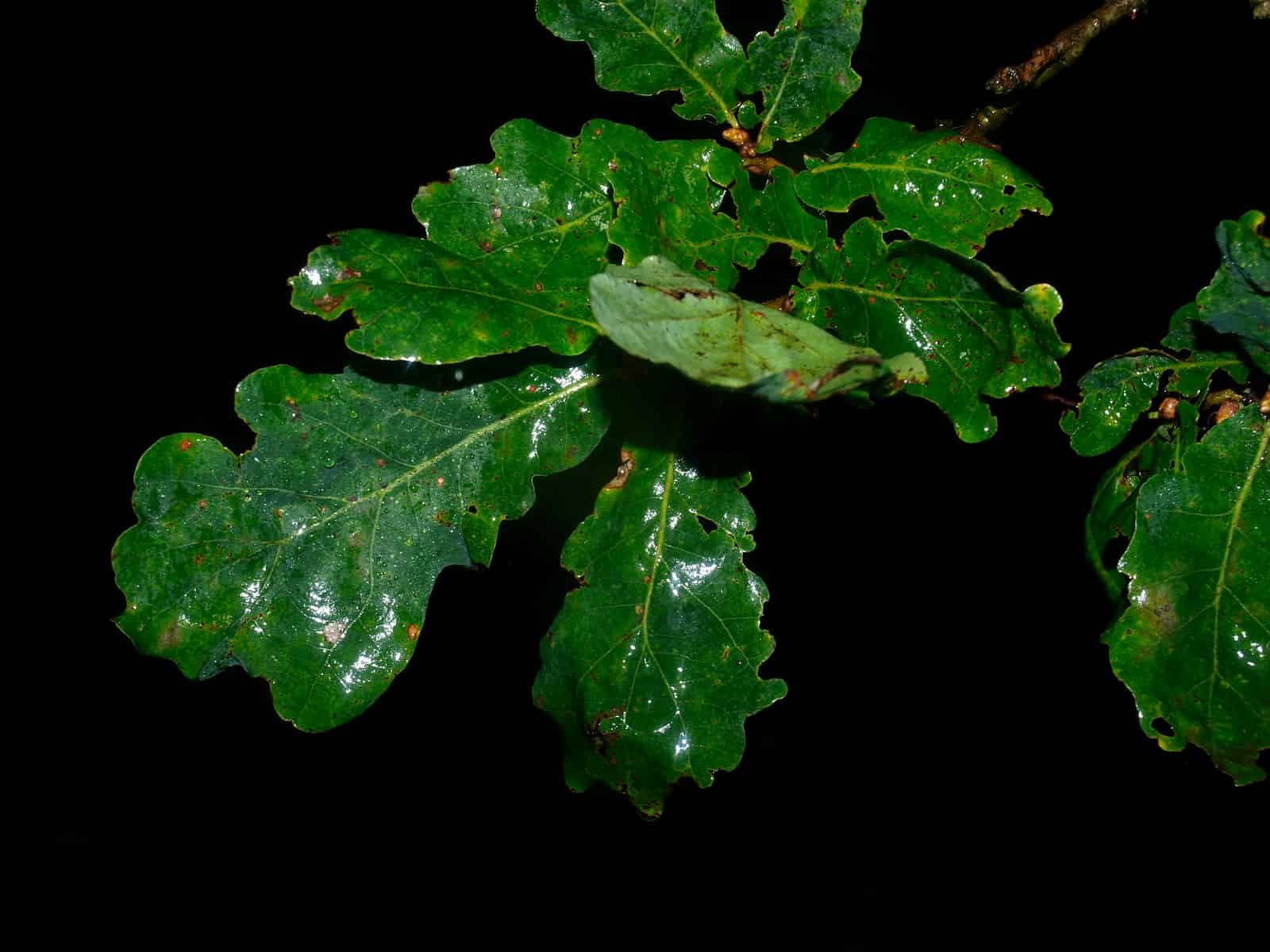
Another difference from previous studies is that the team didn’t just sample a leaf or two. They tracked leaves over a season. That meant they could look at the effect of what changed and what didn’t. Once a leaf has grown some factors are stable, like size, shape and vein count. But over the course of a season some things change, like pigments or hydration.
The experiment took place in Marburg Open Forest, Germany, about an hour and a half north of Frankfurt. Here a dozen ramets, genetically identical cuttings, of oaks were planted in a common garden in a forest clearing. The identical genes and location means they’re not explanations for any differences in the leaves. They also marked which leaves got swabbed for bacteria with colour-coded plastic rings, so they were following the same leaves through the season, rather than sampling a different leaf each time.
That repeat swabbing could be both a blessing and a curse. Sure, you’re getting data from the same leaf each time but, when you swab a leaf, are you wiping out the bacterial community that lives there? If you are, then what you measure is the effect of reestablishment after each swab. So the team also took a reference swab from an adjacent leaf in September to check against their repeat-swab results.
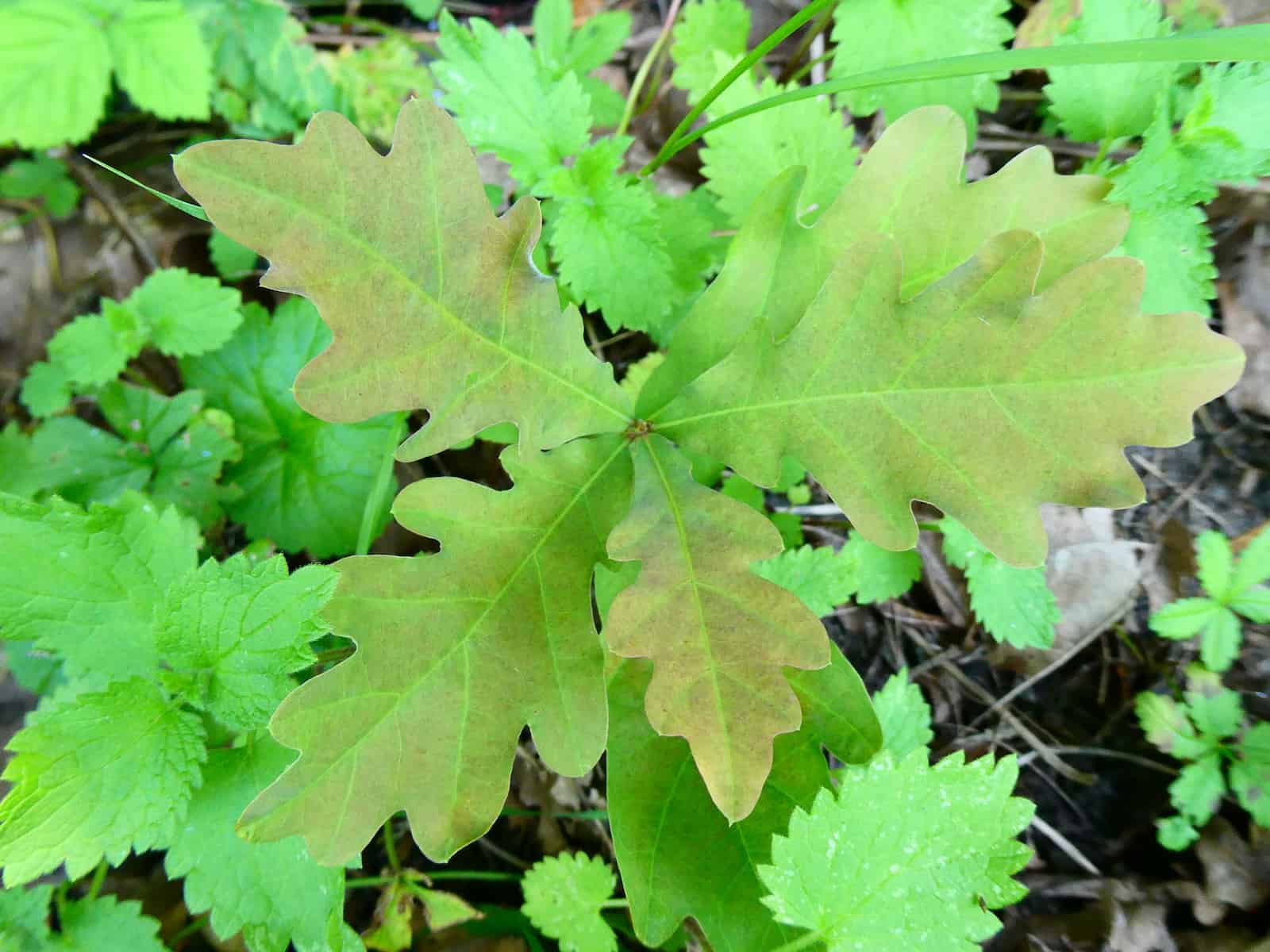
Another possible explanation for any difference could simply be exposure to the Sun, with continual exposure to sunlight irradiating the upper side of the leaves. So the team also shaded some trees to see if that changed how different the results were from the two sides of a leaf.
They found that the two sides did have different bacterial communities, both dominated by the same broad group of bacteria, in reliably different proportions. Seasons made more of a difference in variation, but both of these factors were dwarfed by the differences between trees and random noise in the results. What makes the paper interesting is how that change in diversity played out as autumn came.
Diversity on the top of the leaf stayed pretty much as it was. However, the underside had a different story. In Spring the bacterial community was just as diverse as the upper surface, but this diversity fell as the season wore on, as if bacteria were getting filtered out. What is a bit confusing is that the underside came to have more species in common with the upper side, but had a narrower range of them.
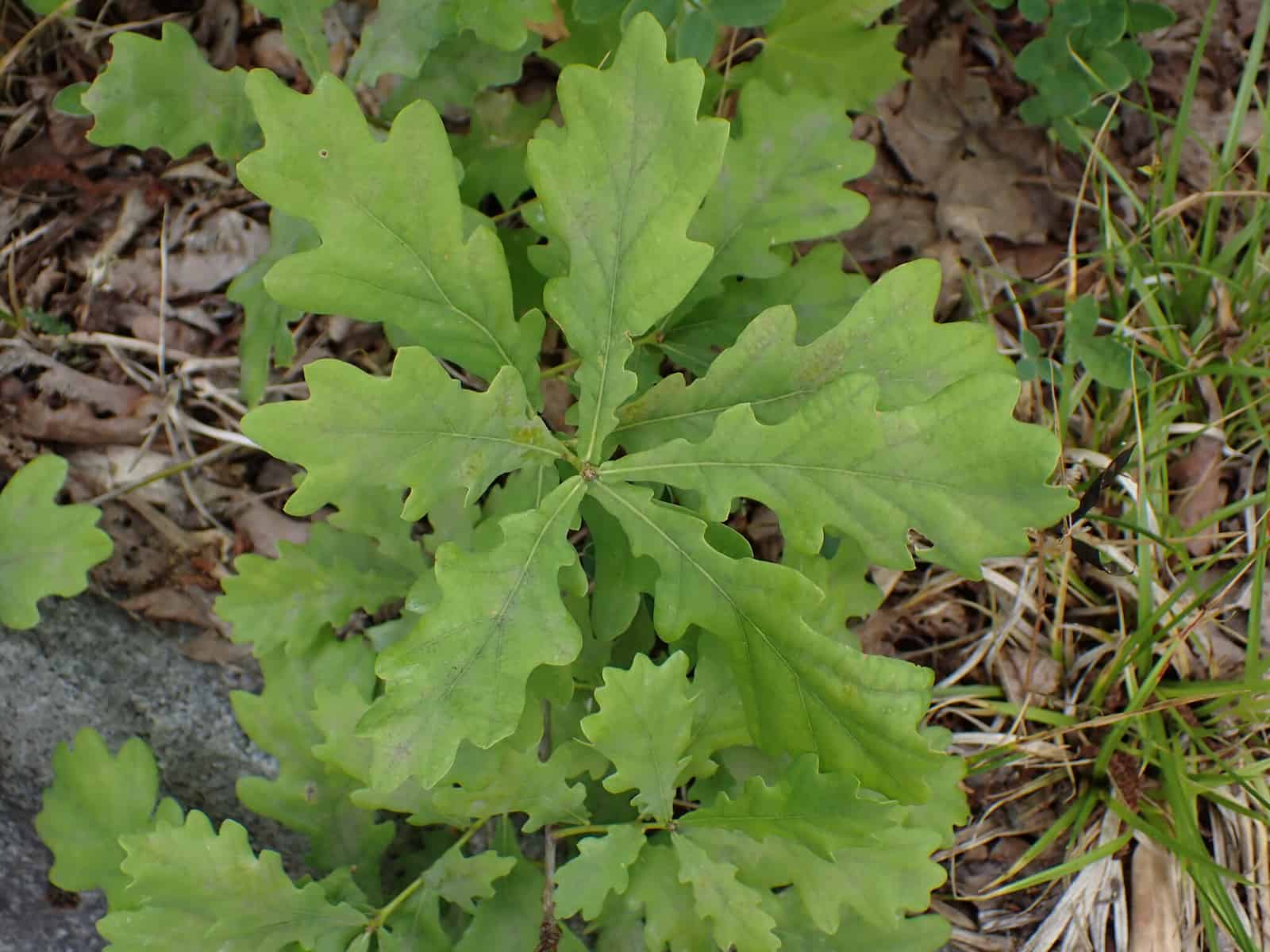
One possible explanation for the difference might be how the underside bacteria got there. There’s an insect signature on the underside of the leaves. On the upper you have a few genera that do well. The list includes Deinococcus, a genus famous for being able to survive high radiation. The top side bacteria are hard to kill. Some of the underside bacteria are opportunists, and include genera like Leuconostoc, which ferments sugars. They also found Buchnera and Portiera. These are bacteria that live in aphids and whitefly. They don’t live on leaves, so their DNA was probably from swabs picking up dead bacteria. If you find these bacteria on a leaf then they were most likely deposited by insects.
One of the odder results was a lack of difference between shaded and open samples. Given the effects of sunlight making the upper side of a leaf a difficult place to live, you’d expect putting plants in the shade to make their leaves different. It didn’t. Why that’s the case isn’t clear. The authors say that maybe the shading wasn’t strong enough, but they think it’s more likely that the physical properties of the different sides of the leaf were the main factor.
The results are purely for bacteria, fungi were excluded from the study, but they do highlight how forests, fields and your garden are complex habitats. The top of the leaves all get exposed to the same sun, but the underside will reflect local conditions and the state of the plant. What the authors don’t say, is that treating leaves as a single thing to spray for pests or fungi misses a lot of how the ecological relationships between plants and the things that live on them work. But it seems to follow from their work.
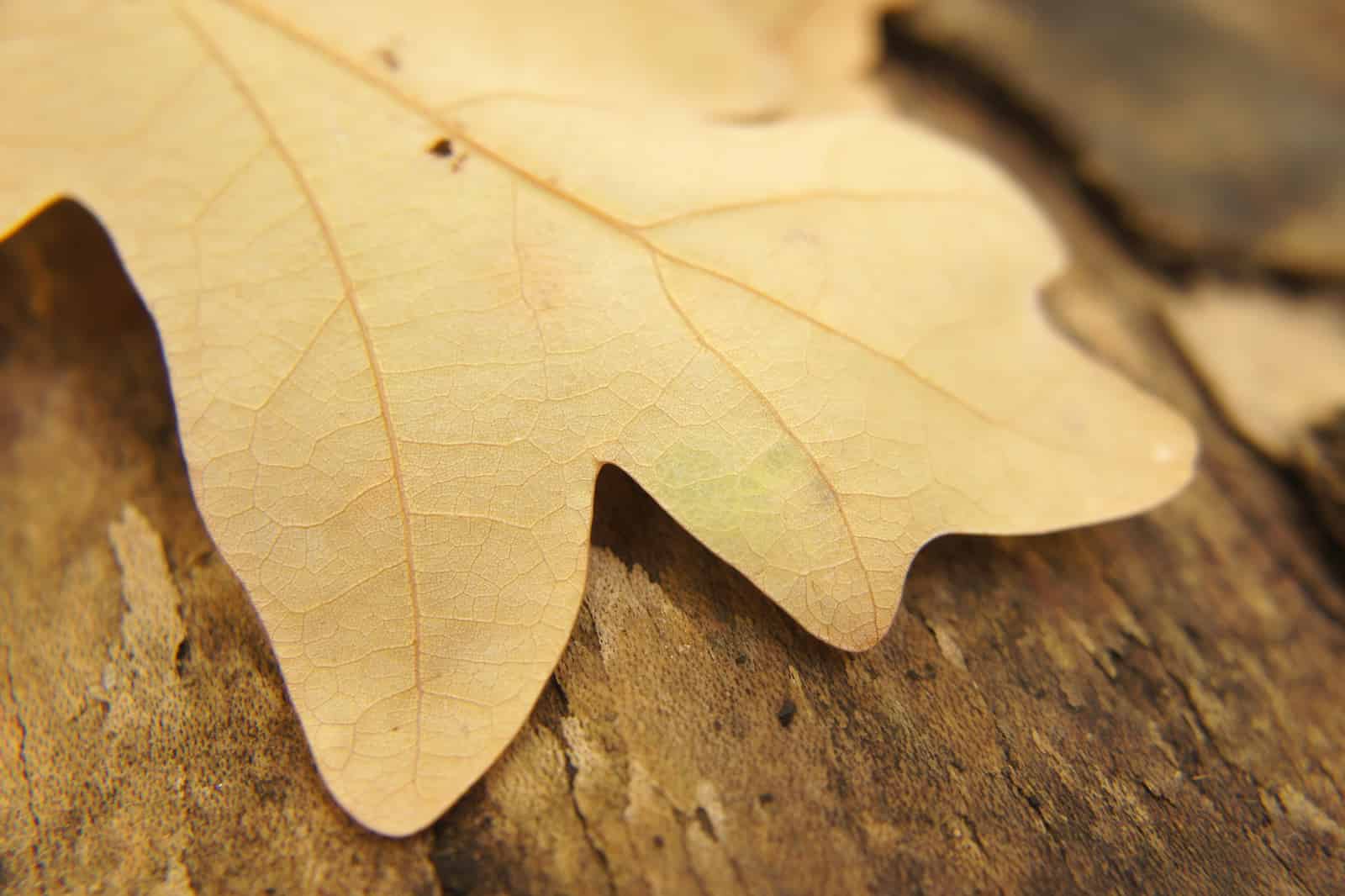
The relevance goes further than simply aphids on your roses. The microbes on plants are part of a system of checks and balances. Some aid nitrogen fixation, others impact carbon turnover. Some are pathogens that can harm a plant, but others can provide services to aid the same plant. It’s a complex community, and Yin and colleagues note that an earlier study by Smets and colleagues found quite different results to them.
Smets et al. identified core taxa using abundance–occupancy distributions on rarefied datasets, whereas we applied a 90% occurrence threshold, which may yield different interpretations of what constitutes the core community. Furthermore, pooling across multiple species at a single time point may mask species-specific and seasonal dynamics, particularly when the strength and direction of upper–lower surface divergence vary through time. Further, leaves from different species are at different developmental stages, which complicates cross-species comparisons.
So, Yin and colleagues make an interesting case that working out how to define what the core community is, and how to sample it could give a better picture if what’s going on among the bacteria. Maybe in the future crop yields will improve not just from farming in the fields, but farming bacteria on the leaves too.
READ THE ARTICLE
Yin, X., Ramirez, L., Lampei, C., Azarbad, H., Greif, D., Martiné, E., Liu, C., Kong, F., Ang, L., Herrmann, S., Opgenoorth, L., and Bader, M.(2026) Bacterial communities on upper and lower leaf surfaces show distinct seasonal response patterns. New Phytologist. Available at: https://doi.org/10.1111/nph.71483.
Cover image: Quercus robur by lalalara / iNaturalist CC BY-NC