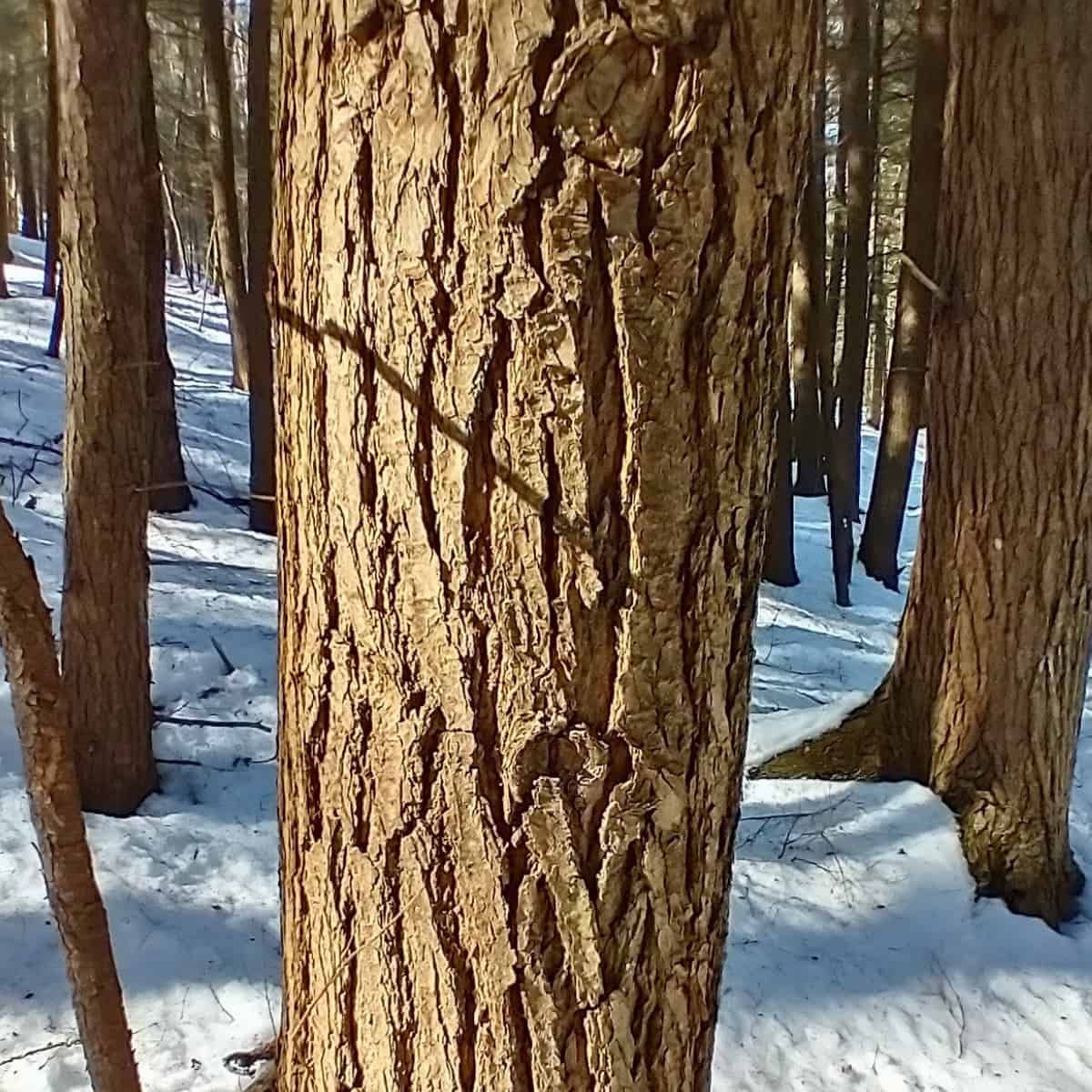

Tsuga canadensis, or Eastern Hemlock, is a tree found in the eastern North America, or at least that’s where it’s found today. It’s not a surprise that plant distributions have changed since industrialisation, but Hemlock has an odder change. Some time around 5000 years ago, in the middle of what seems to be a stable climate, Hemlock populations collapsed. But a closer look at the geological record shows that in what looks like a stable climate, abrupt changes in ecological systems lurk. In a new paper Bryan Shuman argues that an average view of climate hides local changes in temperature and precipitation.
It’s an approach that might explain one of the puzzling aspects of the collapse. If you were around at the time, looking at eastern North America as a region, it wouldn’t look like a collapse, but more a gentle stumble, taking up to a thousand years to happen. A person might notice hemlocks dying here or there, but there’s no single event. An example Shuman gives of this patchwork collapse is found in the Berkshire Hills of west Massachusetts, where there were two ponds, Davis and Guilder. The ponds were just 4 km apart, yet after the Hemlocks died at Davis, the trees at Guilder hung on for another 600 years.
The difference between the two wasn’t down to latitude or longitude. It was elevation. The Guilder pond was 400 m higher above sea-level, making it naturally cooler. These differences in height can create ‘sky islands’, isolated zones of cooler climates at high elevations cut off from similar locations by warmer valleys. The result isn’t that the Hemlocks were killed by a big event but struggled more and more, as the climate around them changed.
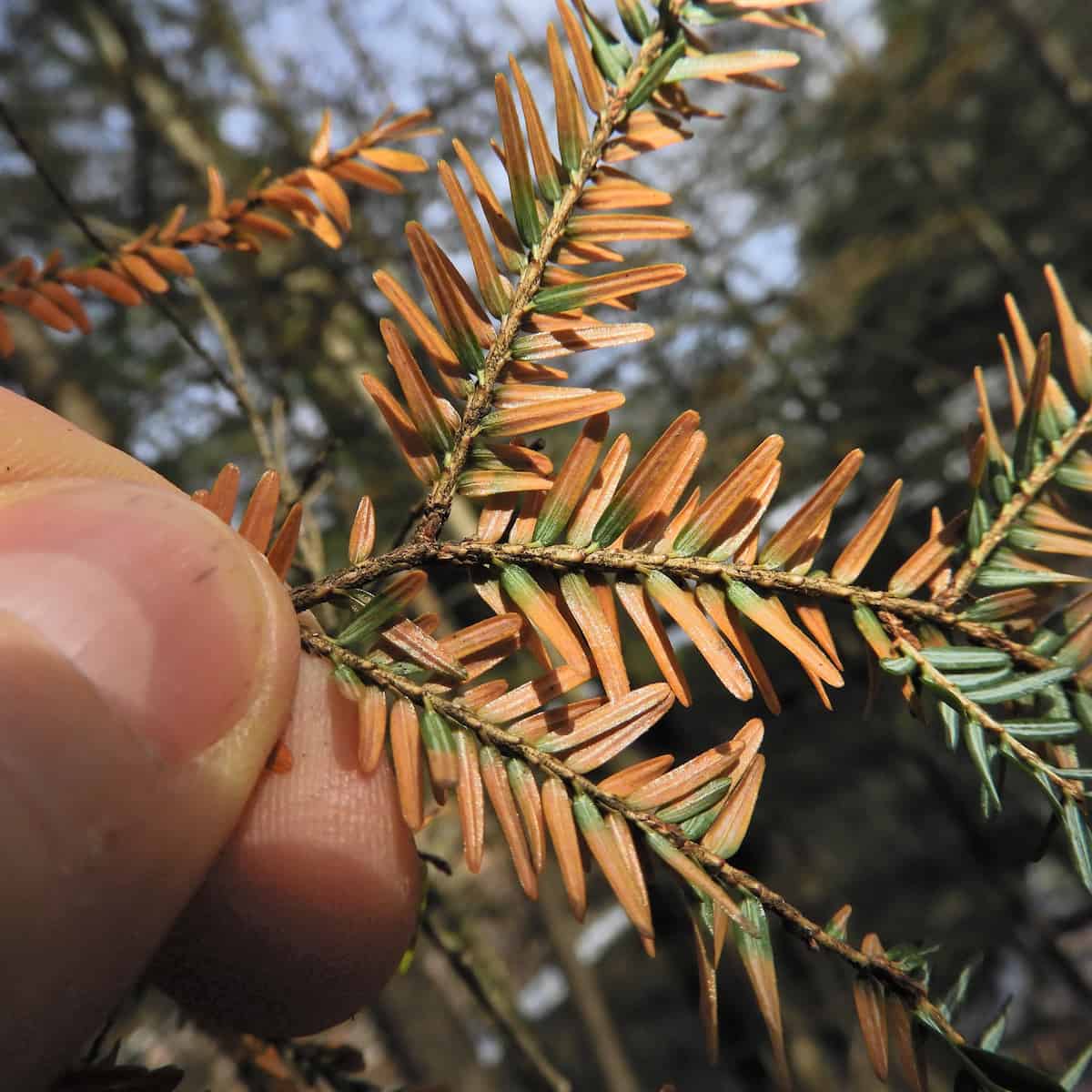
The findings have some relevance to today , and some irrelevance too. Currently Tsuga canadensis is under threat from Adelges tsugae, the hemlock woolly adelgid. This is an insect from east Asia, which has been brought to North America. It attacks the fresh shoots of hemlocks, sucking out sap, and there are a lot of them, so when a tree is attacked, it loses a lot of its fluid.
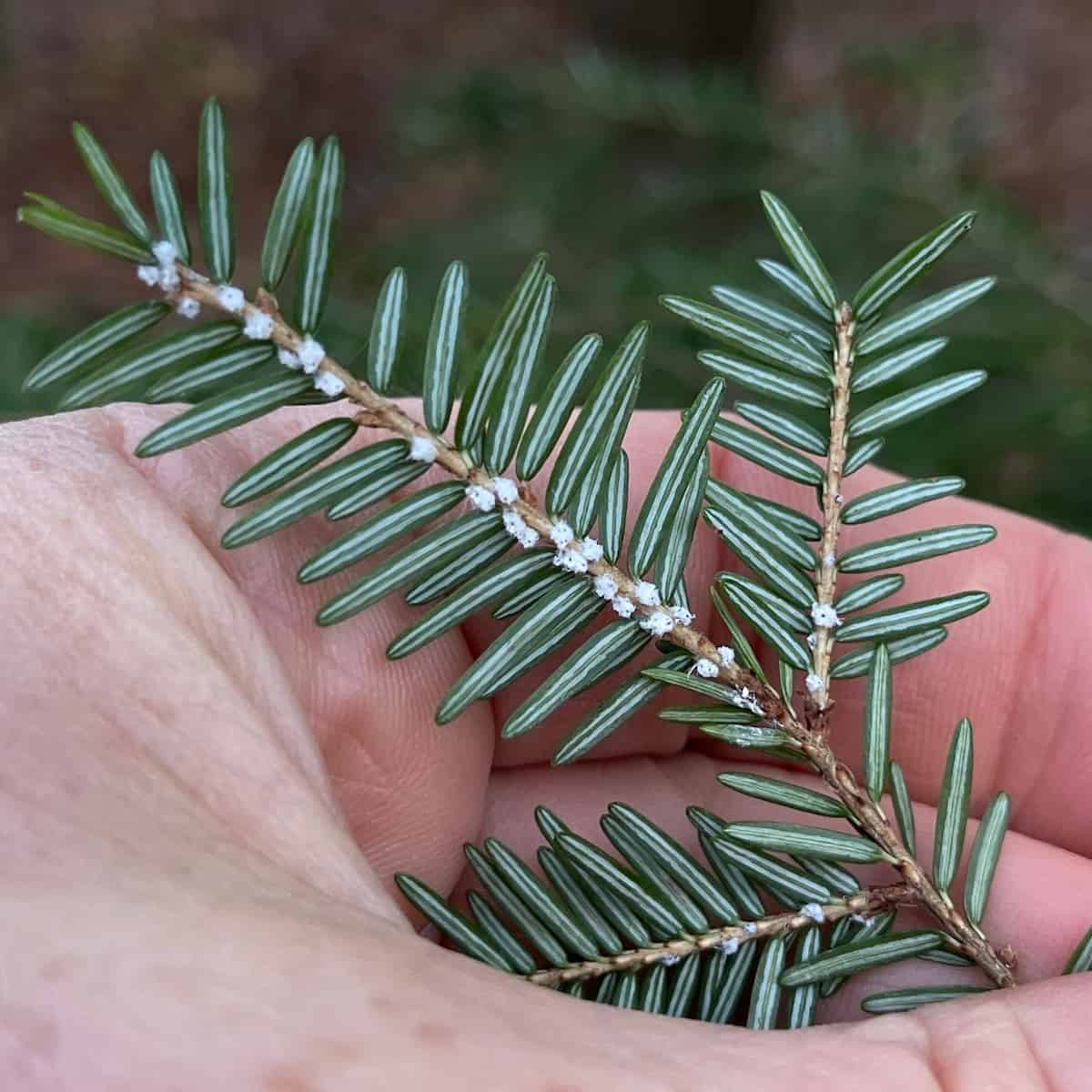
If Shuman is right, then the evidence from pollen in the past shows that the mid-Holocene decline of the hemlocks was not the same as what we see today. The worry is that even in ‘stable’ climates abrupt local climate changes happen, and we do not have a stable climate, and the insect infestation adds another complication. At the moment it’s the winter cold that limits the spread of Adelges tsugae. Abrupt changes in habitats could both cause problems for hemlocks directly and aid their attackers.
Looking back we talk about an abrupt decrease in Hemlocks. For them it was a disaster in just a couple of generations, but it was just losses here and there on the scale of human lifetimes. Could we recognise the signs of upheavals in ecosystems happening now?
READ THE ARTICLE
Shuman, B.(2026) Range‐wide Tsuga tree decline driven by abrupt climate changes in mid‐Holocene America. New Phytologist. Available at: https://doi.org/10.1111/nph.71484.
Cover image: Tsuga canadensis by Tom Norton / iNaturalist CC BY