
In nature, we often think of the relationship between flowers and pollinators, such as bees, as a perfect partnership: the bee pollinates the flower and, in return, enjoys a feast of nectar. It’s the classic win-win situation. But did you know that there are plants that pose as other species and act as true tricksters?
Brazilian scientists have just documented, for the first time in South America, a striking case of floral Batesian mimicry. In simple terms, an orchid that pretends to be another famous plant just to trick bees!
For this deception strategy to work, you need a master of disguise, the mimic, and a victim to copy, the model. So, here we have:
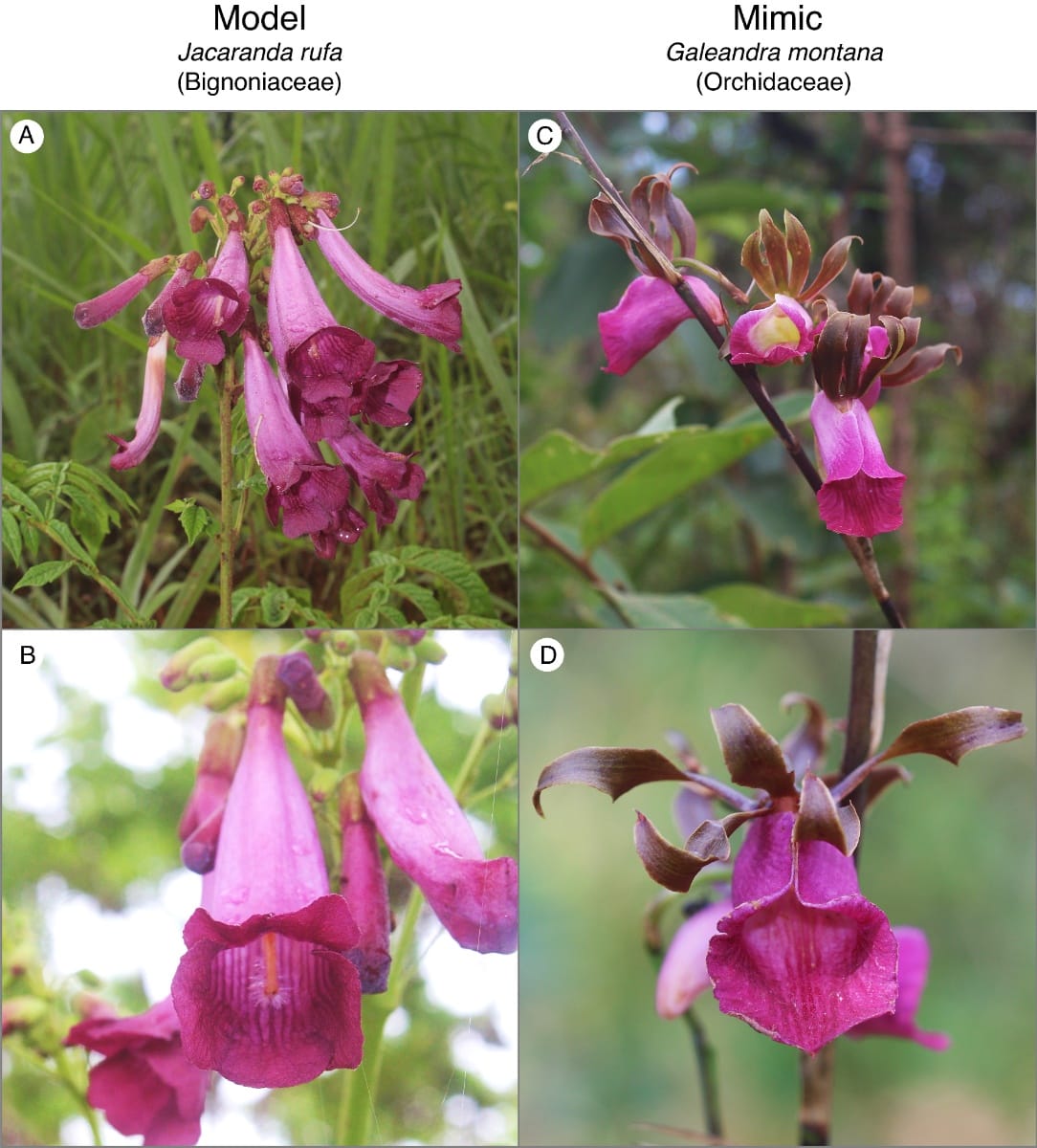
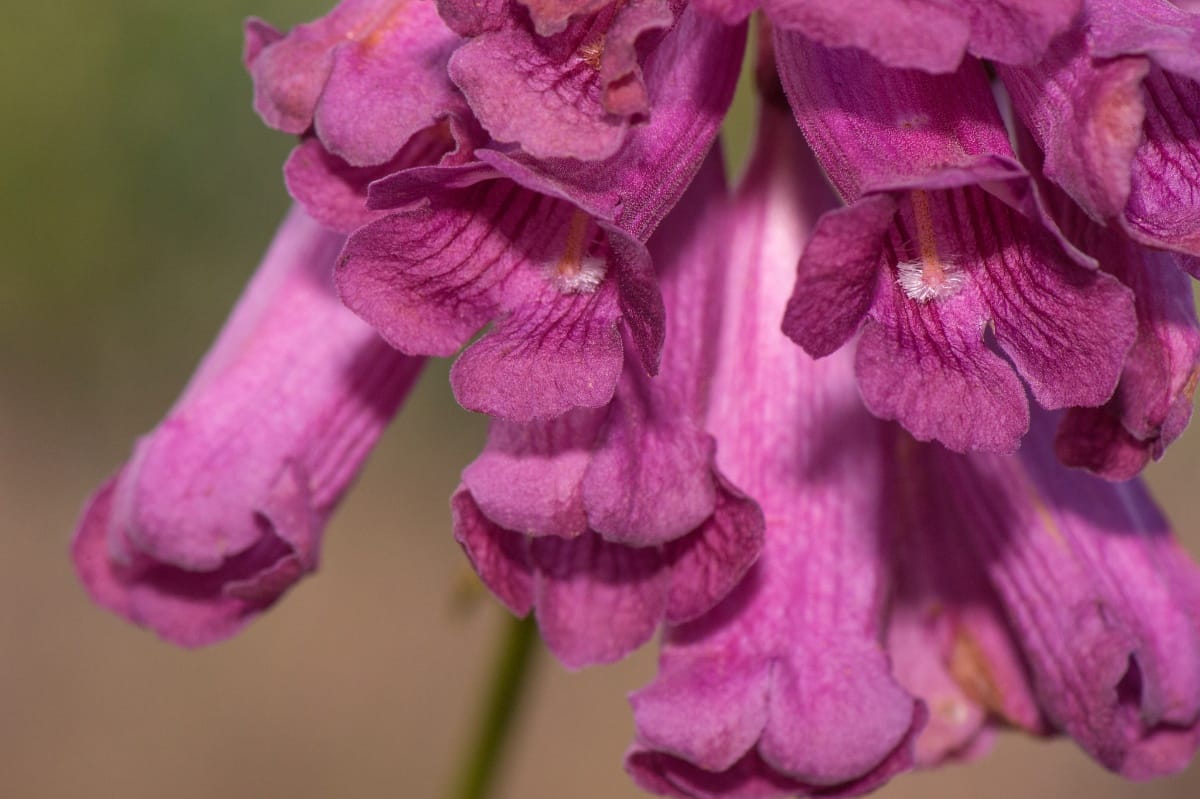
- The species Jacaranda rufa, the model: A common shrub in the Cerrado. Its flowers are shaped like a lilac funnel and offer a proper feast of nectar, oils, and resins for large bees.
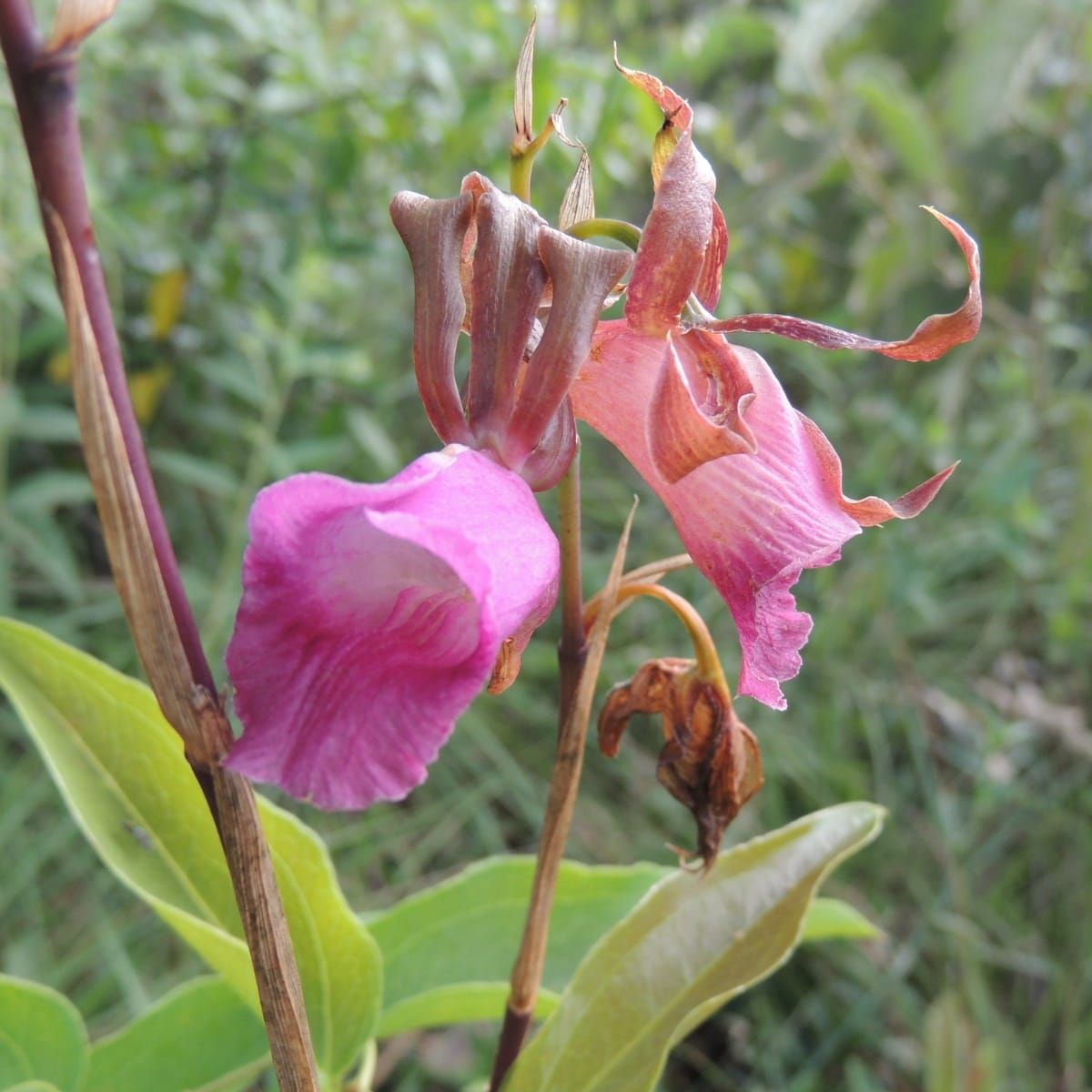
- Galeandra montana, the mimic: A stunning terrestrial orchid that also lives in the Cerrado. It has flowers that look visually similar to those of the Jacaranda, but it produces absolutely no resources, neither nectar nor oil. It is an "empty" flower.
And you might be asking yourself: how does this trick work?
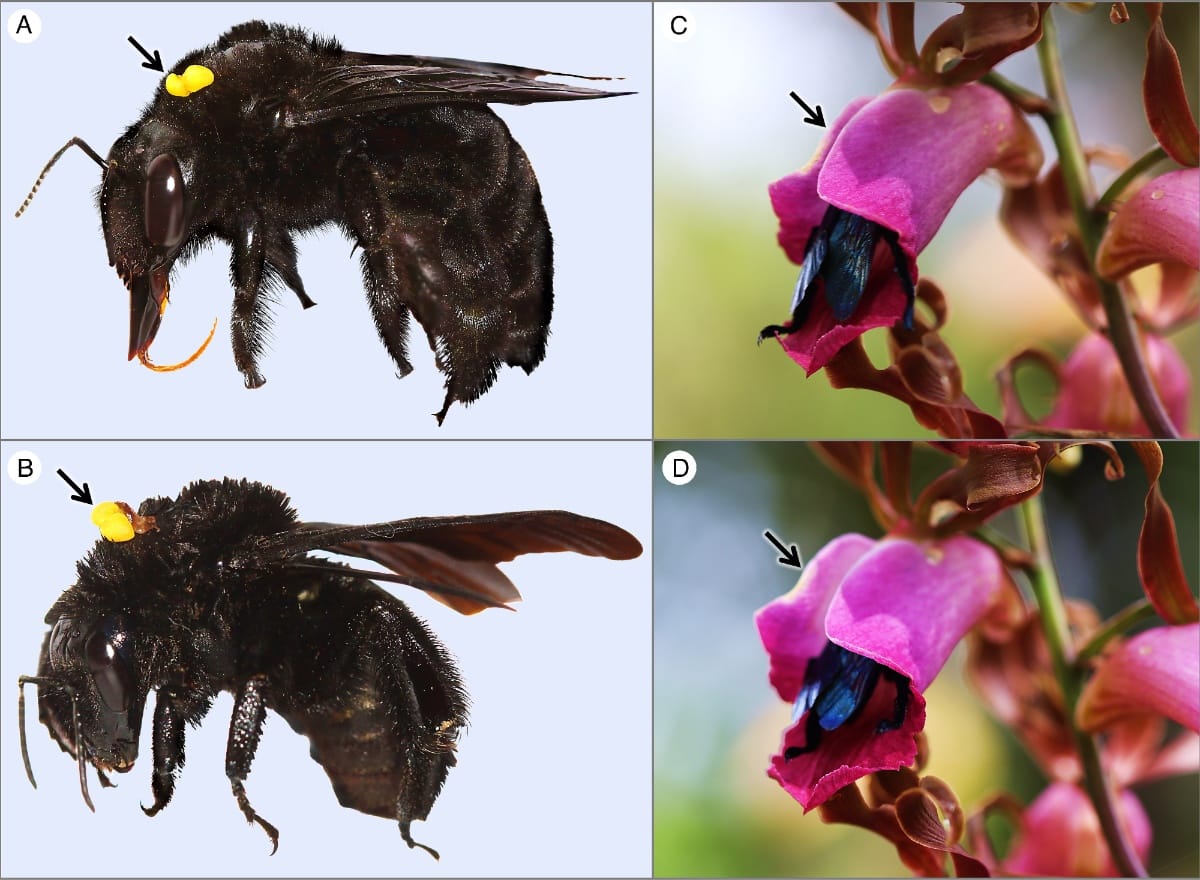
Imagine you are driving down a deserted road and see the storefront of a famous diner. You go in starving, but as soon as you reach the counter, you realise it’s just a cardboard backdrop. But before you can run out, someone sticks a leaflet on your back! That is precisely what the orchid does to bees, particularly Bombus morio and Xylocopa suspecta.
The orchid Galeandra montana has microscopic scent-producing glands on its central petal, called osmophores. It produces a sweet fragrance that attracts bees from afar. As it approaches, the bee sees that funnel-shaped flower with parallel lines at the back, which resemble “nectar guides”, and thinks it’s visiting a Jacaranda flower. The bee lands and enters the flower. Upon realising it has been tricked and that the flower is empty, it leaves frustrated in under five seconds. But the orchid’s plan has already succeeded. While the bee was trying to find nectar, a pollen-packed structure called a “pollinium” was stuck onto its back. When the bee falls for the next trick in another orchid, it will complete the pollination.
Saying that two plants look alike is easy, but proving mimicry requires scientific rigour. To do this, the researchers tested how bees perceive colours. They showed that, to a bee's eyes, the colour of the orchid and that of the Jacaranda are virtually indistinguishable. Furthermore, they flower at precisely the same time of year; the orchid’s season is completely nested within the Jacaranda's flowering period. Finally, both species share a massive common geographical area, about 9% of the whole of South America. In the field, they grow just a few metres apart from one another.
There was only one curious difference the researchers noted: the orchid produces far fewer flowers than the Jacaranda. To compensate for this disadvantage, evolution gave them a helping hand: their flowers are slightly larger and grow on taller stems. It’s like they put up a larger, higher billboard to make up for the lack of volume.
Although floral mimicry has been widely studied in Africa, Europe, and Australia, this is the first formally proven case in South America. This discovery opens the door to an even grander hypothesis: as there are dozens of other orchid species in the genus Galeandra and hundreds of species in the family Bignoniaceae living together in this region, it is very likely that we might be looking at a vast and complex “Impostors’ Club” spread across the Neotropics.
More than just a curiosity, research like this shows that the Cerrado harbours incredibly rich, beautiful, and delicate ecological connections, reinforcing the urgent need to preserve this deeply threatened biome.
READ THE ARTICLE:
Cardoso JCF, Matallana-Puerto CA, Trevizan R, et al.. 2026. Impostors in South America: a new Batesian floral mimicry system involving orchids and Bignoniaceae models. Annals of Botany. https://doi.org/10.1093/aob/mcag096
Portuguese translation by Andressa Luna.
Cover Picture: Galeandra montana. Photo by Carol Farhat (iNaturalist, CC BY-NC 4.0)