
One of the things that annoys me, when I put together this newsletter, is that I'm keenly aware that I'll have read many papers that deserve attention that I'm not going to get round to telling people about. So this week I'm going to try doing something about that.
In connected news, we've had plans about making video for a while, and I've found lots of ways not to make video. This has also annoyed me, but I have a fix for this. I'm simply going to announce here that by the start of October, there'll be three short videos a week about a paper that caught my eye, and I'll leave my subconscious to work on the details of how this is going to happen when so far I've spent around a month failing to do this.
What I think will happen is that instead of anything fancy, I'll take my phone with me into the garden when I have a tea break, and talk about a paper for a minute or two. This will then go up on YouTube, TikTok and, eventually, Instagram. If you're the kind of person that isn't a fan of video, then I'll be taking the transcript, tidying it up and putting out on Mastodon and Bluesky as message threads. If you're the kind of person who rolls their eyes at social media, then I'll be tidying that up and putting it up as a short post on here too.
What I'm hoping is that it'll help highlight papers that might otherwise get missed. The sudden deadline is due to me realising October is coming, and I want to get something out. So next week, there will be another email sharing what we've posted either as a triumph or a defeat, as well as the stories you're sharing on Mastodon and Bluesky, and career postings at the usual time.
Until then, take care,
Alun (webmaster@botany.one)
On Botany One
Sreetama Bhadra: "Once You Stop Really Seeing Something, You Stop Asking What It Is Doing"
Botany One interviews Dr Sreetama Bhadra, an evolutionary biologist fascinated by how plants duplicate, rearrange and reshape their genomes as they adapt and diversify.
Plants Protect Chloroplasts by Slathering Them in Sunscreen
Understanding how plants make this sunscreen could lead to more resilient, higher yielding crops.
Building Nature-Friendly Neighbourhoods
A US study compares residential developments, showing how replacing turfgrass with native plants triples insect diversity and conserves water.
There was also Science Shared, Sudoku Garden commemorated Johnny Appleseed, and Manihot esculenta: Cassava / Yuca was plant of the week. You can also see last week's Week in Botany too.
In AoBC Publications
- Genomic evidence for genetic erosion and strong population subdivision in Amomum hainanense (Zingiberaceae), an endangered island endemic plant from Hainan, China
- Recommendation of Suitable Planting Locations for Hybrid Maize Varieties Based on Graph Collaborative Filtering
- Temperature-dependent seedling development in native and alien herbaceous plants and associations with naturalization extent
News & Views
Reading the Leaves: Decoding the Secret Cellular Language of Plants
Early in her career, HHMI Investigator Keiko Torii figured out how plant cells talk to each other. Three decades later, she’s still listening — and uncovering exactly what they’re saying.
hhmi.org
As Japan swelters, farmers turn to new heat-resistant rice varieties to boost staple crop
New rice varieties give hope that farmers can overcome the climate emergency and a warmer future that threatens harvests.
theguardian.com
Book club 3: The Day of the Triffids
For the third installment of the Belowground Book Club, instead of providing a classic review, I will discuss the most famous fictional plant character: the Triffid. I recently discovered that even many botanists are still not familiar with this book, so I hope that my description will inspire you to read the original novel. Do not worry, I have not spoiled anything about the story.
plantlifebelowground.wordpress.com
Glimmer of hope in fight against kauri dieback
Before vast numbers were felled to build the villas of Ponsonby and Grey Lynn for early European settlers, Auckland's Waitakere Ranges were covered in ancient kauri forests.
rnz.co.nz
The beauty of slag
Maybe it’s not just a brownfield or a wastescape. Maybe it’s a novel ecosystem.
mag.uchicago.edu
Leaky flowers: Why rainy days can make nectar robbing costly for primroses
In the high-altitude meadows of the Himalayas, bumblebees and primroses usually make a good team. The flowers offer nectar, and the bees help move pollen from flower to flower. But rainy weather can make this relationship much more complicated.
fesummaries.wordpress.com
Clever things that plants do: No. 1, Colourful sex
Does the ability of a plant to make decisions indicate true intelligence at work? I leave that to you to decide. But, as far as Mr Cuttings is concerned plants are pretty dam’ good at making the right calls…
plantcuttings.uk
How do we recognize world-class science? Not by the journal it appeared in
What I told early-career researchers about prediction, rigour, failure, priors — and the tyranny of bar graphs.
kamounlab.medium.com
Pastures Past: Fire, forestry and the rise of radiata pine
'This is the pine age and...production of pine timber will go on increasing.'
nzherald.co.nz
Elastic fantastic: The deadly fluid of pitcher plants
Flies check in, but they don’t check out, thanks to liquid laced with stretchy sugars that keep them tangled up
knowablemagazine.org
Science Shared
Three botany papers widely shared on Bluesky this past week were:
1. Plant Peptide Hormones: Three Decades of Discovery and Emerging Paradigms
Torii, K. U. · Plant Physiology · 1 post · 60 likes · 22 reposts on Bluesky
In this review, I highlight selected peptide hormone families, Systemin, PSK, INFLORESCENCE DEFICIENT IN ABSCISSION (IDA)/IDA-LIKES, CLAVATA3/EMBRYO SURROUNDING REGION (CLE), and EPIDERMAL PATTERNING FACTORs (EPF)/EPF-LIKES, and discuss how individual discoveries of the peptides and their cognate receptors have shaped emerging concepts in plant peptide signaling.
Prof. Keiko Torii @keikoutorii.bsky.social · on Bluesky
I am proud to share my No-AI-assisted perspective review "Plant Peptide Hormones: Three Decades of Discovery and Emerging Paradigms" for the Centennial issue of
@plantphys.bsky.social 🌱🍅. It's OA, so everyone can access! 1/
academic.oup.com/plphys/advan...
 View on Bluesky →
2. The end of theory in science?
Pigliucci, M. · The EMBO Reports · 1 post · 52 likes · 16 reposts on Bluesky
Philosopher Ludwig Wittgenstein (1889–1951) famously said that, “whereof one cannot speak, thereof one must be silent.” Although his counsel was given in a specific context, it is actually good general advice that Chris Anderson, Editor‐in‐chief of Wired magazine, would do well to heed. On June 23, 2008, Anderson posted an article on Wired's website, “The end of theory: the data deluge makes the scientific method obsolete,” from which it is perfectly clear that he doesn't understand much about either science or the scientific method.
Discussed on Bluesky by @bjenquist.bsky.social.
3. A TurboID-based proximity labelling method for detecting extracellular protein interactions in plants
Qutb, A. M., Szymansky, C. M., Kettles, G. J. · bioRxiv · 1 post · 15 likes · 12 reposts on Bluesky
Here, we designed and validated a TurboID-based PL strategy for investigating protein interactions in the leaf apoplast using the well-characterised interaction between the Phytophthora infestans elicitor INF1 and the receptor-like protein (RLP) REL in Nicotiana benthamiana. Transient expression of SP-INF1-TurboID (INF1-T) induced a cell death (CD) response comparable to that triggered by native INF1, demonstrating that fusion of the TurboID tag did not impair INF1 recognition by REL.
bioRxiv Plant Bio @biorxiv-plants.bsky.social · on Bluesky
A TurboID-based proximity labelling method for detecting extracellular protein interactions in plants https://www.biorxiv.org/content/10.64898/2026.09.22.753433v1
View on Bluesky →You can see the full list with more details at Science Shared: September 26.
Careers on Bluesky
Please note these are not jobs I am offering. Nor can I help you with any visa requirements. At time of writing there are around 50 other jobs posted at Botany One.
PDRA in Macroalgal Population Genetics // Scotland
www.jobs.ac.uk/job/DTA346/p...
Your research will focus on identifying genetic loci associated with kelp phenotypes such as growth rate, blade morphology and polysaccharide content.
Research Associate: Dune Grasses // Sheffield
www.jobs.ac.uk/job/DTA501/r...
Wet-lab experience of preparing samples for next-generation sequencing, experience of conducting research on dune grasses and experience of combining genomic and trait data is essential.
Senior Research Technician // Warwick
www.jobs.ac.uk/job/DTA698/s...
We are seeking an enthusiastic, hard-working and dedicated individual to support our dynamic lab’s research on various aspects of plant immunity, most notably systemic acquired resistance.
Assistant Teaching Professor in Plant Biology // Cambridge
www.jobs.ac.uk/job/DTB063/a...
This is a teaching-focussed opportunity to engage with undergraduates on inter-departmental courses across the School of Biological Sciences that form part of the Natural Sciences Tripos (NST).
Research Associate in Long-Wavelength Oxygenic Photosynthesis // London
www.jobs.ac.uk/job/DTB051/r...
You will use a combination of interdisciplinary methods to solve the current burning questions in the field.
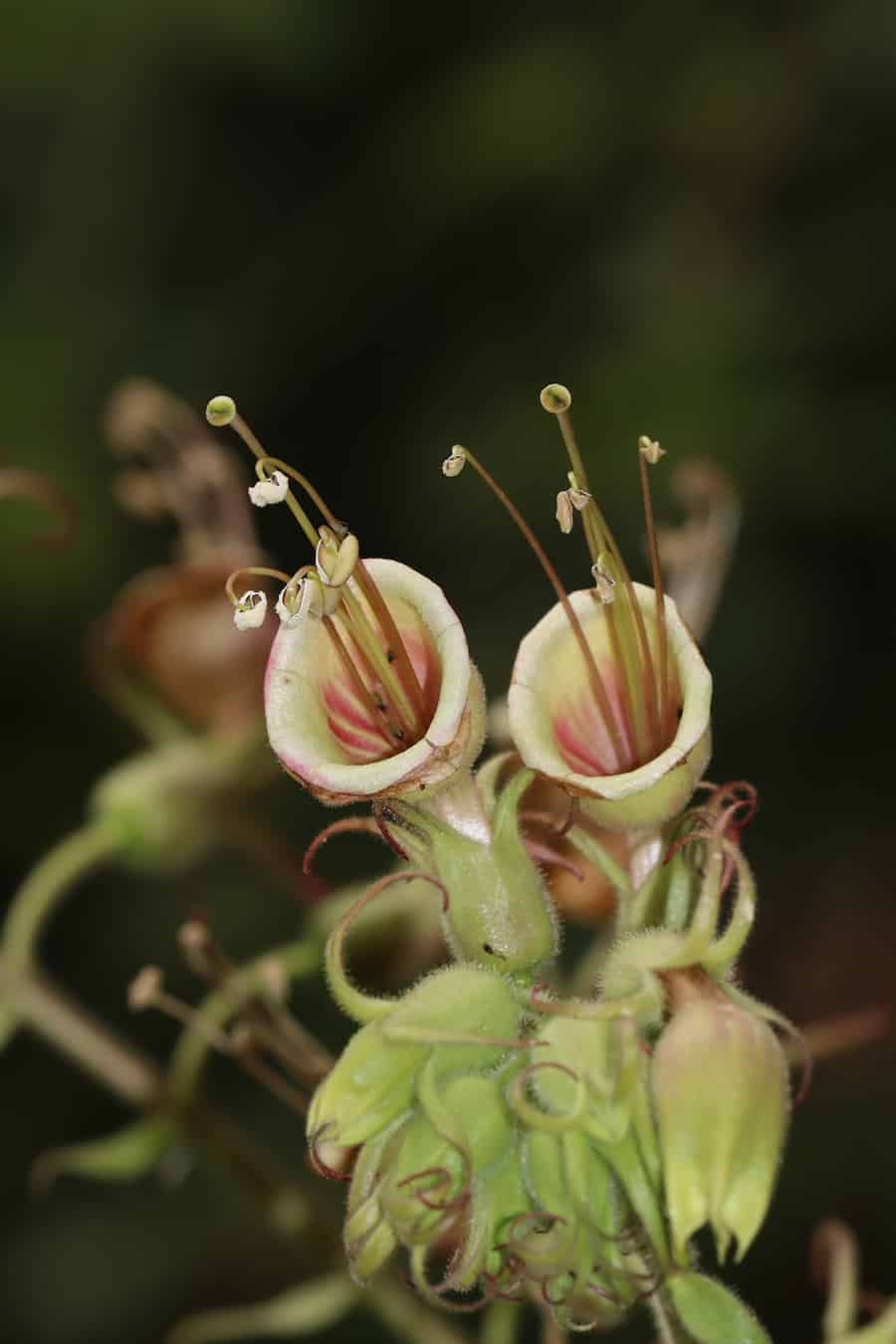
Cover Image: Nicotiana otophora by lillybyrd / iNaturalist CC BY-NC