
Here are the twenty most shared/liked/posted science papers from our survey this week. A quote from Henri Poincaré came to mind this week: "Science is built up of facts, as a house is built of stones; but an accumulation of facts is no more a science than a heap of stones is a house." The second most shared paper this week is old, from 2009, but it seems people need reminding that there's more to science than data. As usual, papers behind a paywall are marked 💰 otherwise they're free to access at time of checking.
How this works
We scan posts by people on the Botany Auto list and pull out the entries with links to papers. Every time a paper gets a post written about it it gets 4 points. It gets 3 points for a repost and 1 point for a like.
We try to add people to the Botany Auto post, if they post about Botany (doesn't have to be links to papers) around 20% of the time or more. The belief is that because the list as a whole shares an interest in plants, it's this material that tends to rise to the top.
If you think you should be on the Botany Auto list, but aren't, please drop a message to @botany.one on Bluesky.
1. Plant Peptide Hormones: Three Decades of Discovery and Emerging Paradigms
Torii, K. U. · Plant Physiology · 1 post · 60 likes · 22 reposts on Bluesky
In this review, I highlight selected peptide hormone families, Systemin, PSK, INFLORESCENCE DEFICIENT IN ABSCISSION (IDA)/IDA-LIKES, CLAVATA3/EMBRYO SURROUNDING REGION (CLE), and EPIDERMAL PATTERNING FACTORs (EPF)/EPF-LIKES, and discuss how individual discoveries of the peptides and their cognate receptors have shaped emerging concepts in plant peptide signaling.
Prof. Keiko Torii @keikoutorii.bsky.social · on Bluesky
I am proud to share my No-AI-assisted perspective review "Plant Peptide Hormones: Three Decades of Discovery and Emerging Paradigms" for the Centennial issue of
@plantphys.bsky.social 🌱🍅. It's OA, so everyone can access! 1/
academic.oup.com/plphys/advan...
 View on Bluesky →
2. The end of theory in science?
Pigliucci, M. · The EMBO Reports · 1 post · 52 likes · 16 reposts on Bluesky
Philosopher Ludwig Wittgenstein (1889–1951) famously said that, “whereof one cannot speak, thereof one must be silent.” Although his counsel was given in a specific context, it is actually good general advice that Chris Anderson, Editor‐in‐chief of Wired magazine, would do well to heed. On June 23, 2008, Anderson posted an article on Wired's website, “The end of theory: the data deluge makes the scientific method obsolete,” from which it is perfectly clear that he doesn't understand much about either science or the scientific method.
Discussed on Bluesky by @bjenquist.bsky.social.
3. A TurboID-based proximity labelling method for detecting extracellular protein interactions in plants
Qutb, A. M., Szymansky, C. M., Kettles, G. J. · bioRxiv · 1 post · 15 likes · 12 reposts on Bluesky
Here, we designed and validated a TurboID-based PL strategy for investigating protein interactions in the leaf apoplast using the well-characterised interaction between the Phytophthora infestans elicitor INF1 and the receptor-like protein (RLP) REL in Nicotiana benthamiana. Transient expression of SP-INF1-TurboID (INF1-T) induced a cell death (CD) response comparable to that triggered by native INF1, demonstrating that fusion of the TurboID tag did not impair INF1 recognition by REL.
bioRxiv Plant Bio @biorxiv-plants.bsky.social · on Bluesky
A TurboID-based proximity labelling method for detecting extracellular protein interactions in plants https://www.biorxiv.org/content/10.64898/2026.09.22.753433v1
View on Bluesky →4. Large‐scale nuclear and plastid phylogenomic analyses inform an updated Angiosperm Phylogeny Group classification: APG V
Byng, J. W. et al. · Journal of Systematics and Evolution · 2 posts · 15 likes · 9 reposts on Bluesky
We present here a revision of the APG classification that considers the extensive recent analyses of hundreds of nuclear and plastid genes for many angiosperm species. Although previous versions of the APG classification were largely based on uniparentally inherited markers (plastid DNA, typically maternally inherited), there has emerged since APG IV extensive evidence of widespread hybridization and inheritance of ancestral polymorphisms.
Botanical Society of Britain and Ireland (BSBI) @bsbibotany.bsky.social · on Bluesky
The 5th iteration of the Angiosperm Phylogeny Group (APG V) classification has been published.
It's #OpenAccess, so check it out here: onlinelibrary.wiley.com/doi/10.1111/...
5. Effects of invertebrates and local environment on decomposition rates of dead plant and animal biomass along an elevation gradient
Guo, C. et al. · Ecological Monographs · 1 post · 15 likes · 9 reposts on Bluesky
Here, we quantified how elevation, as a proxy for macroclimate, and local conditions (microclimate, vegetation, soil) interactively affect decomposition rates and invertebrate effects across necromass types. We conducted a comprehensive decomposition experiment including five types of plant or animal necromass (carrion, dung, leaves, beech wood, and spruce wood) along an elevation gradient (600–2000 m above sea level [asl]) in the German Alps.
Rupert Seidl @rupertseidl.bsky.social · on Bluesky
Is there generality in decomposition across substrates? We tested this in an experiment across elevation, studying carrion, dung, leaves & wood. We found idiosynchratic patterns of decomp, with local conditions being more important than macroclimate @sebseibold.bsky.social doi.org/10.1002/ecm....
 View on Bluesky →
6. Maintenance of quantitative genetic variation in regions of restricted recombination via associative overdominance
Zhao, Y. et al. · bioRxiv · 1 post · 17 likes · 7 reposts on Bluesky
Here we show that weakly selected QTLs linked to genomic regions exhibiting AOD can elevate VA above what is expected in the absence of unconditionally deleterious mutations.
Tom Booker @tombooker.bsky.social · on Bluesky
I’m keen to share this preprint. There is growing evidence that associative overdominance leads to the maintenance heterozygosity and we wondered how this would affect variance for traits under stabilizing selection:
www.biorxiv.org/content/10.6...
7. Genetically engineered crop adoption support yields and cultivation under climate change 💰
Dong, C. Y. et al. · Nature Climate Change · 1 post · 16 likes · 7 reposts on Bluesky
Here we conduct a US national-level spatial analysis of the impacts of genetically engineered (GE) crop adoption over the past four decades to show that GE adoption is broadly associated with yield benefits. We show higher yields and lower yield volatility for corn and soybean, with partial attenuation of adverse climate effects on yield, and more modest effects for upland cotton, implying that GE development and associated forces have improved resilience to climate-induced stress.
PlantEvolution 🌱🌾 @plantevolution.bsky.social · on Bluesky
Conventional #GMO crops have unexpected benefits in the face of climate change: reduced yield volatility, fewer climate related losses & even slowing the northward shift of US corn & soybean production.
#climatecatastrophe
www.nature.com/articles/s41...
 View on Bluesky →
8. A tale of 2 realms: spatial processing of the maize phytocytokine Zip1
Khan, M. · Plant Physiology · 1 post · 13 likes · 7 reposts on Bluesky
Plants rely on sophisticated cell-to-cell communication to perceive environmental changes and coordinate appropriate responses. Among the signalling molecules involved in these processes are phytocytokines, a diverse group of small, plant-derived peptides that regulate growth, development, and stress responses.
Maurice König @maukoe.bsky.social · on Bluesky
Very happy to see our Zip1 work highlighted in Plant Physiology 🌽
Sequential proteolysis across compartments can shape where, when and in which form peptide signals act.
Thanks to @mamoonakhan.bsky.social for the insightful highlight!
academic.oup.com/plphys/artic...
9. A noncoding SNP in ELF3 alters ELF3β expression and confers adaptation of Arabidopsis to a continental climate
Buckley, C. R. et al. · Plant Physiology · 1 post · 13 likes · 6 reposts on Bluesky
Plant circadian clocks govern the timing of physiological and developmental processes that determine growth, reproduction, and seasonal phenology. As a result, natural variation in clock genes can directly influence local adaptation, but the components of the clock that have already been targeted by selection are unclear. We found that naturally occurring variation in the core clock gene EARLY FLOWERING 3 (ELF3) determines circadian period length and has been selected for in hot, seasonal climates.
Plant Physiology @plantphys.bsky.social · on Bluesky
A noncoding SNP in ELF3 alters ELF3β expression and confers adaptation of Arabidopsis to a continental climate (Christopher R Buckley , Anna Philippova , Alexandre Fournier-Level , Michael J Haydon) doi.org/10.1093/plph... #PlantScience @aspbofficial
View on Bluesky →10. Genetic mechanisms underlying temperature-mediated changes in flower development
Laitinen, R. A. E., Elomaa, P. · Journal of Experimental Botany · 1 post · 12 likes · 6 reposts on Bluesky
This review gathers current knowledge on the temperature effects of floral traits and explores the genes and mechanisms underlying the temperature-mediated changes in flower development. We highlight trait-specific responses and consider the adaptive consequences of temperature-mediated trait variation.
Journal of Experimental Botany @jxbotany.bsky.social · on Bluesky
🌸🌡️ DARWIN REVIEW 🌡️🌸
Laitinen & Elomaa review current knowledge on changing temperatures on genetic regulation of flower development traits and their plasticity, and their implications for plant adaptation and resilience.
🔗 doi.org/10.1093/jxb/...
#PlantScience 🧪
 View on Bluesky →
11. Biosensors reveal distinct cytosolic pH and redox dynamics across seedlings in response to danger signals and pathogen infection
Mor, E. et al. · Journal of Experimental Botany · 1 post · 11 likes · 6 reposts on Bluesky
Using genetically encoded biosensors (GEBs), we monitored cytosolic pH and redox dynamics across whole Arabidopsis seedlings with spatiotemporal resolution. Global treatments with diverse danger signals first induced cytosolic acidification and oxidation in roots, followed by petioles and, later, the hypocotyl, revealing organ-specific responsiveness and a bidirectional response gradient. By contrast, Pseudomonas syringae pv. tomato (Pto) DC3000 induced sustained cytosolic alkalinization and suppressed redox responses in inoculated shoots, even when co-treated with PAMPs.
12. Single cell transcriptome reveals the molecular pathways of MADS-box genes in maize ovule development 💰
Li, Y. et al. · The Plant Cell · 1 post · 8 likes · 7 reposts on Bluesky
Here, single-cell transcriptomic analysis revealed that ZmMADS8/14 regulate ovule cell specialization and that branch-like structures are associated with defective floral meristem termination and enhanced proliferation of ovule epidermal cells in the mads8;14 mutant.
13. Biomolecular Condensates in Plant Stress and Development: Recent Advances and Emerging Concepts
Maruri-López, I. et al. · Journal of Experimental Botany · 1 post · 10 likes · 6 reposts on Bluesky
Here, we synthesize current knowledge of condensate functions in plant development and stress responses, focusing on Arabidopsis thaliana, where mechanistic insights are most advanced.
14. The multilayered cuticle underlying structural coloration in red algae shares features with the metazoan extracellular matrix 💰
Philippe, G. et al. · Proceedings of the National Academy of Sciences · 1 post · 9 likes · 6 reposts on Bluesky
Here, we use integrated genomic, transcriptomic, proteomic, and metabolomic approaches together with analytical profiling of carbohydrates to determine the composition of the multilayered cuticle in the red alga Chondrus crispus and assess its evolutionary conservation.
15. Coupled decline in growth and fine‐branching signals the onset of drought‐induced European beech mortality
Schmied, G. et al. · New Phytologist · 1 post · 8 likes · 6 reposts on Bluesky
Severe and recurrent droughts have caused widespread canopy decline and mortality in European forests. Drought‐induced mortality occurs when structural damage and physiological dysfunction impair a tree's ability to recover, yet it remains unclear when trees transition from reversible stress to irreversible vitality loss at the whole‐tree level. We combined detailed information on fine‐branching architecture derived from terrestrial laser scanning with radial growth data from 174 trees to assess how structural and growth decline relate to drought‐induced mortality in European beech ( Fagus sylvatica ).
16. CERK1-mediated phosphorylation of nitrilases activates auxin biosynthesis and promotes resistance to Botrytis cinerea 💰
Zheng, J. et al. · The Plant Cell · 1 post · 12 likes · 4 reposts on Bluesky
Here, we identified the nitrilases NIT1, NIT2, and NIT3, as key components of auxin biosynthesis during infection. Upon chitin perception, CERK1 associates with and phosphorylates nitrilases to stimulate the conversion of indole-3-acetonitrile (IAN) into indole-3-acetic acid (IAA), thereby activating auxin signaling and promoting resistance to B. cinerea.
17. Structural Evolution of LEAFY Reveals DNA-Mediated Cooperativity and Dimerization Shifts at the Water-to-Land Transition 💰
Verhage, L. et al. · Molecular Plant · 1 post · 8 likes · 5 reposts on Bluesky
Here, we combine experimental structural determination and biochemical assays to reveal how LFY’s dimerization and DNA-binding preferences shifted during the water-to-land transition. We present crystal structures of the LFY DNA-binding domain (DBD) from the hornwort Nothoceros aenigmaticus and the alga Interfilum paradoxumbound to DNA, demonstrating two distinct dimerization mechanisms: one mediated by direct protein-protein interactions and another driven by DNA-mediated cooperativity.
18. The ZmBBM2-BBIP1-RCC1-4 module enhances callus growth and genetic transformation efficiency in maize
Fu, Q. et al. · Plant Physiology · 1 post · 7 likes · 5 reposts on Bluesky
BABY BOOM (BBM) encodes an AP2 transcription factor belonging to the AINTEGUMENTA-LIKE (AIL) subfamily and is widely recognized as a master regulator of embryogenesis. In maize, ectopic expression of ZmBBM markedly improves genetic transformation efficiency across multiple inbred lines. Similarly, overexpression of another maize BBM homolog, ZmBBM2, promotes rapid callus proliferation and significantly enhances transformation efficiency in elite germplasm.
19. Nondefense functions of plant specialized metabolites: ecological phenomena, molecular mechanisms, and evolutionary implications
Carley, L. N. · New Phytologist · 1 post · 7 likes · 5 reposts on Bluesky
Frameworks for studying plant chemistry often assume that defense chemical evolution is shaped primarily by herbivores. However, there is mounting evidence that defense chemical variation also influences a number of nondefense functions and interactions. These correlated effects are widespread and can arise from a diversity of underlying molecular mechanisms, ranging from pleiotropy to shared regulation to correlated past natural selection.
20. Make it so: Rapid and affordable plasmid sequencing on ONT platforms with PICARD-seq
Wolters, R. et al. · bioRxiv · 1 post · 12 likes · 3 reposts on Bluesky
Plasmid construction underpins molecular biology and synthetic biology, yet validation is often limited to the inserted fragment rather than the whole plasmid, and around a third of laboratory-made plasmids carry sequence errors that can affect function. Sanger sequencing scales poorly across whole plasmids, while short-read approaches cannot resolve the repeated DNA parts, such as promoters, that are common in synthetic constructs. We present PICARD-seq, a rapid nanopore-based protocol that uses off-the-shelf Tn5 rapid barcoding reagents and a MinION to sequence pools of whole plasmids in under a day, and we systematically benchmark the computational pipelines available for analysing the resulting data.
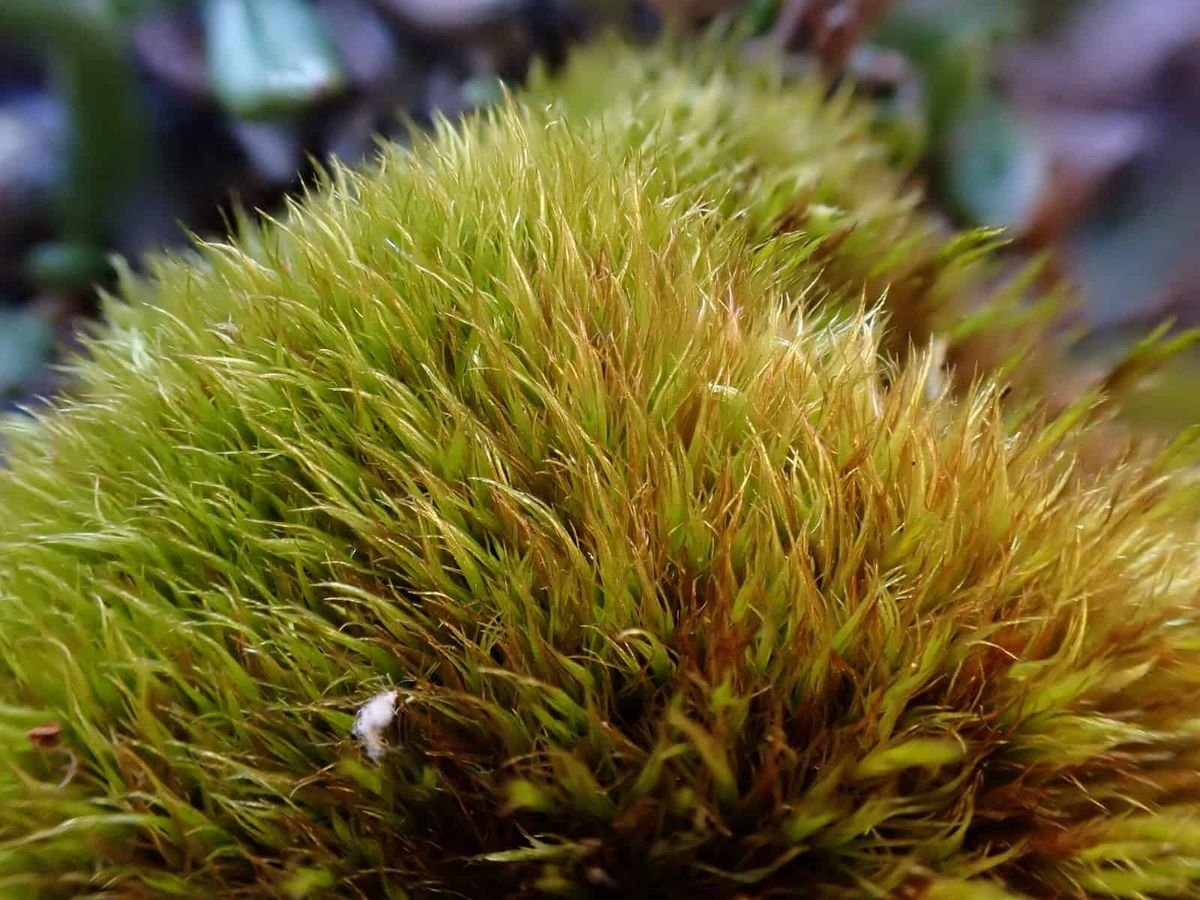
Cover image: Paraleucobryum enerve by Stefan Gey / iNaturalist CC BY-NC