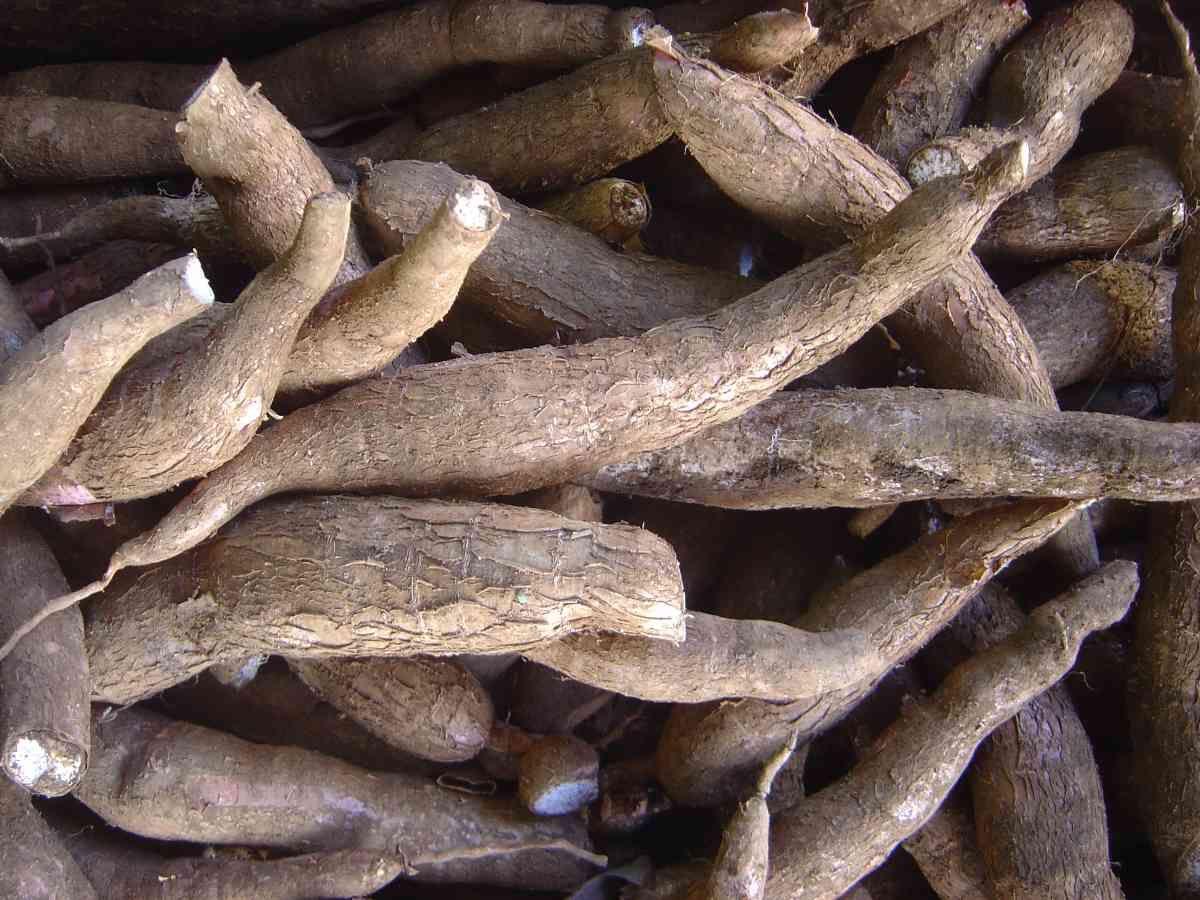

Last week, I wrote about pokeweed, which got me thinking about other plants we eat that are poisonous when not properly cooked. The first plant that came to mind is cassava, also known as yuca or manioc, which is native to South America but widely cultivated in tropical and subtropical countries for its starchy tuberous roots. In fact, it is the world's "most important non-grain food crop", feeding over 800 million people worldwide. It is also commonly used as animal feed.
What's Special About Cassava?
Cassava is a perennial species that belongs to the Euphorbiaceae family. It is monoecious, with separate female and male flowers on the same plant.
Unlike potatoes, cassava's starchy, tuberous roots are not true tubers. Rather, they are storage roots that cannot be used for vegetative propagation. Instead, cassava is clonally propagated from stem cuttings called stakes. The storage roots that develop from these stakes are functionally and developmentally different from fibrous roots. They are mostly made up of starch, with little protein.
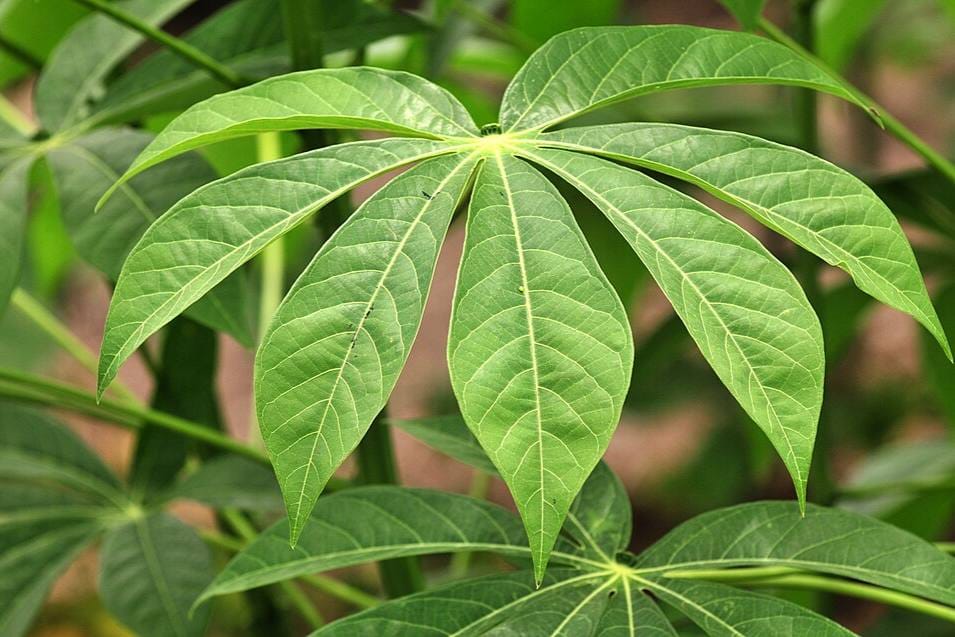
Every part of cassava, except the seed, accumulates cyanogenic glucosides in the forms of linamarin and lotaustralin. These toxic compounds are mainly produced in the leaves, where accumulation is highest, and then transported to the tuberous roots. The cyanide is released when plant tissue is damaged, such as by herbivores who take an interest.
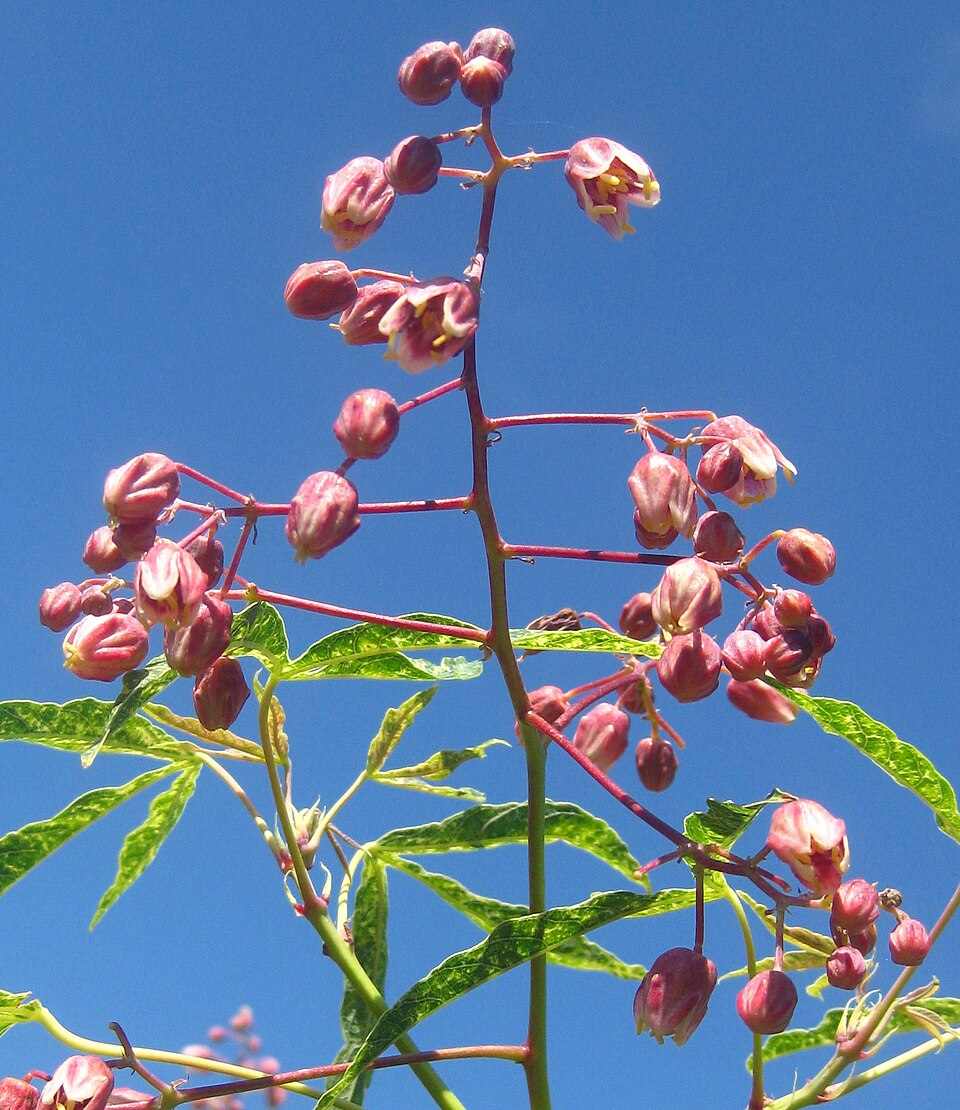
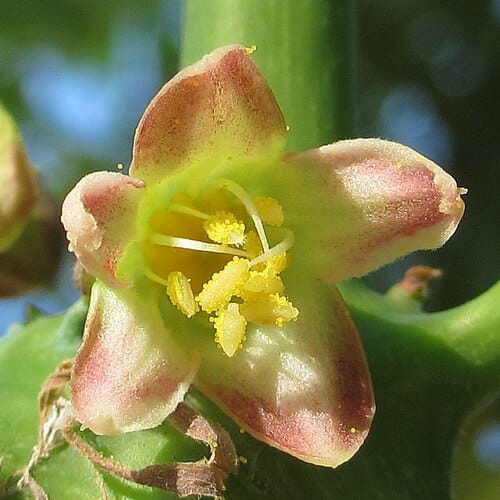
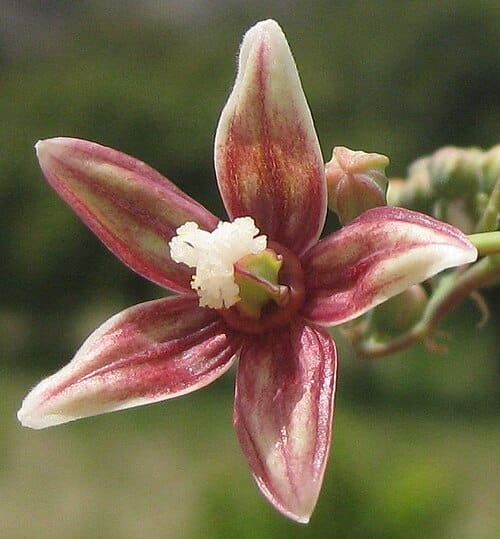
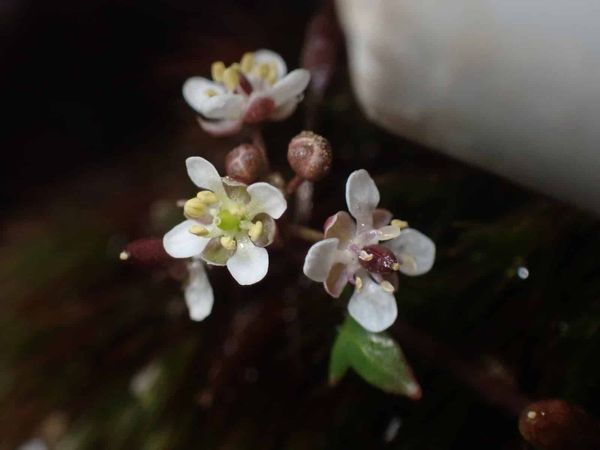
On the left, a cassava inflorescence (Manihot esculenta) is seen in the early afternoon, when male flowers begin to open. In the middle, an open male cassava flower. On the right, a female cassava flower. Images by Ton Rulkens from Mozambique CC BY-SA 2.0 via Wikimedia (left, middle, right).
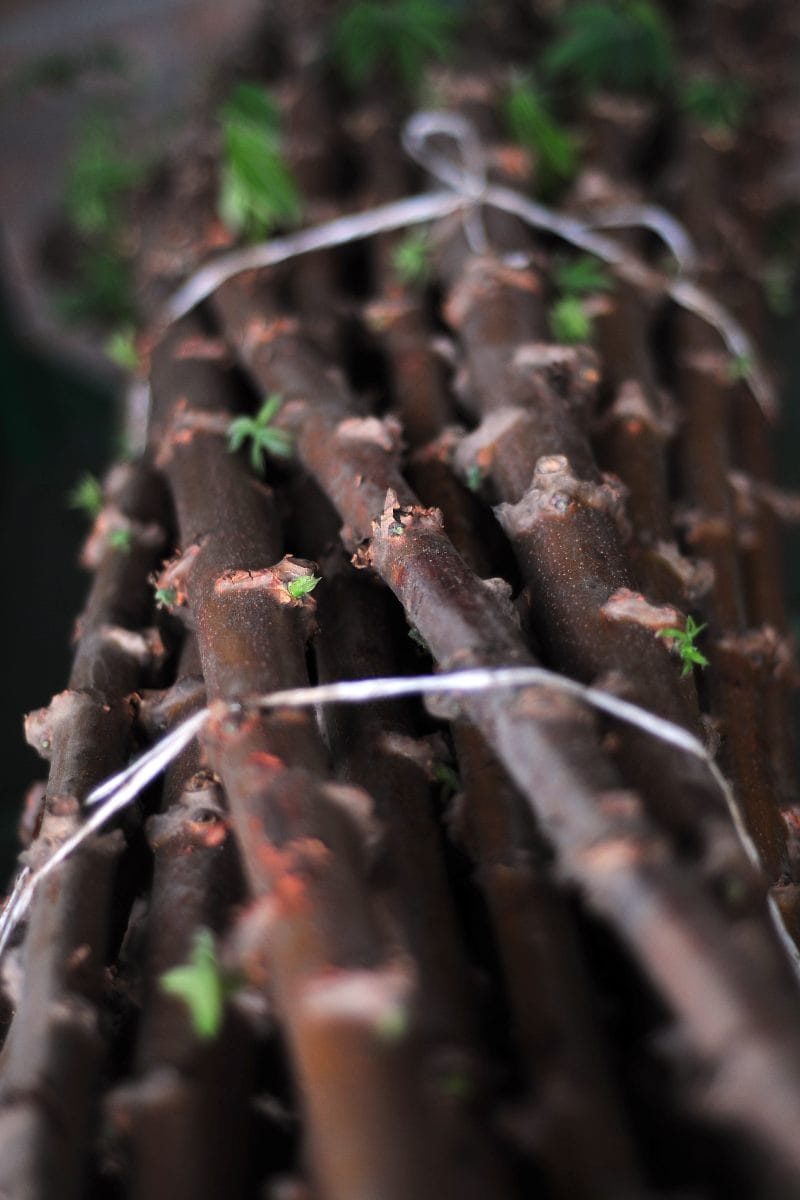
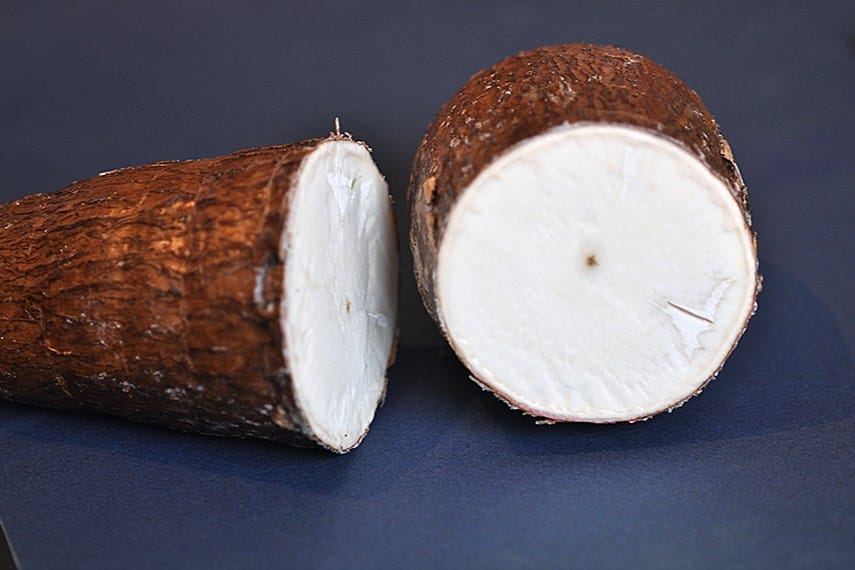
Left: Farmers vegetatively propagate cassava from stem sections called stakes, seen bundled here. Right: A cassava storage root shown in cross section. Storage roots are up to 90% starch by dry weight. (Left: Neil Palmer (CIAT) CC BY-SA 2.0 via Wikimedia; Right: Amada44 via Wikimedia CC BY 3.0).
The Route to Domestication
Cassava was domesticated from its wild progenitor M. esculenta ssp. flabellifolia over 6000 years ago in Brazil, where over 4000 varieties are found. Early European sailors eventually brought the crop from South America to Africa in the 16th century, and from there, cassava was brought to Asia through the Columbian Exchange. Its worldwide spread was aided by its ability to grow well in marginal conditions, such as drought and degraded or acidic soils.
Today, the crop is widely cultivated between 30°N and 30°S from sea level to 1800 m. It is an important staple crop, representing the third largest dietary source of starch, after rice and maize. Part of the appeal of the crop, is that tubers can be harvested as needed. Although in commercial production, farmers harvest annually.
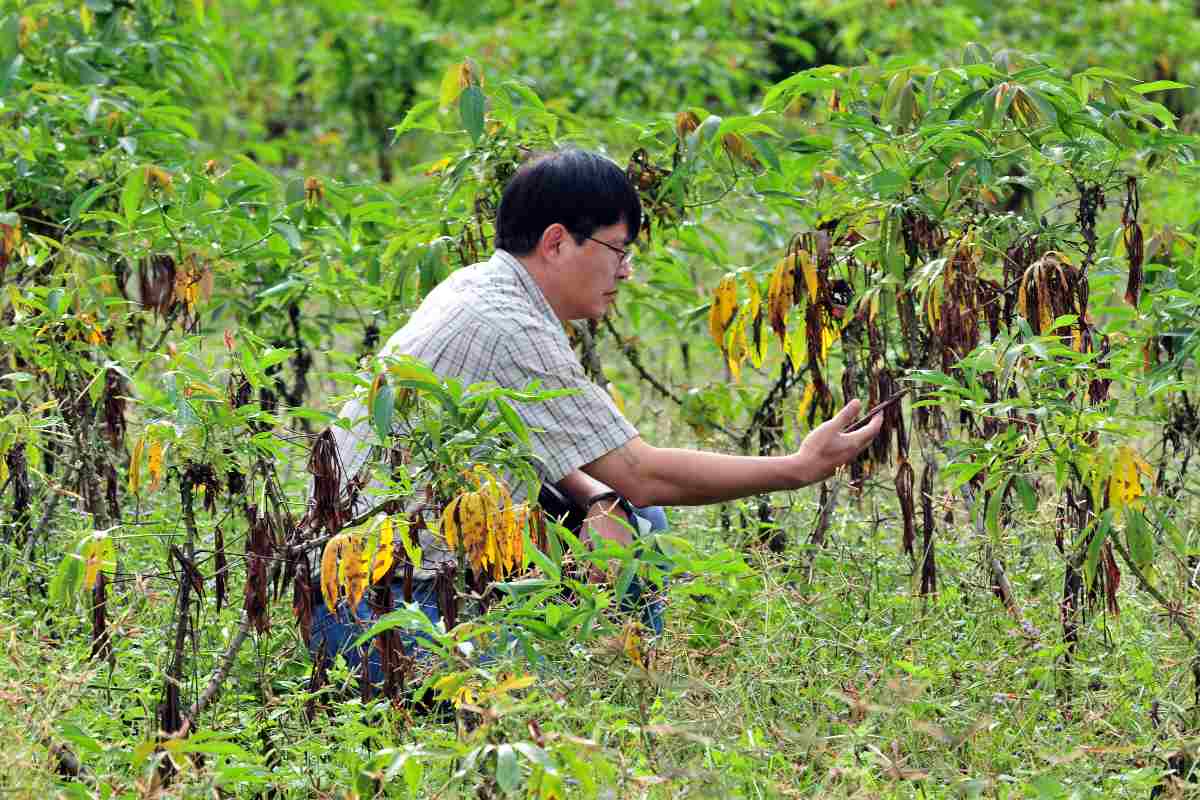
To improve cultivation, scientists are trying to mine the genes of wild cassava, including its parent M. esculenta ssp. flabellifolia. Researchers are looking to lower cyanide content, increase protein, and to improve resistance to diseases such as cassava mosaic disease, cassava brown streak disease and cassava bacterial blight.
Heat to Eat
Like pokeweed, cassava must be properly heated to be edible. Cassava roots must be peeled, then boiled, or heat processed, to remove the risk of cyanide poisoning. How extensively the cassava needs to be treated depends on whether the variety is bitter or sweet. The sweet varieties have less cyanide and are therefore easier to process and safely eat, by peeling and cooking thoroughly. Bitter varieties typically must be peeled, grated, extensively soaked and then thoroughly cooked.
Common Culinary Uses
Cassava's tubererous roots are a versatile dietary starch. Once properly treated, they can be cooked like potato in many different ways: baked, boiled, fried or grilled. Cassava flour is commonly used to make breads, other baked goods or noodles. Byproducts such as tapioca, including the pearls found in boba tea, are a tasty treat, while arrowroot is an effective thickener. In many cultures, cassava leaves are also consumed after extensive boiling.
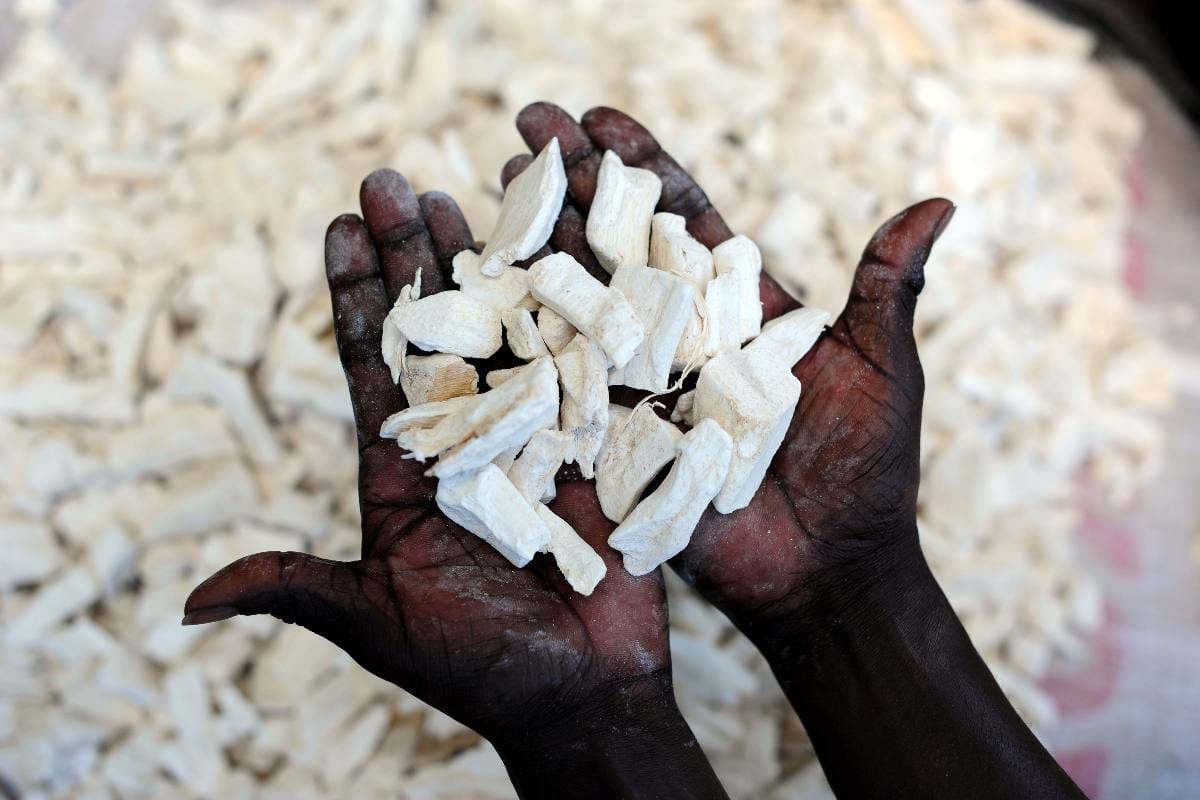
Cover image: Cassava tubers on sale on Réunion Island / David Monniaux / Wikimedia / CC BY-SA 3.0
LEARN MORE:
Carluccio, A., David, L., Claußen, J., Sulley, M., Adeoti, S., Abdulsalam, T., Gerth, S., Zeeman, S., Gisel, A., and Stavolone, L.(2022) Set up from the beginning: The origin and early development of cassava storage roots. Plant, Cell & Environment, 45(6), pp. 1779-1795. Available at: https://doi.org/10.1111/pce.14300.
Bredeson, J., Lyons, J., Prochnik, S., Wu, G., Ha, C., Edsinger-Gonzales, E., Grimwood, J., Schmutz, J., Rabbi, I., Egesi, C., Nauluvula, P., Lebot, V., Ndunguru, J., Mkamilo, G., Bart, R., Setter, T., Gleadow, R., Kulakow, P., Ferguson, M., Rounsley, S., and Rokhsar, D. (2016) Sequencing wild and cultivated cassava and related species reveals extensive interspecific hybridization and genetic diversity. Nature Biotechnology, 34(5), pp. 562-570. Available at: https://doi.org/10.1038/nbt.3535.Ceballos, H., Iglesias, C., Pérez, J., and Dixon, A. (2004) Cassava breeding: opportunities and challenges. Plant Molecular Biology, 56(4), pp. 503-516. Available at: https://doi.org/10.1007/s11103-004-5010-5.
White, W., Arias-Garzon, D., McMahon, J., and Sayre, R. (1998) Cyanogenesis in Cassava1. Plant Physiology, 116(4), pp. 1219-1225. Available at: https://doi.org/10.1104/pp.116.4.1219.
https://www.cfs.gov.hk/english/multimedia/multimedia_pub/multimedia_pub_fsf_19_01.html
https://www.canr.msu.edu/news/plant-science-at-the-dinner-table-cassava


.jpg?ref=botany.one)

.jpg)

.jpg)
.jpg)

