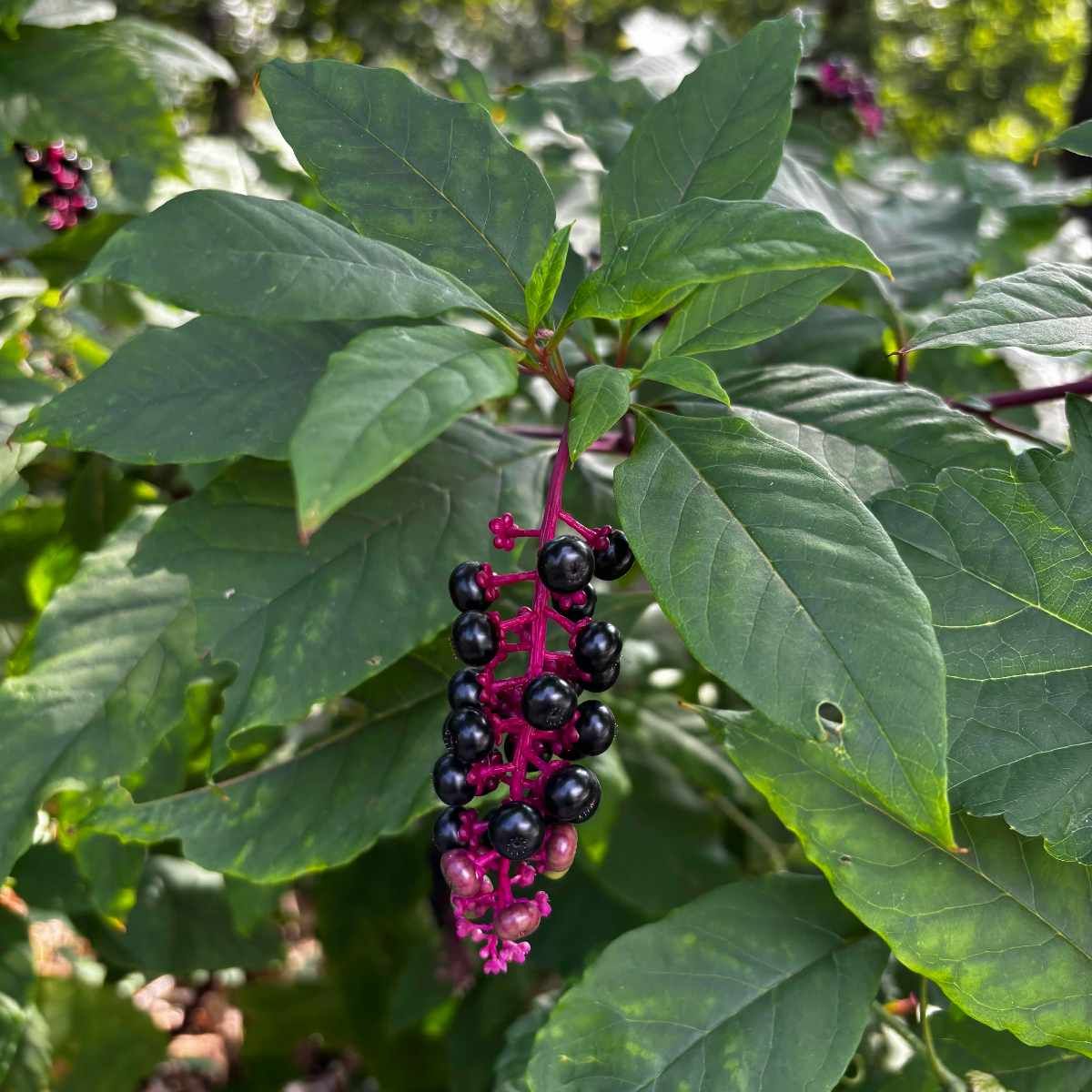

Last week, I talked about my adventures foraging for pawpaws. This week, I'd like to introduce another traditionally foraged species but one that I'm not planning to eat anytime soon, even though I know where plenty of it is: the highly toxic pokeweed.
Beautiful but Toxic
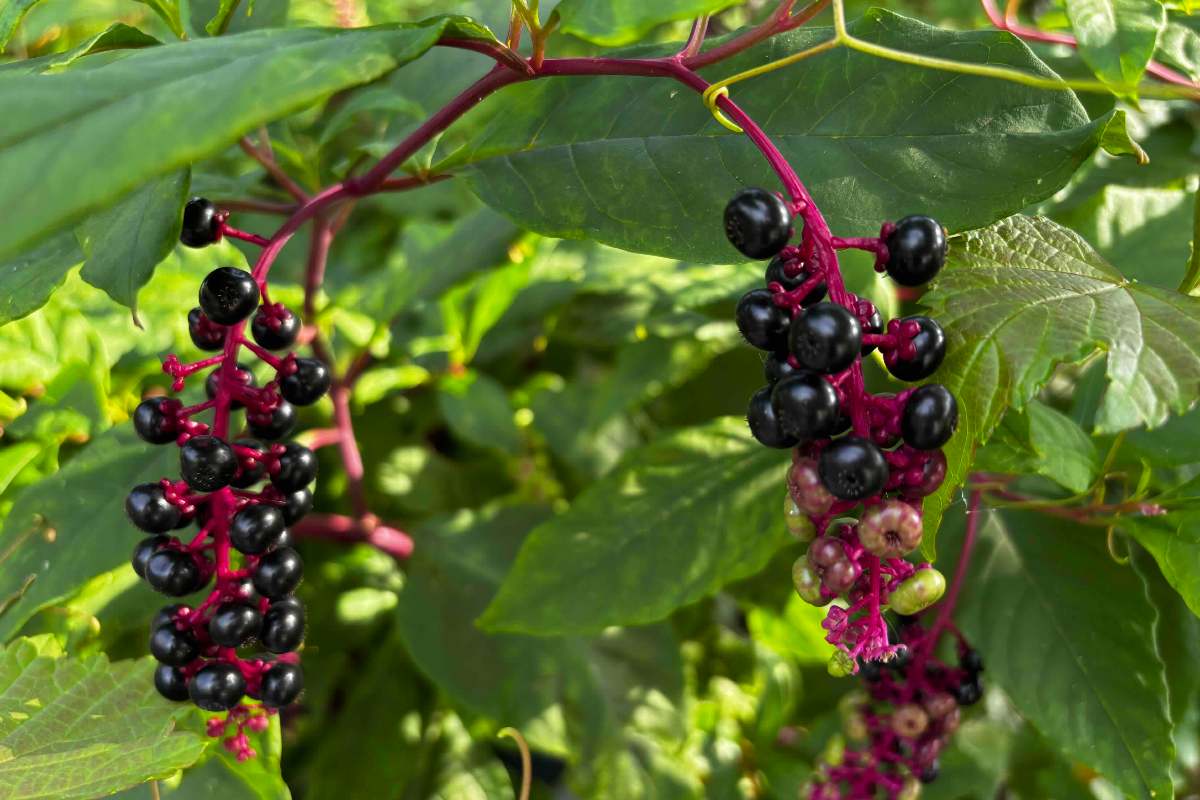
Pokeweed, also known as dragonberry or inkberry, is a poisonous, perennial species native to the eastern half of the United States. It is a large herbaceous species that grows up to 3 m tall from a white, fleshy taproot each season. It has simple leaves and lovely purple-hued stems. The species produces clusters of green berries that mature to purple-black from July through October, and these are an excellent source of food for songbirds and some small mammals such as raccoons foxes, and opossum – but not for us humans.
The leaves, fruits, stems and especially root are all highly poisonous to us, with their toxicity increasing with maturity. Not only are the toxins often fatal when accidentally ingested (they cause respiratory failure), but the toxins are also mutagenic and can lead to cancer and birth defects in those who survive. Indeed, the plant is so toxic that you don't even need to ingest it to feel its effects – you just have to touch it.
Toxic But Edible
Young stems and leaves that develop during spring and early summer, while still toxic, can be edible if properly processed. Knowledge of how to prepare pokeweed comes from American Indigenous peoples, who also used the plant for medicinal purposes. Preparing pokeweed for safe eating involves boiling the leaves at least twice in fresh water, making sure to replace the water after each boiling. This effectively removes the toxins because the toxins are water soluble. The leaves can then be prepared with cream or butter like other greens.
Pokeweed, or 'poke sallet', is still traditionally eaten in Appalachia, a unique cultural region of the United States, where it has been foraged as a survival food for generations. Historically, poke sallet was also foraged by enslaved African Americans and their descendants throughout the American South as a subsistence food. Pokeweed happens to be one of the first spring vegetables, making it a desirable and nutritious addition to the table, no matter how much work is needed to prepare it.
Alexis Nikole Nelson (aka the #BlackForager) has an excellent summary of the plant and how to cook it.
Where Is Pokeweed Found?
The plant is often found along edge habitats, like roadways, as well as in pastures. And because seeds are spread by the birds that eat them, pokeweed easily pops up in new places. During winter, the plant dies back to its very poisonous roots, and in spring the process of renewal and regrowth starts again with new young shoots. And perhaps, during spring you might find the plant on a plate in the kitchen. I'm just not brave enough to find it in mine.
Cover image: Pokeweed. Image copyright of Sarah Covshoff.