
To me, the best kind of walk is the foraging kind. Whether I'm walking in the mountains, along a river or in the city, you are likely to find me reaching into trees and shrubs for a tasty treat. Many of these are easily recognizable fruits, like figs, wild strawberries or blackberries, plums and pomegranates. Sometimes, I get lucky, and a fellow forager introduces me to something new, like chokecherry or loquat. But this week, I went foraging for something a little more niche – an undomesticated fruit called the pawpaw that most people have never heard of.
What's a pawpaw?
This North American fruit is a member of the custard apple family (Annonaceae), and its genus (Asimina) is the only temperate one in the family. These small trees or shrubs, native to eastern North America, bear edible fruit that taste of custard and have a mild banana-like flavour. They have been enjoyed for centuries as a staple of the Native American diet, either fresh when in season, or dried into fruit leather during winter. Pawpaws are not domesticated, and so to enjoy a pawpaw, you need to forage one yourself, usually in September. But first you need to find one.
Where to find a pawpaw?
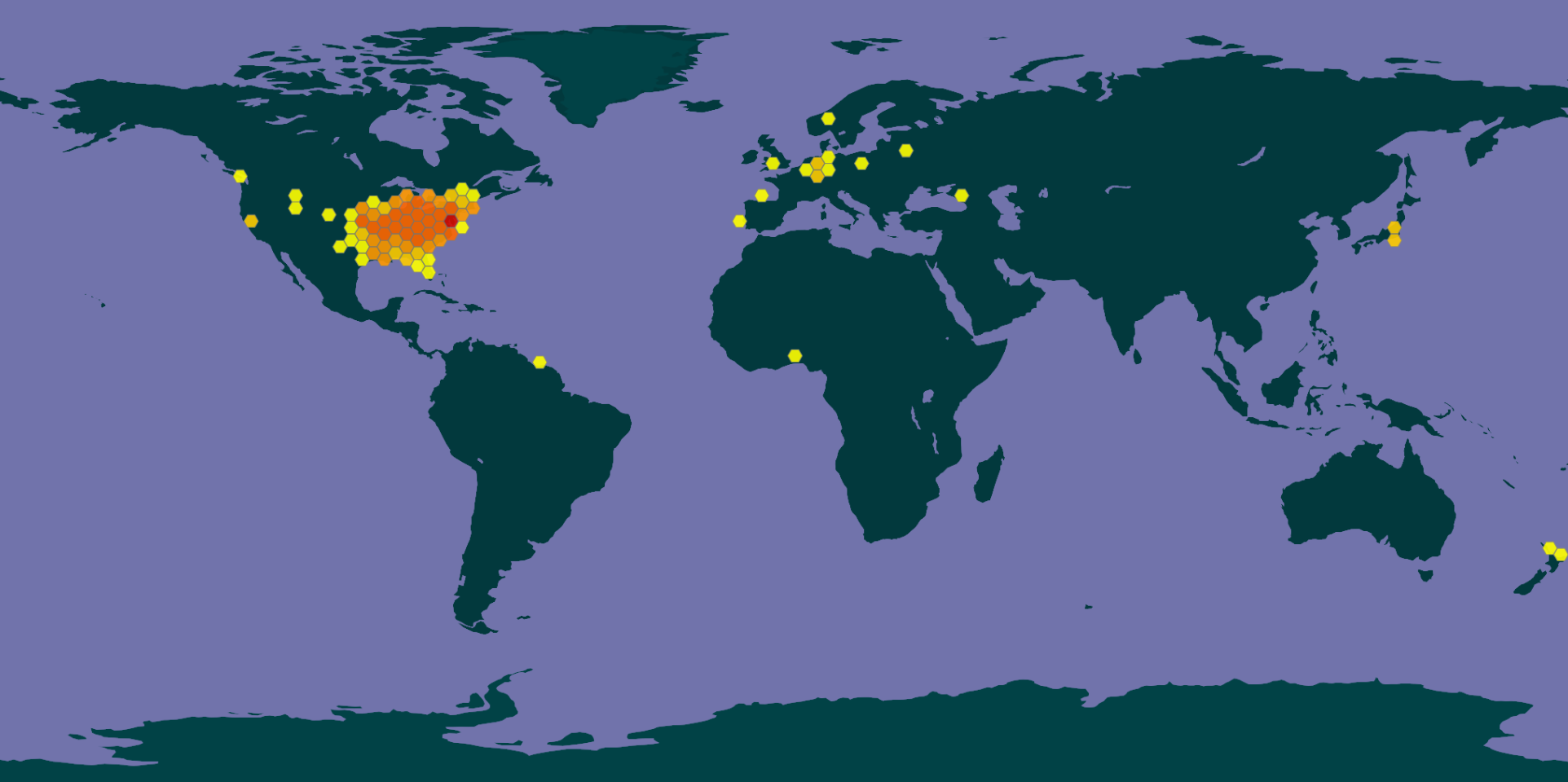
There are 11 species of pawpaw native to the 26 eastern US states and extreme southern Ontario, Canada, as can be seen in the map below. But while they are native to the area I'm living in, finding them can be difficult because people who know about pawpaws really like them and keep specific locations secret. I was given the nebulous advise that they grow along water ways and to find a riverside trail.
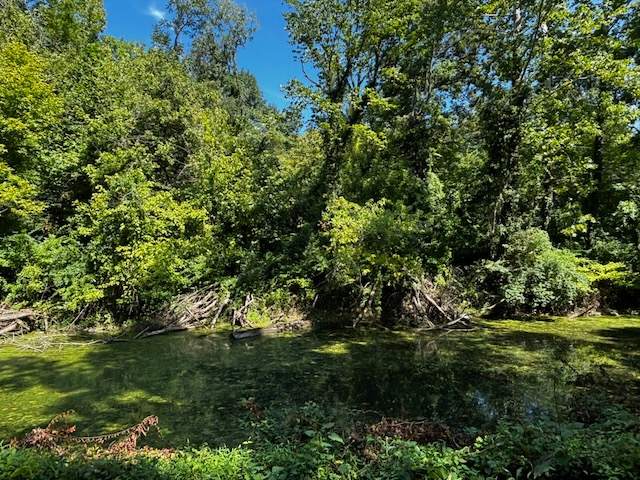
Into the woods we go...
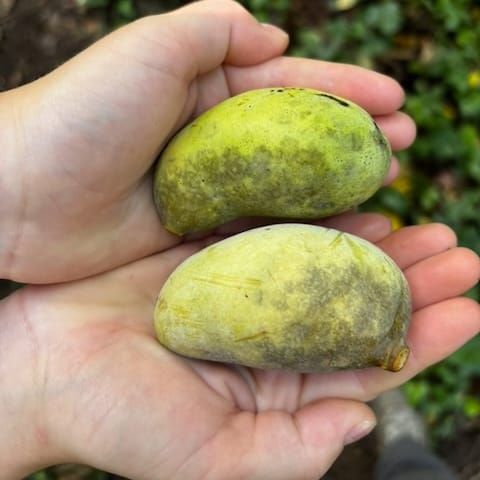
And so, off I went on a hunt for pawpaws. No good foraging expedition is complete without children, who bring a good mix of enthusiasm and despair when looking for something. So I brought a few of those, snacks and some water. The children were instructed to look for fruits shaped like small, green, slightly bean-shaped mangoes, hanging from slender-trunked, shortish trees (pawpaws grow 2-12 m tall).
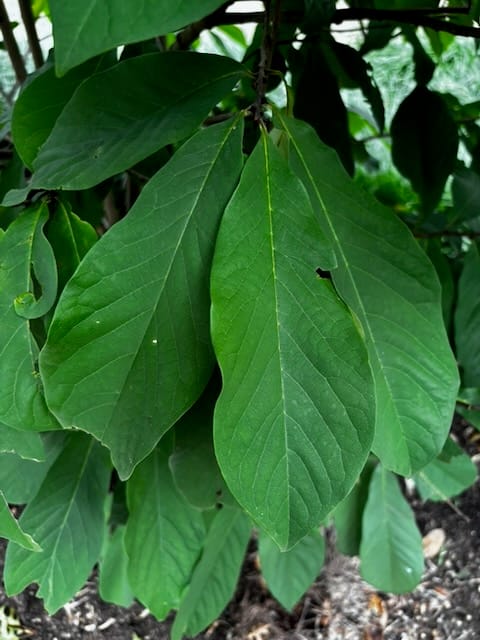
The first hour was a nice walk, albeit disappointing in the pawpaw department. Lots of trees, easily recognizable by their large, obovate leaves and slender trunk, but no fruit. The children were disappointed, but given it would take at least an hour to walk back, we decided to turn around before running out of snacks.
Yet – lo and behold – as soon as we turned back, one of the children decided to climb a bench by the water (obviously) and looked up to find a pawpaw fruit hanging from a tree! Much excitement followed. We realized this tree marked the head of a narrow, riverside towpath and decided to follow it into the woods.
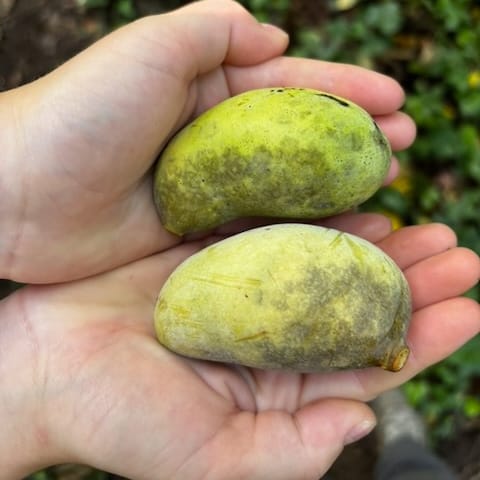
And what a find!
Tree after tree with fruits to be had. Because they are so slender and short, pawpaw trees cannot be climbed, even by children, but they can be gently shaken to release the fruit. We gently shook the trees and collected our bounty, careful to avoid any poison ivy lurking about.
The fruits of our labours
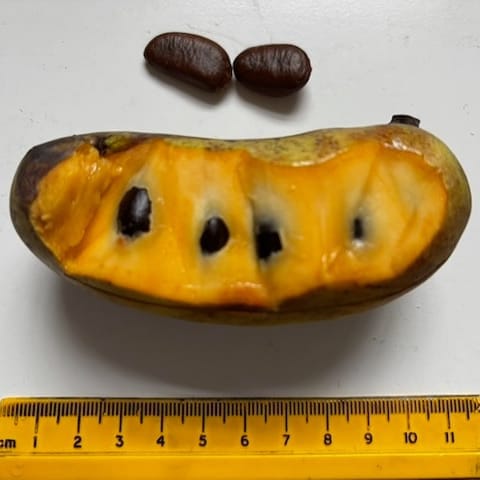
Pawpaw fruits are a large edible berry 5-16 cm in length and 3-7 cm broad. They have numerous large, brown seeds surrounded by a pale yellow flesh. The fruits are easy to peel by rubbing with a thumb. Importantly, pawpaws don't keep well. so we ate the ripest of them there and then, taking a few home for later.
And the best part – now that we know where to forage for pawpaws, we can go again next year.
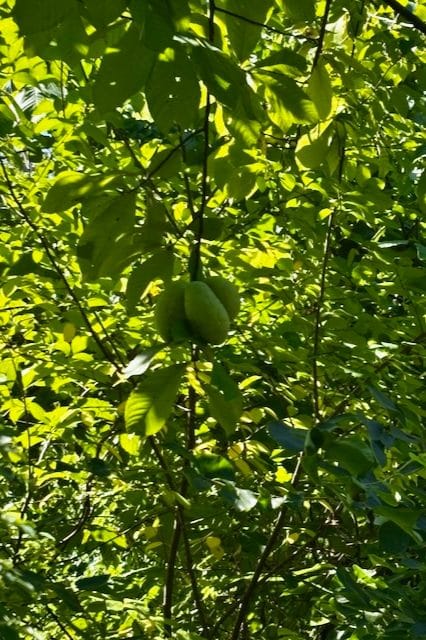
Cover image: Pawpaw fruit. All images included in this article are copyright of Sarah Covshoff.