
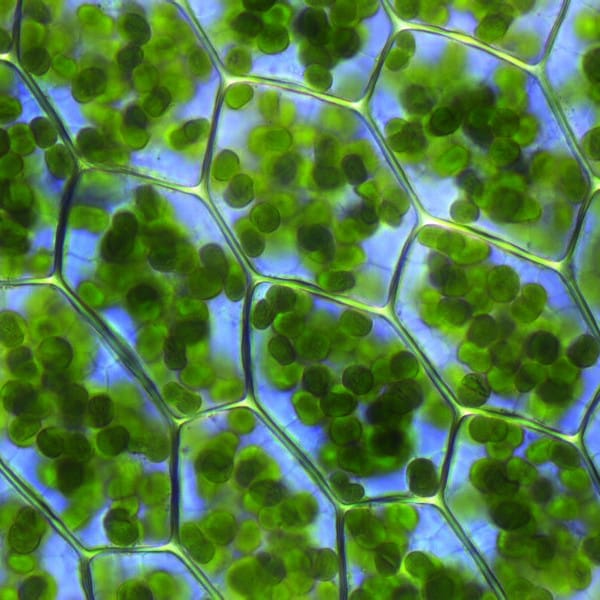
Like any other living organism, plants need food to survive, grow and reproduce. Unlike many other lifeforms, they use photosynthesis to produce their food themselves, by converting light energy into sugars. This complex reaction occurs in specialised plant sub-structures called chloroplasts and relies on the pigment chlorophyll to capture the light.
But while plants rely on sunlight to survive, they can get too much of a good thing. Under high light conditions, chlorophyll can reach its capacity to absorb sunlight, resulting in excess energy inside the chloroplast that cannot move through photosynthesis. With nowhere to go, this excess energy is transferred to molecular oxygen, which produces singlet oxygen (¹O₂), a highly reactive molecule that damages proteins, lipids and other components of the photosynthetic machinery. If the damage is severe enough, the growth of the plant is significantly impaired and the plant can die.
So what’s a plant to do to protect itself? According to a new study published in Cell, plants slather their chloroplasts in a special homemade sunscreen when the light becomes too bright.
Researchers identified a protein called MBS1 as the core component of this sunscreen. Under high light, this specialized protein can rapidly self-assemble into aggregates that form a protective layer around chloroplasts. The MBS1 layer then acts as a molecular sun-protection, reducing the amount of light reaching the chloroplasts and consequently reducing the accumulation of dangerous singlet oxygen within the chlorophyll.
“Upregulation of MBS1 [METHYLENE BLUE SENSITIVITY1] prompted the formation of condensates that coat the chloroplasts and provide sunscreen-like protection from harmful light stress,” write Shao and colleagues.

The researchers tested the sunscreen’s effect in rice by preventing the MBS1 protective coat from forming. They found that in the absence of MBS1, the amount of singlet oxygen in the chloroplasts skyrockets when exposed to high light conditions.
This discovery immediately prompted a flood of questions: How does MBS1 aggregate? How does it know when protection is needed? And how quickly can it respond to a sudden burst of high-intensity light?
What they discovered is fascinating. By looking at its 3D structure, the researchers identified the mechanism behind MBS1 aggregation – “intrinsically disordered regions”. These are parts of the protein that do not fold into neat, fixed 3D structures, and instead can form weak interactions with other molecules. And, under the right conditions, these interactions act like molecular glue, bringing many MBS1 molecules together. This is the general process behind the formation of biomolecular condensates, structures that look and behave like any other organelle, but lack a surrounding membrane. And in this case, intense light acts as a trigger for MBS1 condensation.
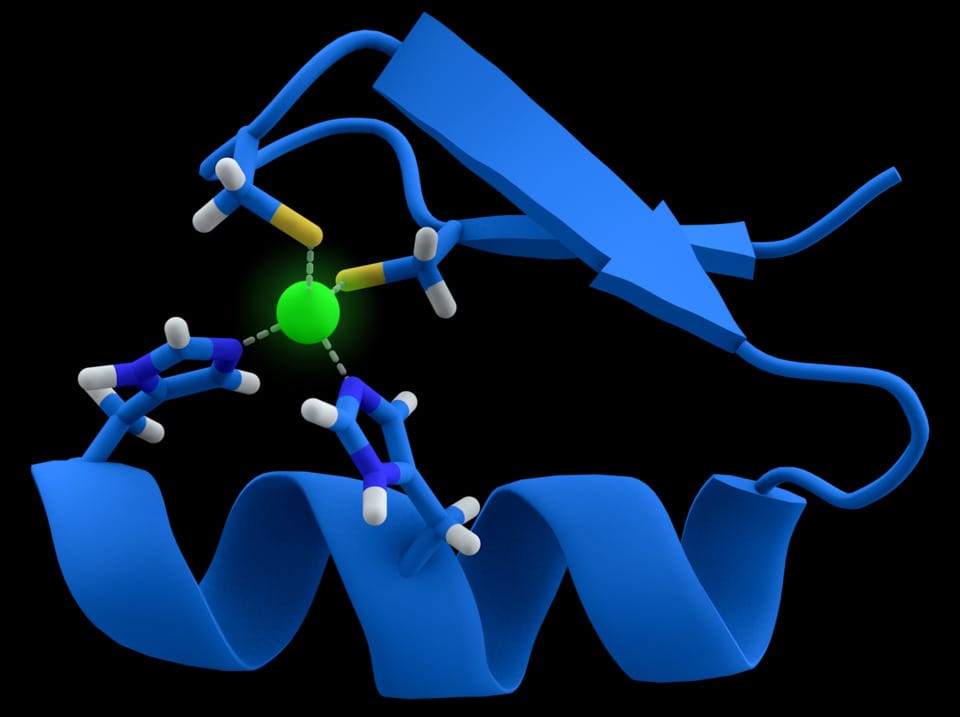
But this doesn’t explain how intense light makes MBS1 sticky. The answer lies in a small region of the MBS1 protein called the zinc finger domain (ZnF), which sits between MBS1's two intrinsically disordered regions. Singlet oxygen, when present due to photodamage, changes the shape of the ZnF, which in turn affects the intrinsically disordered regions, allowing them to stick to other MBS1 proteins. This 'stickiness' encourages multiple MBS1 molecules to come together and form a condensate. This way, the condensate only forms when photodamage by intense light occurs.
Of course, this condensate would need to be dynamic and reversible. The plant would only want the condensate to form under dangerously high light, when it needs the protection, and would want the layer to dissolve when it’s not needed. And this is exactly what the researchers found. In normal light, MBS1 was absent from the chloroplast surface, indicating that this protective layer is only produced in response to high-intensity light. From these results, the researchers concluded that MBS1 has the ability to dynamically protect chloroplasts by adjusting to the light conditions – deploying its molecular sunscreen only when needed.
"This mechanism represents a three-in-one module integrating ¹O₂ sensing, light shading, and reversible dynamic protection,” write Shao and colleagues. But how quickly the sunscreen can be ‘washed off’ after the light intensity returns to normal remains an open question.
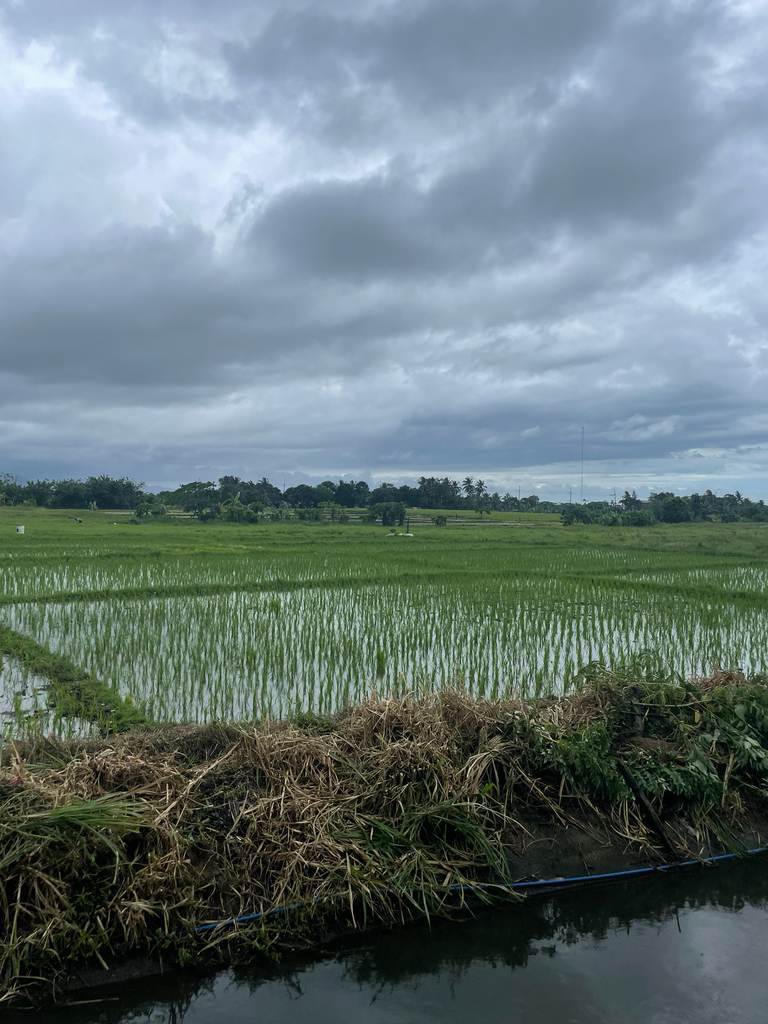
The discovery of this mechanism has important implications for crops. Climate change is pushing the growth environment of many agricultural areas to the extremes. And as the plants experience higher temperatures, light exposure and drought, crop yields are becoming more prone to photodamage by reactive oxygen species such as singlet oxygen. For example, the resulting 'midday depression,' a term for the photosynthetic slowdown during the peak heat of the day, can lead to up to significant reductions in photosynthesis, with knock-on effects on yield.
“The changing climate poses immense challenges for global agriculture, particularly in sunlit fields where plants often experience midday depression and photoinhibition, which together lead to an up to 30% reduction in photosynthesis,” write Shao and colleagues.
Therefore, the researchers asked the next natural question: can we use the MBS1 mechanism to protect our crops from photodamage? To address this, they artificially boosted the production of MBS1 protein in rice crops. The results were promising. They observed “substantially increased crop yields and improved adaptation to high-light conditions due to a notable reduction in 1O2 accumulation in chloroplasts of the OsMBS-overexpressing lines.”
Amazingly, in field trials conducted in areas of very high photosynthetically active variation (how much the wavelength varies throughout the day), increases in crop grain reached a staggering 47.1%.
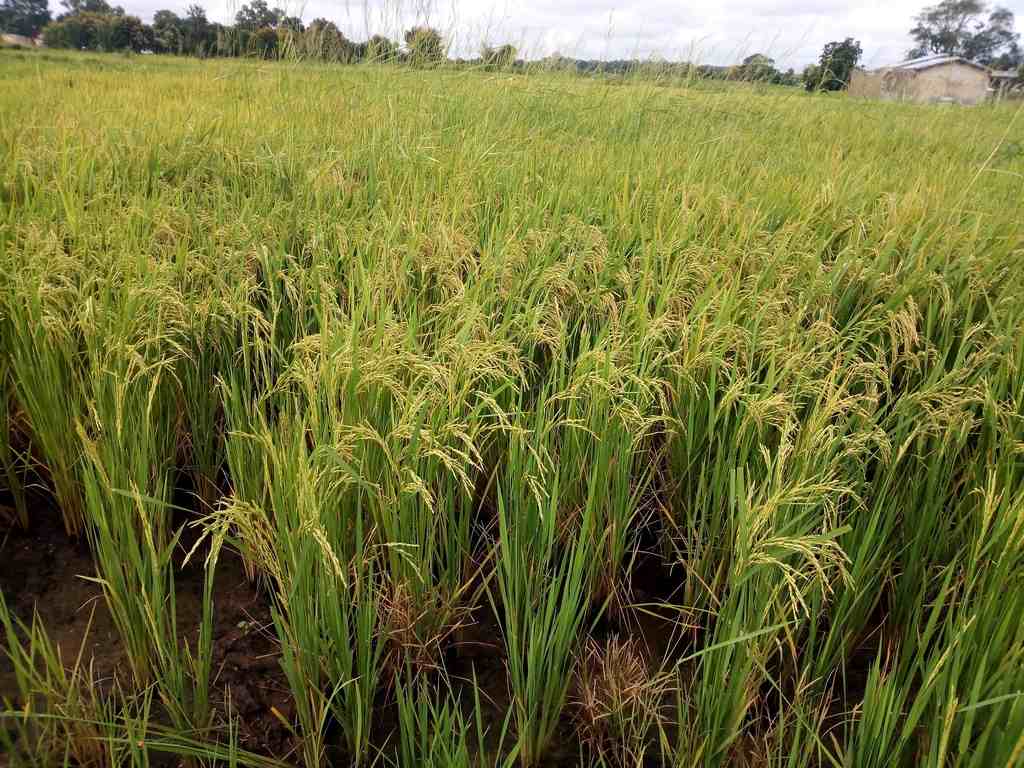
Importantly, MBS1 overexpression didn't hamper growth under normal light conditions. As the added benefit of sun-protection didn’t come at the expense of efficient photosynthesis during normal light, this is a promising finding for engineering crop resilience.
Shao and colleagues conclude that the sun-protecting mechanism “enables [high light] tolerance without reducing photosynthetic efficiency and avoids the typical trade-off between stress resistance and grain yield.”
This research has demonstrated a mechanism that plants have evolved to detect the early stages of singlet oxygen build-up and prevent it from reaching damaging concentrations. Not only does this demonstrate an exciting new concept in cellular biology, but it also proposes a promising strategy to strengthen crops.
READ THE ARTICLE: Shao, N., Chen, M., Xu, N., Qin, Y., Zhao, Q., Bock, R., Zhou, M., Duan, G., Yang, J., Ji, D., Wu, D., Wang, Y., Lu, Y., Lei, X., Sun, K., Liu, K., Liu, G., Meng, X., Jing, Y., Fan, X., Zhao, Y., Wang, B., Yu, H., Liu, C., Jiang, Y., Zhou, Z., and Li, J.(2026) Chloroplast sunscreening by protein condensates confers high-light tolerance. Cell, 189(17), pp. 5182-5197.e9. Available at: https://doi.org/10.1016/j.cell.2026.05.042.
LEARN MORE: Krysiak, M., Oung, H., and Kirchhoff, H.(2025) What are grana in chloroplasts of vascular plants good for?. Annals of Botany, 137(3), pp. 571-590. Available at: https://doi.org/10.1093/aob/mcaf229.
Cover image: "Sun Shining Over Field of Crops" by Unsplash. CC0 License.