
I should start with flagging a job that's opened this week. One of the journals we're associated with, in silico Plants, is looking for a Chief Editor. in silico Plants is an open-access journal dedicated to digital plant science, computational modeling, and AI-informed plant research. This looks like a fun position, because the field is really shifting at the moment, and it opens the opportunity for a new editor to help support emerging research topics. Also, Rachel Shekar, the managing editor, is extraordinarily good at her job, so if there's a new direction you want to take the journal, the support will be there.
Looking ahead to next week, there's not just rain for me to look forward to. Pablo Santos has an article on using moss to rebuild ecosystems, and have a new author who will be writing about invasive seaweed. I have the first batch of video scripts to finish, but I expect I'll write at least one blog post about a paper too. Though probably not the 1000 underpants paper, as that's been covered by Ars Technica already.
There will also be another email sharing what we've posted as well as the stories you're sharing on Mastodon and Bluesky, and career postings at the usual time next week.
Until then, take care,
Alun (webmaster@botany.one)
On Botany One
The brain does plant science, but the heart moves the body
A survey of 421 plant biologists found the strongest recruiter for botany isn't argument. It’s contact.
Nina Bziuk: Uncovering the Secret Dialogue Between Plants and Microbes
Botany One interviews Dr Nina Bziuk, a microbial ecologist investigating how plants and their microbiomes communicate and how these interactions influence plant health and stress responses.
How sterile stamens produce more seeds
One plant has swapped some of its stamens for false petals, and that's something that catches a bee's eye.
The End of Papaya?: What Genomics Teaches Us About Its Survival
A study of papayas in Mexican backyards reveals how hybridisation between wild and cultivated plants can boost genetic diversity while creating new challenges for conservation.
There was also Science Shared, Sudoku Garden featured a hairy dandelion, and Adenophora triphylla was plant of the week. You can also see last week's Week in Botany too.
In AoBC Publications
- Winter chilling regulates seedling development in Mediterranean terrestrial orchids cultivated in vitro 🆓
- Elements of a functional-structural plant model 🆓
- Ambient-condition performance provides trait-dependent prediction of wheat genotype responses under elevated CO2 and chamber-associated warming 🆓
News & Views
Australia has a soft spot for the amazing flannel flower
The flannel flower is a beautiful bloom with a few superpowers up its floral sleeve. And it's not just an east-coast star.
abc.net.au
‘I love it. It’s hope’: the mysterious self-willed wildflower meadow that seeded itself
Farmer Derek Sayer let a boggy field run wild and just one annual hay-cut has led to remarkable biodiversity
theguardian.com
Ten simple rules for writing a peer review
Peer review is the cornerstone of scientific progress, and it does not exist without the “peers”. Thus, it is part of our responsibility as members of the scientific community to review manuscripts (as well as poster and talk abstracts, funding proposals, theses, white papers, etc.). Doing so can be a daunting task for novice reviewers.
journals.plos.org
Coexisting shrubs exhibit distinct hydraulic strategies and advantages for coping with desert environments
Wenyue Zhao, Xibin Ji, Rui Chen, Lishan Shan, Hai Zhou, Bowen Jin, Liwen Zhao, Dongsheng Li This is a plain language summary of a Functional Ecology research article which can be found here. Water …
fesummaries.wordpress.com
In the footsteps of Ireland’s most famous naturalist
The BSBI is for everyone who cares about the wild plants of Britain and Ireland.
bsbi.org
A Day for BSA 2026
On August 27, 1895, the Botanical Society of America held its very first foundational meeting. To celebrate over 130 years of a continuing mission to support the botanical sciences, we are marking this day with our third annual “A Day for BSA!”
day-for-bsa.botany.org
Dolly Parton dies aged 80 — researchers celebrate her contributions to science
The country singer was an advocate for vaccines, public health, literacy and marginalized communities.
nature.com
Water Lilies At The Missouri Botanical Garden
Each summer when the heat and humidity make St. Louis feel like the tropics, giant Amazon Victoria water lilies at the Missouri Botanical Garden seem right at home.
discoverandshare.org
Ghost Orchid finder, Richard Bate, on BBC World Today
BSBI member Richard Bate was interviewed on BBC TV talking about how he refound a Ghost Orchid, the first sighting in UK since 2009.
youtube.com
Research differentiates new species of endangered baobab tree in Madagascar
Researchers at the University of Wisconsin–Madison recognize a new species of baobab tree, Adansonia bozy, unique to Madagascar, according to a study published in the journal Taxon.
biology.wisc.edu
Science Shared
Three botany papers widely shared on Bluesky this past week were:
1. Grassland destruction causes shifts in plant traits that persist during recovery 💰
Nerlekar, A. N. et al. · Proceedings of the National Academy of Sciences · 2 posts · 53 likes · 27 reposts on Bluesky
We synthesized trait data for 742 plant species from 24 studies across six continents to understand how plant species indicative of old-growth and secondary grasslands compare in their traits. Compared to old-growth grasslands, plants indicative of secondary grasslands were taller and had leaves with more nitrogen content, higher specific leaf area, and lower dry-matter content.
Lars Brudvig @lars-brudvig.bsky.social · on Bluesky
New from @ashishnerlekar.bsky.social @llseedsull.bsky.social me and many others: Grassland destruction causes shifts in plant traits that persist during recovery
www.pnas.org/doi/10.1073/...
eeb.msu.edu/news/why-anc...
2. TOR–NOT4 signalling couples translation to co-translational quality control in plants
Schwarze, M. A. et al. · Nature Communications · 1 post · 42 likes · 21 reposts on Bluesky
Protein synthesis must be tightly coordinated with quality control to prevent proteotoxic stress, yet the mechanisms underlying co-translational surveillance in plants, and how these are aligned with translational output, remain poorly understood. Here, we identify three NOT4-like E3 ubiquitin ligases in Arabidopsis thaliana as regulators of co-translational protein quality control and uncover a functional link between NOT4 and TARGET OF RAPAMYCIN (TOR) signalling that coordinates quality-control capacity with translational output.
Dan Gibbs 🌱🧬 @djgibbs.bsky.social · on Bluesky
Protein synthesis is dynamically responsive to the environment, but how do cells ensure that their protein quality control mechanisms are appropriately scaled to changing translational demand?
We address this question in our new study in @natcomms.nature.com www.nature.com/articles/s41...
3. Herbaceous Plants in Forest Ecosystems: One Hundred Fundamental and Applied Questions
Radhamoni, H. V. N. et al. · Journal of Vegetation Science · 1 post · 22 likes · 13 reposts on Bluesky
Understanding this knowledge gap, and recognizing the critical importance of expanding and streamlining the scope of research on forest herbs, we set out to identify 100 fundamental and applied questions related to the ecology of this distinct plant group. We first conducted a survey shared widely online with the ecological community, which generated a total of 130 questions. We then held a 3‐day workshop involving invited herb researchers with expertise in various forest ecosystems, during which the questions were narrowed down through multiple rounds of discussion, revision, and rewording.
Martin Dovciak🌳🌱🌻 @dovciak-lab.bsky.social · on Bluesky
🌿 New paper! The forest herb layer can account for up to 80% of plant diversity, yet remains understudied.
I’m glad to have contributed to this Yale-led collaboration identifying 100 questions to advance forest herb-layer ecology.
What did we miss?
🔗 onlinelibrary.wiley.com/doi/full/10....
 View on Bluesky →
You can see the full list with more details at Science Shared: August 29.
Careers on Bluesky
Please note these are not jobs I am offering. Nor can I help you with any visa requirements. At time of writing there are around 130 other jobs posted at Botany One.
Postdoc ‘Breeding for resilient crops' // Wageningen
www.wur.nl/en/vacancy/p...
Our research aims to explore plant genetic resources by using advanced biotechnology and molecular breeding tools to create cultivars of crops (with the focus on tomato) resistant to different diseases.
Postdoctoral researcher in plant cell biology // Umeå Plant Science Centre
www.slu.se/en/about-slu...
You will be part of a team that work at building a better understanding in the signaling controlling cell fate acquisition in Arabidopsis root.
Postdoc in ecology // Umeå
www.slu.se/en/about-slu...
This Post doc position offers an opportunity to work with these questions through studies of fungi and continuous cover forestry in boreal forest landscapes.
Research Assistant // Kew
careers.kew.org/vacancy/rese...
The Mycorrhizal Ecology Team within the Ecosystem and Conservation Science Department is seeking an experienced Research Assistant to provide lab, data and organisational support for the sample processing of soil and roots.
Curator Botanist Asia // Kew
careers.kew.org/vacancy/cura...
This is an excellent opportunity to join the Herbarium Curation team within the Scientific Collections Department as a Curator Botanist (Asia). The successful candidate will curate the Herbarium collections to a high standard
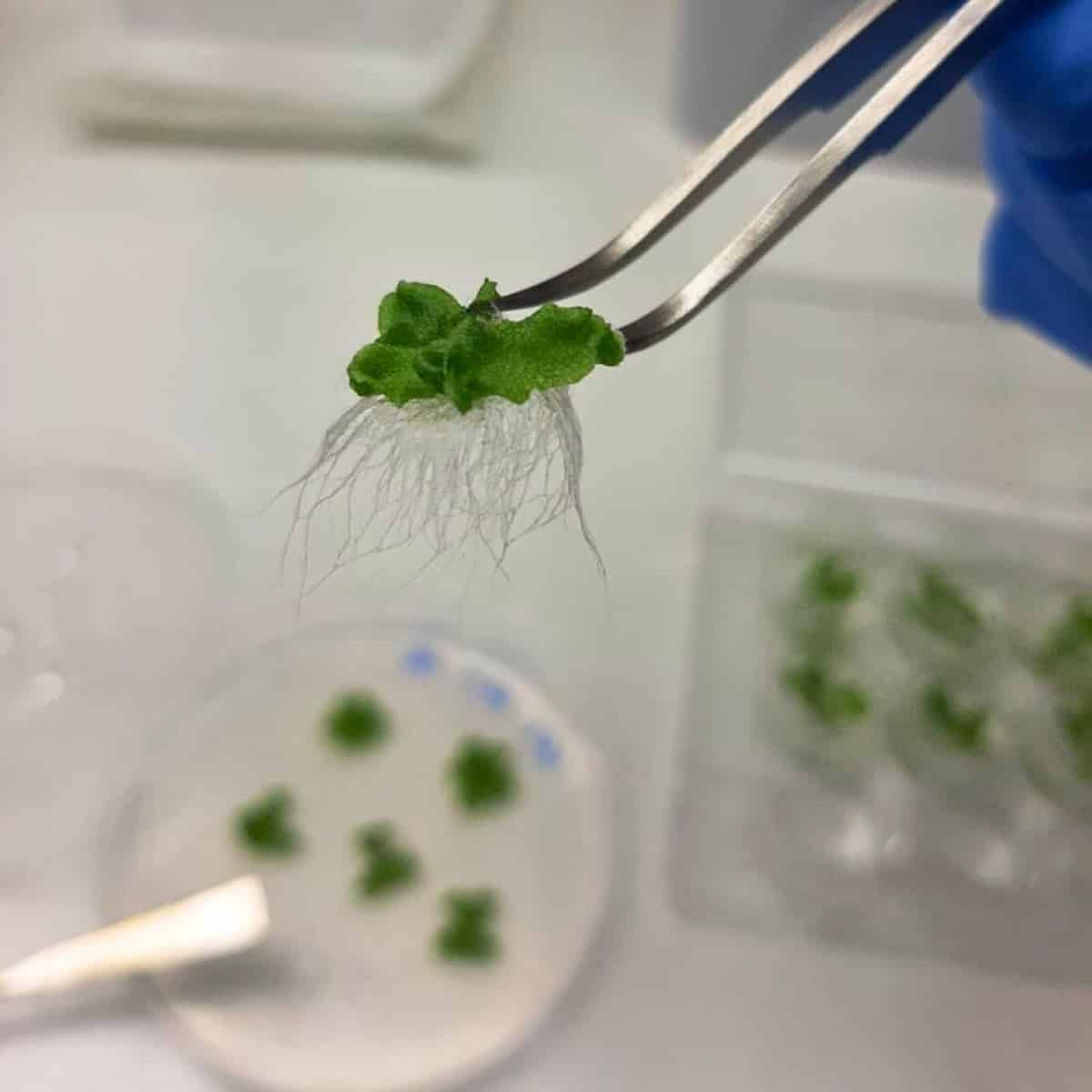
Cover Image: Marchantia polymorpha in vitro cultivation. Picture taken by Nina Bziuk.