
It's been one of those weeks where there's an avalanche of interesting papers, and no time to write. I'll see what I can do next week, as I also see there are no stories at all scheduled at the moment, so something needs to be done. I've also remembered I need to take a day off, so it will need to be done fast, to allow me to build up a buffer. So there may be more typos than usual over the next few days
Whatever happens, there will be another email sharing what we've posted as well as the stories you're sharing on Mastodon and Bluesky, and career postings at the usual time next week.
Until then, take care,
Alun (webmaster@botany.one)
On Botany One
Bryophytes Reveal the Hidden Costs of Selective Logging
A forest may remain standing after selective logging, but its hidden biodiversity can still unravel as the largest trees disappear.
Yago Barros-Souza: Plants Are Anything but Static
Botany One interviews Yago Barros-Souza, a Brazilian plant biogeographer exploring how evolution, geography and environment shape plant diversity across mountains and entire landscapes.
Introducing Species Dashboard
Get details on a species fast.
How far can better technique take a plant app?
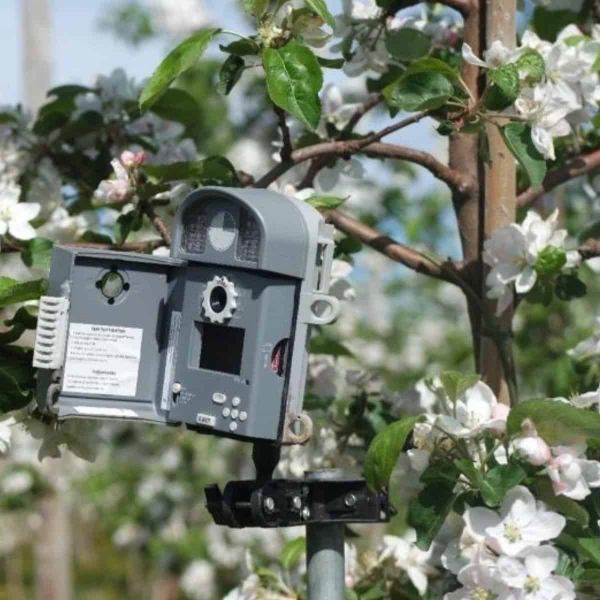
Apps are getting better and better at identifying plants, but are they ready for surveys in the field?
There was also Science Shared, Sudoku Garden celebrated plant milk, and Caladenia crebra was plant of the week. You can also see last week's Week in Botany too.
In AoBC Publications
- Inflorescence architecture and development in the megadiverse Eugenia (Myrteae, Myrtaceae): an evolutionary perspective 🆓
- Secondary Growth and Exodermal Barriers Shape Local Root Hydraulics: Modeling Insights in Tomato 🆓
- Global agriculture shows limited evidence of a pollinator-driven yield decline to date 🆓
News & Views
Dungeness - Britain's only desert
Dungeness on a Kent headland is Britain's only desert. The shingle landscape is a juxtaposition of nature reserve, nuclear power stations and fishing boats.
wildabouthere.com
Plant picks of the week - Cambridge University Botanic Garden
Our Head of Horticulture picks the must see plants from the Garden this week.
botanic.cam.ac.uk
Grandes Incendios Forestales 2026 en España
Aquí podrás ver los Grandes Incendios Forestales que se hayan producido en España durante 2026
edu.forestry.es
Robert VanBuren named associate director of MSU Plant Resilience Institute
The Plant Resilience Institute has named faculty member Robert “Bob” VanBuren as its new associate director. He will serve as a key member of the PRI leadership team, helping oversee the institute’s operations and progress.
plantresilience.msu.edu
The female artists who shaped botanical illustration in Australia
Female botanical illustrators have translated the science of our landscapes for centuries, today the craft is as important as ever.
abc.net.au
Plants at 6000 metres: Tough life, high demands
Alpine environments impose some of the most severe conditions experienced by vascular plants. Low temperatures and air pressure, intense radiation, poorly developed soils, and perhaps most importantly, an exceptionally short growing season, all challenge plant growth. Yet, in the dry area of Western Himalayas, flowering plant communities persist at elevations around 6000 m a.s.l. (!), under conditions that are already undeniably hostile for humans.
plantlifebelowground.wordpress.com
Twenty-two easy ways to power up your lab meetings
Scientists share help and advice on how they got their research discussions flowing.
nature.com
The Struggle for Light: Seaweed illustrations inspire new Garden exhibition
A new immersive exhibition explores artist Mary Merrifield’s seaweed paintings and the enduring struggle for women’s creative freedom.
botanic.cam.ac.uk
In Bloom — Flower Color Quiz
A crowdsourced flower-color observation quiz.
tribblelab.org
Are your plants CAM suspicious?
Have you ever wondered if the plants you work on are... living a double life working the nightshift? We are too. Our lab is looking to identify and screen more plants for CAM activity. We are beginning a wide survey of plants in our greenhouse for CAM phenotypes, and we want to know if you have any candidates to put on our list!
docs.google.com
Science Shared
Three botany papers widely shared on Bluesky this past week were:
1. A single genetic innovation at the origin of plant terrestrialization
Mbadinga Zamar, D. L. et al. · bioRxiv · 2 posts · 61 likes · 37 reposts on Bluesky
How the functional innovations that enabled plants to first colonize land 450 million years ago evolved remains puzzling. Here, we show that the gain of a single family of enzymes was pivotal in the evolution of two of these innovations, the cuticle that protect plants from dehydration and UV light, and the Arbuscular Mycorrhizal symbiosis promoting water and nutrient uptake.
Mélanie Rich 🌱🍄 @melaniekrich.bsky.social · on Bluesky
New preprint alert!
www.biorxiv.org/content/10.6...
The conclusion of a long-lasting obsession about lipids, plant terrestrialization and the origin of plant symbioses 1/7 🧵
@pierremarcdelaux.bsky.social @katharinamel1.bsky.social @tatiana-vernie.bsky.social @kellerjeanphd.bsky.social
2. Techniques and challenges in studying photosynthetic diversity in freshwater submerged vascular plants
Loew‐Mendelson, E. et al. · Applications in Plant Sciences · 2 posts · 29 likes · 16 reposts on Bluesky
While the photosynthetic diversity of aquatic plants rivals that of terrestrial species, the environmental conditions underlying that diversity fundamentally differ. Despite these environmental differences, aquatic and terrestrial plants have convergently evolved carbon concentrating mechanisms (CCMs). However, characterization of these pathways in submerged plants has lagged behind terrestrial systems due to methodological constraints of the aquatic environment. Here we review and evaluate contemporary methods for detecting CCMs in aquatic plants. Physiological methods, including gas exchange and isotopic analyses, provide valuable insights into terrestrial plants but face significant challenges in aquatic systems.
Karolina Heyduk @kheyduk.bsky.social · on Bluesky
New lab paper, led by @ellliieee.bsky.social with assist from @wickellomics.bsky.social, other lab members, and folks at @li-corenv.bsky.social - how do we study photosynthesis in aquatic plants? Turns out it's pretty hard! Part review, part methods paper. Check it out! doi.org/10.1002/aps3...
View on Bluesky →3. A bacterial metabolite rewires fungal metabolism, triggering the hyphae-to-yeast transition
Bharathwaj, M. et al. · Current Biology · 1 post · 40 likes · 13 reposts on Bluesky
Fungi transition between cell morphologies to adapt to and colonize environments. For Candida albicans, commensal colonization of humans and virulence depend on a reversible switch between invasive hyphae and disseminating yeast cells. The yeast-to-hyphae transition is well understood, but comparatively little is known about the reverse transition from hyphae back to yeast. By developing an imaging assay to visualize and quantify the hyphae-to-yeast transition, we show that the bacterial natural product gladiolin accelerates the transition.
Ákos T Kovács @evolvedbiofilm.bsky.social · on Bluesky
A bacterial metabolite rewires fungal metabolism, triggering the hyphae-to-yeast transition
@currentbiology.bsky.social by Manasa Bharathwaj @mbharathwaj.bsky.social et al from Ana Traven
www.cell.com/current-biol...
You can see the full list with more details at Science Shared: August 22.
Careers on Bluesky
Please note these are not jobs I am offering. Nor can I help you with any visa requirements. At time of writing there are around 130 other jobs posted at Botany One.
Research Assistant // Royal Agricultural University
www.jobs.ac.uk/job/DSR158/r...
We are looking for an enthusiastic and motivated Research Assistant to contribute to the NURSE project, developing innovative technology to recover valuable nutrients from livestock waste.
Postdoctor in Botany // University of Gothenburg
web103.reachmee.com/ext/I005/103...
The postdoctor will work on a project using a comprehensive phylogenetic tree of southern African (SA) Asteraceae to evaluate the roles of long-distance dispersal, biome shifts & environmental change.
Postdoctoral Research Fellow - RNA Biology // The University of Queensland
uniroles.com.au/display-job/...
Lead and contribute to high-quality research in RNA interference (RNAi) for plant protection against root lesion nematodes.
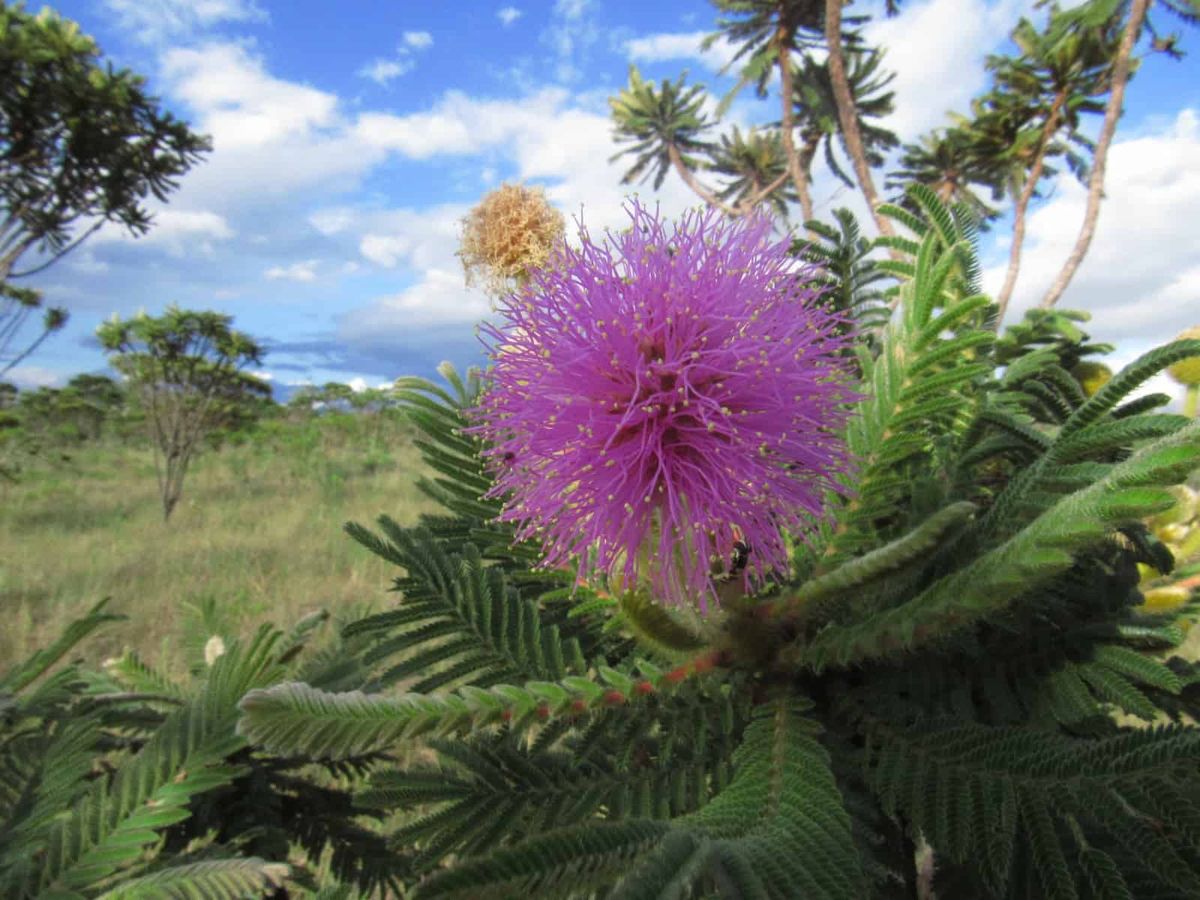
Cover Image: Mimosa manidea at Parque Nacional da Chapada dos Veadeiros (Goiás, Brazil). Photo by Monique Maianne.