
Here's this week’s round up of the most shared items on Bluesky. It's been a frustrating week, this week. Not because it's difficult to track down papers, but the opposite. There's plenty here that I'd want to read properly and write about. But there's also plenty that didn't make the list that was interesting too. Enough things came in on Friday alone, that I could be busy for a week. For some reason I was expecting the summer to be quiet. As usual, papers behind a paywall are marked 💰otherwise they're free to access at time of checking.
How this works
We scan posts by people on the Botany Auto list and pull out the entries with links to papers. Every time a paper gets a post written about it it gets 4 points. It gets 3 points for a repost and 1 point for a like.
We try to add people to the Botany Auto post, if they post about Botany (doesn't have to be links to papers) around 20% of the time or more. The belief is that because the list as a whole shares an interest in plants, it's this material that tends to rise to the top.
If you think you should be on the Botany Auto list, but aren't, please drop a message to @botany.one on Bluesky.
1. A single genetic innovation at the origin of plant terrestrialization
Mbadinga Zamar, D. L. et al. · bioRxiv · 2 posts · 61 likes · 37 reposts on Bluesky
How the functional innovations that enabled plants to first colonize land 450 million years ago evolved remains puzzling. Here, we show that the gain of a single family of enzymes was pivotal in the evolution of two of these innovations, the cuticle that protect plants from dehydration and UV light, and the Arbuscular Mycorrhizal symbiosis promoting water and nutrient uptake.
Mélanie Rich 🌱🍄 @melaniekrich.bsky.social · on Bluesky
New preprint alert!
www.biorxiv.org/content/10.6...
The conclusion of a long-lasting obsession about lipids, plant terrestrialization and the origin of plant symbioses 1/7 🧵
@pierremarcdelaux.bsky.social @katharinamel1.bsky.social @tatiana-vernie.bsky.social @kellerjeanphd.bsky.social
2. Techniques and challenges in studying photosynthetic diversity in freshwater submerged vascular plants
Loew‐Mendelson, E. et al. · Applications in Plant Sciences · 2 posts · 29 likes · 16 reposts on Bluesky
While the photosynthetic diversity of aquatic plants rivals that of terrestrial species, the environmental conditions underlying that diversity fundamentally differ. Despite these environmental differences, aquatic and terrestrial plants have convergently evolved carbon concentrating mechanisms (CCMs). However, characterization of these pathways in submerged plants has lagged behind terrestrial systems due to methodological constraints of the aquatic environment. Here we review and evaluate contemporary methods for detecting CCMs in aquatic plants. Physiological methods, including gas exchange and isotopic analyses, provide valuable insights into terrestrial plants but face significant challenges in aquatic systems.
Karolina Heyduk @kheyduk.bsky.social · on Bluesky
New lab paper, led by @ellliieee.bsky.social with assist from @wickellomics.bsky.social, other lab members, and folks at @li-corenv.bsky.social - how do we study photosynthesis in aquatic plants? Turns out it's pretty hard! Part review, part methods paper. Check it out! doi.org/10.1002/aps3...
View on Bluesky →3. A bacterial metabolite rewires fungal metabolism, triggering the hyphae-to-yeast transition
Bharathwaj, M. et al. · Current Biology · 1 post · 40 likes · 13 reposts on Bluesky
Fungi transition between cell morphologies to adapt to and colonize environments. For Candida albicans, commensal colonization of humans and virulence depend on a reversible switch between invasive hyphae and disseminating yeast cells. The yeast-to-hyphae transition is well understood, but comparatively little is known about the reverse transition from hyphae back to yeast. By developing an imaging assay to visualize and quantify the hyphae-to-yeast transition, we show that the bacterial natural product gladiolin accelerates the transition.
Ákos T Kovács @evolvedbiofilm.bsky.social · on Bluesky
A bacterial metabolite rewires fungal metabolism, triggering the hyphae-to-yeast transition
@currentbiology.bsky.social by Manasa Bharathwaj @mbharathwaj.bsky.social et al from Ana Traven
www.cell.com/current-biol...
4. Foliar salt spray exclusion and tissue tolerance underlie local adaptation to oceanic salt spray
Plunkert, M. L. et al. · American Journal of Botany · 1 post · 33 likes · 11 reposts on Bluesky
Surviving the effects of oceanic salt spray is critical for plants in coastal ecosystems, yet the mechanisms of coastal plant resilience to salt spray are not well understood. We investigated mechanisms of salt spray adaptation by comparing five latitudinal pairs of yellow monkeyflower accessions locally adapted to coastal and inland habitats... Our results suggest that plant adaptation to coastal habitats may often involve the evolution of multiple mechanisms to survive stress imposed by oceanic salt spray.
Botanical Society of America @botsocamerica.bsky.social · on Bluesky
Foliar salt spray exclusion & tissue tolerance underlie local adaptation to oceanic salt spray
New #AJB research by @madisonplunkert.bsky.social, @pcdurant.bsky.social, @davidlowry.bsky.social & Katherine Egeler
doi.org/10.1002/ajb2...
#botany #plantscience #monkeyflower #Mimulus
 View on Bluesky →
5. The combination of morphogenic regulators BABY BOOM and GRF ‐ GIF improves maize transformation efficiency and promotes leaf regeneration
Chen, Z. et al. · New Phytologist · 1 post · 22 likes · 13 reposts on Bluesky
Transformation is an indispensable tool for plant genetics and functional genomics. Although stable transformation in maize is no longer a major obstacle, there remains a need for accessible and efficient methods for academic laboratories. Here, we present the GGB system, a rapid and efficient approach optimized for immature embryo transformation in B104 and other maize lines. This system combines two distinct morphogenetic regulators, the wheat GRF4‐GIF1 chimera and the maize BABY BOOM (BBM) transcription factor (hence the name “GGB”) with a modified QuickCorn protocol, enabling regeneration of transformed maize plantlets in c . 2 months with an efficiency 7‐fold higher than when compared to either morphogenic factor used in isolation.
New Phytologist @newphyt.bsky.social · on Bluesky
The combination of morphogenic regulators BABY BOOM and GRF‐GIF improves maize transformation efficiency and promotes leaf regeneration
📖 nph.onlinelibrary.wiley.com/doi/10.1111/...
by Chen et al.
@WileyPlantSci #PlantScience
 View on Bluesky →
6. Identification of carnivory in the flowering plant Saxifraga via multidisciplinary evidence
Zhang, X. J. et al. · Nature Communications · 1 post · 25 likes · 9 reposts on Bluesky
The transformation from prey to predator is a striking adaptive innovation shared by all carnivorous plants, which capture and digest diverse animal prey for nutrients (nitrogen, N). Here, we report carnivory in the alpine flowering plant Saxifraga candelabrum (Saxifragaceae; Saxifragales). Field experiments and herbarium surveys reveal that this plant actively attracts and captures insect prey via glandular hairs.
Chenxin Li, PhD @chenxinli2.bsky.social · on Bluesky
Another incidence of carnivorous plant, this time in the Saxifraga genus. Carnivory is another of those repeatedly convergently evolved tricks among plants. #PlantScience
From: www.nature.com/articles/s41...
7. Stomatal decoupling during heatwaves does not alter leaf cooling or recovery in Quercus ilex under long-term experimental drought
Gauthey, A. et al. · Tree Physiology · 1 post · 18 likes · 11 reposts on Bluesky
We investigated leaf physiology and canopy temperature in a Mediterranean Quercus ilex forest exposed to more than 20 years of experimental rain exclusion, including during an intense heatwave (>40°C). Overall, Q. ilex exhibited stomatal decoupling under extreme heat, but this mechanism provided limited evaporative cooling and did not prevent canopy scorching. Long-term drought mainly influenced recovery capacity rather than the occurrence of decoupling itself.
Alice Gauthey @a-gthy.bsky.social · on Bluesky
🌳🌡️ Our new paper is out! We show that during extreme heat stomatal decoupling occurred in mature holm oak trees; yet, this mechanism provided very little leaf cooling 🍂
academic.oup.com/treephys/adv...
@charlottegrossiord.bsky.social
@mdekauwe.bsky.social
& many others
 View on Bluesky →
8. Rethinking the soil core microbiome
Lee, J. et al. · New Phytologist · 2 posts · 14 likes · 10 reposts on Bluesky
The concept of a core microbiome emerged from host‐associated research to describe microbial members or functions conserved across clearly defined spatial, temporal, and biological boundaries. In soil‐ and plant‐associated microbiome research, however, the term has increasingly shifted toward analytically defined subsets selected using study‐specific thresholds or criteria. Synthesizing recent literature and cross‐site analyses of bioenergy crop field soils, we show that the original biological meaning of the core microbiome has been blurred by dataset‐specific analytical criteria.
New Phytologist @newphyt.bsky.social · on Bluesky
✨ Paper spotlight ✨
(🧵 1/6) Rethinking the soil core microbiome
nph.onlinelibrary.wiley.com/doi/10.1111/...
 View on Bluesky →
9. Engineering an Exo70 integrated domain of a barley NLR for improved blast resistance
Saado, I. et al. · The Plant Cell · 1 post · 15 likes · 10 reposts on Bluesky
Intracellular immune receptors protect plants from microbial invasion by detecting and responding to pathogen-derived effector molecules, often triggering cell death responses. However, pathogen effectors can evolve to avoid immune recognition, resulting in devastating diseases that threaten global agriculture. Here, we show that an integrated Exo70 domain from the barley intracellular nucleotide-binding leucine-rich repeat (NLR) RGH2 can interact with both the rice blast pathogen effector AVR-Pii and a closely related wheat blast causing variant.
The Plant Cell @theplantcell.bsky.social · on Bluesky
Engineering an Exo70 integrated domain of a barley NLR for improved blast resistance (Indira Saado, Helen J Brabham, Josh W Bennett, Anson Ho Ching Lam, Inmaculada Hernández-Pinzón , Matthew J Moscou, Juan Carlos De la Concepcion , Mark J Banfield) doi.org/10.1093/plce... #PlantScience @aspbofficial
View on Bluesky →10. Integrating single-cell omic techniques to resolve the spatio-temporal complexity of arbuscular mycorrhizal symbiosis
Ferreras-Garrucho, G., Chancellor, T., Paszkowski, U. · Journal of Experimental Botany · 1 post · 17 likes · 9 reposts on Bluesky
In this review, we recapitulate the current knowledge on the spatio-temporal control of Arbuscular mycorrhizal symbiosis (AMS) , evaluate the relevance of existing spatial datasets to AMS research, and provide new perspectives for future study.
Journal of Experimental Botany @jxbotany.bsky.social · on Bluesky
🧬🌱 REVIEW 🌱🧬
Ferreras-Garrucho et al. explore recent methodological advancements in single cell technologies to unravel the spatio-temporal dynamics of arbuscular mycorrhizal symbiosis, focusing on cell-type-specific plant and fungal transcriptomes.
🔗 doi.org/10.1093/jxb/...
#PlantScience 🧪
 View on Bluesky →
11. Global proliferation of opportunistic pleuromeian lycopsids following the disappearance of the end-Triassic forests
Peng, J. et al. · npj Palaeoecosystems · 1 post · 21 likes · 7 reposts on Bluesky
Environmental crises and mass extinction events on land are typically followed by ecological upheaval, during which opportunistic plants rapidly colonize devastated landscapes, forming transient ‘pioneer’ communities that precede the establishment of complex forest ecosystems. Here, we identify such a pattern in the aftermath of the end-Triassic mass extinction event ~201 million years ago. We document the final global occurrence of the pleuromeian lycopsids within Lower Jurassic (Hettangian) strata of Sweden and demonstrate biological links between the parent plant Lycostrobus scottii and its mega- and micro-spores.
12. Seeing the unseen: hyperspectral imaging opens a new window into the root economics space
Rewald, B. · New Phytologist · 1 post · 15 likes · 8 reposts on Bluesky
Fine roots – the ‘hidden half’ of plants – regulate water, nutrient uptake and transport, underpin plant resource-use strategies, and influence community and ecosystem processes. Yet despite their ecological importance, roots remain considerably less studied than leaves and shoots, owing in part to methodological challenges.
13. Valeriana officinalis genome sequence reveals candidate genes for valerenic acid biosynthesis and flavonoid metabolism
de Oliveira, J. A. V. S., Baez, M., Pucker, B. · bioRxiv · 1 post · 14 likes · 8 reposts on Bluesky
Valeriana officinalis is the scientific name for valerian, a plant known for producing valerenic acid, a compound with anxiolytic properties. Anxiety disorders represent a significant global health crisis, impacting everyday lives. As the global demand for natural, non-synthetic anxiety treatments rises, V. officinalis has emerged as a promising, yet underutilized, medicinal resource. Understanding its genome is the first step toward unraveling the biosynthetic genes underlying valerenic acid production, facilitating further research into its production. Here, we report the first genome sequence of valerian, with an assembly size of 3.3 Gbp and an N50 of 110.8 Mbp, and its corresponding annotation with 96.6% completeness, providing a foundational resource for studying the genetic basis of specialized metabolism in valerian.
14. Bacterial small regulatory RNAs 💰
Papenfort, K. · Nature Reviews Microbiology · 1 post · 21 likes · 5 reposts on Bluesky
In this Review, I summarize the regulatory functions of bacterial sRNAs, describe the molecular mechanisms that govern their expression and regulatory consequences, and discuss the many exciting open questions surrounding sRNA-mediated gene regulation in bacteria.
15. What has population genomics told us about the dynamics of selection and plant adaptation?
Gaut, B. S. et al. · Molecular Biology and Evolution · 1 post · 10 likes · 8 reposts on Bluesky
Population genomics has transformed our understanding of how natural selection shapes plant genomes. The explosion of whole-genome resequencing data has enabled estimates of nucleotide diversity across genomes, clarified how selection interacts with recombination and demography, and broadened inference beyond crops and model species to virtually any plant system. Here, we synthesize key lessons and outstanding challenges concerning the action of natural selection on plant genomes.
16. Partial mycoheterotrophy: a common strategy in arbuscular mycorrhizal plants?
Merckx, V. S. F. T. et al. · New Phytologist · 1 post · 9 likes · 8 reposts on Bluesky
The vast majority of land plants transfer part of the organic carbon they produce by photosynthesis to arbuscular mycorrhizal (AM) fungi inside their root cells; the fungi in turn help plants to take up nutrients and water from the soil. This carbon can subsequently be acquired from mycorrhizal fungi by rare nonphotosynthetic ‘mycoheterotrophic’ plants that tap into the same fungal network. However, recent findings suggest that carbon uptake from AM fungi may exist among some green plants too. If so, this would qualify them as partial mycoheterotrophs (mixotrophs) rather than as pure autotrophs. Here, we discuss the evolutionary, ecophysiological, morphological, genetic, and environmental evidence for the existence and prevalence of this trait.
17. Plant bioacoustics: decoding ultrasonic emissions 💰
Font Bordera, P. et al. · Journal of Experimental Botany · 1 post · 14 likes · 6 reposts on Bluesky
For decades, plant-environment interactions were understood to be primarily mediated by chemical and visual stimuli. However, recent evidence has unveiled an underexplored dimension of plant physiology: airborne ultrasonic emissions. This review evaluates current research in plant bioacoustics, focusing on ultrasound generation, characteristic features, and specificity across different stress conditions.
18. Mycorrhizal strategy of non-native plants varies with biome and disturbance
Cazzaniga, S. G. et al. · Nature Ecology & Evolution · 1 post · 9 likes · 7 reposts on Bluesky
Predicting which non-native plant species will become established and where is critical for conserving and managing biodiversity. Theory suggests that the mycorrhizal strategy of non-native plants may predict their establishment success. Here we combine a global dataset of 440,788 vegetation plots with data on plant native status and mycorrhizal type to assess mycorrhizal strategy of non-native plants.
19. Informing indicator species selection by combining species associations and environmental responses
Rissanen, T. et al. · Ecological Applications · 1 post · 14 likes · 5 reposts on Bluesky
Biodiversity is changing at an unprecedented pace, underscoring the need for effective and scalable ecological monitoring. Yet selecting which species to monitor remains a major challenge. Indicator species can offer cost‐effective proxies for broader biodiversity trends, but there is a critical gap in robust, data‐driven approaches to identify them across complex and rapidly changing ecosystems shaped by climate, land management, and their interactions. We provide a model‐based approach to select potential indicator species to monitor boreal understory communities, which are crucial part of forest biodiversity but often not as continuously monitored as trees. We focus on vascular plants due to their associations with multiple taxa. With joint species distribution models, we investigate species–species and species–environment relationships across Finland, utilizing nationwide understory vegetation data covering nearly 3000 study sites across different soil types and bioclimatic zones together with key environmental factors representing climate, habitat, and forest management.
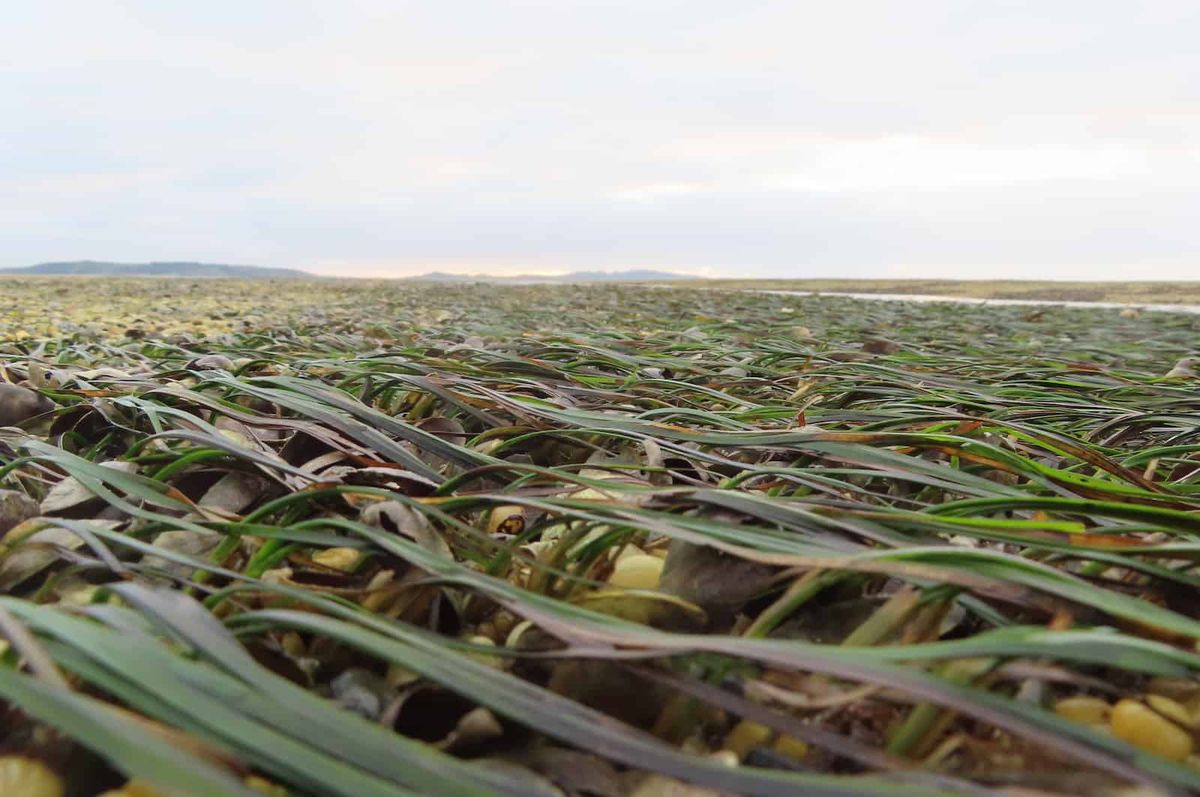
Cover image: Zostera muelleri novazelandica by Lloyd Esler / iNaturalist CC BY-NC