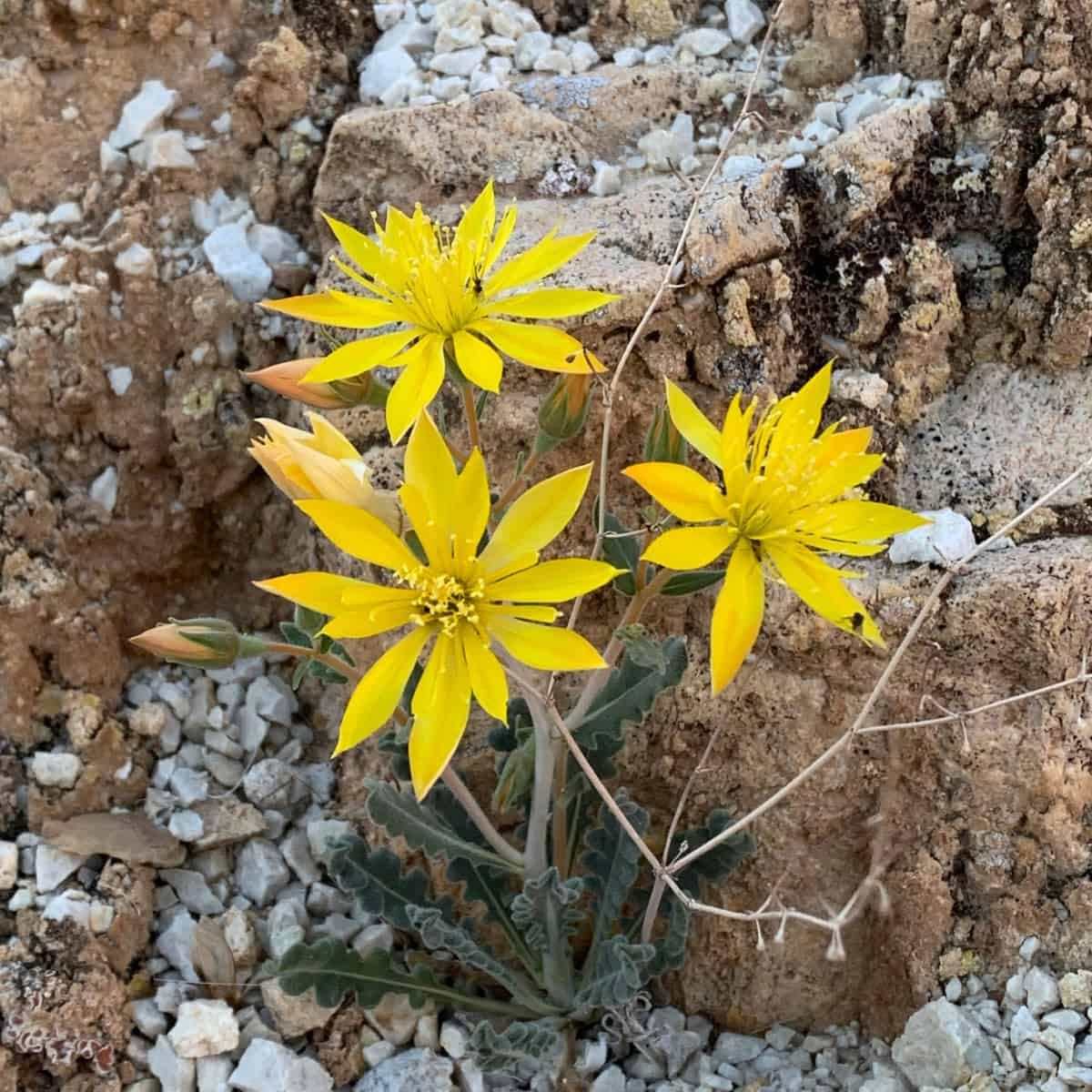

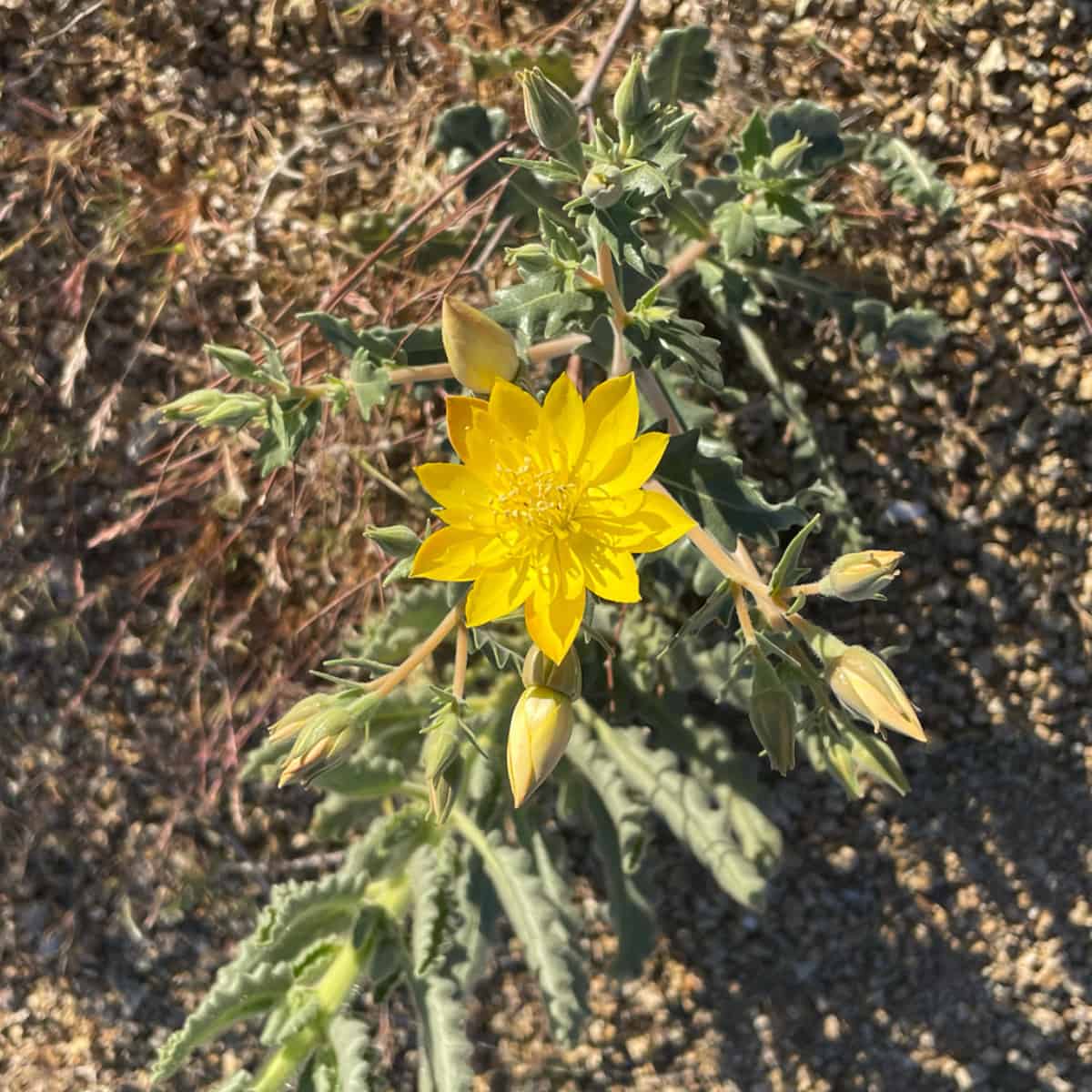
The stamen is the part of the flower that provides the pollen. That’s its job. So while a sterile stamen might not sound helpful, thousands of plants have independently evolved staminodes, or sterile stamens. Ling and colleagues examined petaloid staminodes in the plant Mentzelia integra, Virgin Blazingstar.
A petaloid staminode is a stamen that has lost the ability to produce viable pollen and instead has flattened to look like a petal. It’s not a real petal, which is why it’s called petaloid, and it’s not a proper stamen, so it’s a staminode. It’s known that these petaloid staminodes affect pollinators, but it wasn’t known if they also affected seed set. Are the flowers trading pollen production for attraction?
The team paired flowers on plants so that one of the flowers would be left intact, while the other would be plucked with tweezers to lose its staminodes. This way the plant and location shouldn’t be the explanation for any difference in visits.
Losing staminodes was bad news for the flower. Across three unrelated bee groups, the results were the same, a drop off in visits. Anthophora and Megachile bees made just a third of the visits to the cut flowers, compared to the untampered flowers. Perdita, another bee genus, cut its visits by a half.
This change in visitation had an effect on seed set. Almost 80% of seeds in untampered flowers developed, against just over half in the cut flowers. And Mentzelia integra can't fall back on selfing. Bagged flowers, with pollinators excluded, set no seed at all.
The staminodes seem to work mainly on approach. The team could only time visits for Perdita, the smallest of the three bees. For this bee, there was no meaningful difference in visit time. Once they landed, they stayed just as long on the cut flowers as the full flowers. So the effect looks to be visual rather than physical.
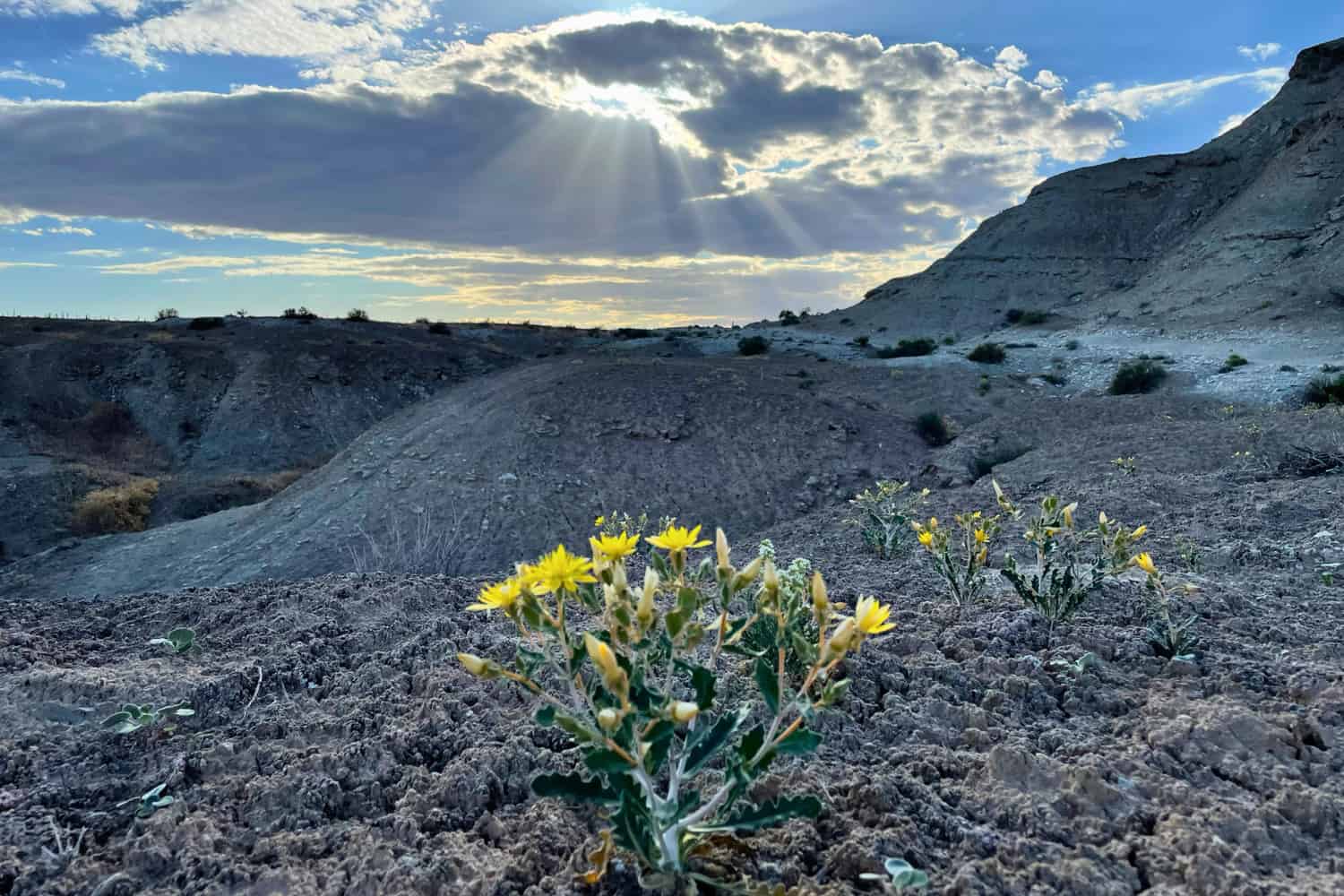
For Mentzelia integra the trade-off works, losing some pollen production to gain visibility is crucial. The flowers open for a short period in the evening in the arid and windy landscapes of the south-western USA. Attracting pollinators within a short window is imperative for success, getting pollen in and away before it’s too late.
It’s not a perfect experiment. Damaging the staminodes could cause other effects in the flower, for example releasing chemicals associated with defence against herbivores, which could be off-putting. But it seems that for the Virgin Blazingstar, sterile stamens are a huge help in losing their virginity.
READ THE ARTICLE
Ling, T., Fabre, P., Kloss, N., and Schenk, J. (2026) Petaloid staminodes enhance pollinator attraction and seed set in an arid-adapted plant. Botanical Journal of the Linnean Society. Available at: https://doi.org/10.1093/botlinnean/boag082.
Cover image: Mentzelia integra by Zach Coury / iNaturalist CC BY-NC